

Launch a no-inventory clothing brand using print-on-demand and private-label jewelry to boost margins, following the step-by-step LAUNCH Framework for under $500.
Published:
July 29, 2026
Author:
Yi Cui
The barrier to launching a clothing brand has never been lower, yet most founders still leave significant revenue on the table. The global apparel ecommerce market is projected to reach $850 billion in 2026, driven by rising consumer demand for niche, personalized fashion [1].
The print-on-demand (POD) and dropship models have democratized access to this massive market. Unlike traditional inventory-based brands that require thousands of dollars in upfront stock, minimum order quantities, and warehousing space, no-inventory models allow you to create designs, list products on your storefront, and have a third-party supplier print and ship the item only after a customer makes a purchase. This eliminates inventory risk and frees up capital for marketing and brand building.
However, lower inventory risk does not mean higher margins — in fact, the opposite is often true for apparel alone, which is why category diversification matters from Day 1. The median gross margin for apparel stores sits around 60–70%, but after factoring in high customer acquisition costs, platform fees, and return rates (which plague the clothing sector due to sizing issues), net margins often compress to a fragile 10–20% [2]. Relying exclusively on POD t-shirts and hoodies is a volume game. To build a resilient brand in 2026, you need a product strategy that blends low-risk apparel with high-margin companions.

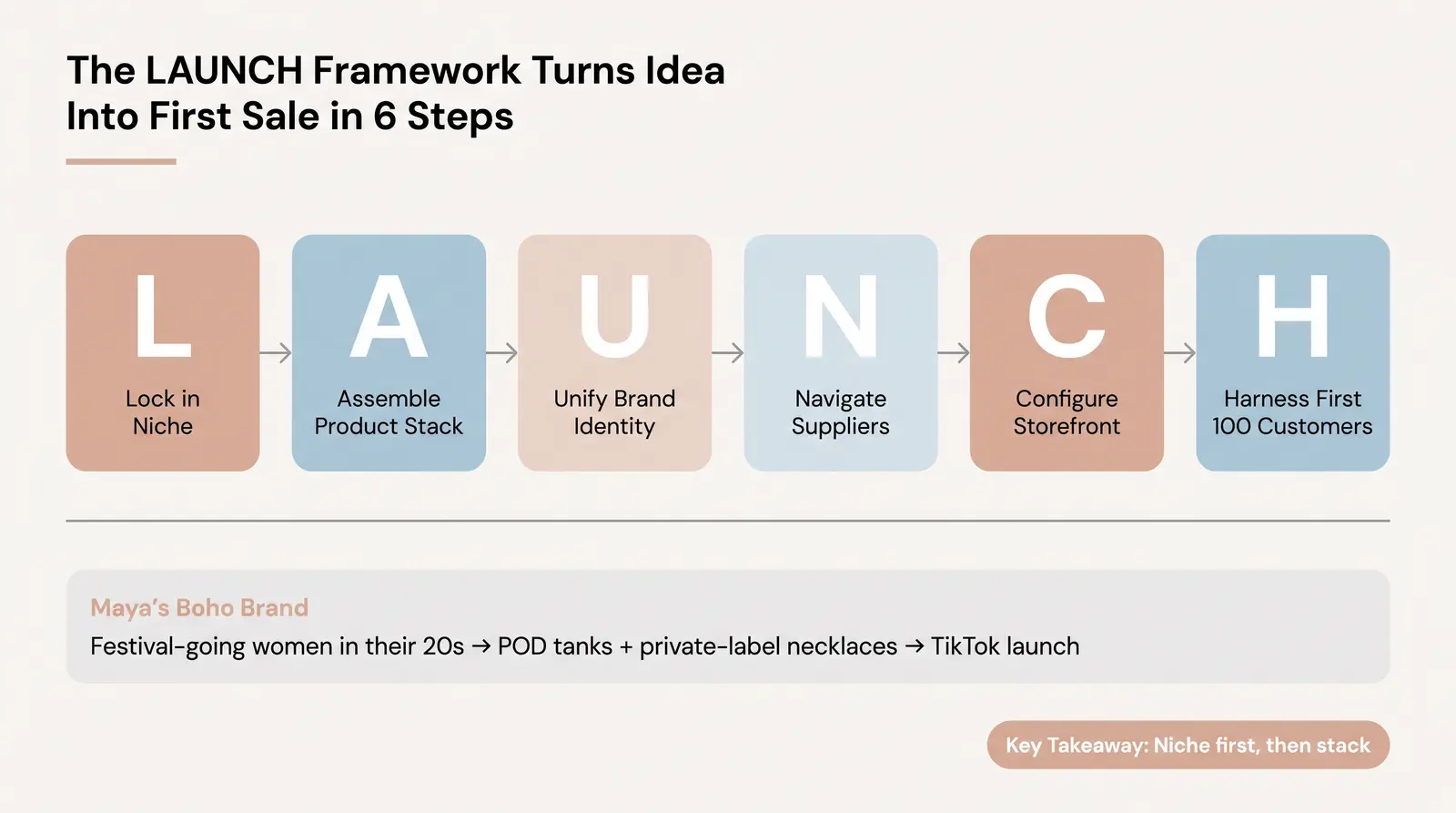
To help founders go from idea to first sale without getting stuck in the weeds, we developed The LAUNCH Framework — a 6-step system Branvas uses to build profitable no-inventory brands.
The LAUNCH Framework in Action: Maya's Boho Brand
Consider Maya, a fictional founder launching a boho-aesthetic clothing brand. Using the LAUNCH Framework, Maya Locks in her niche: festival-going women in their 20s. She Assembles her product stack, pairing POD flowy tanks with high-margin private-label layered necklaces. She Unifies her brand with earthy tones and a free-spirited brand voice. She Navigates her setup by connecting Printify for apparel and Branvas for jewelry directly to her Shopify store. She Configures her storefront with lifestyle mockups and a "complete the look" bundle feature. Finally, she Harnesses her first 100 customers through a targeted TikTok campaign showcasing her outfits.
Before you build your product stack, you need to understand the fulfillment options available.
| Model | Upfront Cost | Margin Range | Brand Control | Speed to Launch | Scalability |
|---|---|---|---|---|---|
| Print-on-Demand | $ | Low–Mid | Low | Fast | Medium |
| Dropship | $ | Low | Very Low | Fast | Low–Med |
| Private Label | $$–$$$ | High | High | Medium | High |
For apparel alone, POD margins are often thin (10–30% net). This sets up the critical strategic pivot that separates hobbyists from profitable founders.

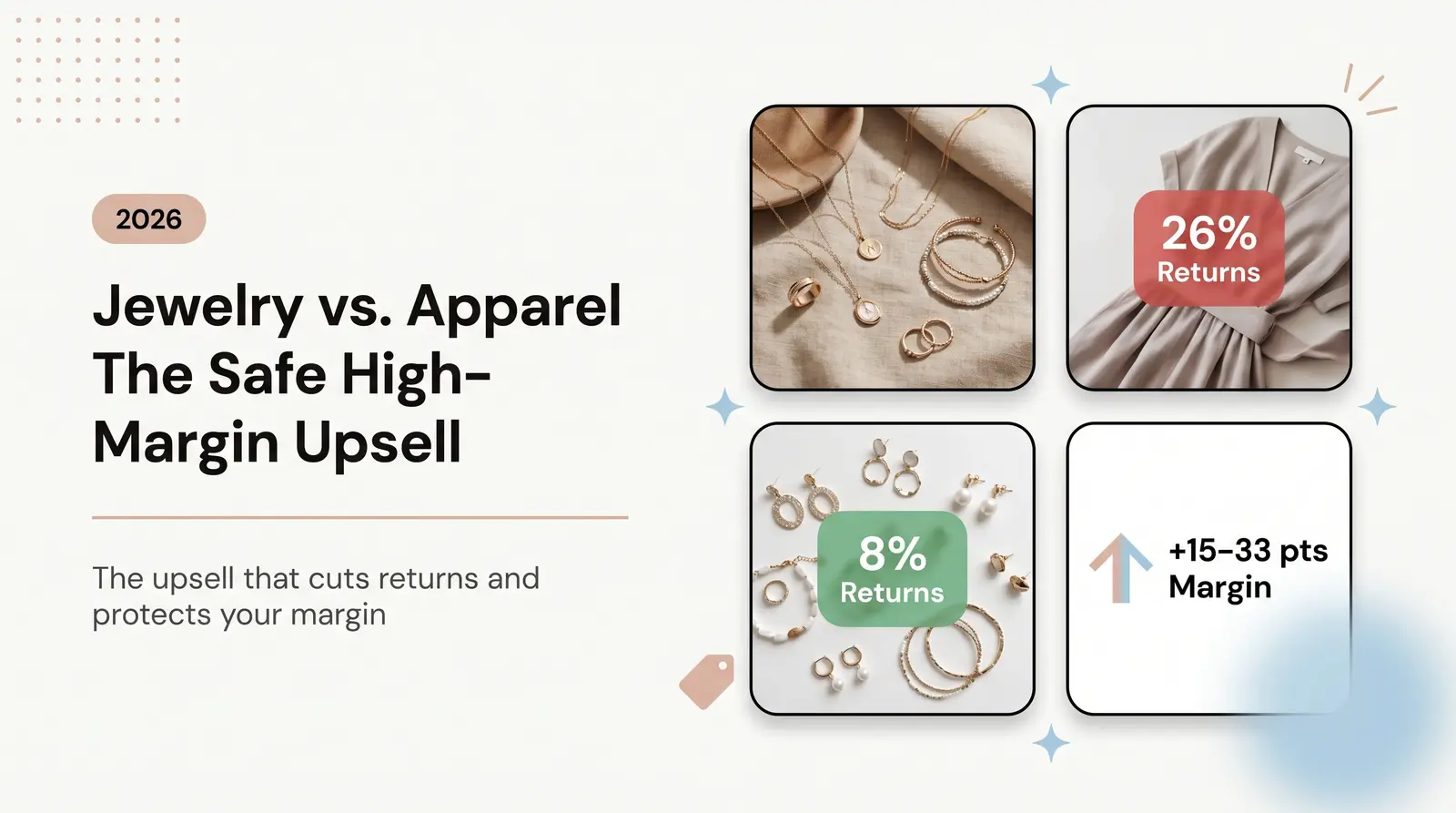
Most no-inventory apparel founders obsess over shirts and hoodies but ignore the category with 2–5× higher margins sitting right next to them: accessories, specifically jewelry.
Jewelry and accessories are the perfect companion category for a clothing brand. They possess a higher perceived value relative to their cost, allowing for premium pricing. Crucially, jewelry has no sizing issues — a necklace fits everyone — which drastically lowers the return rates that typically destroy apparel margins. Furthermore, jewelry acts as a natural AOV booster when bundled with apparel outfits, creating a cohesive brand storytelling opportunity.
| Product | Avg. Retail Price | Avg. COGS (POD/Private Label) | Gross Margin |
|---|---|---|---|
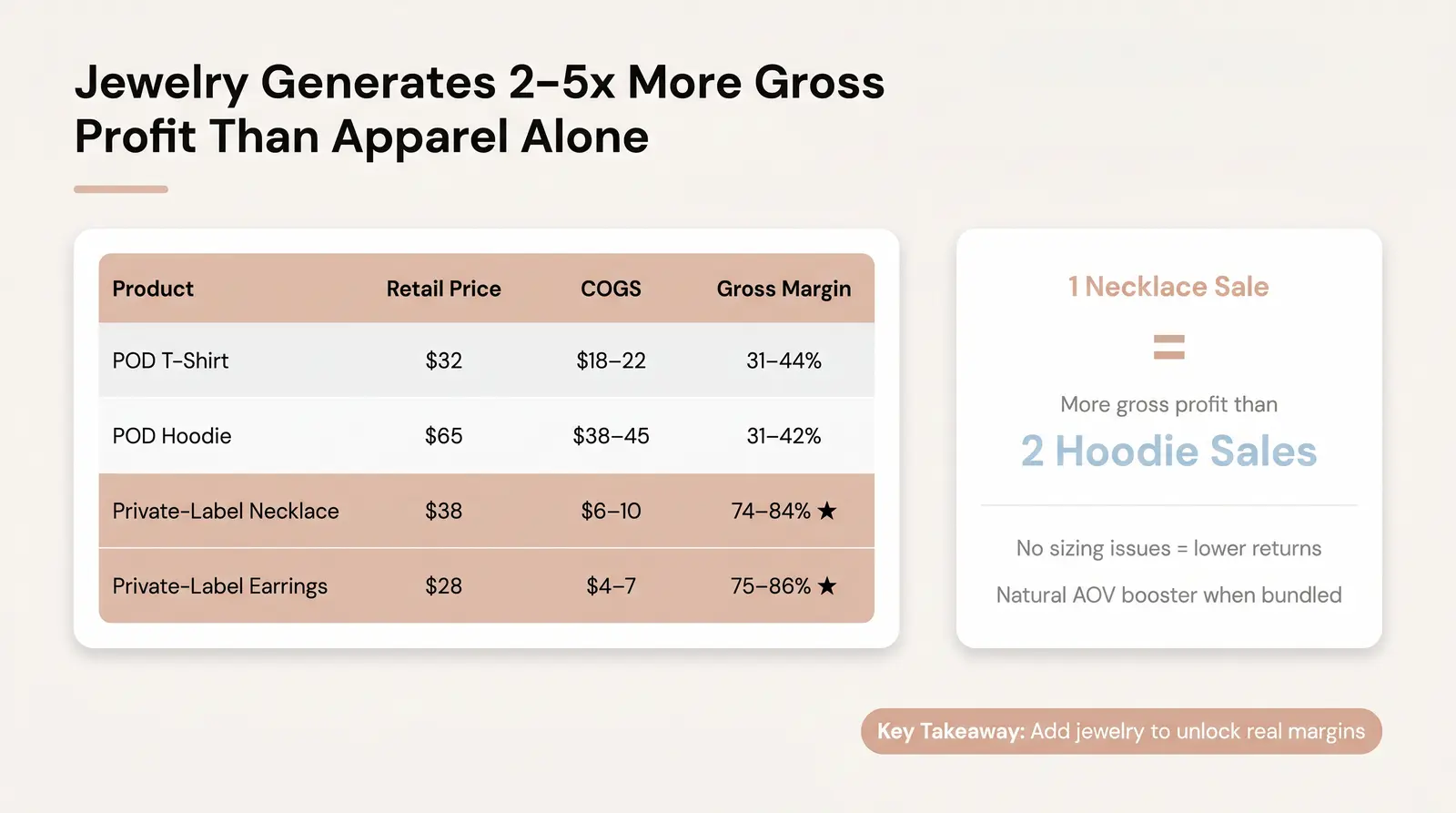
| POD T-Shirt | $32 | $18–22 | 31–44% |
| POD Hoodie | $65 | $38–45 | 31–42% |
| Private-Label Necklace | $38 | $6–10 | 74–84% |
| Private-Label Earrings | $28 | $4–7 | 75–86% |
We often see clothing founders surprised when they realize a single jewelry SKU at $38 retail generates more gross profit than two hoodie sales. That asymmetry changes how you think about product strategy.
If you're building an apparel brand and want to understand how jewelry fits your product stack, explore how Branvas works →
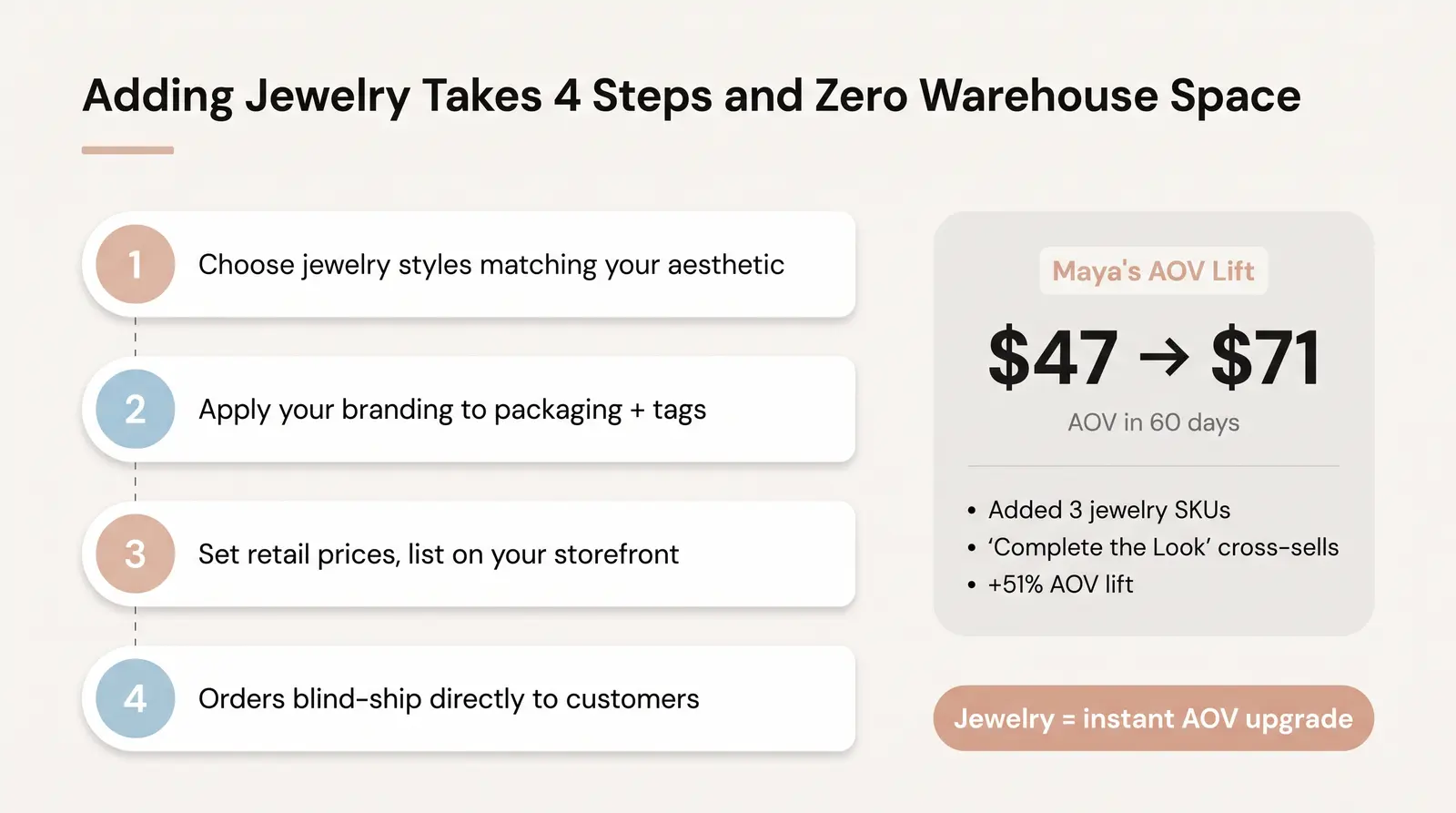
Adding a high-margin jewelry line doesn't require you to become a metalsmith or rent a warehouse. Here is the practical walkthrough of how a clothing brand founder adds jewelry via a service like Branvas:
Returning to Maya's story: After launching her boho clothing store, she realizes her $47 AOV isn't leaving enough room for ad spend. She adds 3 jewelry SKUs (a layered necklace, an earring set, and a statement ring) via Branvas. By utilizing "Complete the Look" cross-sells on her product pages, her AOV lifts from $47 to $71 in just 60 days.
Discover more Solutions for Ecommerce & Boutique Store Owners.
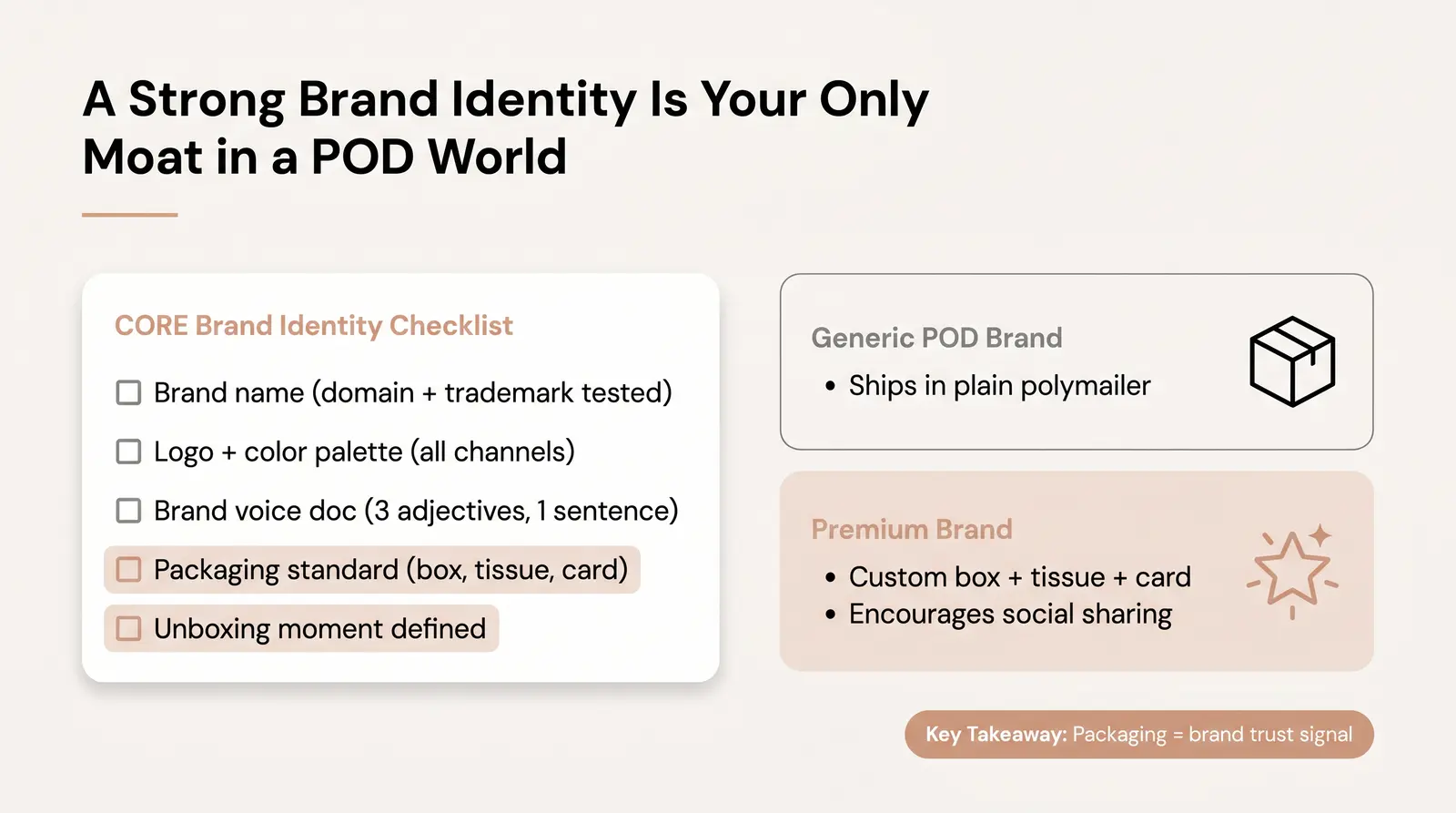
Your brand is the only moat you have in a world where anyone can launch a POD store. A strong brand identity justifies premium pricing and fosters customer loyalty.
Use our proprietary CORE Brand Identity Checklist to ensure you cover the essentials before launch:
While POD apparel often ships in generic polymailers, your high-margin accessories offer a chance to shine. Branvas's Brand Studio handles packaging and branding for jewelry SKUs, ensuring your customers receive a premium unboxing experience that encourages social sharing and repeat purchases.
You don't need $20,000 to start a clothing brand anymore. The modern tech stack is lean and scalable. Key tools include Shopify for your storefront, Printful or Printify for apparel POD, Branvas for jewelry private-label, Canva or Adobe for design, Meta/TikTok Ads for paid traffic, and Klaviyo for email marketing.
Here is a realistic cost-to-launch breakdown:
| Item | Estimated Cost (USD) |
|---|---|
| Shopify (Basic, 3 months) | $87–105 |
| Domain | $12–15/yr |
| POD Setup | $0 (free) |
| Branvas Jewelry Setup | $0 (free to start) |
| Initial Design Assets | $0–200 |
| First Ad Spend | $100–300 |
| Total to Launch | ~$200–620 |
At Branvas, we've seen founders launch their first jewelry-apparel hybrid brand for under $500 total.


How much does it cost to start a clothing brand with no inventory?
Realistically, you can launch a no-inventory clothing brand for between $200 and $600 in 2026. This covers your ecommerce platform subscription (like Shopify), a custom domain, initial design assets, and a small budget for your first marketing campaigns. The inventory itself costs nothing upfront.
Can I start a clothing brand with no money at all?
It is extremely difficult to start with zero dollars. While POD and dropshipping eliminate inventory costs, you still need to pay for a storefront platform and domain. You can minimize costs by using free design tools like Canva and relying entirely on organic social media marketing (like TikTok) instead of paid ads.
What is the best print-on-demand platform for a clothing brand in 2026?
The "best" depends on your strategy. Printify offers the lowest base prices and the largest catalog (over 1,300 items), making it great for margins and testing. Printful offers superior, consistent in-house print quality but at a higher base cost. Gelato is excellent if you have a large international customer base.
How do I make my clothing brand stand out from competitors?
Differentiation comes from a hyper-specific niche, a distinct brand voice, and a unique product mix. Don't just sell apparel; curate a lifestyle. Offering high-quality, branded companion products like private-label jewelry elevates your brand's perceived value above standard POD t-shirt shops.
Can I add jewelry to my clothing brand without holding inventory?
Yes. Platforms like Branvas allow you to add private-label jewelry to your store on a blind-dropship basis. You select the styles, Branvas applies your branding to the premium packaging, and orders are shipped directly to your customers without you ever holding stock.
Ready to add a high-margin jewelry line to your clothing brand? Start with Branvas — no inventory required →
[1] E-Commerce Apparel Market Size to Surpass USD 1,841.01 Bn by 2035
[2] Apparel Profit Margin Benchmarks for 2026 (Gross, Operating & Net)
[3] Printful vs Printify vs Gelato: The Definitive 2026 Comparison
[4] Average AOV by Ecommerce Vertical 2026
[5] 10 proven ways to increase average order value for ecommerce growth