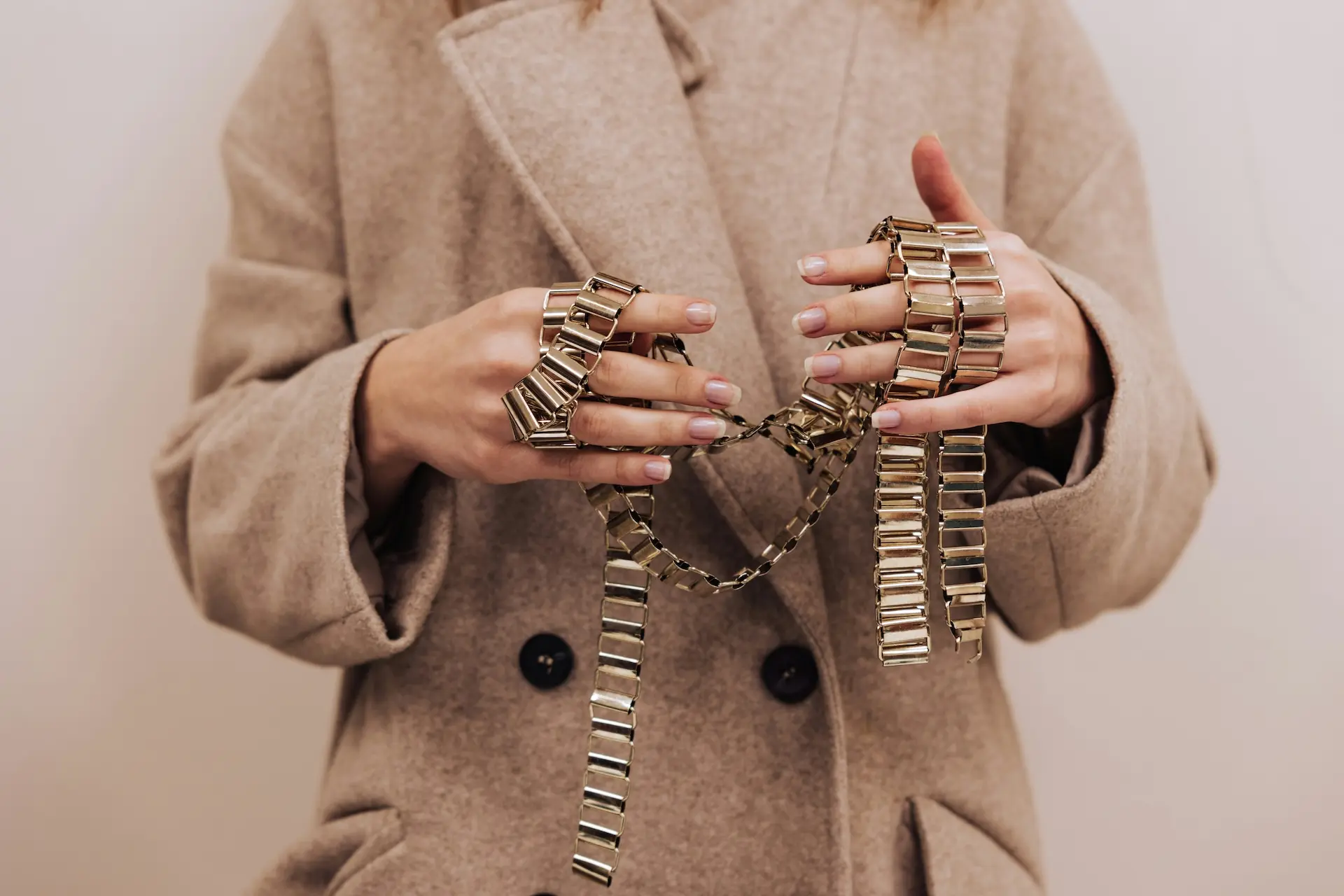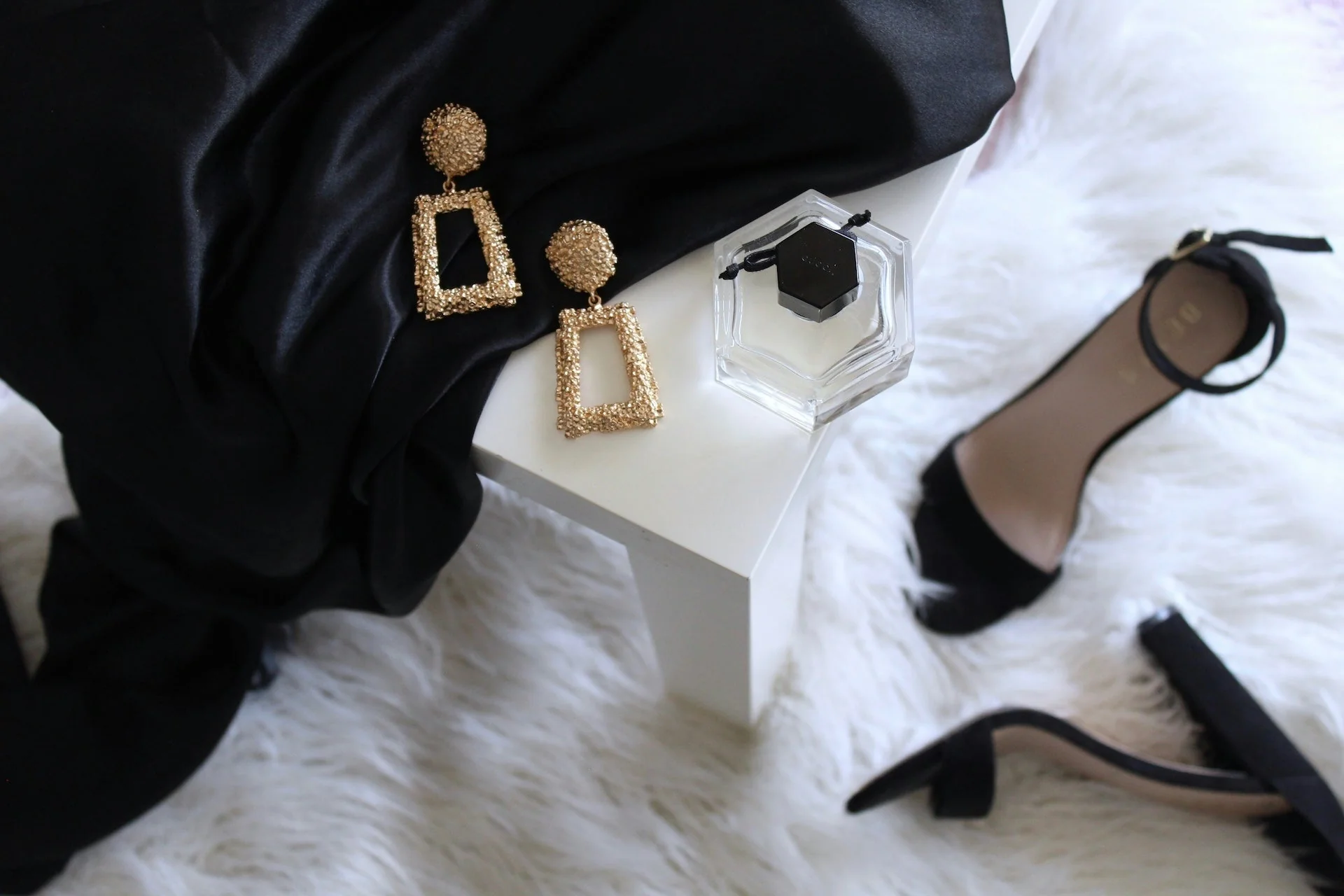



A systematic approach to pairing jewelry with clothing using the Branvas Pairing Matrix, featuring neckline-specific recommendations, athleisure strategies, and a curated 10-SKU starter catalog for apparel sellers.
Published:
February 26, 2026
Author:
Yi Cui
Wondering what jewelry goes with dresses? Or whether the best jewelry for athleisure even exists? You're not alone. Most apparel sellers guess at accessory pairings rather than using a system, which leads to dead inventory and missed cross-sell revenue.
The stakes are real. Jewelry is now the fastest-growing category in fashion, projected to grow at 4.1% annually in unit sales through 2028, nearly four times the rate of clothing [1]. Getting pairings wrong leaves significant money on the table. Getting them right can lift your average order value by 20-30% [2].
This guide gives you the tools to stop guessing. You'll get the Branvas Pairing Matrix, a starter SKU catalog, trend insights for 2026, and a step-by-step testing framework you can implement this week.
Jewelry is the highest-leverage add-on category for apparel sellers. It requires no complex sizing, ships light, and photographs beautifully alongside clothing. When a customer is already in a fashion mindset, choosing an outfit, the cognitive leap to "complete the look" is minimal.
The data backs this up. According to Shopify's 2025 benchmarks, apparel and accessories typically generate average order values in the $40 to $170 range. When jewelry is added as a complement, it pulls the combined transaction toward the premium end of that spectrum [2]. Personalized product recommendations and bundled offers can increase conversion and revenue by up to 30% [2].
From the consumer side, the shift is equally compelling. Forty-two percent of women and 35% of men now report buying more jewelry for themselves than two or three years ago [1]. Self-purchasing, not gifting, is the primary growth driver. Consumers want pieces that express identity and complete a look, not just mark an occasion.
For boutique owners and e-commerce merchants, this means one thing: your clothing customers are already primed to buy jewelry. The question is whether you're giving them a reason to buy it from you.
Key Takeaway: Jewelry cross-selling is not a nice-to-have. It's a revenue strategy with measurable, data-backed upside.

The most common pairing mistake is treating jewelry as an afterthought. The Branvas Pairing Matrix treats it as a system. Every clothing neckline creates a specific visual geometry, and the right jewelry works with that geometry, not against it.
To score each pairing, we use the Branvas Pairing Score™, a four-factor rubric:
| Factor | What It Measures | Scale |
|---|---|---|
| Visual Balance | Does the jewelry complement or compete with the neckline and silhouette? | 1-5 |
| Occasion Fit | Is it versatile enough for multiple contexts (casual, work, evening)? | 1-5 |
| Movement Compatibility | Does it interfere with activity? Critical for athleisure. | 1-5 |
| Merchandising Velocity | Based on retail data, how fast does this pairing sell? | 1-5 |
A perfect score is 20/20. Anything above 16 is a strong commercial pairing. Below 12 means the combination is likely to sit unsold.
Here is the full Branvas Pairing Matrix:
| Neckline | Jewelry Type | Recommendation | Visual Balance | Occasion Fit | Movement Compatibility | Merchandising Velocity | Score |
|---|---|---|---|---|---|---|---|
| V-Neck | Pendant Necklace | Mirror the V shape; keep 1 inch of space between neckline and pendant | 5 | 5 | 5 | 5 | 20/20 |
| V-Neck | Layered Chains | Delicate chains of varying lengths (16", 18", 20") | 4 | 5 | 4 | 4 | 17/20 |
| Scoop | Round Pendant | Follows the curve of the neckline; clean and timeless | 4 | 5 | 5 | 5 | 19/20 |
| Scoop | Statement Necklace | Bold piece that fills the open space | 5 | 4 | 4 | 4 | 17/20 |
| Boat | Stud Earrings | Simple studs keep focus on the clean horizontal line | 5 | 5 | 5 | 5 | 20/20 |
| Boat | Long Pendant | Creates a vertical line that elongates the torso | 4 | 4 | 4 | 3 | 15/20 |
| Halter | Drop Earrings | Draw the eye upward; complement the shoulder lines | 5 | 4 | 4 | 4 | 17/20 |
| Halter | Cuff Bracelet | Balances the look; avoids necklace competition | 4 | 4 | 5 | 3 | 16/20 |
| Off-Shoulder | Choker | Highlights the elegant shoulder and collarbone line | 5 | 4 | 5 | 4 | 18/20 |
| Off-Shoulder | Statement Earrings | Bold earrings frame the face and draw attention upward | 5 | 5 | 4 | 4 | 18/20 |
| Turtleneck | Hoop Earrings | Medium to large hoops add modern flair without competing | 4 | 5 | 5 | 5 | 19/20 |
| Turtleneck | Long Pendant | Elongates the torso; creates visual interest | 5 | 5 | 4 | 4 | 18/20 |
A V-neck creates a natural focal point. The best pairing mirrors that geometry. A pendant necklace that echoes the V shape creates harmony rather than competition. According to a 2026 neckline pairing guide, a good rule is to keep about one inch of space between where the neckline ends and where the pendant begins [3]. For a more layered look, delicate chains of varying lengths (16", 18", 20") work well and are one of the top-performing categories in current retail data [4].
Scoop necklines offer a wider, more open space. A round pendant that follows the curve of the neckline is a timeless choice that scores high on both visual balance and merchandising velocity. For sellers who want to offer a bolder option, a statement necklace can fill the space effectively, though it works best for evening or occasion wear rather than everyday styling.
Boat necklines are wide and run from shoulder to shoulder. Short necklaces create a cluttered effect here. The stronger play is simple stud earrings, which keep the focus on the clean horizontal line of the neckline. This pairing scores a perfect 20/20 and is one of the most commercially reliable combinations in the matrix.
Halter tops and dresses draw attention to the shoulders and collarbone. Necklaces compete with the straps and often look awkward. The better approach is elegant drop earrings that draw the eye upward, or a bold cuff bracelet that adds personality without interfering with the neckline. At Branvas, we've seen halter-paired drop earrings perform consistently well in boutique settings, particularly in the $30-$60 price range.
Off-shoulder styles showcase the shoulders and décolletage. A choker highlights the elegant line of the shoulders, while statement earrings frame the face and create a complete, editorial look. This combination is both romantic and modern, and it photographs exceptionally well, which matters for e-commerce conversion.
Turtlenecks provide a clean, high backdrop. Medium to large hoop earrings are the top commercial pairing here, scoring 19/20 and consistently appearing in bestseller lists for fashion jewelry retailers [4]. A long pendant necklace is a strong secondary option, particularly for brands with a more editorial or minimalist aesthetic.
Boutique X wants to cross-sell jewelry with their bestselling midi dress: scoop neck, cotton blend, priced at $85. They test four necklace options using the Branvas Pairing Score:
| Necklace Option | Visual Balance | Occasion Fit | Movement Compatibility | Merchandising Velocity | Score | Hypothetical AOV Lift |
|---|---|---|---|---|---|---|
| Round Pendant (gold, 18") | 4 | 5 | 5 | 5 | 19/20 | +25% |
| Statement Necklace (bold, layered) | 5 | 4 | 4 | 4 | 17/20 | +18% |
| Long Beaded Necklace | 3 | 3 | 4 | 2 | 12/20 | +5% |
| Delicate Choker | 2 | 4 | 5 | 3 | 14/20 | +8% |
The Round Pendant wins. It complements the neckline without overwhelming it, works for multiple occasions, and has strong retail velocity. By featuring it as the primary cross-sell on the product page, Boutique X could realistically expect a 20-25% lift in AOV on that item.
In our brand strategy work at Branvas, we've noticed retailers consistently underestimate how jewelry photography, styled on-model with clothing, drives conversion. Flat lays alone don't communicate wearability. When customers can see how a pendant sits against a specific neckline, the purchase decision becomes much easier.

The athleisure market reached $368.61 billion globally in 2025 and is projected to grow at a CAGR of 9.7% through 2034 [5]. Two in three millennial and Gen Z consumers wear athleisure multiple times per week. This is not a niche category. It's a primary wardrobe segment, and it represents a significant jewelry opportunity that most apparel sellers underestimate.
The conventional wisdom says athleisure and jewelry don't mix. The data says otherwise.
The first filter for athleisure jewelry is material. Sweat, moisture, and frequent wear will destroy standard fashion jewelry quickly. The materials that perform best are stainless steel (especially 18K gold PVD-coated), silicone, and titanium. These materials are tarnish-resistant, hypoallergenic, and water-resistant [6].
A 2025 analysis of fashion jewelry bestsellers found that 18K Gold PVD finishes dominated more than 90% of top-performing SKUs, driven in part by rising gold prices and consumer demand for pieces that look premium but wear practically [4]. For athleisure-focused collections, this material is the right starting point.
For athleisure, the design brief is simple: add style without adding friction. The best performers are small hoop earrings, simple studs, and short delicate chains. These pieces add a visual lift to activewear without getting in the way of movement or creating safety concerns during physical activity.
Here is a key contrarian insight worth noting: long pendant necklaces are often avoided with athleisure, yet retail data shows they are a consistent performer when styled with oversized hoodies and casual layering pieces. The key is context. A long pendant on a sports bra is impractical. A long pendant on an oversized hoodie or a relaxed sweatshirt is on-trend and commercially strong [4].
The Branvas Pairing Score for athleisure pairings prioritizes Movement Compatibility above all other factors. Any pairing that scores below 4 on Movement Compatibility should be reserved for casual athleisure (coffee runs, errands, light activity) rather than active wear.
Key Takeaway: Athleisure is not a "no jewelry" category. It's a "right jewelry" category. Durable materials and minimal interference designs are the entry point.

After several seasons of maximalist layering, the 2026 jewelry mood is shifting toward quality over quantity. According to British Vogue's 2026 trend report, the most discerning shoppers are seeking fewer, more substantial pieces that make a statement on their own [7]. The trend is not about going plain. It's about going intentional.
The numbers support this directional shift. A National Jeweler report from January 2026 found that while the number of jewelry units sold declined by 5.6% in 2025, the average retail sale increased by 10.9% [8]. Consumers are buying fewer pieces but spending more on each one. This is a strong signal for retailers: curate tightly, price confidently, and don't chase volume with cheap SKUs.
Branded jewelry is growing at nearly twice the rate of unbranded jewelry, with branded pieces now comprising 25% of the market and growing at 8.3% annually [1]. This means that even for smaller boutiques, brand presentation and storytelling around jewelry matters. A well-photographed, well-named piece with a clear pairing story outperforms a generic item at the same price point.
Mixed metals are a specific trend worth inventorying. A 2025 analysis by Accio found that search interest for "mixed metal rings" peaked at 100 in late October and November 2025, and the mixed-metal jewelry market is projected to grow at a CAGR of 7% through 2033 [9]. Missoma founder Marisa Hordern notes that "silver is having a huge moment on the catwalk and red carpet, leading to people mixing up their metals more and more in their everyday styling" [7].
Silver and alternative metals are gaining ground as gold prices remain elevated. A 2025 National Jeweler report found that silver and alternative metal jewelry was up 4% in sales, with a 14% increase in average retail sale [8].
For apparel sellers entering the jewelry category, the biggest mistake is starting with too many SKUs. More SKUs don't raise AOV. Better curation does [2]. Start with 10-25 carefully selected pieces across three price tiers: Impulse ($15-$35), Core ($40-$80), and Premium ($90-$150+).
Here is a curated 10-SKU starter catalog designed for high cross-sell velocity:
Your 10-SKU Starter Jewelry Catalog (Curated for High Cross-Sell Velocity)
| # | SKU Type | Best Paired With | Avg. Retail Price Range | Why It Works |
|---|---|---|---|---|
| 1 | Gold-Tone Hoop Earrings (1.5") | Turtlenecks, crew necks, athleisure tops | $25-$45 | Timeless design, works across casual and dressy contexts. High retail velocity. |
| 2 | Delicate Layering Necklace (16-18") | V-necks, scoop necks, open-collar blouses | $30-$50 | Perfect for layering, adds elegance without competing with the garment. |
| 3 | V-Shape Pendant Necklace | V-neck dresses and tops | $35-$60 | Mirrors the neckline geometry. Scores 20/20 on the Branvas Pairing Matrix. |
| 4 | Statement Stud Earrings | High necklines, boat necks, off-shoulder tops | $20-$40 | Adds personality without competing with the garment. Universally wearable. |
| 5 | Cuff Bracelet (gold or silver) | Halter tops, sleeveless dresses, short-sleeve tops | $40-$75 | Bold statement piece. Balances halter and sleeveless looks effectively. |
| 6 | Minimalist Bar Necklace | Crew necks, square necks, minimalist tops | $30-$55 | Clean lines, modern aesthetic, easy to style. Aligns with 2026 minimalism trend. |
| 7 | Water-Resistant Stud Earrings (Stainless Steel) | Athleisure, activewear, everyday wear | $15-$30 | Durable, hypoallergenic, and practical. Ideal anchor SKU for athleisure collections. |
| 8 | Mixed-Metal Layering Chains | Neutral-toned apparel, monochrome outfits | $45-$80 | On-trend for 2026. Adds depth and texture to simple outfits. |
| 9 | Small Charm Necklace | Casual tops, t-shirts, simple dresses | $25-$45 | Allows for personalization. Drives repeat purchases and emotional connection. |
| 10 | Long Pendant Necklace (30-36") | Turtlenecks, oversized hoodies, simple maxi dresses | $50-$90 | Elongates the torso. Strong performer with casual layering pieces. |
How to Source These SKUs:
Wholesale suppliers are the most accessible starting point, offering a wide variety of styles at competitive price points. Dropship partners are a good option for testing the market without committing to inventory. For brands ready to scale, private label manufacturing offers greater control over design, branding, and margin. Platforms like Branvas offer private label jewelry programs specifically designed for apparel brands entering the accessories category.
At Branvas, we often see apparel founders over-SKU their accessory lines, diluting focus and confusing customers. The brands that scale fastest typically start with 8-12 core jewelry pieces that align tightly with their existing apparel aesthetic. Once you know which SKUs attach consistently, you can expand from a position of data, not guesswork.

Even experienced sellers make predictable errors when building a jewelry cross-sell program. Here are the most common ones, and how to avoid them.
Over-Accessorizing the Recommendation. Showing five jewelry options on a single product page creates decision fatigue. Research from Baymard Institute consistently shows that irrelevant or excessive product recommendations harm conversion [2]. Keep it to one to three pieces per product page, selected specifically for that garment.
Ignoring Neckline Geometry. A necklace that clashes with the neckline disrupts the entire look. This is the most common visual mistake. The Branvas Pairing Matrix addresses this directly. Use it as a reference before adding any necklace to a product page.
Assuming All Athleisure is "No Jewelry." This is a missed opportunity. The athleisure market is massive and growing, and consumers in this category are actively looking for jewelry that fits their lifestyle. The key is choosing durable, minimal-interference designs, not avoiding the category altogether.
Mismatching Metals Without Intention. Mixed-metal looks are on-trend, but they need to be curated, not accidental. A random mix of clashing metals looks like an inventory mistake. When mixing metals, look for pieces that share a common design element, such as a consistent finish, a shared motif, or a unified weight.
Photographing Jewelry Separately from Clothing. Flat lays and white-background shots don't communicate wearability. On-model photography that shows jewelry styled with specific garments is significantly more effective at driving attach rates. This is one of the highest-leverage investments a boutique can make.

Building a jewelry cross-sell program is not a one-time setup. It's an ongoing cycle of testing, measuring, and refining. Here is a practical framework for doing it systematically.
Step 1: Start with Your Bestselling Apparel Items. Don't try to pair jewelry with your entire catalog at once. Identify your top five to ten bestselling clothing items and build your initial jewelry pairings around those. Use the Branvas Pairing Matrix to select two to three jewelry options for each item.
Step 2: Set Up A/B Tests on Product Pages. Create two versions of each product page: one with a jewelry cross-sell recommendation and one without. Run the test for at least two weeks to get statistically meaningful data. Track AOV, conversion rate, and attach rate (the percentage of orders that include jewelry).
Step 3: Track the Right Metrics. The key metrics for a jewelry cross-sell program are: base AOV (orders without jewelry), AOV with accessories, accessory attach rate (target: 15% or higher), and conversion rate impact (ensure jewelry recommendations don't hurt overall conversion). Review these weekly for the first 90 days [2].
Step 4: Survey Customers Post-Purchase. Ask customers which jewelry pieces they would like to see paired with your clothing. This qualitative data often surfaces insights that quantitative data misses. A simple two-question survey (which jewelry did you consider, and why did you or didn't you add it) can significantly improve your curation.
Step 5: Rotate SKUs Seasonally. Keep your jewelry offerings fresh by introducing seasonal capsules that align with your apparel collections. This creates a natural reason for repeat customers to re-engage with your accessories, and it allows you to test new trends without permanently expanding your core catalog.
Tools to Consider: Shopify's built-in cross-sell features, ReConvert for post-purchase upsells, and Rebuy for personalized product recommendations are all practical options for e-commerce sellers. For inventory management, platforms that support bundling and SKU-level analytics will help you track attach rates accurately.
If you're scaling a fashion or accessory brand and need help positioning your collections for maximum market fit, Branvas specializes in brand strategy and go-to-market planning for emerging lifestyle brands. Explore our brand strategy services.

What necklace length is best for a V-neck dress?
A pendant necklace that mirrors the V shape of the neckline is the strongest choice. Keep about one inch of space between where the neckline ends and where the pendant begins. For a layered look, delicate chains at 16", 18", and 20" work well together and score 17/20 on the Branvas Pairing Matrix [3].
Can you wear jewelry with athleisure?
Yes. The key is choosing durable, minimal-interference designs. Opt for sweat-proof and water-resistant materials like stainless steel or PVD-coated pieces, and stick to simple styles: studs, small hoops, and short delicate chains. Long pendants also work well with casual athleisure pieces like oversized hoodies [4] [6].
What's the best minimalist jewelry for a capsule wardrobe?
Focus on versatile, timeless pieces that work across multiple outfits. A pair of classic gold hoops, a delicate layering necklace, and a minimalist bar necklace are strong starting points. These align with the 2026 trend toward fewer, more intentional pieces [7].
How many jewelry SKUs should I stock as an apparel seller?
Start with 10-25 SKUs across three price tiers: Impulse ($15-$35), Core ($40-$80), and Premium ($90-$150+). More SKUs don't raise AOV. Better curation does. Once you identify which pieces attach consistently, you can expand from a position of data [2].
Do mixed-metal jewelry pieces work with neutral clothing?
Yes, and they're increasingly popular. Mixed-metal jewelry is a major trend for 2026, with search interest peaking in late 2025 and the market projected to grow at 7% CAGR through 2033 [9]. Neutral and monochrome outfits are actually the ideal backdrop for mixed-metal pieces, as the contrast is visually striking without being overwhelming.
[1] BoF Insights and McKinsey and Company. (2025, December 10). Why the Shine Isn't Fading on Jewellery Sales. Business of Fashion. https://www.businessoffashion.com/articles/luxury/the-state-of-fashion-2026-report-jewellery-category-sales/
[2] Yi Cui. (2026, February 12). Jewelry as an Add-On Category: The AOV Playbook for Women's Apparel Stores (2026). Branvas. https://branvas.com/blogs/news/jewelry-add-on-category-aov-playbook-womens-apparel
[3] Eternz. (2026, February 20). How to Match Jewelry with Different Necklines: 2026 Guide. https://www.eternz.com/blog/how-to-pair-or-match-necklaces-with-necklines-the-ultimate-style-guide/
[4] WJW Marketing. (2026, January 29). 2025 Recap: A Breakthrough Year for the Fashion Jewelry Industry. Wholesale Jewelry Website. https://wholesalejewelrywebsite.com/blogs/news/2025-recap-a-breakthrough-year-for-the-fashion-jewelry-industry
[5] Fortune Business Insights. (2026, February 7). Athleisure Market Size, Share and Value, Growth Report, 2034. https://www.fortunebusinessinsights.com/athleisure-market-110642
[6] Tula Blue. (2025, February 25). Best Athleisure Jewelry for an Active Lifestyle. https://www.tulabluerope.com/blogs/tula-blue-blog/best-athleisure-jewelry-for-an-active-lifestyle
[7] Kerry McDermott. (2025, December 28). The 5 Major Jewellery Trends The Experts Are Backing For 2026. British Vogue. https://www.vogue.co.uk/article/2026-jewellery-trends
[8] Sherry Smith. (2026, January 13). 2025 Was a 'Price Up, Units Down' Year, Here's What That Signals for 2026. National Jeweler. https://nationaljeweler.com/articles/14601-2025-was-a-price-up-units-down-year-here-s-what-that-signals-for-2026
[9] Accio. (2026, January 3). Mixed Metal Jewelry Trend 2025: Versatile Styles and Sustainable Designs. https://www.accio.com/business/mixedmetaljewelry_trend
Ready to refine your brand positioning and merchandising approach? Branvas partners with apparel and accessory entrepreneurs to build scalable, market-aligned brands.