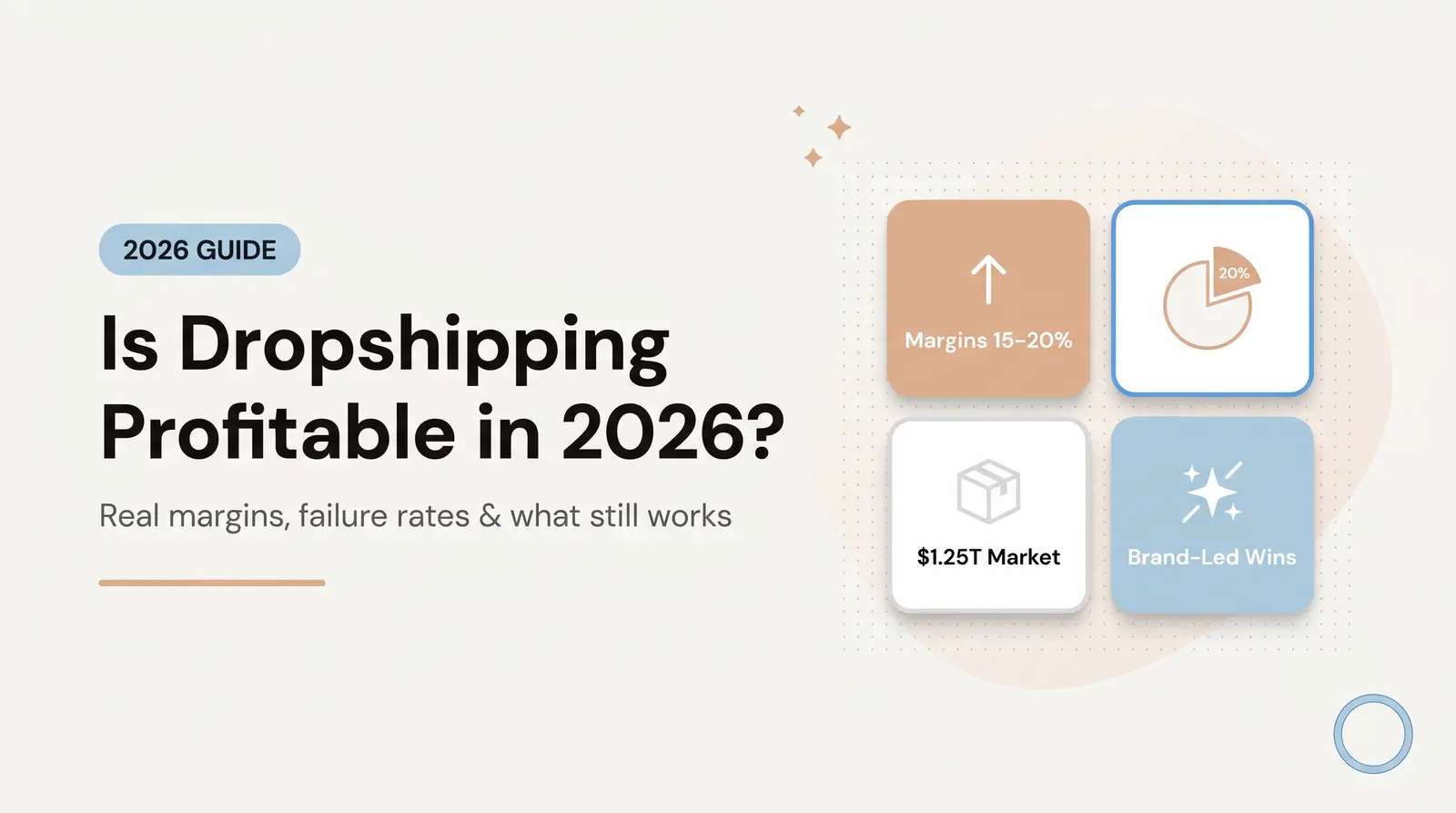



Ecommerce is not saturated in 2026 — commodity selling is. Brand-first, private-label businesses thrive as global ecommerce sales reach $6.88 trillion.
Published:
July 10, 2026
Author:
Yi Cui
"It's too late" has been wrong every year for a decade.
If you spend enough time in online business forums or watching YouTube gurus, you will inevitably hear the same refrain: ecommerce is dead, the market is saturated, and the golden era of easy online sales is over. It is a terrifying narrative for aspiring entrepreneurs, dropshippers questioning their next move, and first-time founders who fear they have missed the window entirely. The anxiety is real, and given the rising costs of digital advertising and shifting platform algorithms, it is entirely understandable.
But this article will not give you the typical hype or a false promise of overnight success. We are going to look at the hard data and give you an honest answer about the state of ecommerce in 2026. The truth is that the "saturation" narrative is missing a crucial distinction between what is actually dying and what is just getting started. We will break down the numbers, analyze what still works, and show you the clear path forward.

The easiest way to counter the "saturation" narrative is to look at the actual market data. If the market were truly saturated, we would see stagnation or decline. Instead, we see sustained, massive growth. Global ecommerce sales are expected to hit $6.88 trillion in 2026, accounting for 21.1% of total retail sales. [1] By 2028, that number is forecast to reach $7.89 trillion. [1]
This growth is driven by several factors. First, mobile commerce continues to expand, making shopping more accessible globally. Second, emerging markets in Southeast Asia and Latin America are coming online at unprecedented rates. [1] Third, the integration of social commerce—where users buy directly within apps like TikTok and Instagram—has created entirely new purchasing behaviors. TikTok Shop alone is projected to reach $15.82 billion in US sales in 2025, capturing nearly 20% of the social commerce market. [2]
| Year | Global Ecommerce Sales (Trillions USD) | Share of Total Retail Sales | Annual Growth Rate |
|---|---|---|---|
| 2023 | $5.58 | 19.4% | 9.6% |
| 2024 | $6.01 | 20.1% | 7.7% |
| 2025 | $6.42 | 20.5% | 6.8% |
| 2026 | $6.88 | 21.1% | 7.2% |
| 2027 | $7.38 | 21.8% | 7.2% |
Data compiled from EMARKETER and Oberlo forecasts. [1] [3]
These numbers indicate a market that is expanding, not contracting. There are more buyers, more accessible global markets, and more diverse channels for reaching consumers than ever before.

When someone claims ecommerce is saturated, they are usually talking about a very specific, outdated model. They mean that selling generic, unbranded commodity products—where the only competitive advantage is a slightly lower price or a slightly better ad—is saturated. And they are right. That specific playbook is exhausted.
However, here is the contrarian insight: "Saturation" is often just a proxy for "I tried the wrong model." A highly competitive market is actually a strong signal of validated demand. If thousands of sellers are trying to sell jewelry, it means millions of people want to buy jewelry. The saturation isn't in the demand; it is in the lack of differentiation among the supply. When a market feels crowded, it simply means the baseline requirement for entry has been raised. You can no longer win by being just another vendor; you must be a distinct brand.

The short answer is no, dropshipping is not dead. But the low-effort version of it certainly is. In 2026, the landscape has fundamentally shifted. Digital advertising costs have risen significantly, making it harder to squeeze a profit out of thin margins. [4] Consumer expectations have also evolved; shoppers demand faster shipping, better quality, and a cohesive brand experience. They can spot a generic dropshipping store from a mile away.
What still works is branded dropshipping and hybrid private-label approaches. This means curating high-quality products, investing in custom packaging, and building a genuine brand identity around a specific niche. At Branvas, we work with sellers every week who came from generic dropshipping — the ones who pivoted to branded private-label are the ones still standing. They realized that owning the customer relationship and the brand perception is the only sustainable moat against rising ad costs and platform algorithm changes.

To succeed in 2026, you need a systematic way to evaluate your business model. We use an internal tool called The Brand Moat Matrix to help sellers determine if their idea has staying power. It evaluates a business across four critical dimensions:
| Dimension | Low Score (Commodity) | High Score (Brand Moat) |
|---|---|---|
| Niche Specificity | "Jewelry for women" | "Minimalist crystal pieces for wellness creators" |
| Brand Identity Depth | Generic Shopify theme, no story | Distinct aesthetic, clear founder story, strong values |
| Product Exclusivity | AliExpress import, identical to competitors | Private-label, unique designs, custom packaging |
| Fulfillment Experience | Slow shipping, generic mailer | Fast, blind shipping, premium unboxing |
Worked Example:
Let's look at two hypothetical sellers. Seller A decides to sell generic silver rings on Shopify. They score low across the board on the Brand Moat Matrix. They are competing purely on price against thousands of identical stores and massive marketplaces. They fail within three months. Seller B launches a private-label crystal jewelry brand specifically targeting the wellness and yoga community. They score high on niche specificity and brand identity. By using a private-label service, they ensure product exclusivity and a premium fulfillment experience. Seller B wins because they aren't selling rings; they are selling a lifestyle.
If you're curious how Branvas can help you build a brand-first product line — without sourcing headaches — [see how it works at branvas.com/how-it-works].

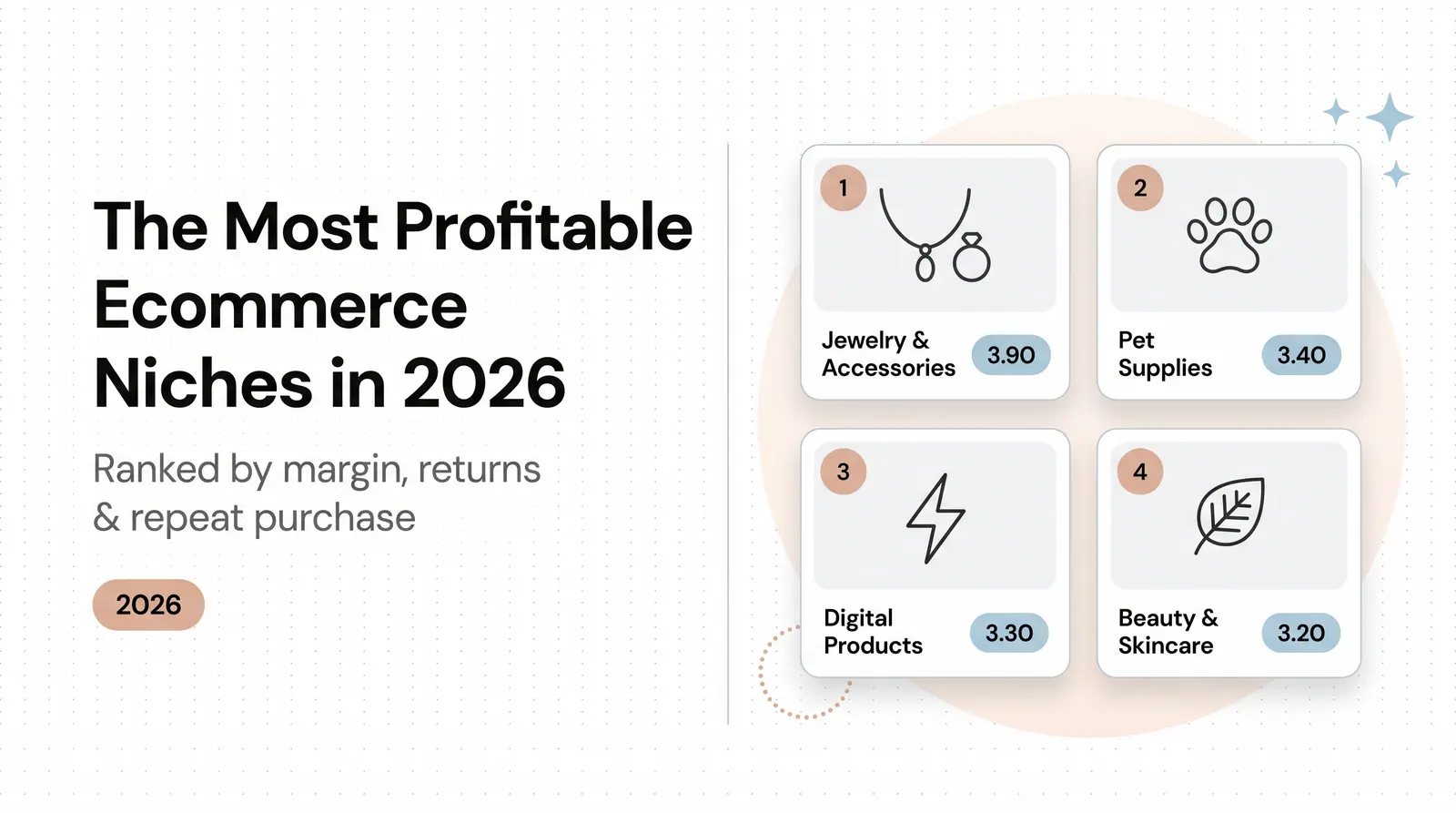
The opportunity in 2026 is vast, but it requires moving away from the broad funnel and focusing on specific, high-value vectors. Based on current market trends, here is where the real growth is happening:

No, it is not too late to start an ecommerce business in 2026. However, the playbook has permanently changed. The era of copy-paste dropshipping for easy, passive profit is over. It is harder now because the baseline for quality, branding, and customer experience is higher.
But the era of brand-differentiated ecommerce is wide open. The market is larger than ever, the tools for building a brand are more accessible, and consumers are actively seeking unique, authentic products over mass-produced commodities. You need to stop looking for a quick hack and start building a real brand. The mindset shift is moving from "What can I sell?" to "Who can I serve?"
Ready to stop selling commodities and start building a brand? Branvas gives you private-label jewelry and accessories, branded packaging, and blind fulfillment — all done for you. [Start at branvas.com/how-it-works] or [explore pricing at branvas.com/pricing].
1. Is ecommerce really saturated in 2026?
No, the overall ecommerce market is not saturated; it is projected to reach $6.88 trillion globally in 2026. What is saturated is the market for generic, unbranded commodity products. There is still massive opportunity for differentiated, niche brands that offer a unique value proposition and strong customer experience.
2. Is dropshipping still worth starting in 2026?
Yes, but only if you approach it correctly. Traditional, low-effort dropshipping from overseas suppliers is highly difficult due to rising ad costs and consumer expectations. Branded dropshipping, where you curate quality products and build a strong brand identity, remains a viable and profitable business model.
3. What type of ecommerce is most profitable in 2026?
The most profitable models in 2026 focus on private-label products, creator-led commerce, and strong brand moats. Businesses that control their product quality, invest in custom packaging, and cultivate a loyal community can command higher margins and better withstand rising customer acquisition costs.
4. Is it too late to start an online store in 2026?
It is absolutely not too late. The global shift toward online shopping continues to grow, with ecommerce expected to capture over 21% of all retail sales. However, new sellers must focus on building a distinct brand rather than relying on outdated, low-barrier entry methods.
5. How do I stand out in a competitive ecommerce market?
To stand out, you must differentiate your brand. Focus on a highly specific niche, develop a unique brand voice, offer private-label or exclusive products, and provide an exceptional fulfillment experience. Compete on value, community, and brand identity rather than just trying to offer the lowest price.