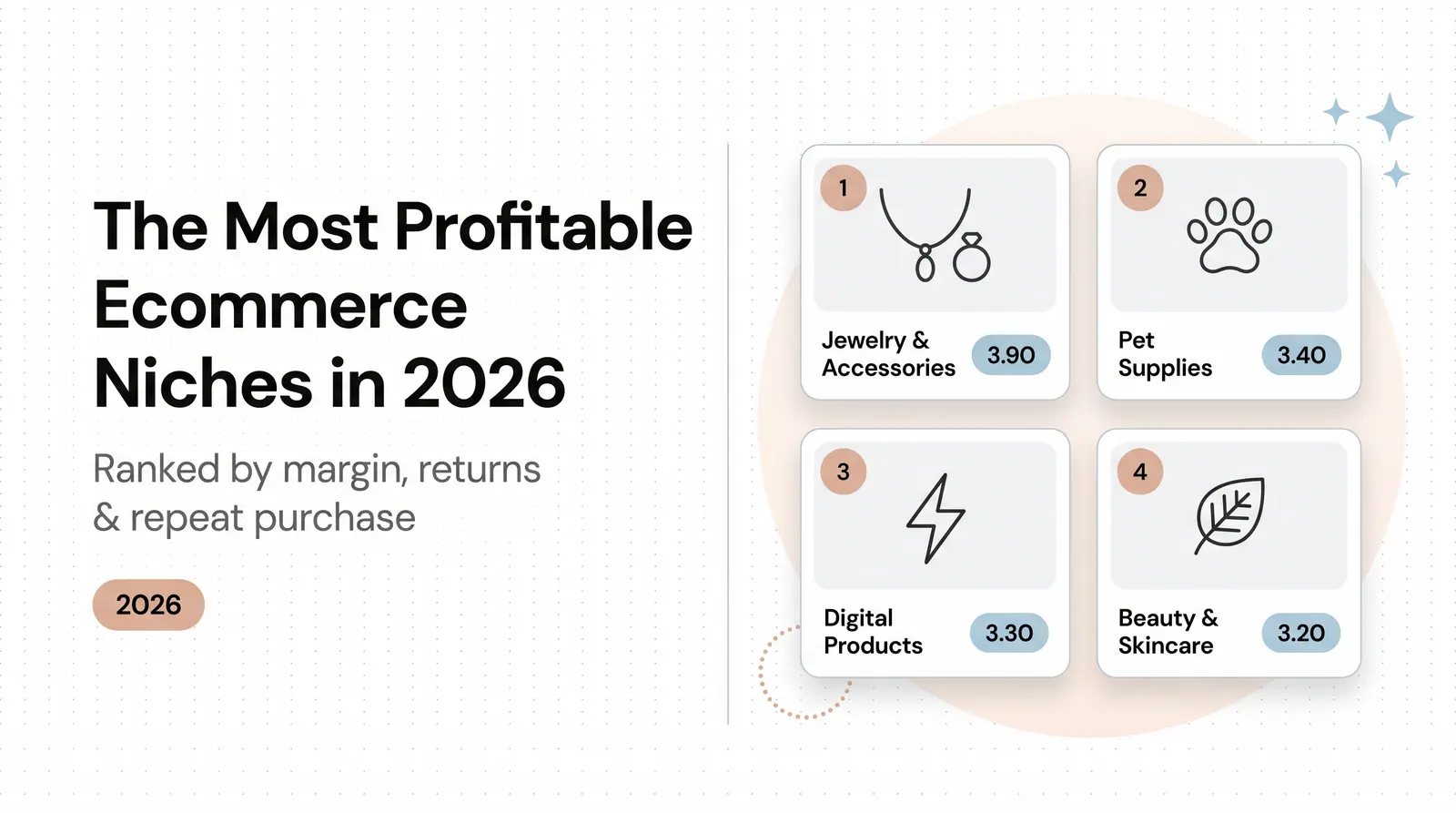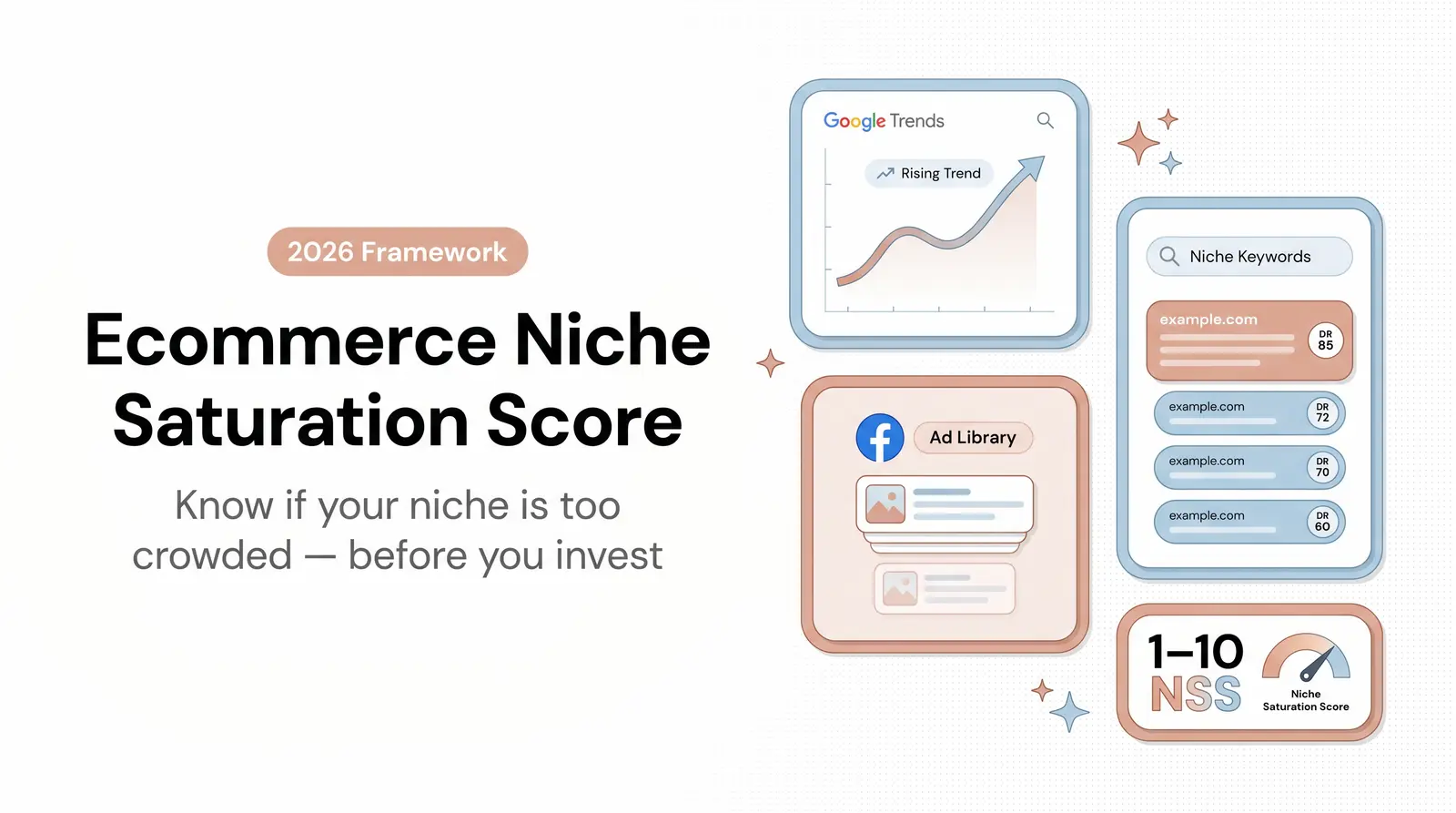



A 7-factor scoring matrix helps founders evaluate and validate profitable ecommerce niches by assessing margin, repeat purchase potential, competition, and brand-building opportunity.
Published:
June 11, 2026
Author:
Yi Cui
The highest-leverage decision beginners freeze on.
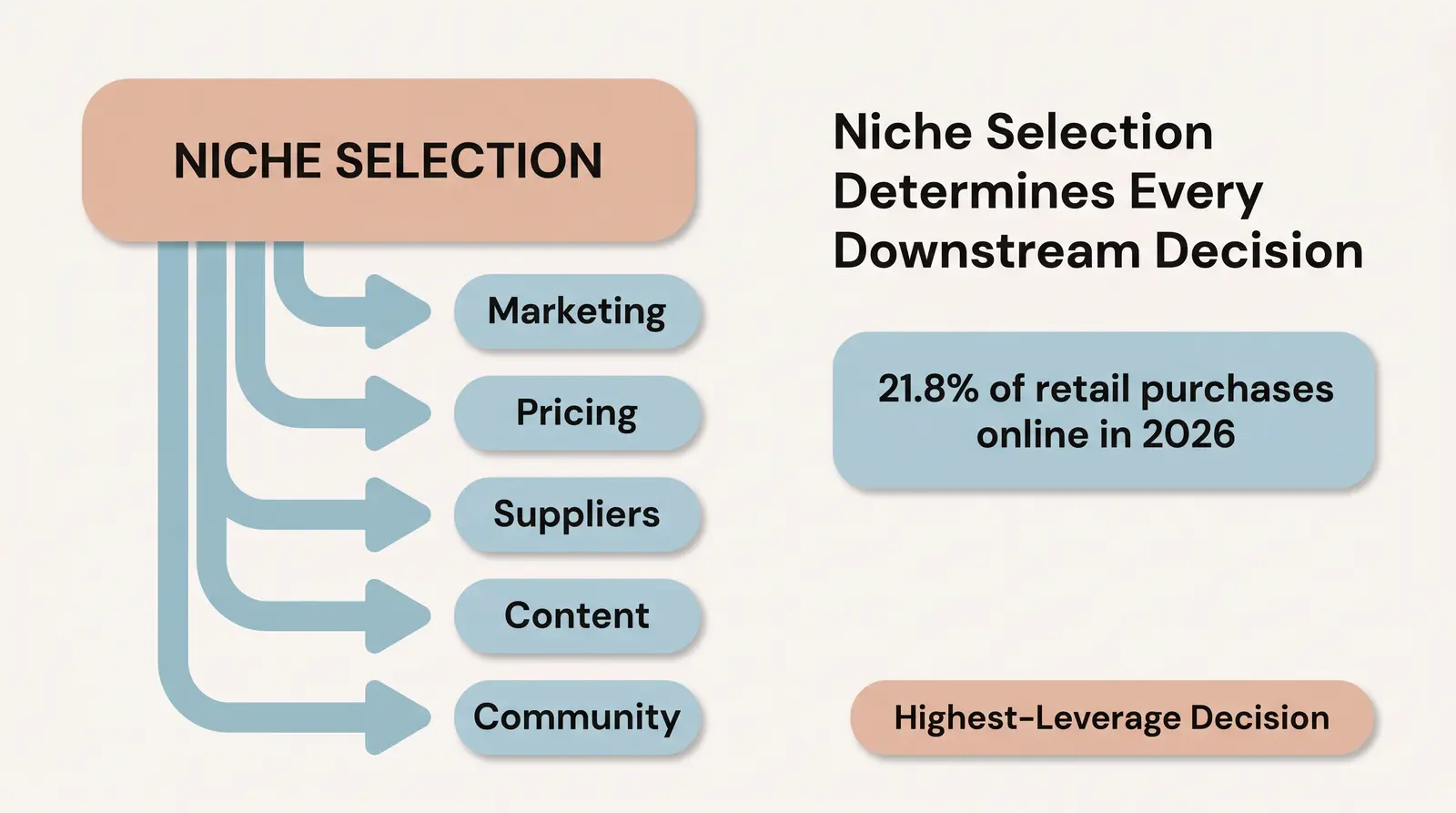
Niche selection is the single decision that determines everything downstream: marketing, pricing, supplier relationships, content strategy, and community. Beginners treat this as a minor early step; it is actually the constraint that determines all future optionality.
At Branvas, we speak with dozens of founders each month, and the ones who stall longest almost always trace it back to the same moment — they couldn't confidently answer: what do I actually sell?
The stakes are high. The global B2B and B2C ecommerce markets continue to expand rapidly. In 2026, 21.8% of retail purchases are expected to take place online, with global retail ecommerce sales projected to reach new heights [1].
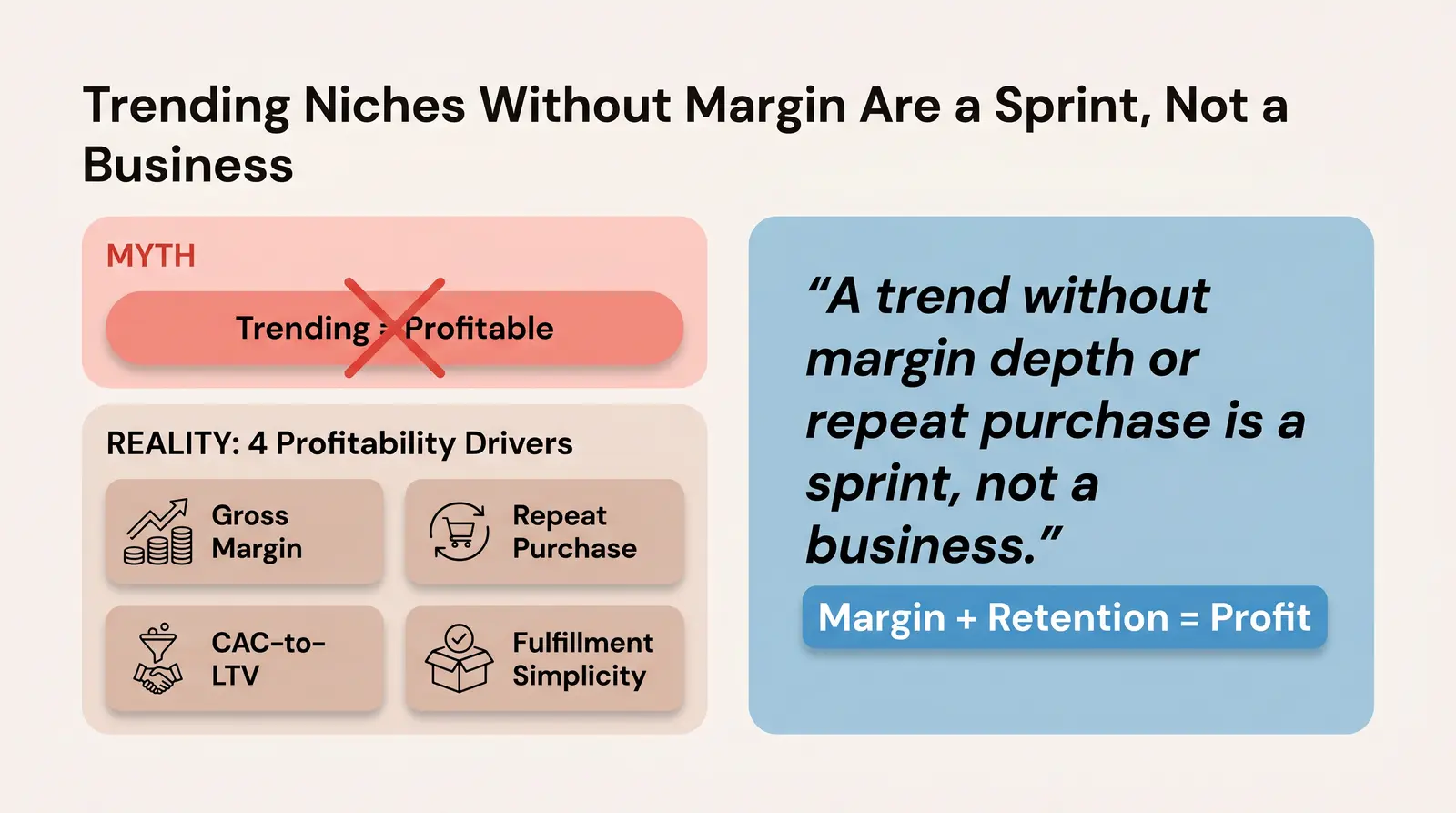
Profitability in an ecommerce niche is defined by gross margin potential, repeat purchase likelihood, CAC-to-LTV ratio viability, and fulfillment simplicity.
A common myth is that "trending = profitable." A trend without margin depth or repeat purchase is a sprint, not a business.
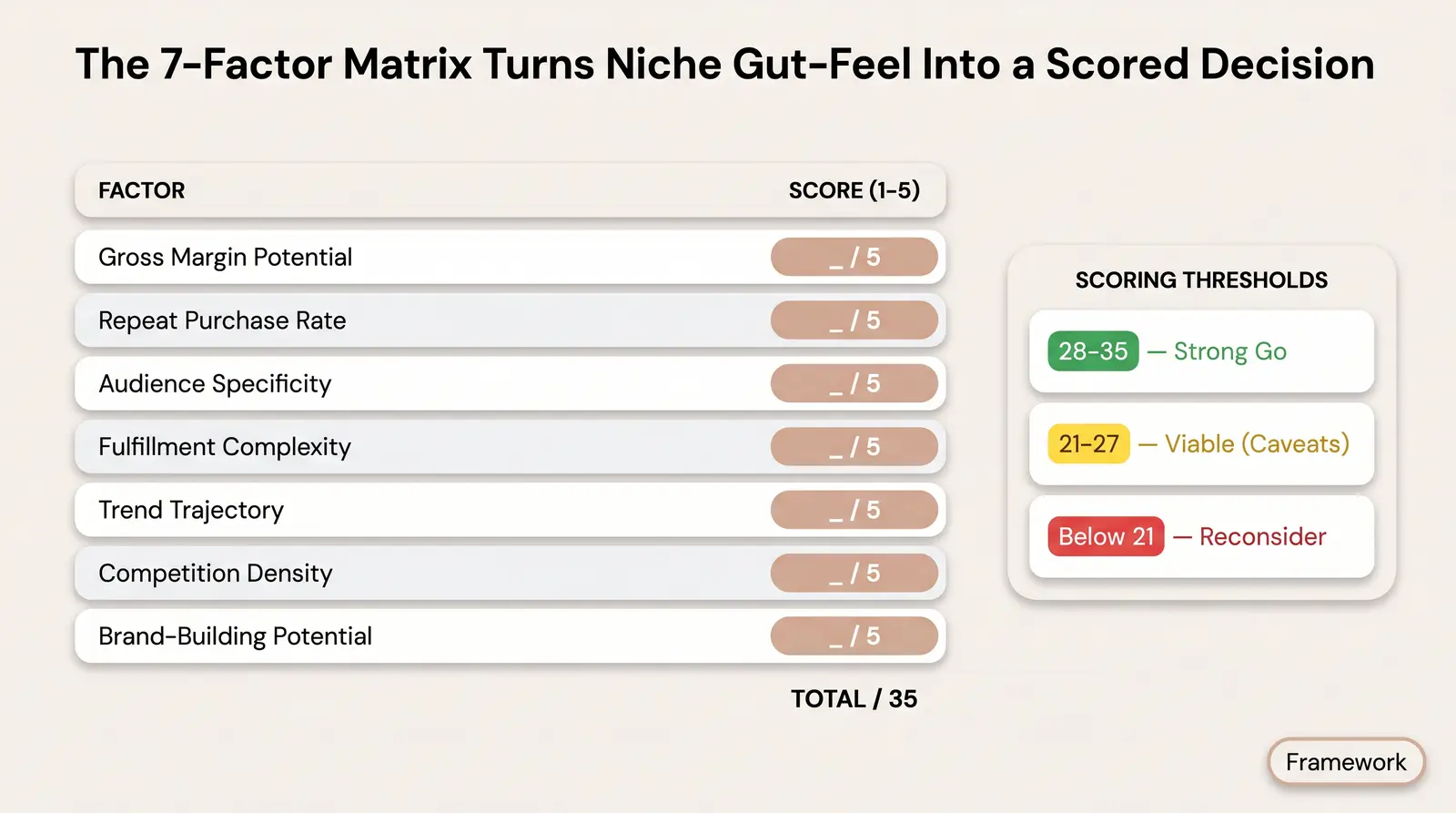
This matrix is a decision-support tool, not a guarantee. Use it alongside customer research and personal fit.
| Factor | Why It Matters | Score (1–5) |
|---|---|---|
| Gross Margin Potential | Can you realistically achieve 50%+ margins at retail? High margins provide a buffer for ad spend and operational costs. | |
| Repeat Purchase Rate | Does the niche naturally drive returning customers? Acquiring new customers is expensive; retention drives long-term profitability. | |
| Audience Specificity | Can you reach a defined, targetable audience without massive ad spend? Broad audiences are costly to target. | |
| Fulfillment Complexity | How difficult, expensive, or fragile is shipping this product? Bulky or fragile items eat into margins and increase return rates. | |
| Trend Trajectory | Is demand growing, plateauing, or declining over a 2–5 year horizon? You want to ride a growing wave, not fight a receding tide. | |
| Competition Density | Is the niche dominated by entrenched brands, or are there exploitable white spaces? High competition means higher customer acquisition costs. | |
| Brand-Building Potential | Can you build emotional equity, loyalty, and a defensible brand in this niche? Commoditized products lead to price wars. |
Total possible score = 35
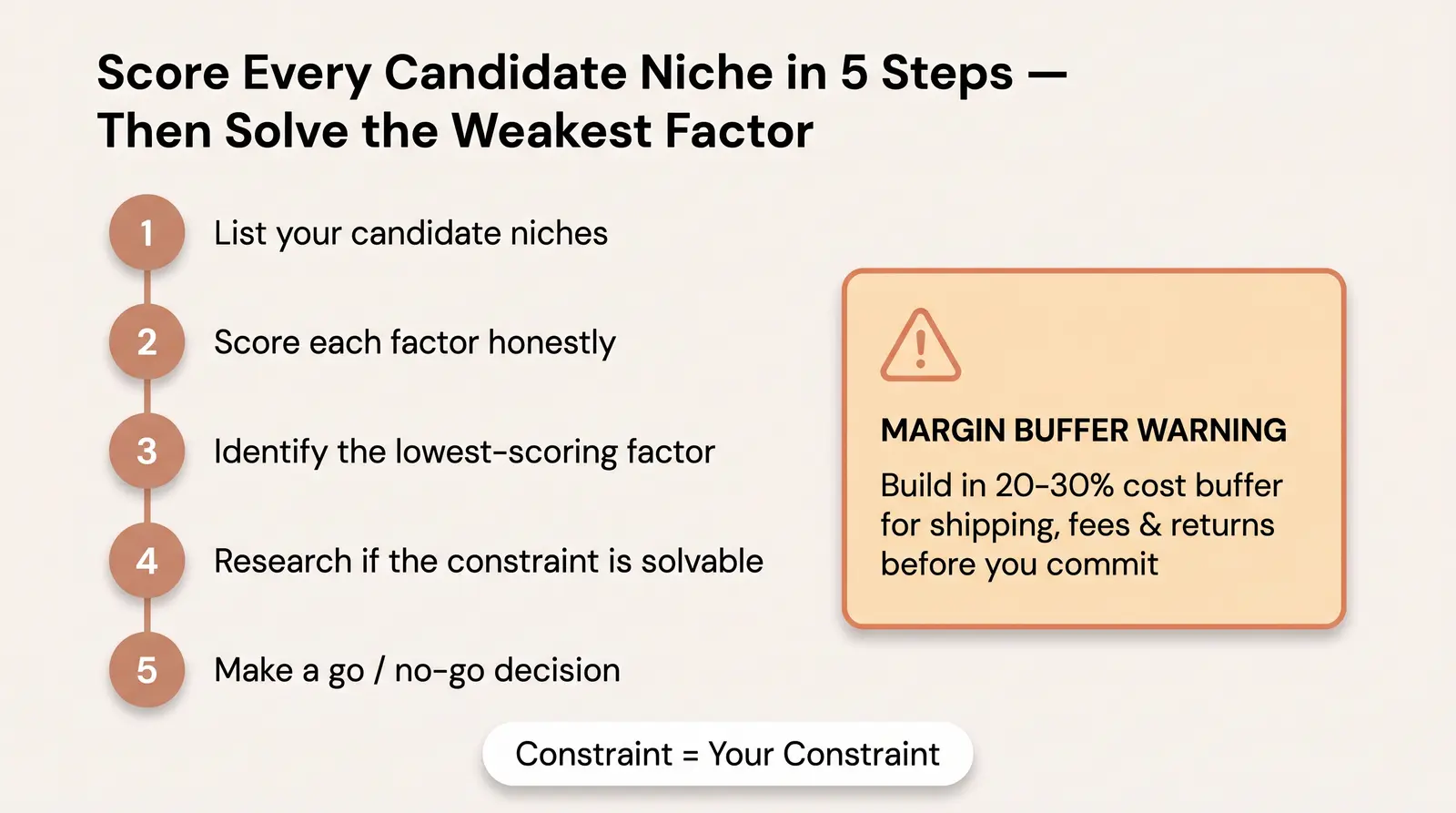
We often see founders score their niche too generously on margin without accounting for shipping costs, platform fees, and returns. Build in a 20–30% cost buffer before you commit.
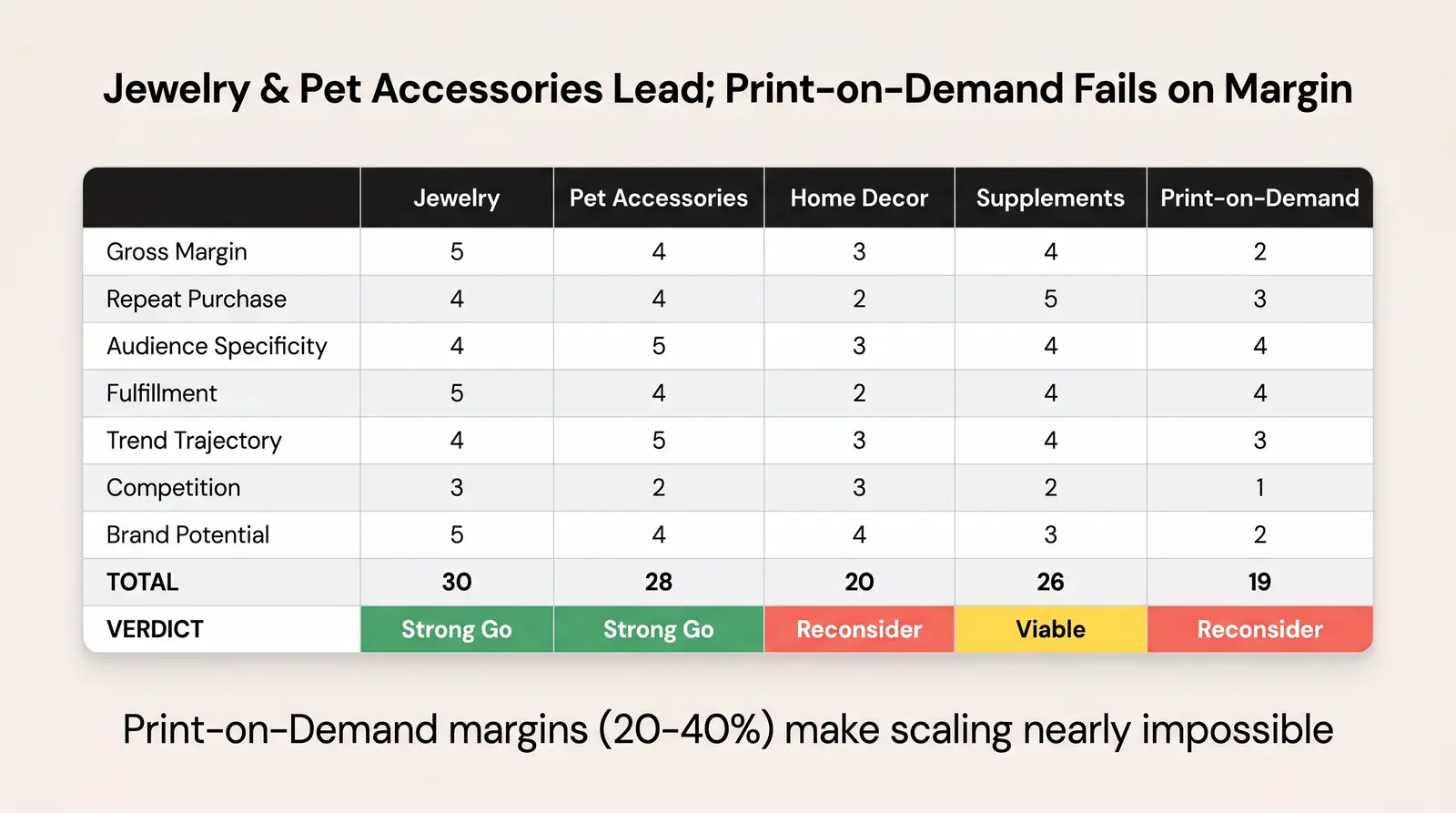
| Factor | Jewelry & Accessories | Pet Accessories | Home Décor | Fitness Supplements | Print-on-Demand Apparel |
|---|---|---|---|---|---|
| Gross Margin Potential | 5 | 4 | 3 | 4 | 2 |
| Repeat Purchase Rate | 4 | 4 | 2 | 5 | 3 |
| Audience Specificity | 4 | 5 | 3 | 4 | 4 |
| Fulfillment Complexity | 5 | 4 | 2 | 4 | 4 |
| Trend Trajectory | 4 | 5 | 3 | 4 | 3 |
| Competition Density | 3 | 2 | 3 | 2 | 1 |
| Brand-Building Potential | 5 | 4 | 4 | 3 | 2 |
| Total Score | 30 | 28 | 20 | 26 | 19 |
| Verdict | Strong Go | Strong Go | Reconsider | Viable (Caveats) | Reconsider |
Note: Jewelry scores high due to exceptional margins and low fulfillment complexity. Pet accessories also score well, driven by strong trend trajectory and audience specificity. Home décor struggles with fulfillment complexity. Supplements have high repeat purchase but fierce competition. Print-on-demand suffers from very low margins and saturation.
The matrix reveals that while Print-on-Demand seems accessible, the low margins (typically 20-40%) make it difficult to scale profitably. Conversely, Jewelry and Pet Accessories offer strong fundamentals that support sustainable growth.
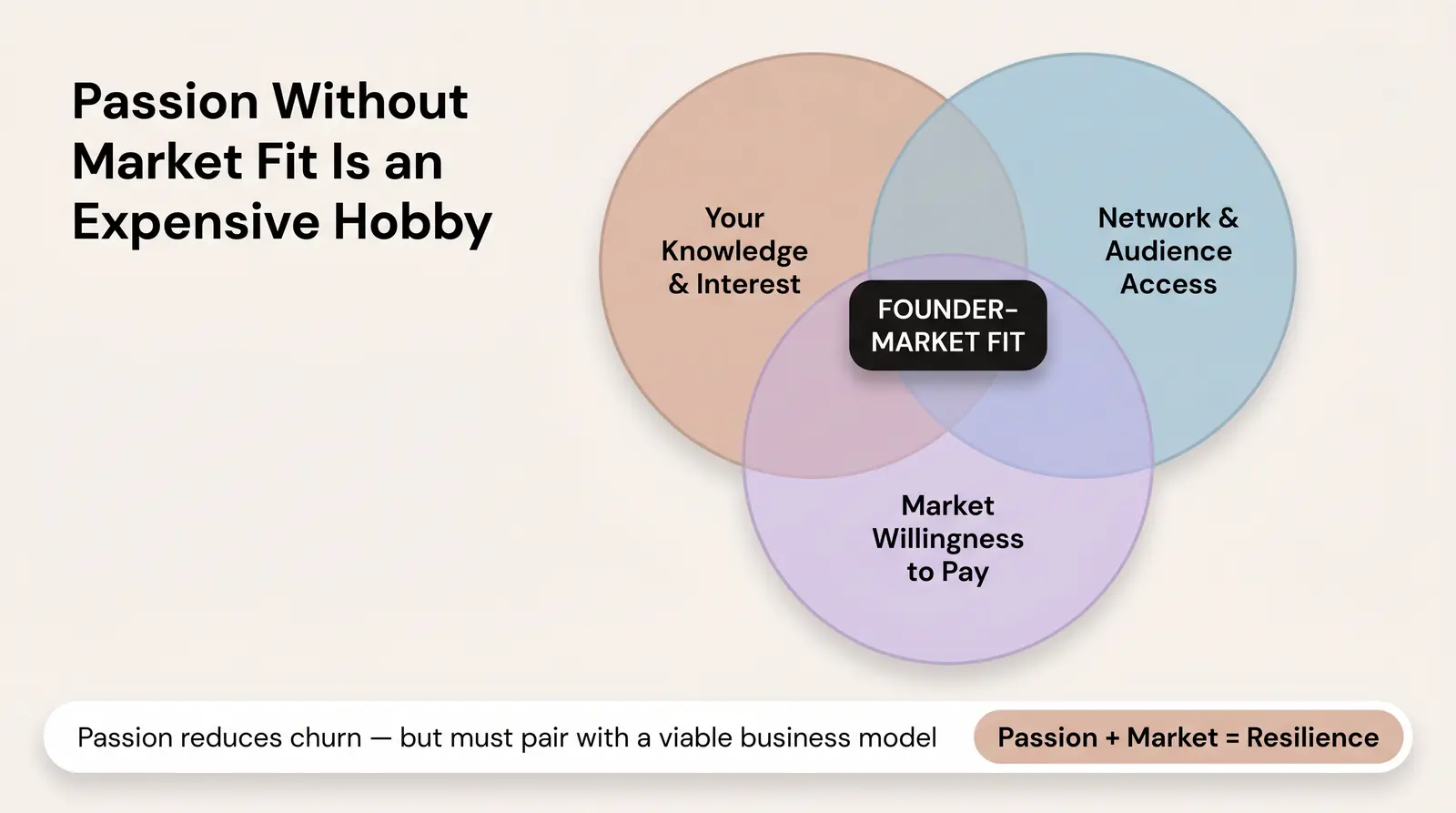
Passion is necessary but insufficient for niche selection. Without market demand, margin, and operational fit, passion becomes an expensive hobby.
A better lens is Founder-Market Fit: the intersection of your knowledge/interest, your network/audience access, and a market with demonstrated willingness to pay [2].
Passion reduces churn and increases resilience, but it must be paired with a viable business model to succeed.
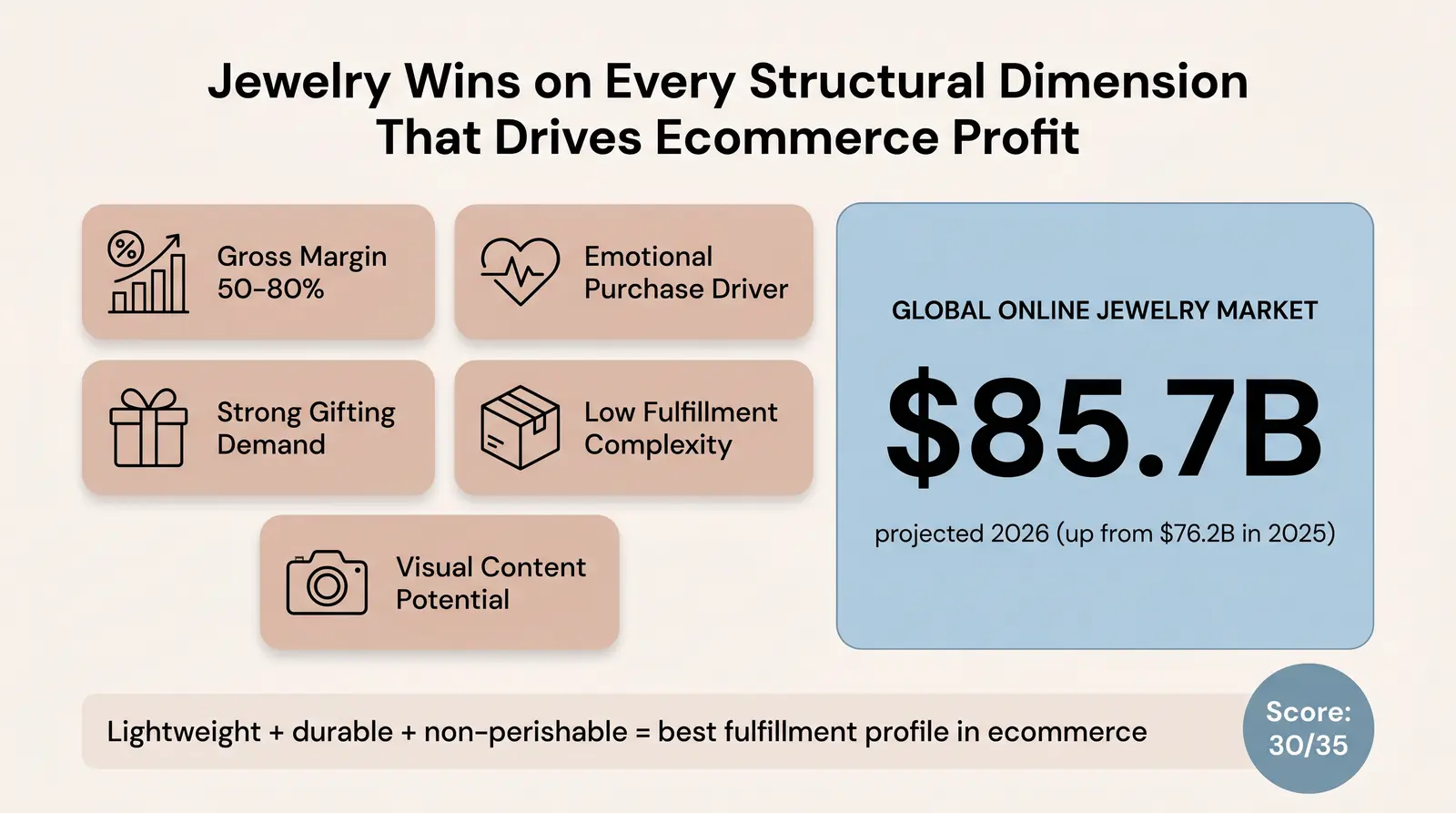
Jewelry and accessories consistently score high due to several structural advantages. They offer high gross margins (typically 50–80% in private label), act as an emotional purchase driver, have strong gifting demand, and boast low fulfillment complexity since they are lightweight, durable, and non-perishable. Furthermore, they offer strong social and visual content potential, along with repeat-purchase and occasion-based buying cycles.
In 2026, the global online jewelry market is projected to be worth around $85.7 billion, up from about $76.2 billion in 2025 [3].
If jewelry has cleared your Niche Scoring Matrix, the next question is execution — and that's where a platform like Branvas can compress months of setup into days. Founders use Branvas to source branded jewelry, apply custom packaging, and ship blind to customers — without holding inventory.
Ready to test jewelry as your niche? Explore Branvas's full product catalog and request a sample before you commit: branvas.com/catalog. You can also run the numbers using the Branvas Profit Calculator.
How do I know if a niche is too competitive?
A niche is too competitive if customer acquisition costs exceed your gross margin, or if the first page of search results is dominated entirely by massive, entrenched brands. Look for sub-niches or specific audience segments that are underserved by the big players.
What is a good profit margin for an ecommerce niche?
A strong gross profit margin for ecommerce is typically 50% or higher. This provides enough buffer to cover marketing, shipping, returns, and operational expenses while still leaving net profit.
Can I succeed in ecommerce without a unique product?
Yes, but you need a unique angle. You can succeed by offering superior branding, better customer service, a unique unboxing experience, or by targeting a highly specific audience that competitors ignore.
How long does it take to validate an ecommerce niche?
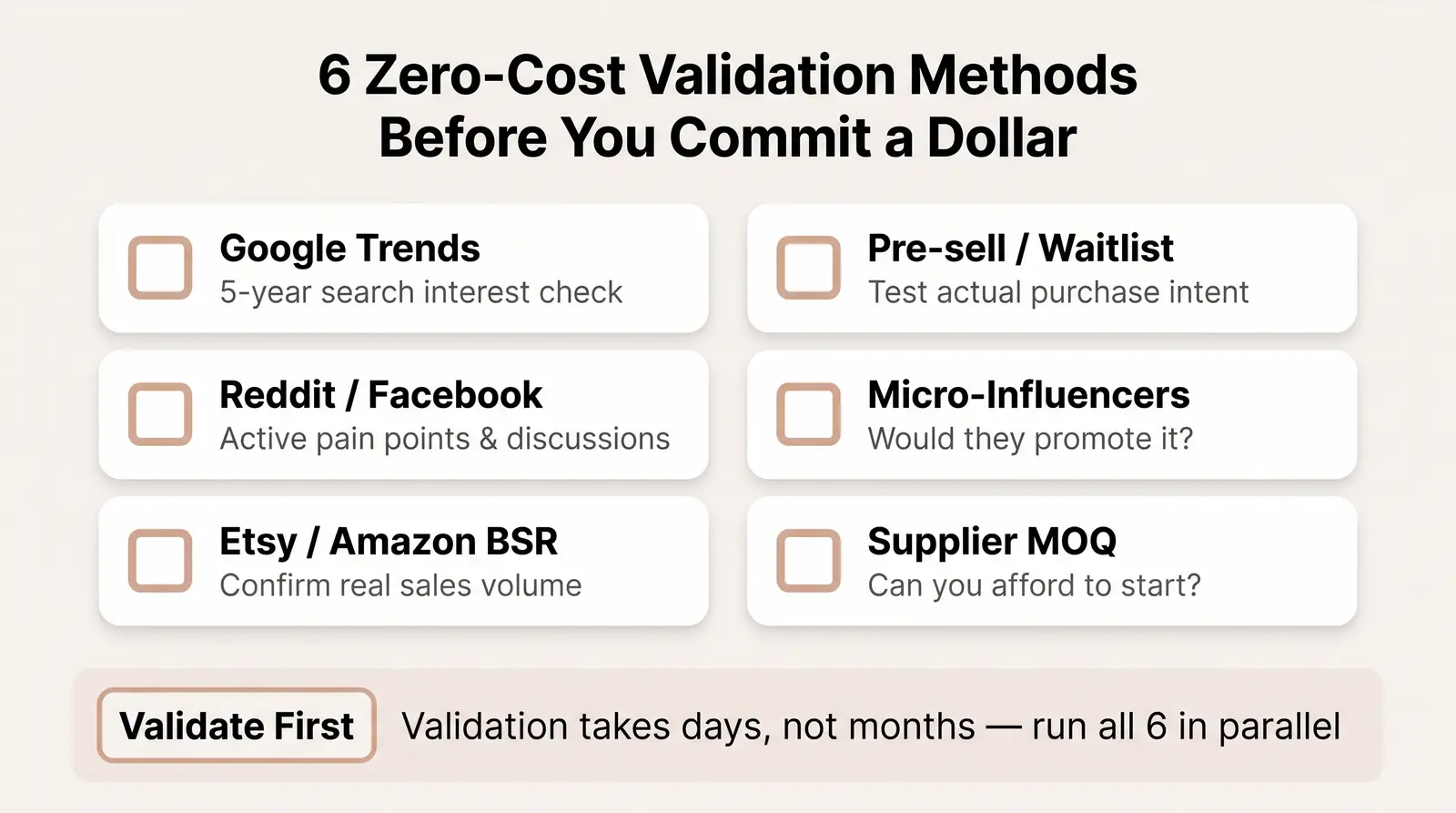
Validation can take anywhere from a few days to a few weeks. By analyzing search trends, competitor sales data, and running small test ad campaigns to a waitlist, you can gather enough data to make an informed decision quickly.
Is jewelry a good niche for beginners?
Yes, jewelry is excellent for beginners because it offers high margins and low shipping costs. It also allows for strong brand building through visual content, though success requires high-quality photography and a clear brand identity.