


Discover why shoppers abandon carts and use a structured recovery framework combining email sequences, SMS, retargeting, and checkout optimization to reclaim lost revenue.
Published:
August 11, 2026
Author:
Yi Cui
Abandoned carts are recoverable revenue that most store owners are quietly ignoring. Across the global ecommerce landscape, the average cart abandonment rate currently sits at a staggering 70.19% [1]. This translates to approximately $260 billion in recoverable revenue lost each year to friction, unexpected costs, and poor checkout experiences [1]. For ecommerce store owners and brand founders, watching high-intent shoppers load up their carts only to vanish at the final step is a frustrating reality. But cart abandonment is not an inevitable cost of doing business; it is a systems problem with a systems solution. This article explores the top reasons shoppers abandon their carts and provides a complete, actionable toolkit to diagnose the problem, implement a prioritized recovery stack, and stop leaking money at checkout.
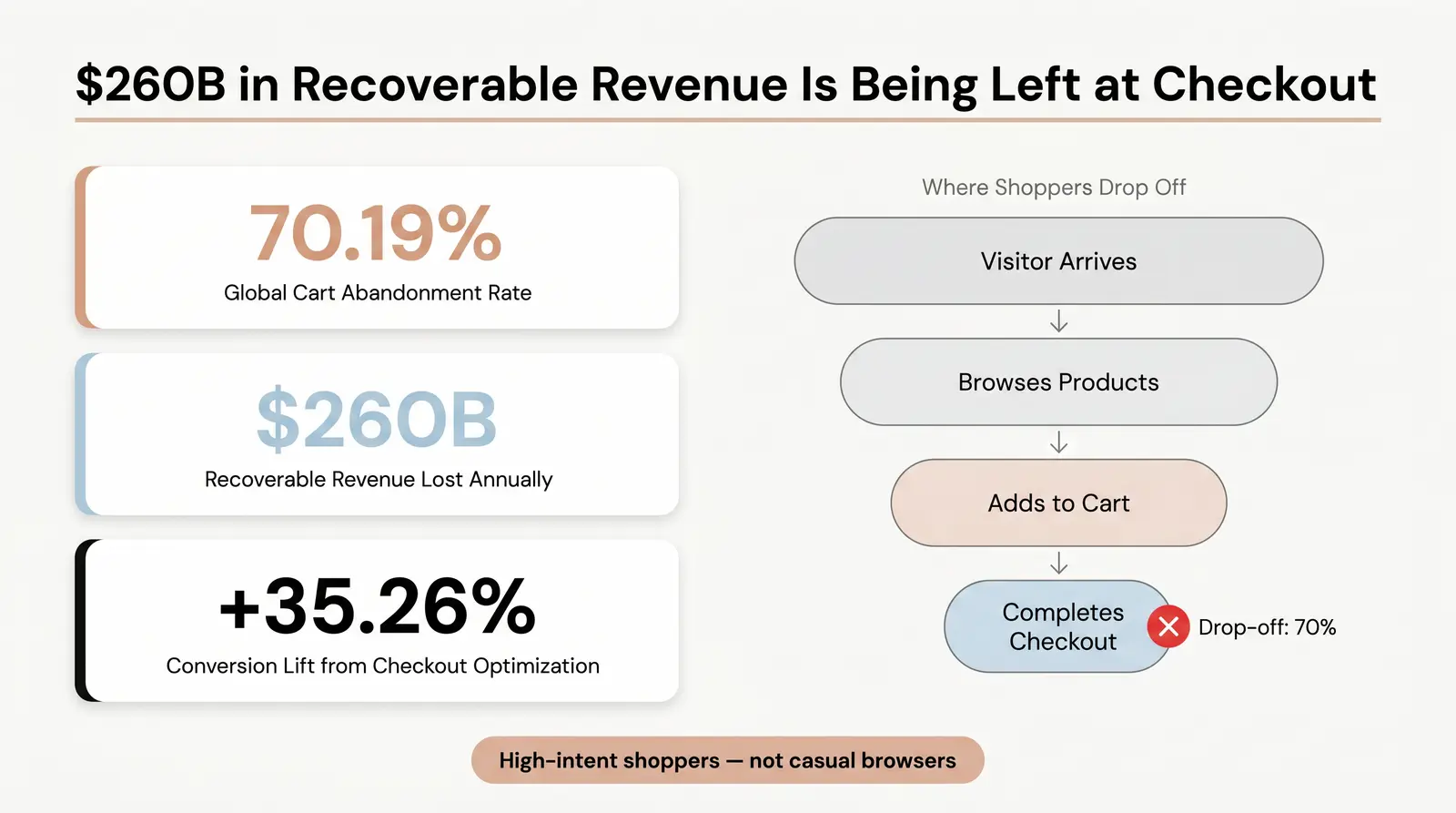
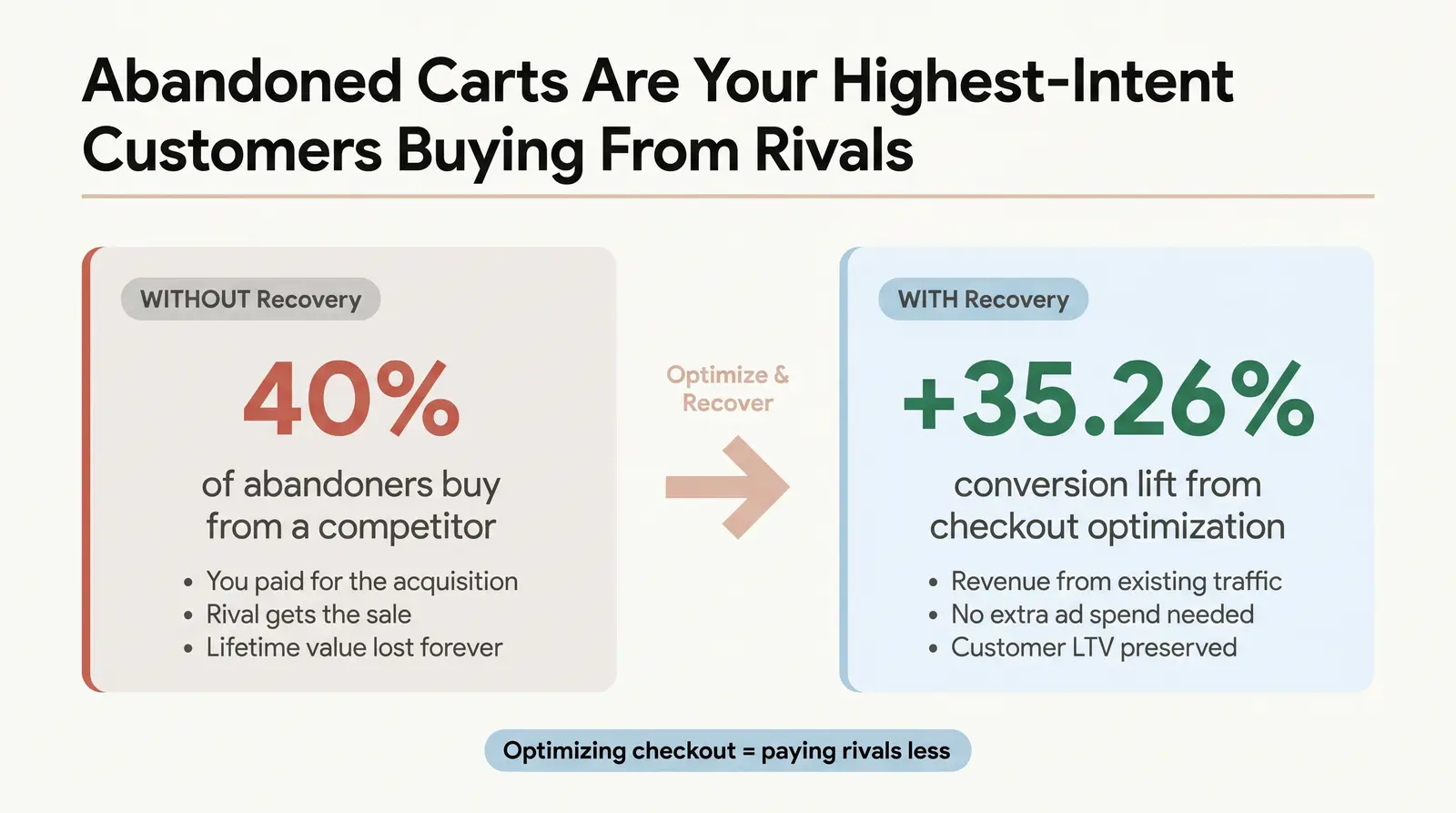
Cart abandonment matters because it represents the highest-intent segment of your audience walking away. These are not casual browsers; these are shoppers who found your product, evaluated the price, added it to their cart, and initiated the checkout process. When they leave, they take not only the immediate sale but also the potential lifetime value of that customer. Furthermore, research shows that 40% of shoppers who abandon their carts will complete their purchase with a competitor [2].
Failing to optimize for cart recovery means you are essentially paying to acquire customers for your competitors. The good news is that optimizing the checkout flow and implementing a structured recovery strategy can yield massive returns. Improving checkout design alone can lead to a 35.26% increase in conversion rates [1].
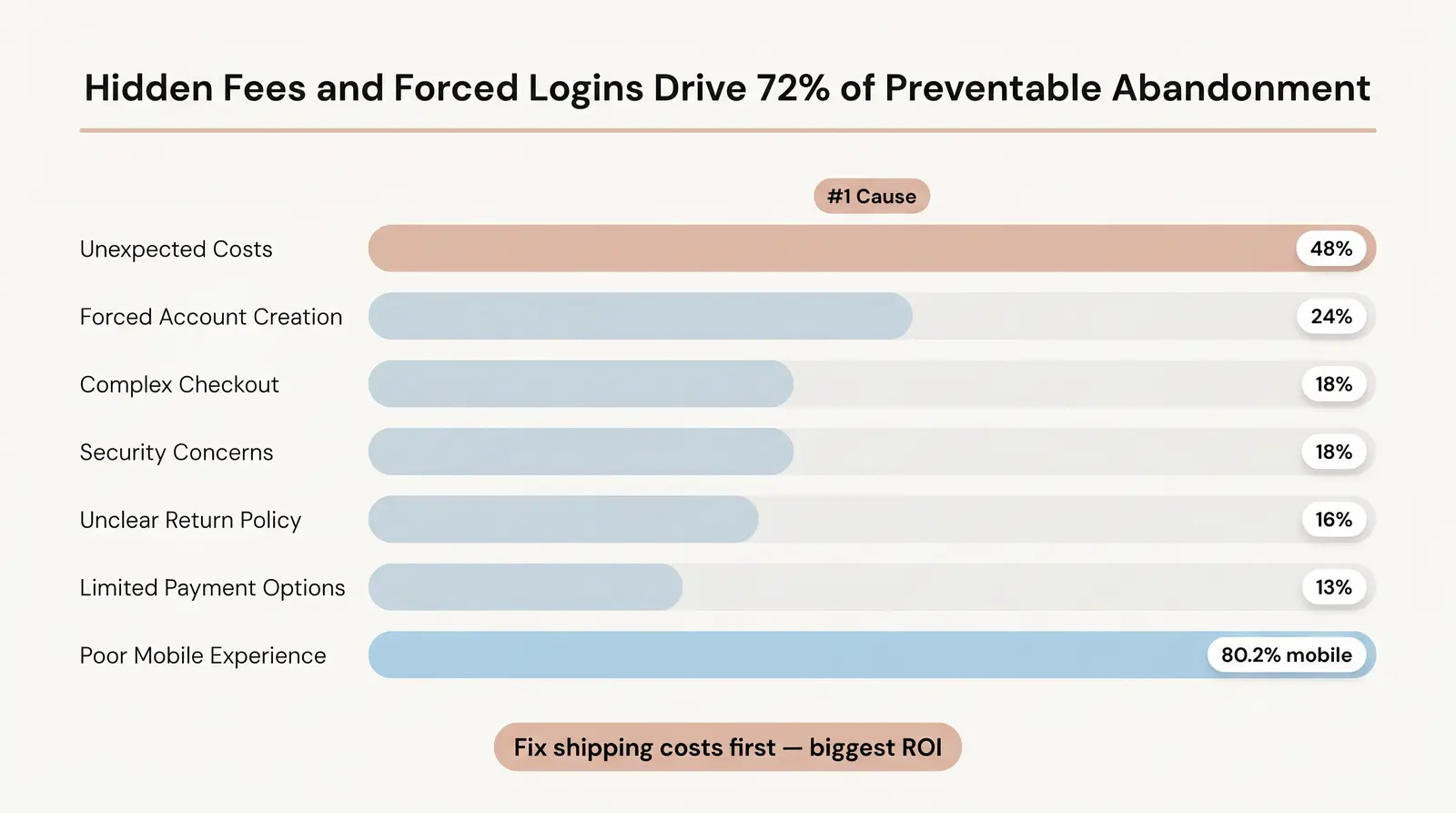
Understanding why shoppers leave is the first step to winning them back. While a portion of users are simply "just browsing" or saving items for later, the majority of abandonments are driven by preventable friction.
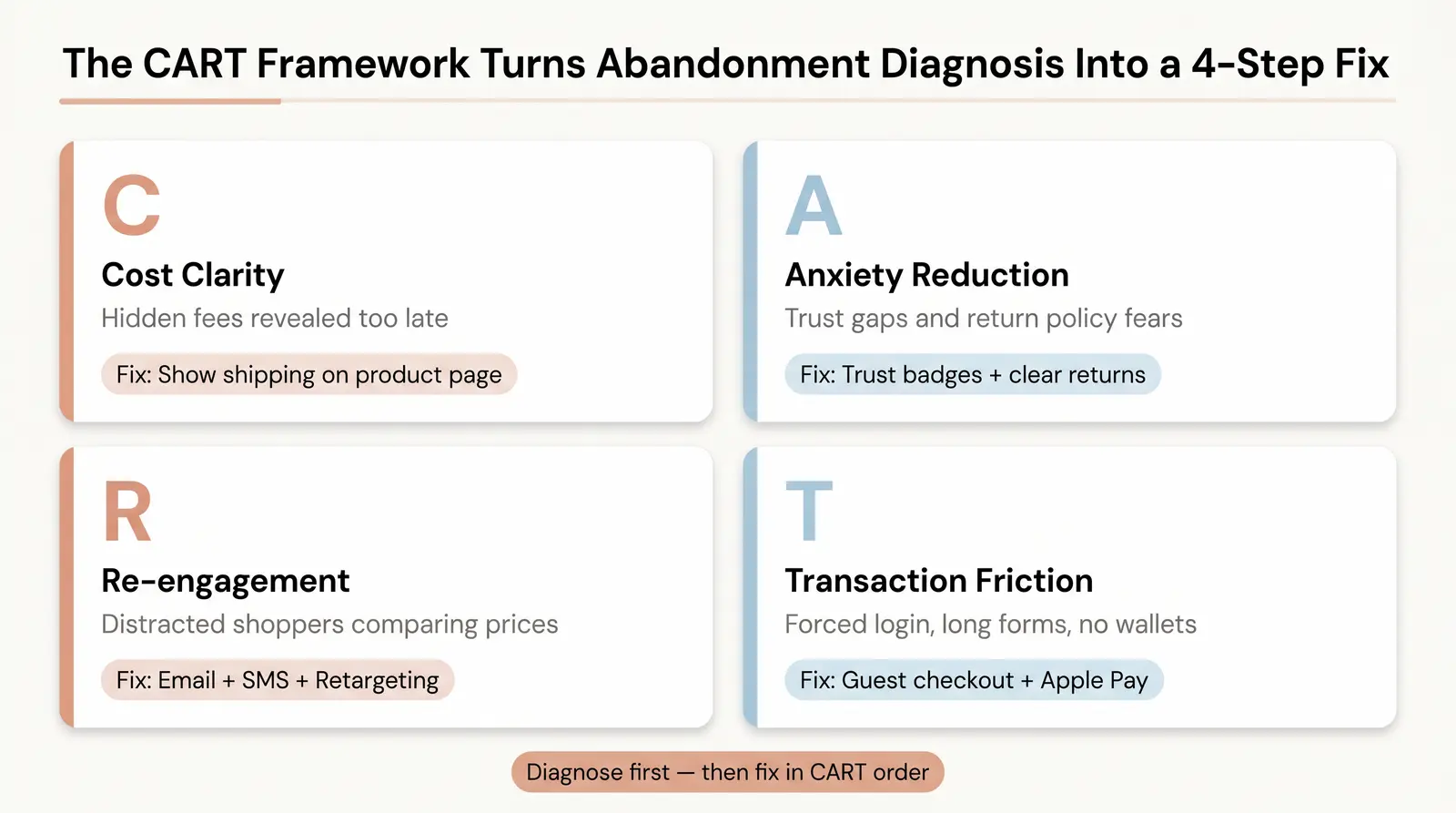
To help ecommerce sellers systematically diagnose and fix their abandonment issues, we developed the proprietary Branvas CART Framework. This four-part model breaks down the recovery process into actionable pillars.
| Pillar | Focus Area | The Abandonment Problem It Addresses | Primary Tactic to Fix It |
|---|---|---|---|
| C | Cost Clarity | Unexpected fees and hidden shipping costs driving shoppers away at the last second. | Display shipping calculators on product pages and explicitly state free shipping thresholds in a sticky header banner. |
| A | Anxiety Reduction | Lack of trust, security concerns, and hesitation regarding return policies or product quality. | Integrate trust badges, clear return policies, and verified customer reviews directly into the checkout flow. |
| R | Re-engagement | Shoppers getting distracted or leaving to compare prices with competitors. | Deploy a multi-channel recovery sequence (Email, SMS, Retargeting) triggered within hours of abandonment. |
| T | Transaction Friction | Forced account creation, long forms, and a lack of preferred payment methods. | Enable guest checkout, implement address auto-fill, and offer digital wallets (Apple Pay, Google Pay, BNPL). |
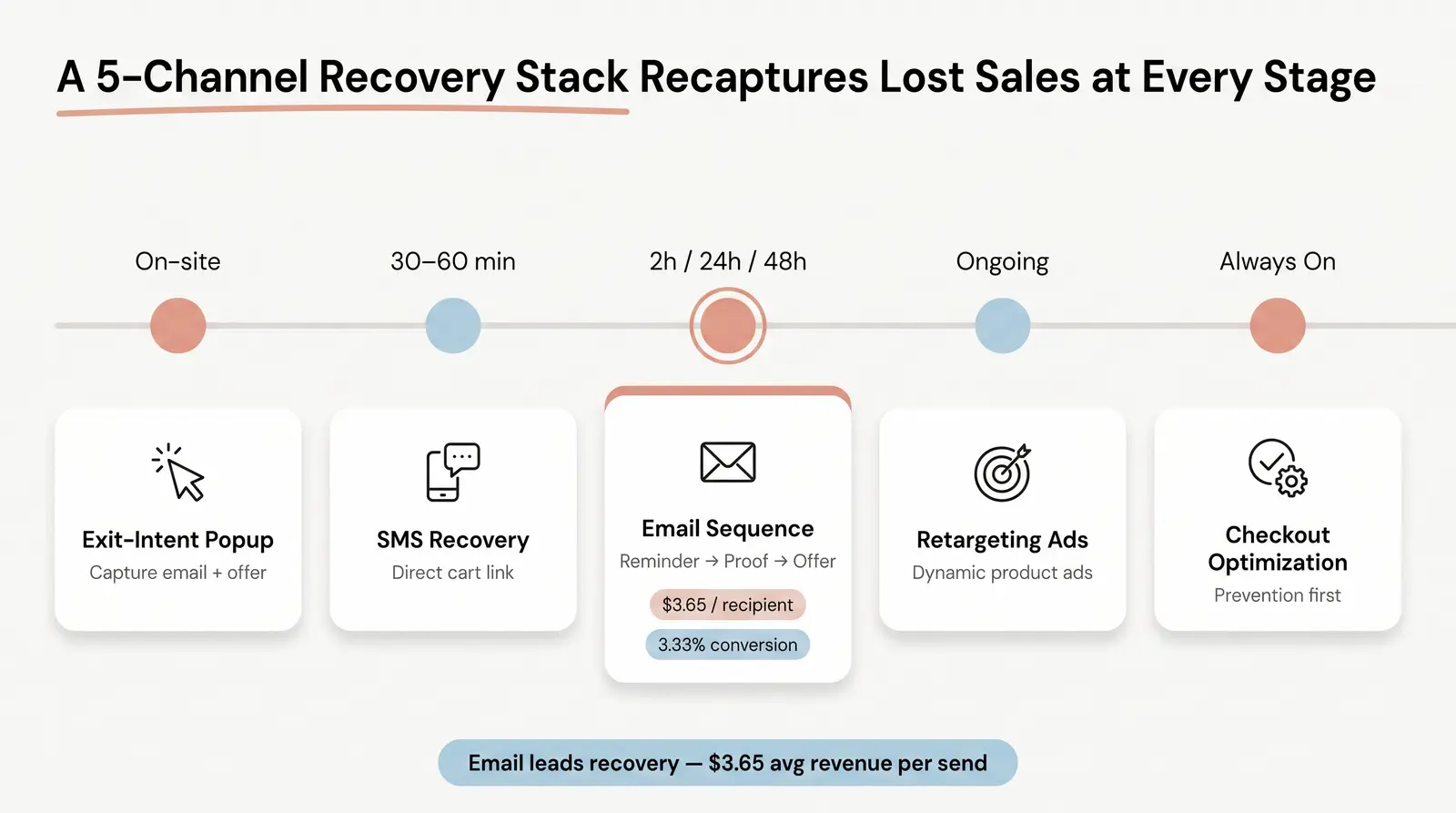
Once you have optimized the checkout experience to prevent abandonment, you need a robust toolkit to recover the shoppers who still slip away.
Non-Obvious Insight: Most sellers default to offering a discount in their very first cart recovery email. However, evidence suggests that leading with social proof or urgency—rather than a price cut—often converts better and protects your profit margins. Training your customers to abandon carts just to wait for a 15% off coupon devalues your brand. Instead, use the first email to remind them of what they left behind, highlight five-star reviews, and emphasize scarcity (e.g., "Only 2 left in stock"). Reserve discounts strictly for the final email in the sequence, and only for high-value carts.
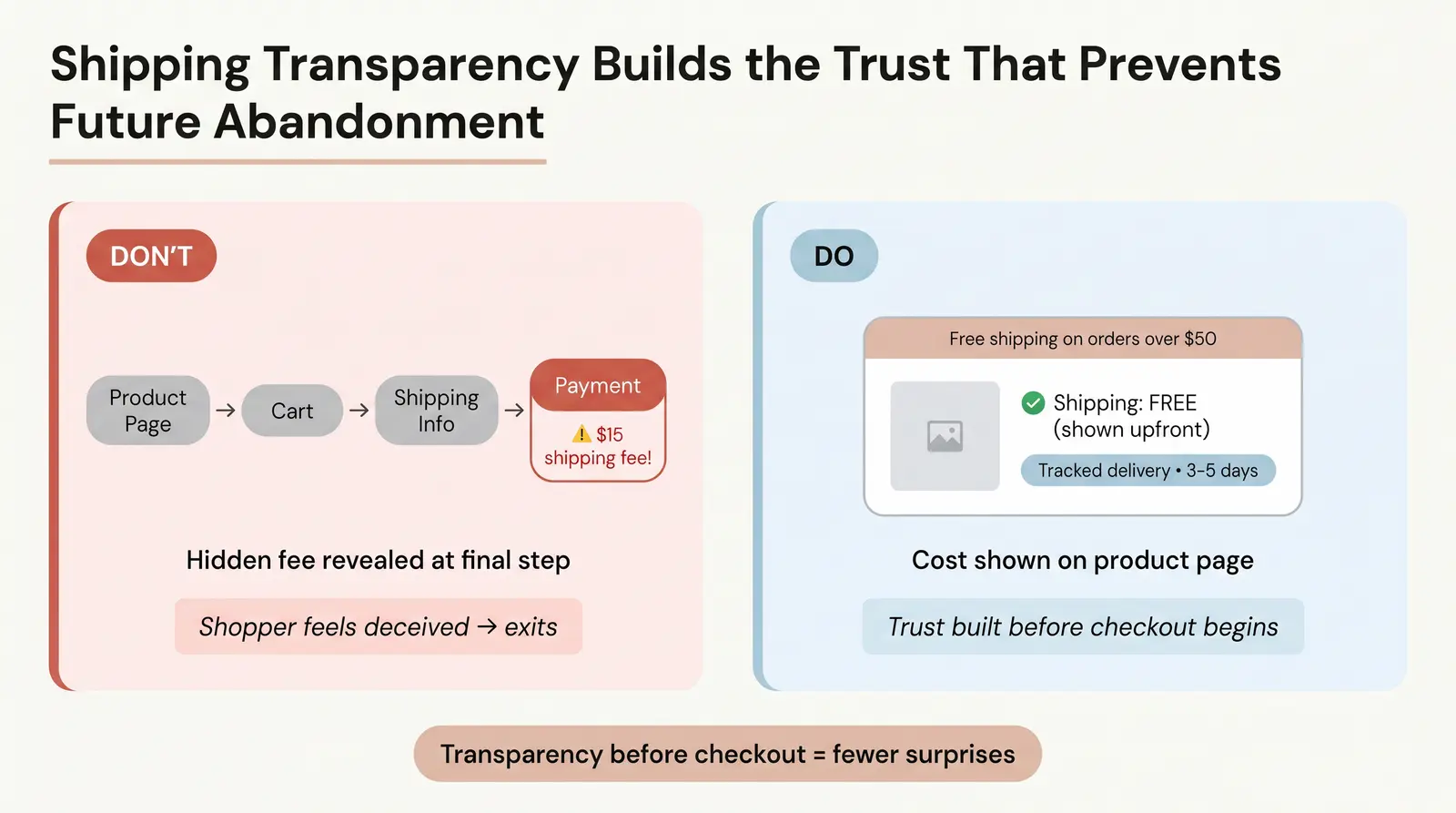
Shipping transparency is not just a logistics detail—it is a conversion lever and a foundational trust signal. As noted earlier, hidden or late-revealed shipping costs are the number one abandonment trigger. When a shopper adds a $50 necklace to their cart only to discover a $15 shipping fee at the final step, they feel deceived.
Showing shipping costs early—whether on the product page or in a sticky banner—drastically reduces this friction. But transparency extends beyond the checkout page. The role of branded, reliable fulfillment is critical in building post-purchase trust that reduces future abandonment. If a customer has a poor delivery experience, they will not return, regardless of how good your email recovery sequence is. Furthermore, blind shipping and white-label fulfillment protect brand consistency, ensuring the customer perceives the value as coming directly from your brand, not a third-party warehouse.
In our experience working with jewelry and accessories brands, the single most common abandonment trigger we see is a disconnect between the brand's premium aesthetic and a clunky, opaque shipping process. We often watch new brand founders obsess over their product photography while leaving their checkout flow completely unoptimized and their shipping policies hidden.
At Branvas, we've found that shipping transparency—clear delivery timelines, visible tracking, and branded fulfillment—moves the needle on trust more than almost any other single change. For jewelry and accessories sellers using Branvas, shipping transparency is built into the model. Products ship under the seller's brand, with clear timelines, so customers know exactly what to expect.
If you're building a jewelry or accessories brand and want fulfillment that supports trust at every touchpoint, explore how Branvas works →
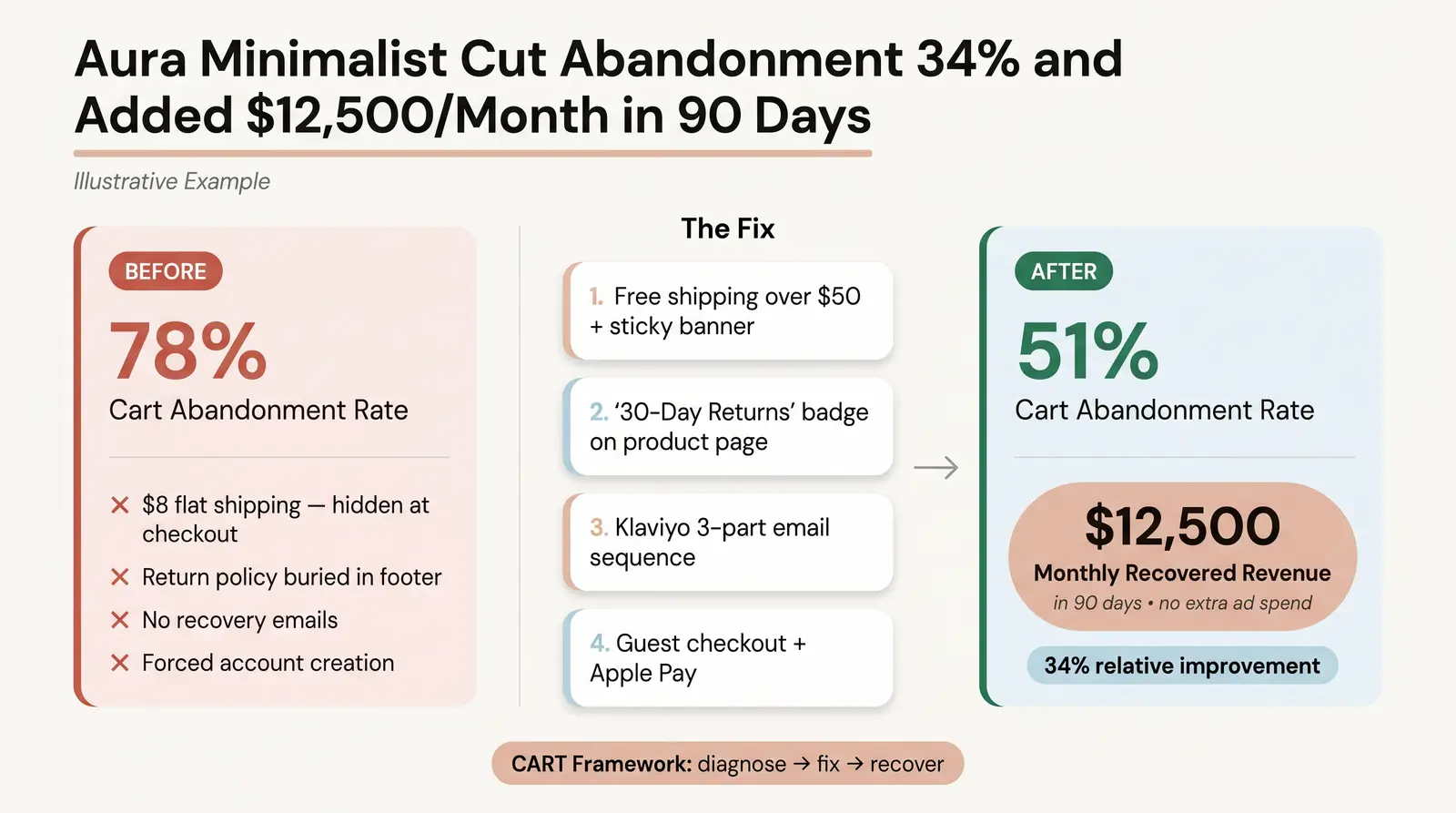
Illustrative Example
Consider "Aura Minimalist," a direct-to-consumer jewelry brand on Shopify. Despite strong traffic from Instagram, they noticed a staggering 78% cart abandonment rate. Their checkout was leaking money.
Using the Branvas CART Framework, the founders diagnosed the issues:
The Fix:
The Result: Over 90 days, Aura Minimalist reduced their cart abandonment rate from 78% to 51% (a 34% relative improvement). By recovering these previously lost sales, they added an estimated $12,500 in monthly recovered revenue—without increasing their ad spend.
Cart abandonment is not inevitable. It is a symptom of friction, hidden costs, and a lack of trust in the buying journey. By understanding the core drivers of abandonment and applying a structured approach like the Branvas CART Framework, you can systematically remove barriers and win back high-intent shoppers. Stop leaving money on the table. Optimize your checkout, deploy a strategic recovery sequence, and prioritize shipping transparency.
Ready to build a jewelry or accessories brand with fulfillment, branding, and shipping transparency already built in? Start with Branvas →
1. What is a good cart abandonment rate for ecommerce?
The global average cart abandonment rate is approximately 70%. While it varies by industry, a "good" rate is generally considered to be anything below 65%. Highly optimized ecommerce stores can sometimes push this closer to 55%, but achieving a 0% abandonment rate is impossible due to natural browsing behaviors.
2. What is the #1 reason shoppers abandon their cart?
The number one reason shoppers abandon carts is unexpected costs revealed too late in the checkout process. This includes high shipping fees, taxes, and other hidden charges. Being transparent about these costs upfront is the most effective way to reduce abandonment.
3. How many abandoned cart emails should I send?
A three-email sequence is the industry best practice. Send the first email 2–4 hours after abandonment as a gentle reminder. Send the second email 24 hours later, highlighting social proof or urgency. Send the third email 48 hours later, optionally including a discount for high-value carts.
4. Does offering a discount in cart recovery emails hurt margins?
Yes, if overused. Training customers to abandon their carts just to receive a discount code will erode your profit margins and devalue your brand. It is better to lead with reminders, urgency, and social proof in your early emails, reserving discounts only as a last resort or for high-value orders.
5. How does Shopify handle abandoned cart recovery?
Shopify includes built-in abandoned checkout recovery features that allow you to automatically send a reminder email to customers who leave without purchasing. For more advanced sequences, including SMS and multi-step emails, most store owners integrate third-party apps like Klaviyo or Omnisend.