



New dropshippers fail by chasing trending products instead of achieving product-market fit. Use the Demand-Fit Matrix to validate buyer demand before spending on ads.
Published:
July 1, 2026
Author:
Yi Cui
"A product is not winning until a specific customer has a reason to buy it from you."
The dropshipping industry is obsessed with the hunt. Go on YouTube or TikTok, and you will find thousands of videos promising to reveal the next "winning product" that will make you a millionaire overnight. This obsession leads new sellers to spend hours scrolling through spy tools and AliExpress catalogs, desperately searching for a viral SKU to duplicate. But this relentless focus on trending items is causing new sellers to skip the one thing that actually drives sustainable sales: matching a product to a buyer who has a specific, real reason to want it.
When you chase trends without understanding demand, you are not building a business; you are gambling on a fleeting moment of attention. The truth is that product popularity is not the same thing as product-market fit. This article will explain why the winning product myth is responsible for so many failed dropshipping stores, what product-market fit actually means in an ecommerce context, and how you can use a smarter framework to validate demand before you ever spend a dollar on ads.
The prevailing dropshipping culture teaches a very specific, and deeply flawed, method for starting a store. Sellers are told to use spy tools, monitor TikTok trends, and subscribe to "winning product" lists to find items that are currently generating high ad engagement. The logic seems sound on the surface: if a product is selling well for someone else, it should sell well for you. However, this approach confuses product popularity with product-market fit.
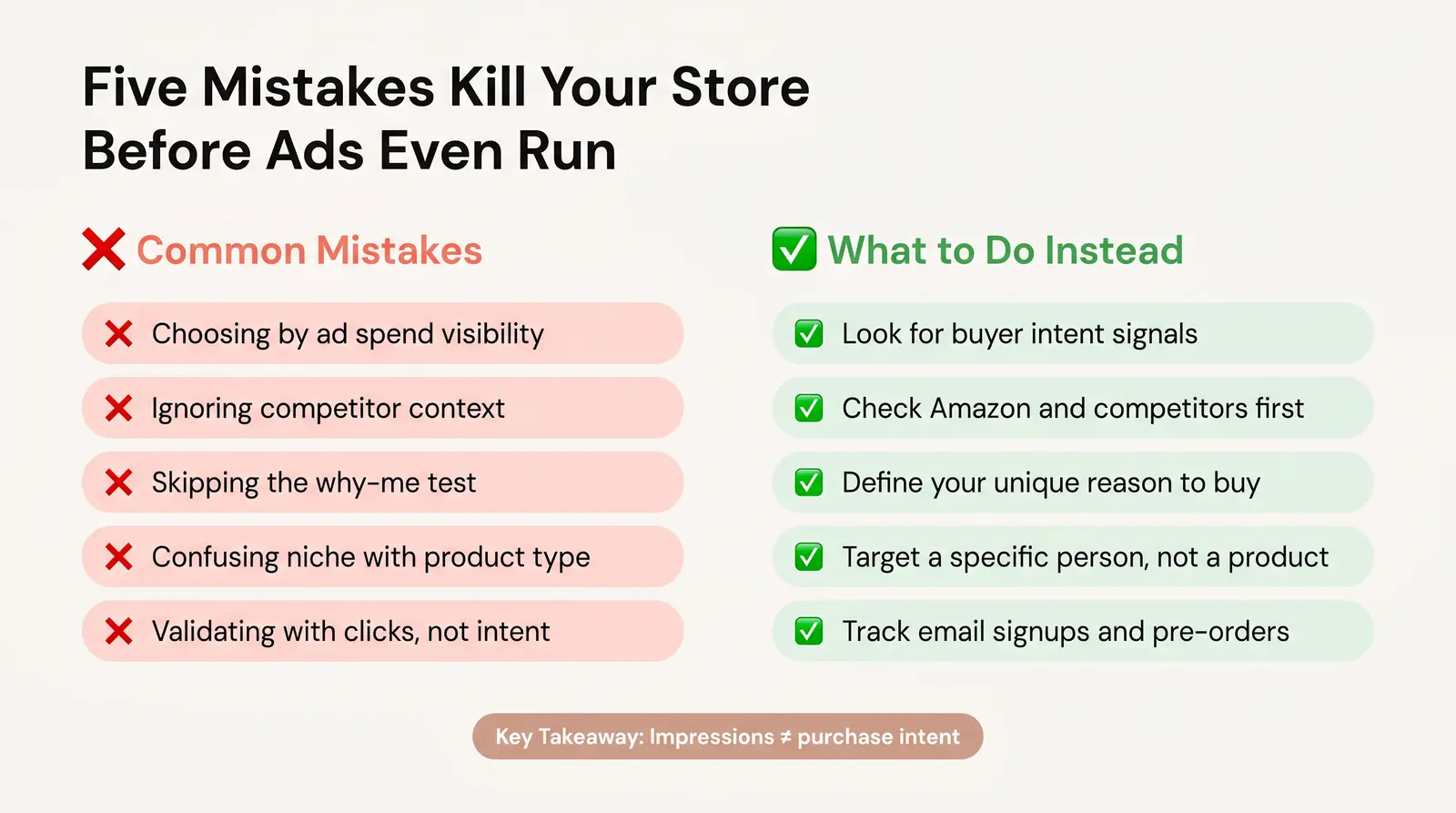
The most contrarian reality in ecommerce is that the most-searched or most-advertised product is often the worst one for a beginner to start with. By the time a product reaches the top of a spy tool dashboard, market saturation has already set in. The buyer you are targeting already has a dozen cheaper options available on Amazon or through established competitor stores before they even see your ad [1]. You are entering a race to the bottom on price, fighting for scraps of attention against sellers with much larger ad budgets.
In our experience at Branvas, the sellers who come to us after burning through ad budgets almost always made the same mistake: they found a product people liked — but couldn't explain why anyone would buy it specifically from them. They had a product, but they had no market fit.

The concept of product-market fit was popularized by Marc Andreessen, who defined it as "being in a good market with a product that can satisfy that market" [2]. While originally built as a framework for Silicon Valley tech startups, the core principle applies directly to dropshipping and ecommerce. It is not enough to have a good product; you must have a market that desperately wants it, and you must be the right vehicle to deliver it.
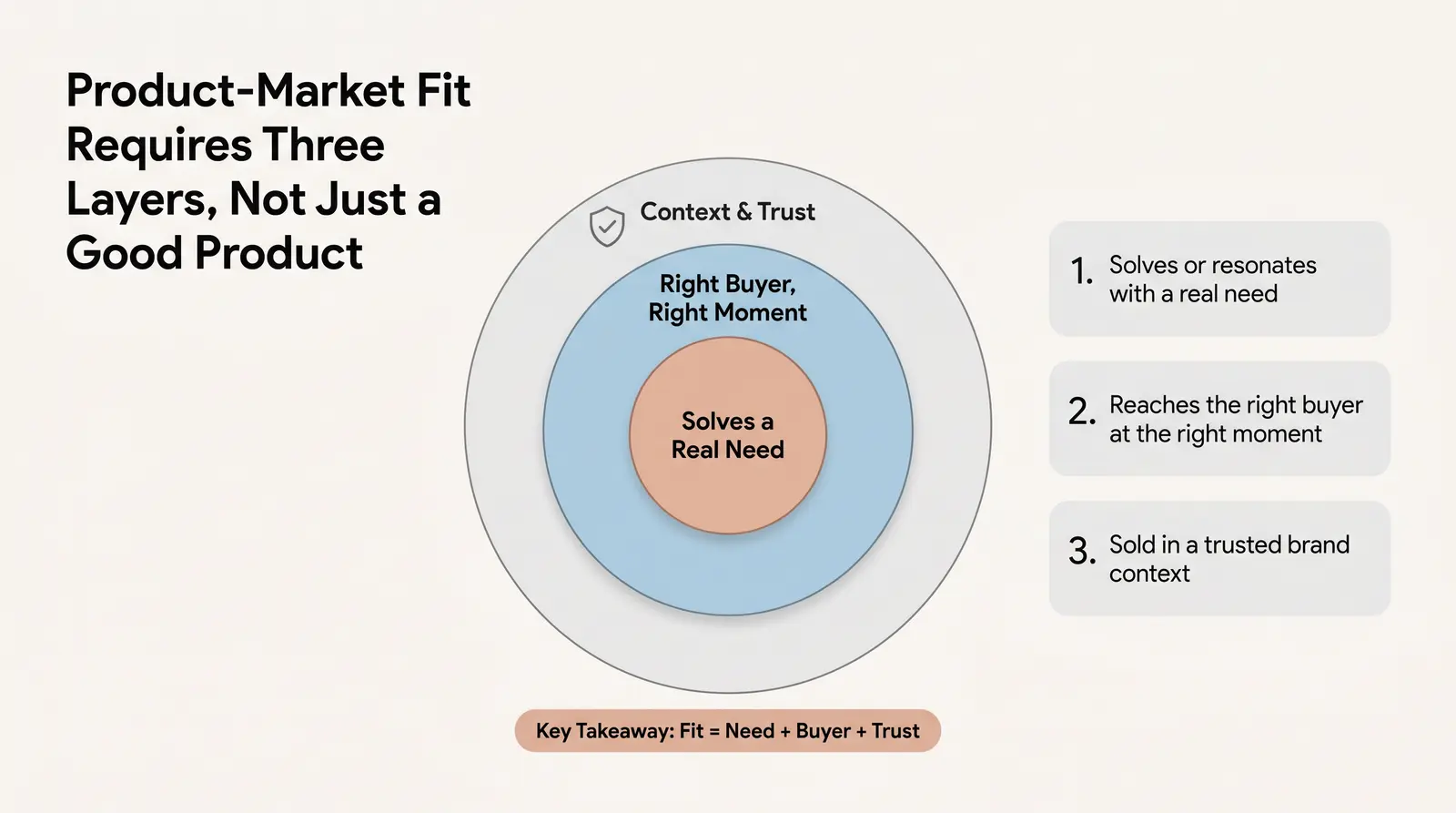
In ecommerce, product-market fit exists across three distinct layers:
Dropshippers often ignore this because finding true fit requires research, patience, and customer empathy, whereas duplicating a trending product feels like a shortcut. We often see aspiring sellers choose a product based purely on margin and ad cost — both of which tell you nothing about whether the buyer actually wants it from you. Margin does not create demand, and cheap clicks do not equal conversions if the trust and context are missing.
To help sellers move away from the gamble of trend-chasing, we use a 2x2 decision tool for evaluating whether a product is truly ready to sell, or if it is just a passing trend. This is the Branvas Demand-Fit Matrix™.
The matrix is built around two critical axes:
| Quadrant | Name | Description | Example |
|---|---|---|---|
| Low Specificity + Low Differentiation | Commodity Trap | Avoid this zone entirely. You are competing purely on price against giants. | Generic phone cases, unbranded fast-fashion jewelry. |
| High Specificity + Low Differentiation | Audience Asset | Viable only if you already own the audience and have their trust. | An influencer selling standard merch to loyal followers. |
| Low Specificity + High Differentiation | Search for Fit | The product is interesting or unique, but needs a defined buyer before scaling. | A highly unique gadget with no clear target demographic yet. |
| High Specificity + High Differentiation | Demand-Fit Zone | Green light. This is where sustainable, profitable dropshipping lives. | Personalized dainty gold jewelry marketed specifically to bridesmaids. |
Let's look at a worked example using a real-world product category: minimalist gold jewelry. A new seller might start in the Commodity Trap by simply importing a generic gold chain from a supplier and running broad Facebook ads. They will struggle to get sales because the buyer has no specific reason to choose them over Amazon.
To move toward the Demand-Fit Zone, the seller must niche down to a specific buyer and add differentiation. Instead of selling a generic chain to everyone, they target bridesmaids gift buyers searching for personalized dainty jewelry under $50. By adding private-label branding and custom packaging, the product is no longer a commodity; it is a highly specific, differentiated gift that solves a clear problem for a defined buyer.

The biggest mistake you can make is assuming that because you like a product, the market will too. You must validate demand before running paid traffic. This validation process is about finding buyer language — the exact words and reasons real buyers use — not just confirming that a product gets search volume.
If you're in the jewelry or accessories space and want a curated starting point rather than building from scratch, Branvas's catalog offers private-label-ready products pre-matched to high-demand buyer niches — so your validation starts from a stronger position.
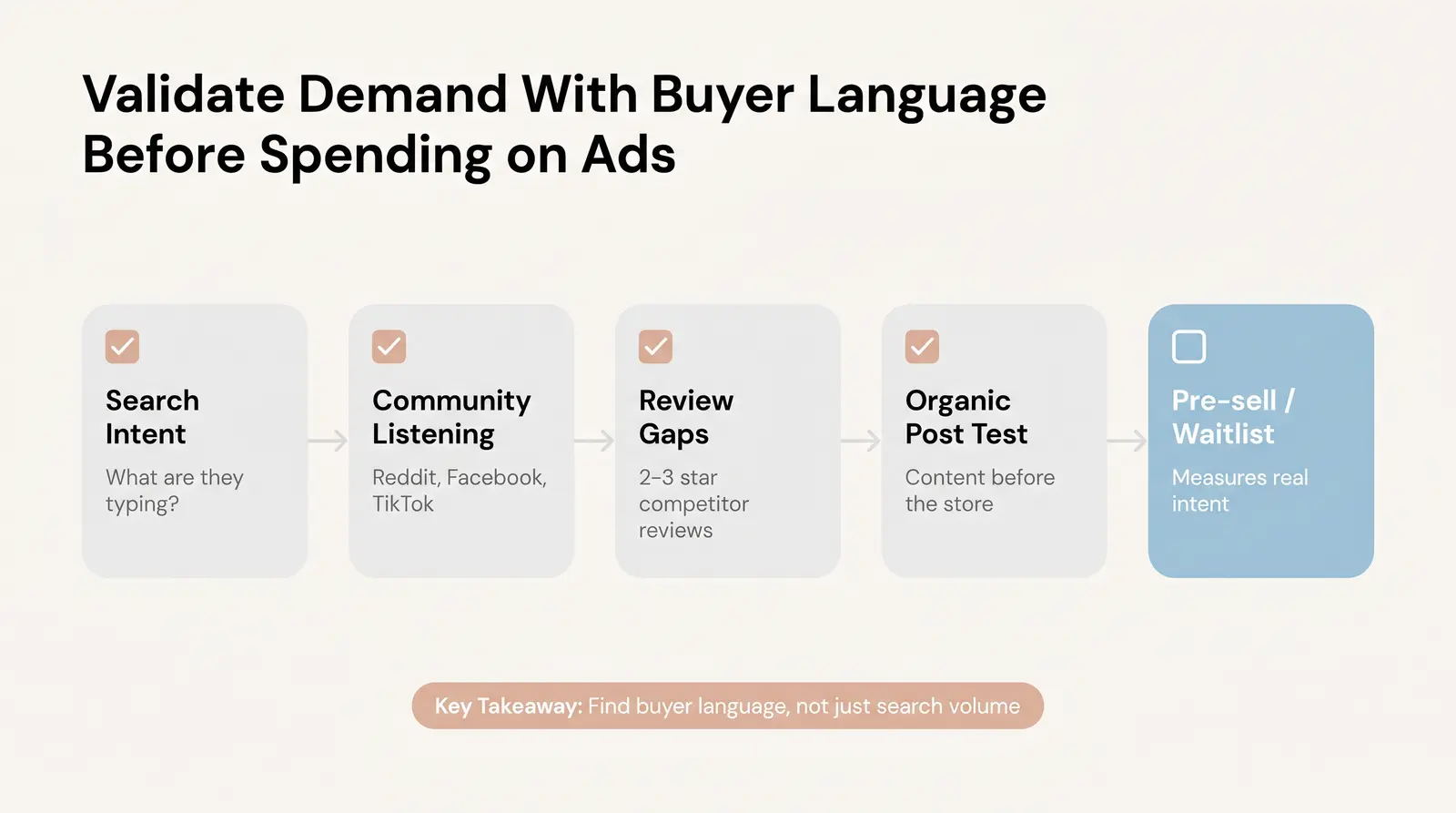
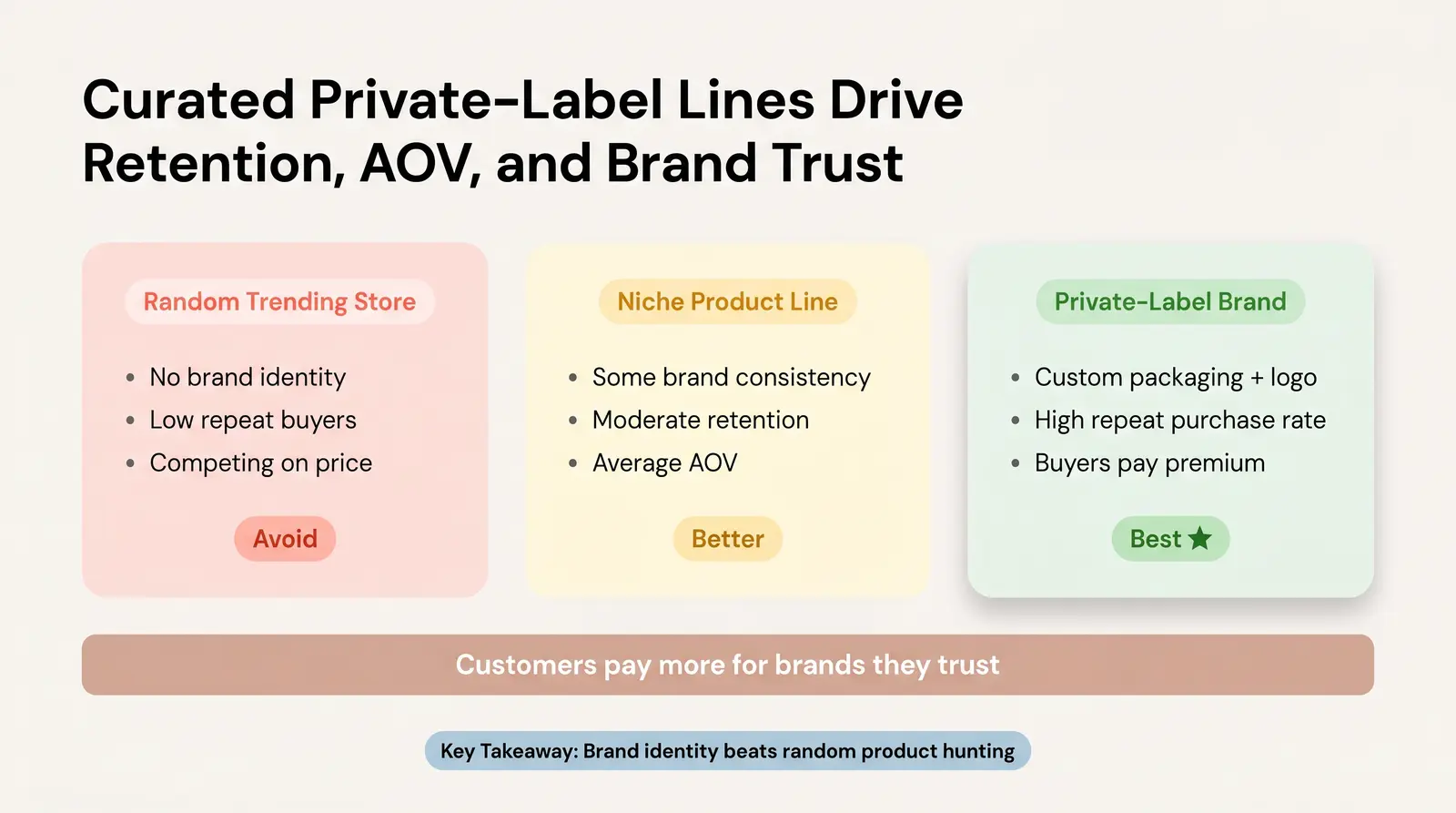
For new sellers especially, starting with a curated, pre-validated product set reduces risk significantly compared to finding a random winning product in the wild. When you build a store around a random assortment of trending items, you have no brand identity. You are simply a vending machine.
Niche-focused, brand-consistent product lines consistently outperform random "winning product" stores in the metrics that actually matter: customer retention, Average Order Value (AOV), and word-of-mouth referrals. Consumers are increasingly making purchase decisions based on trust and brand identity, with data showing that customers will pay more for products from brands they trust [3].
Private-label products, especially in categories like jewelry and accessories, allow sellers to differentiate at the brand level, not just the product level. When your product arrives in custom packaging with your logo, it gives the buyer a reason to choose you specifically, and a reason to come back. At Branvas, we built our catalog specifically so that new sellers aren't starting from zero — they're starting from a place where the product, packaging, and buyer fit have already been considered. You can see exactly how this streamlined approach functions on our how it works page, which is designed to support aspiring entrepreneurs in launching real brands.
A "winning product" is an industry term for an item that is currently trending and generating high engagement or sales, often temporarily. Product-market fit is a foundational business concept where a specific product perfectly satisfies the needs of a well-defined target market. Winning products rely on timing and aggressive ad spend; product-market fit relies on understanding consumer demand and building trust.
Trending products often have massive, sudden spikes in search volume and social media engagement that drop off just as quickly. Real demand is characterized by consistent, steady search volume over time, specific long-tail keyword searches (people looking for exact solutions), and active community discussions where buyers are actively seeking recommendations.
Yes, but it requires extreme specificity in your marketing and branding. If the product itself is not unique, the context in which you sell it must be. This means targeting a very specific demographic that competitors are ignoring, creating superior educational content, or bundling the product in a way that adds unique value.
Private-label dropshipping is generally far superior for achieving product-market fit because it allows for product differentiation. By putting your own brand on the product and packaging, you elevate the item from a generic commodity to a branded asset. This builds the consumer trust necessary for repeat purchases and higher profit margins.
Validation should not take months, but it also shouldn't be a five-minute glance at a spy tool. A thorough validation process using community listening, keyword research, and organic content testing can typically be completed in one to two weeks. The goal is to gather enough data on buyer language and intent to confidently build a targeted offer.
The question you should be asking when starting your ecommerce journey is never just "is this product popular?" The question must always be, "does this product fit this specific buyer, sold by me, in this context?"
Chasing winning products is a race to the bottom, filled with high ad costs and low customer loyalty. Product-market fit is absolutely achievable in dropshipping, but it requires a fundamental shift in your research process. You must move away from trend chasing and toward deep buyer understanding, utilizing frameworks like the Branvas Demand-Fit Matrix™ to ensure you are operating in a zone of high specificity and high differentiation.
If you're ready to stop hunting for winning products and start building a brand buyers actually choose, explore how Branvas works — from curated private-label jewelry to done-for-you fulfillment. See how it works →