


Learn which materials make jewelry gym-proof and how to market waterproof fitness accessories using the GRIP Model to reach active lifestyle buyers.
Published:
August 27, 2026
Author:
Yi Cui
"The only jewelry that works as hard as you do."
For years, the active lifestyle consumer has faced a quietly frustrating dilemma. They want to express their personal style, but traditional accessories simply cannot keep up with their daily routines. Tarnished chains, green skin, and the constant ritual of removing jewelry before every workout or swim have long been accepted as the cost of doing business. A gold-plated necklace that looks stunning on Monday is a patchy, discolored mess by Friday, and that frustration is real, widespread, and commercially significant.
The intersection of the fitness and jewelry markets represents a massive, largely untapped opportunity. With the global fitness accessories market projected to reach $25.68 billion by 2032 [1] and the waterproof jewelry segment valued at $1.52 billion in 2025 and growing at a CAGR of 8.15% [2], demand for functional fashion is accelerating. Consumers are actively searching for waterproof necklaces for swimming, sweat-proof rings for lifting, and durable chains that can survive a CrossFit session without losing their finish.
This article covers what makes jewelry truly gym-proof, who the active-lifestyle jewelry buyer is, and how to effectively market and sell to them. Whether you are a fitness influencer looking to launch a private-label brand or an ecommerce seller seeking a high-loyalty niche, understanding the mechanics of gym jewelry and fitness accessories is the key to unlocking this market.
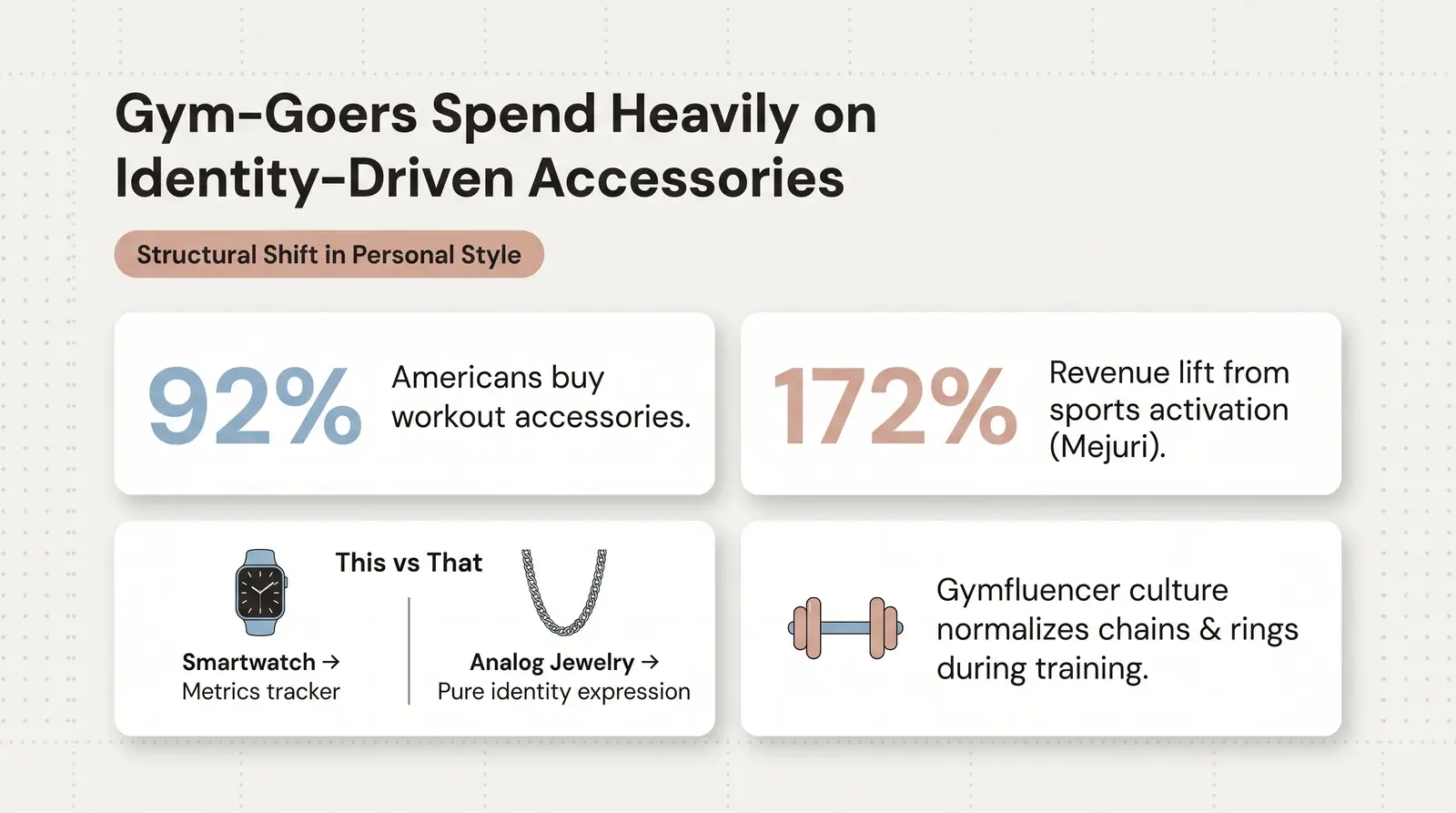
The fitness industry is booming, and consumer spending habits reflect a deep, durable commitment to the active lifestyle. In 2025, a record 81 million Americans held a fitness facility membership [3]. More telling is the accessory spend: 92% of Americans report spending money on workout gear, clothing, or accessories [4]. As everyday carry culture grows among gym-goers, the spend per active consumer on non-equipment items is rising steadily.
Jewelry remains one of the last "analog accessories" in the gym. It requires no battery, no charger, and no software updates. It is pure identity expression. While a smartwatch tracks metrics, a well-crafted chain or a minimal pair of studs communicates something different: personal style, discipline, and a sense of self that does not clock out when the workout ends.
Here is the contrarian insight most jewelry brands miss: they assume athletes do not wear jewelry. Data and culture say otherwise. The rise of gymfluencer culture has made jewelry a core part of workout identity, not a contradiction to it. Fitness creators are increasingly seen wearing chains and rings during intense training sessions, and the brands that have leaned into this shift are seeing real commercial results. Mejuri's Wimbledon activation with athlete ambassador Emma Navarro drove a 172% revenue lift, a 181% increase in foot traffic, and 63% net-new customer conversions [5]. The sports-jewelry crossover is not a trend. It is a structural shift in how consumers think about personal style.
Not all jewelry is created equal, especially when it comes to surviving the rigors of a gym or pool. Understanding the materials science behind gym jewelry is essential for both sellers and consumers.
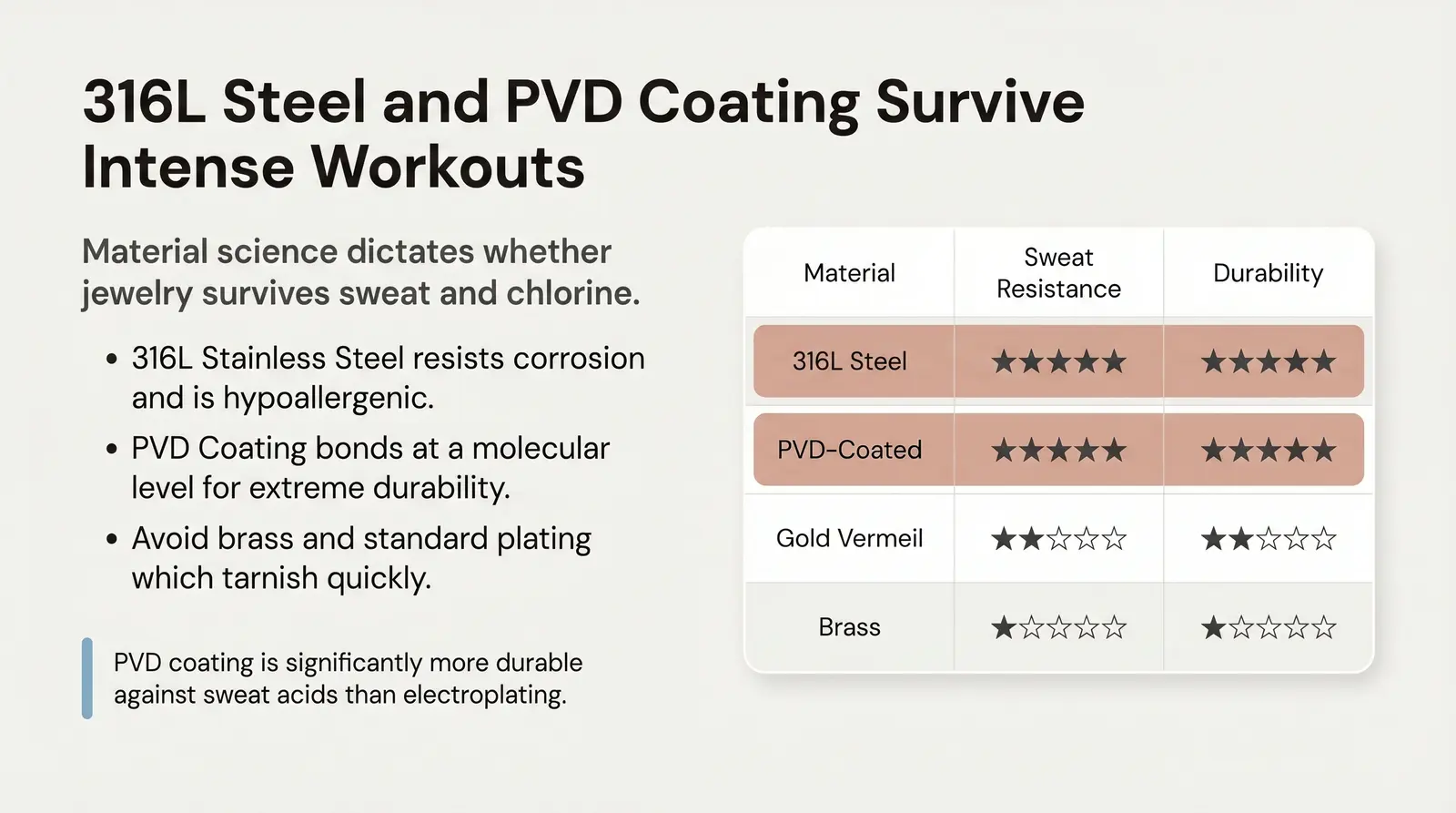
Stainless steel, specifically 316L surgical grade, is the gold standard for active wear. Its chemical composition, which includes chromium (16-18%), nickel (10-14%), and molybdenum (2-3%), gives it exceptional corrosion resistance against sweat, chlorine, and environmental moisture [6]. The "L" designation indicates low carbon content, which further reduces sensitization risk and makes it more biocompatible. It is hypoallergenic, durable, and maintains its finish under daily wear without tarnishing.
PVD (Physical Vapor Deposition) coating is a high-tech process that bonds a thin layer of gold or other metals onto a base metal, usually stainless steel, inside a vacuum chamber. The process vaporizes the coating material and deposits it at a molecular level, creating a bond that is far stronger than traditional electroplating. The result is a coating that is more scratch-resistant, more tarnish-resistant, and significantly more durable against sweat acids and chlorinated water [7]. PVD-coated pieces are the premium choice for waterproof necklaces for swimming and high-intensity training.
IP coating (Ion Plating) is a specific variant of the PVD process where the vaporized metal is ionized in a vacuum environment before deposition. In practice, IP and PVD are often used interchangeably in the jewelry industry, and both deliver similar levels of durability and resistance.
What should active consumers avoid? Brass-base metals with thin electroplating are notorious for tarnishing within weeks of regular sweat exposure. Pieces with high nickel content or reactive alloys are prone to causing skin irritation, a problem that worsens with exercise. The table below summarizes the key differences across common jewelry materials.
| Material | Sweat Resistance | Chlorine/Water Resistance | Skin-Safe (Hypoallergenic) | Durability (Daily Wear) | Recommended For |
|---|---|---|---|---|---|
| 316L Stainless Steel | ★★★★★ | ★★★★☆ | ✅ | ★★★★★ | All active use |
| PVD-Coated Steel | ★★★★★ | ★★★★★ | ✅ | ★★★★★ | Premium gym + swim |
| Gold Vermeil | ★★☆☆☆ | ★☆☆☆☆ | ✅ (if sterling base) | ★★☆☆☆ | Occasional wear only |
| Gold-Filled | ★★★☆☆ | ★★☆☆☆ | ✅ | ★★★☆☆ | Light activity |
| Brass/Standard Plating | ★☆☆☆☆ | ★☆☆☆☆ | ❌ (often has nickel) | ★☆☆☆☆ | Avoid for active wear |
To successfully market fitness accessories, you need to understand the nuances of the active jewelry buyer. This demographic is not a monolith. It consists of several distinct segments, each with specific needs and motivations.
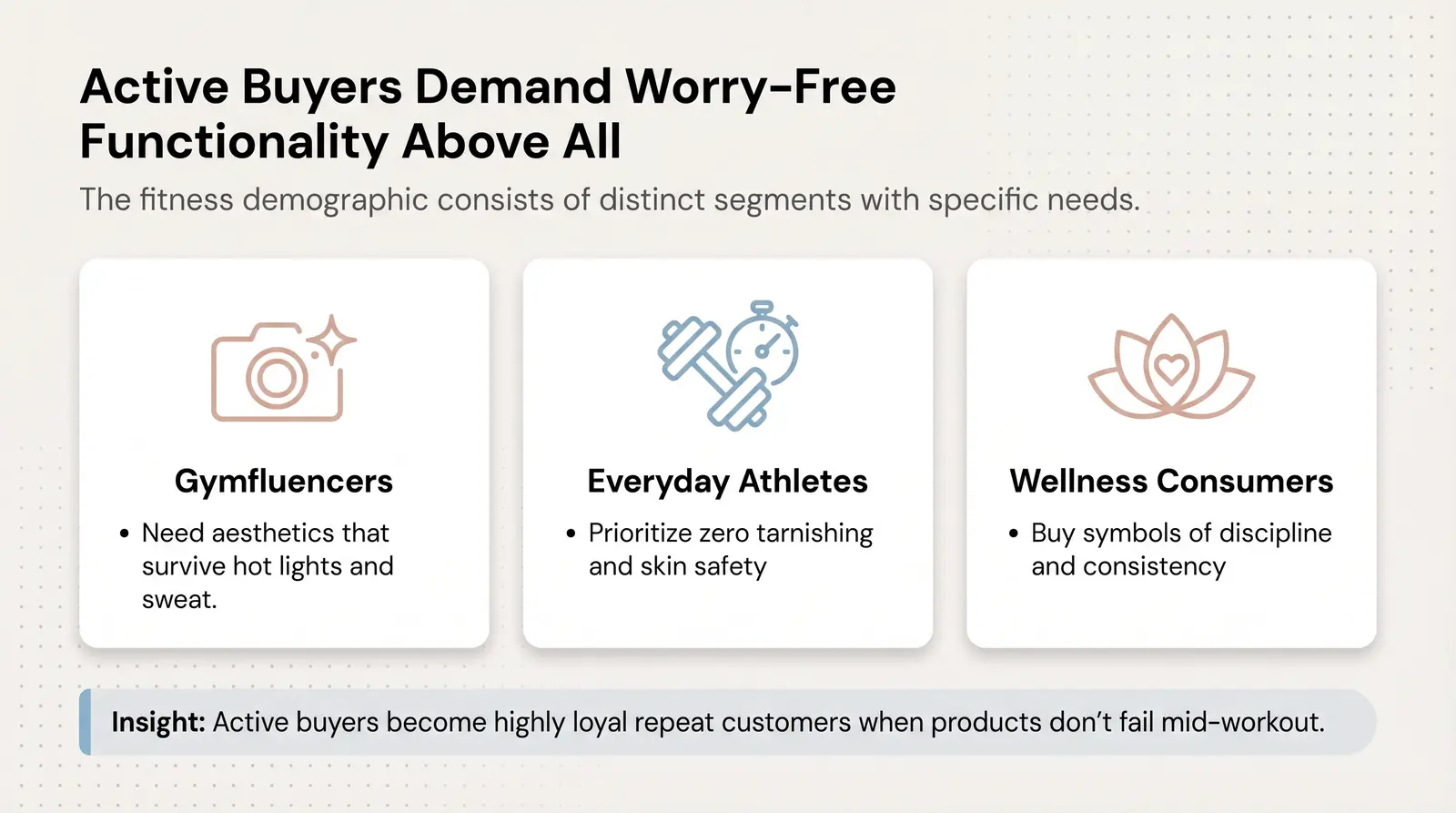
Gymfluencers and fitness content creators view jewelry as a crucial part of their on-camera look. Their pieces need to photograph well, elevate their workout outfits, and survive long shooting days under hot lights or in sweaty environments. For this group, aesthetics and durability are equally non-negotiable.
Everyday athletes, including CrossFitters, runners, swimmers, and yogis, prioritize function above all else. They want to wear their jewelry without thinking about it. Their primary complaints, voiced consistently across forums and review threads, revolve around tarnishing, skin discoloration, and the inconvenience of removing pieces before training [8]. They are not looking for jewelry that is "gym-safe enough." They want pieces that are genuinely worry-free.
Wellness lifestyle consumers see jewelry as an identity-driven purchase. For them, a durable piece is a symbol of their discipline, consistency, and commitment to an aesthetic lifestyle. They are drawn to brands that speak their language, not just brands that sell them products.
In our experience at Branvas, the active lifestyle buyer is one of the most loyal once you earn their trust. They want to know a piece won't let them down mid-WOD or mid-lap, and when it doesn't, they become repeat customers and vocal advocates.
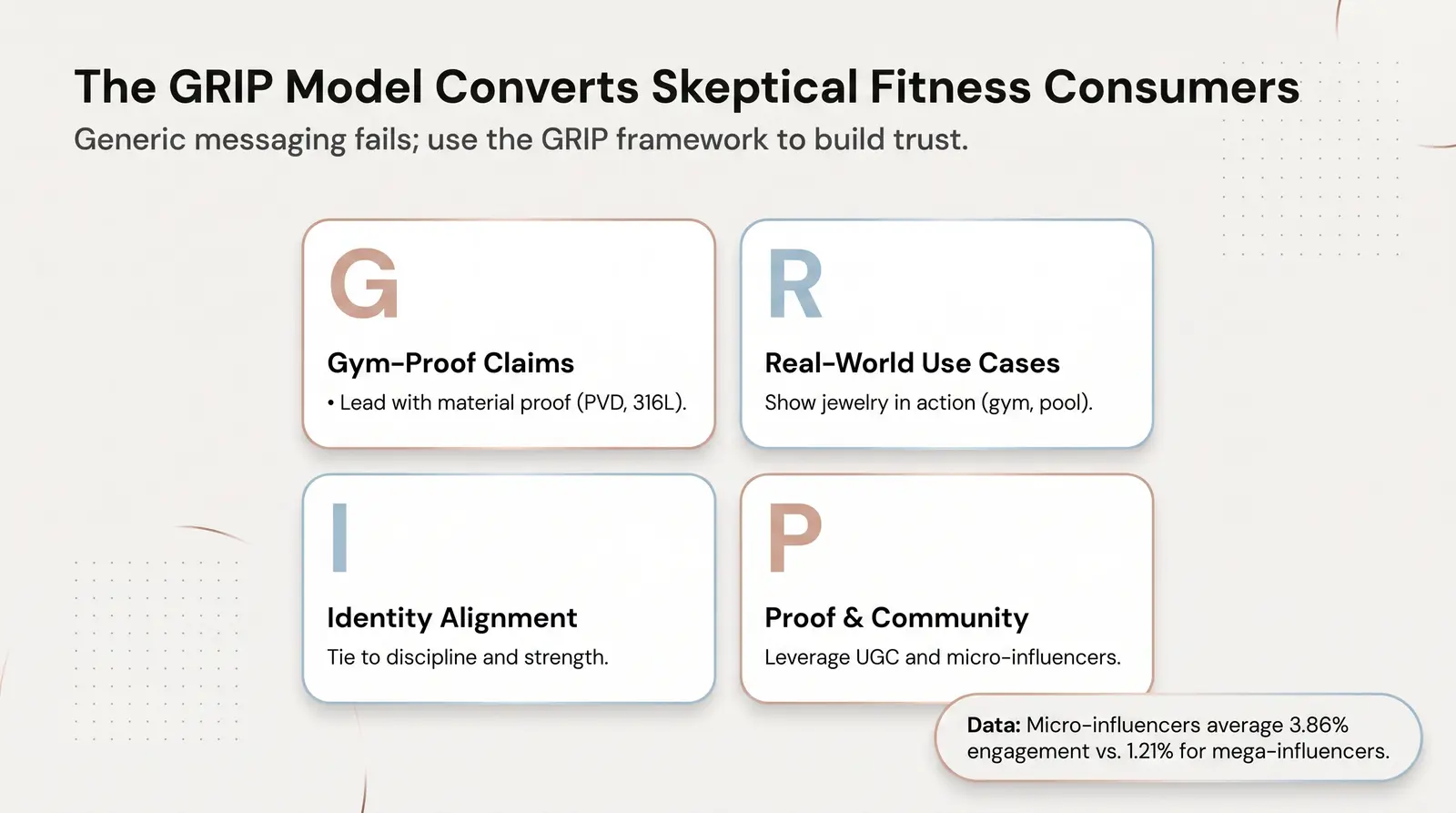
Marketing gym jewelry requires a specific approach. Generic "minimalist jewelry" messaging will not resonate with someone who just finished a deadlift session. Branvas uses a proprietary 4-part positioning system called the GRIP Model to help sellers effectively reach the fitness audience.
G stands for Gym-Proof Claims. Lead with material proof points rather than aesthetics. Use descriptors like "PVD-coated," "316L stainless," and "sweat-resistant" as primary selling points. The fitness consumer is skeptical of vague claims. Specific material language builds immediate credibility.
R stands for Real-World Use Cases. Show the jewelry in action. Photograph pieces in the gym, on the swim block, or during a PR attempt. Context builds purchase confidence far better than a sterile white-background product shot. The consumer needs to see the piece in their world.
I stands for Identity Alignment. Position the jewelry as an extension of the athletic identity. Tie messaging to values that gym-goers already hold: discipline, strength, consistency, and the pursuit of personal records. The jewelry is not separate from the workout. It is part of it.
P stands for Proof and Community. Leverage user-generated content, athlete testimonials, and fitness influencers with genuine audiences. In niche markets, community trust drives conversion more than any paid ad. Micro-influencers in the fitness space (10K–100K followers) average 3.86% engagement compared to 1.21% for mega-influencers [9], making them a high-ROI channel for new brands.
Worked Example: "The Lifter's Stack" Product Launch
A fitness influencer launching a private-label stainless steel chain stack with Branvas applies the GRIP Model:
G: Product copy reads: "316L surgical stainless. PVD gold finish. Sweat-proof, chlorine-resistant, never tarnishes."
R: Content shows the chains worn during a deadlift session, post-swim, and in the locker room. Lifestyle contexts, not studio shots.
I: Caption: "Your PR doesn't care what you're wearing. Neither does this chain." Taps directly into achievement identity.
P: 10 UGC posts seeded to micro gym-influencers (10K–100K followers) before launch. Reposts drive social proof pre-sale.
Result archetype: high click-through on product ads, strong add-to-cart rates, repeat purchase within 60 days.
A generic marketing strategy will not cut it in the fitness accessories space. The channels below are the ones that consistently drive results for gym jewelry brands.
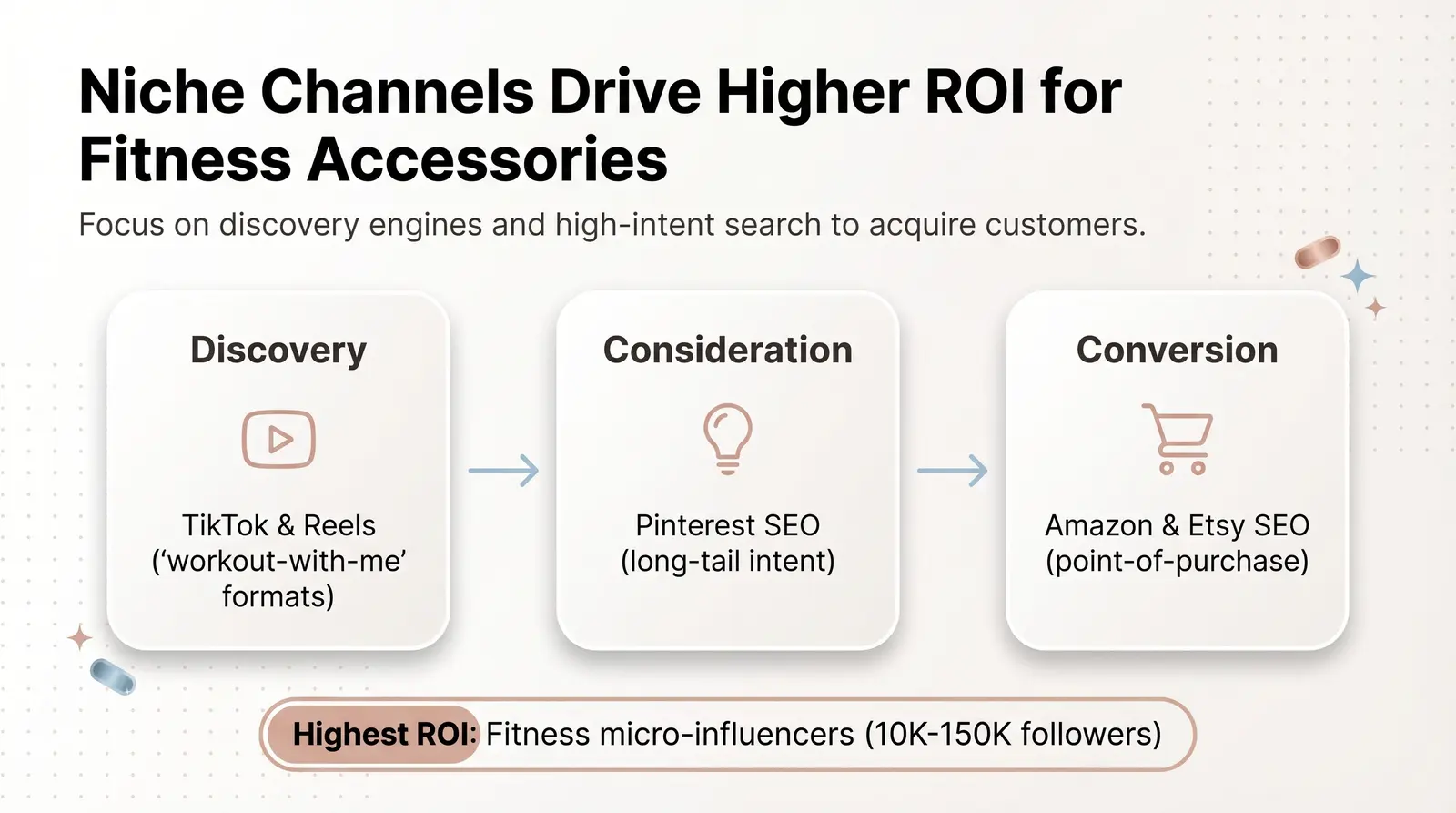
TikTok and Instagram Reels are the primary discovery engines for this niche. "Gym day" content hooks, workout-with-me formats, and jewelry reveals within a fitness context all perform well. Always include keyword-rich captions and descriptive alt text to boost discoverability beyond your existing audience.
Fitness micro-influencers (10K–150K followers) are the highest-ROI channel for most new brands. They have deep niche trust, authentic relationships with their audiences, and are far more affordable than macro-influencers. Fitness influencers who are launching their own brands can explore the Branvas influencer program at branvas.com/solutions/influencers-creators as a fast path to private-label without the sourcing headache.
Pinterest SEO is an underutilized channel for gym jewelry. Optimize for terms like "waterproof necklaces for swimming," "gym jewelry women," "gym jewelry men," and "fitness accessories." Pinterest drives long-tail commercial intent and reaches consumers who are actively planning purchases, not just scrolling.
Amazon and Etsy SEO capture high-intent search traffic at the point of purchase. Optimize product listings for "gym jewelry," "sweat-proof necklace," and related long-tail keywords. Strong listing copy that leads with material claims (PVD, 316L stainless) converts better than generic descriptions.
Email and SMS for active lifestyle buyers should reinforce the "wear it everywhere" positioning post-purchase. Maintenance tips for PVD-coated pieces, styling content, and early access to new drops all build long-term loyalty with a demographic that is already primed to become repeat customers.
Community seeding in gym-specific Facebook groups, subreddits like r/xxfitness and r/bodybuilding, and local CrossFit affiliate gyms creates authentic brand presence. The key is to add value first. Answer questions about materials, share honest comparisons, and let the product speak for itself.
If you're building a fitness-focused jewelry brand and want access to PVD-coated stainless steel pieces ready to private-label, explore Branvas's catalog at branvas.com/catalog. No minimums to start.
Launching a private-label gym jewelry line is more accessible than ever for influencers, boutique sellers, and entrepreneurs. The path to market does not require a warehouse, a factory relationship, or a massive upfront investment.
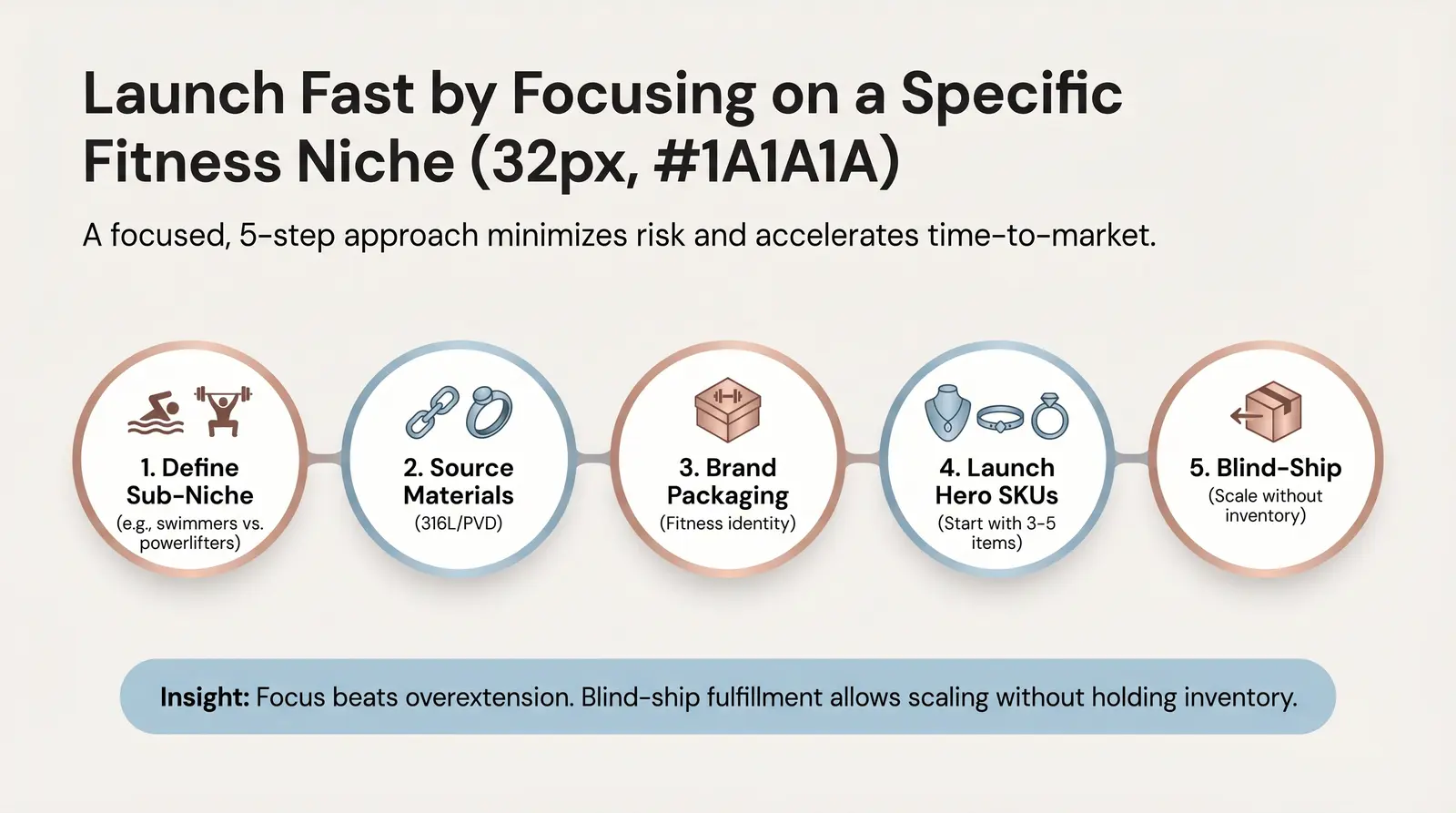
Step one is defining your niche-within-the-niche. The gym jewelry market is broad enough to support multiple sub-segments. Swimmers have different needs than powerlifters. Yogis have a different aesthetic than CrossFitters. Picking a lane sharpens your messaging and makes every marketing dollar work harder.
Step two is selecting gym-proof materials. Source 316L stainless steel and PVD-coated pieces from a trusted supplier or platform. The material choice is your primary marketing claim, so it needs to be solid. Do not compromise here.
Step three is branding. Develop a name, packaging, and unboxing experience that speaks directly to the fitness identity of your target audience. The brand experience starts before the customer puts the piece on.
Step four is launching small and iterating fast. Start with 3 to 5 hero SKUs: a durable chain, a minimalist stud, and a sweat-proof cuff are a strong starting point. Validate these products with your audience before scaling. The gym jewelry niche rewards focus and punishes overextension.
Step five is using blind-ship fulfillment. A fulfillment model that ships on your behalf, without your supplier's branding, allows you to market and sell without holding inventory or managing logistics.
We often see founders struggle with the "everything" approach: 50 SKUs on day one, no clear positioning. The gym jewelry niche rewards focus. Pick a lane, own it, and expand from there.
Ready to launch your own waterproof jewelry line for the fitness market? Branvas handles the sourcing, branding, and fulfillment. You own the brand. See how it works at branvas.com/how-it-works or check pricing at branvas.com/pricing.
The best gym jewelry is made from 316L surgical-grade stainless steel, often finished with a PVD coating. These materials are highly resistant to corrosion from sweat, will not tarnish easily, and are hypoallergenic, making them safe and comfortable for intense workouts. Look for pieces described as "sweat-resistant" or "sweat-proof" with explicit material callouts like "316L stainless" or "PVD-coated." Minimalist styles, such as thin chains, small studs, and low-profile cuffs, also tend to perform better in the gym because they are less likely to catch on equipment or clothing.
Yes. PVD (Physical Vapor Deposition) coating creates a molecular bond with the base metal that is significantly stronger than traditional electroplating. The vacuum-chamber process bonds the coating at a level that resists the acids in sweat, chlorine in pool water, and the friction of daily wear. Unlike standard gold plating, which sits on top of the base metal and wears away quickly, PVD-coated jewelry is designed to maintain its finish through sustained exposure to moisture and activity. That said, no finish is indestructible. Avoiding harsh chemicals like perfume and bleach, and rinsing pieces after prolonged pool exposure, will extend the life of any PVD piece significantly.
Yes. 316L stainless steel is highly resistant to corrosion, making it one of the best materials for waterproof necklaces for swimming. It can withstand exposure to both chlorinated pool water and saltwater without rusting, degrading, or losing its finish. For swimmers who want to wear jewelry in the pool, 316L stainless steel or PVD-coated stainless steel are the two most reliable choices. Avoid gold vermeil, gold-filled, or standard gold-plated pieces in the pool, as chlorine is particularly damaging to those finishes over time.
Start with the GRIP Model. Lead with Gym-proof material claims (PVD, 316L stainless, sweat-resistant). Show Real-world use cases by photographing and filming the pieces in actual gym or swim contexts. Align with athletic Identity by tying your messaging to discipline, strength, and consistency. Build Proof through community by seeding UGC with micro-influencers and encouraging testimonials from real athletes. On the channel side, TikTok and Instagram Reels are the primary discovery engines, while Pinterest SEO captures long-tail commercial intent. Fitness micro-influencers in the 10K to 100K follower range offer the best engagement-to-cost ratio for new brands.
Traditional gold plating involves a thin layer of gold applied via electroplating, a process that deposits gold onto the surface without creating a strong molecular bond. This layer wears away quickly when exposed to sweat, friction, or moisture, which is why standard gold-plated pieces tarnish and fade within months of regular wear. PVD coating uses a vacuum process to vaporize and bond the coating to the metal at a molecular level, creating a finish that is far thicker, harder, and more resistant to the conditions of an active lifestyle. For fitness accessories specifically, PVD-coated stainless steel is the clear choice for durability and longevity.
- Gym Accessories Market Forecast Report 2025-2032 — GlobeNewswire / Research and Markets, 2026.
- Waterproof Jewelry Market Research Report 2034 — Market Intelo, 2026.
- HFA Report Reveals 81M Americans Were Fitness Club Members in 2025 — Athletic Business, 2026.
- Americans to spend $60 billion on fitness in 2026 — Empower, 2026.
- From tennis to baseball to the NFL, jewelry brands are embracing sports for viral growth — Glossy, 2025.
- Is 316L Stainless Steel Good for Jewelry? The Truth — Atolea Jewelry, 2025.
- Is 18K Gold PVD Jewelry Waterproof? The Truth About Tarnish and Wear — Lauren Riley Jewelry, 2025.
- Water/workout-proof jewelry? — Reddit r/jewelry, 2026.
- The Biggest Jewelry Marketing Trends and Insights — Brenton Way, 2026.