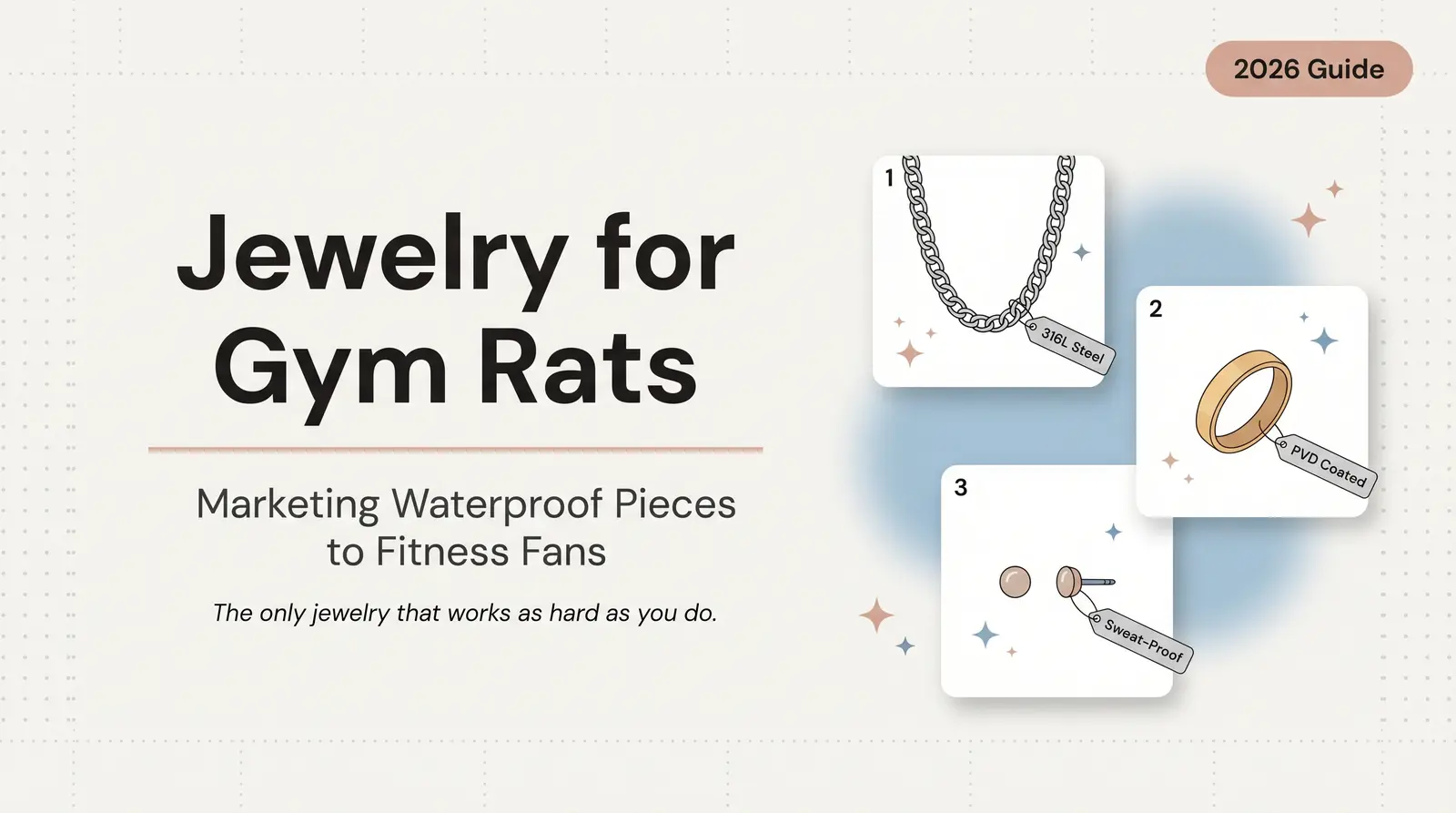



PVD coating creates durable, waterproof, hypoallergenic jewelry that meets 24/7 lifestyle demand, making it a top commercial opportunity for brand founders in 2026.
Published:
March 31, 2026
Author:
Yi Cui
Jewelry that survives the pool, the gym, and the shower.
For decades, the jewelry industry has been plagued by a common consumer frustration: pieces that tarnish, flake, or turn skin green after just a few wears. Traditional gold plating and cheap alloys have trained buyers to treat their fashion jewelry delicately, removing it before workouts, swimming, or even washing their hands. But consumer behavior has shifted. Today's buyers demand jewelry that fits an active, 24/7 lifestyle without compromising on aesthetics.
Enter Physical Vapor Deposition (PVD) coating. This advanced technology has transformed the waterproof jewelry market, offering a durable, hypoallergenic, and tarnish-resistant solution that actually lives up to its promises. For brand founders and ecommerce sellers, PVD is not just a manufacturing upgrade. It is a massive commercial opportunity. The gap between consumer demand for "wear-everywhere" jewelry and the supply of high-quality, accessible pieces makes the PVD niche one of the most lucrative spaces to enter in 2025 and 2026.
Physical Vapor Deposition (PVD) is a highly advanced vacuum coating process that applies a brilliant, durable finish to base metals like stainless steel or titanium. Unlike traditional electroplating, which uses an electric current to deposit metal in a liquid chemical bath, PVD is a dry, vacuum-based process.
Inside a sealed vacuum chamber, a solid coating material (often titanium nitride for gold tones) is vaporized into a fine mist. These vaporized atoms are then propelled toward the jewelry pieces, where they bond at a molecular level with the substrate. This creates a metallurgical bond that penetrates the base metal's lattice structure, rather than just sitting on top of it [1]. The result is an extremely dense, pore-free coating that is significantly harder and more chemically stable than standard plating.
Because the process does not rely on liquid chemicals, it is also far more environmentally friendly, producing no hazardous wastewater [2]. The most common substrate for PVD jewelry is 316L surgical-grade stainless steel, which provides a strong, hypoallergenic foundation that will not rust or corrode.
| Feature | PVD Coating | Gold Electroplating | Gold Vermeil | Ion Plating (IP) |
|---|---|---|---|---|
| Bond Type | Molecular/Vacuum | Surface Adhesion/Liquid | Surface Adhesion/Liquid | Molecular/Vacuum |
| Typical Thickness | 0.8 - 2.0 microns | 0.05 - 0.5 microns | 2.5+ microns | 0.8 - 2.0 microns |
| Water Resistance | Excellent (100-200+ hrs salt spray) | Poor (24-48 hrs salt spray) | Low to Moderate | Excellent |
| Tarnish Resistance | High | Low | Moderate | High |
| Skin Safety | Hypoallergenic | Varies (often contains nickel) | Hypoallergenic (Silver base) | Hypoallergenic |
| Average Lifespan | 2 to 5+ years | 3 to 6 months | 1 to 3 years | 2 to 5+ years |
| Cost Tier | Moderate | Low | High | Moderate |

The demand for waterproof and tarnish-free jewelry is surging, driven by significant shifts in consumer lifestyles. The rise of "gym culture" and athleisure has created a market for accessories that can withstand sweat, friction, and frequent showering. Consumers are increasingly seeking "24/7 wearability," pieces they never have to take off. Furthermore, a growing awareness of skincare and metal allergies has pushed buyers toward hypoallergenic options, making PVD-coated stainless steel highly desirable.
Market data reflects this shift. The global waterproof jewelry market was valued at $1.34 billion in 2024 and is projected to grow at a robust CAGR of 8.2% [3]. Search trends for terms like "tarnish free jewelry" and "waterproof jewelry brands" have seen consistent upward momentum, indicating strong, high-intent buyer interest.
For new brand entrants, the timing is perfect. While legacy brands are slow to pivot from traditional brass and sterling silver, agile founders can capture market share by offering high-quality PVD jewelry at accessible price points. The durability story practically markets itself, leading to higher customer satisfaction and significantly lower return rates compared to traditional fashion jewelry.

In our experience at Branvas, founders who launch PVD jewelry lines without evaluating these dimensions often undercut their own positioning. To help brands succeed, we developed the Branvas WEARPROOF™ Launch Scorecard, a proprietary framework to evaluate whether a product line is truly ready for the waterproof market.
A score of 85 or higher indicates a product line that is ready to dominate the waterproof niche.

Consider Sofia, a fitness influencer with 80K Instagram followers. Her audience constantly asked her about the necklaces she wore during her high-intensity workouts. Recognizing the opportunity, Sofia decided to launch her own line of sweatproof jewelry.
She started by selecting PVD-coated 316L stainless steel chains and minimalist pendants from a reliable catalog. Applying the Branvas WEARPROOF™ framework, she scored her initial lineup at 75. The weak point: her supplier couldn't verify the coating thickness, and she was considering a few brass-based rings to save costs.
Realizing that a single tarnished ring could ruin her brand's credibility, Sofia pivoted. She exclusively sourced verified PVD stainless steel pieces, raising her score to 95. She launched her brand, "Sweat & Shine," utilizing blind-shipped, private-label packaging. Because she set accurate expectations and delivered genuine waterproof quality, her return rate due to tarnish complaints was virtually zero. Within six months, her jewelry revenue surpassed her brand sponsorship income.

Most brands oversell PVD as "permanent" or "indestructible." PVD coatings do have real wear limits, especially on high-friction contact points like ring shanks and bracelet clasps. The honest brand wins more trust, and fewer refund requests, by setting accurate expectations upfront.
While PVD boasts a surface hardness that can reach 800-2000 HV [4], it is not immune to deep scratches from abrasive surfaces like sand, rocks, or knurled gym barbells. If the coating is breached, the base metal is exposed. Furthermore, while PVD is highly water-resistant, prolonged exposure to harsh chemicals, strong acids, or abrasive polishes can dull the finish over time. PVD is also not a substitute for solid gold when it comes to intrinsic investment value, nor can it replace surgical-grade titanium for the most extreme cases of metal hypersensitivity.
We often see founders struggle with over-promising durability. The brands that win long-term are the ones who teach their customers what waterproof actually means. Framing PVD as "highly durable for daily wear" rather than "invincible" builds credibility and fosters customer loyalty.

Launching a successful PVD jewelry brand requires the right manufacturing partner and a streamlined fulfillment process. Here is the practical path to getting started:
First, choose PVD-compatible products. Focus on 316L stainless steel bases with verified PVD coatings. You can explore a wide range of vetted, high-quality options in the Branvas Catalog.
Next, brand your line. Develop packaging, naming, and marketing copy that clearly communicates the waterproof and tarnish-free benefits. Whether you are an influencer looking to monetize your audience (Branvas for Influencers & Creators) or a boutique owner expanding your inventory (Branvas for Ecommerce & Boutique Owners), positioning is key.
If you're exploring what a private-label PVD jewelry line could look like for your audience, Branvas's How It Works page walks through the full process, from product selection to branded packaging to your first shipment.
Finally, set up fulfillment. Utilizing a service that handles blind shipping and private labeling allows you to focus on marketing the durability story rather than packing boxes. You can even estimate your potential margins using the Branvas Profit Calculator and review Branvas Pricing to plan your launch budget.
Ready to launch your waterproof jewelry brand? Start with Branvas →

Yes, PVD-coated jewelry is highly safe for sensitive skin. The PVD process itself does not use nickel or other common allergens. When applied over a hypoallergenic base like 316L surgical stainless steel or titanium, it creates a barrier that prevents skin irritation, making it an excellent choice for those with metal allergies.
With normal daily wear, high-quality PVD coating on stainless steel typically lasts between 2 to 5 years, and sometimes longer. Its lifespan depends on the friction the piece endures; earrings and necklaces last longer than rings, which are subjected to constant rubbing and hard surfaces.
Absolutely. PVD-coated stainless steel is highly water-resistant and can withstand exposure to shower water, sweat, and even occasional swimming in pools or the ocean. However, rinsing the jewelry with fresh water after exposure to chlorine or saltwater will help maintain its shine.
Traditional gold plating uses an electric current to deposit a thin layer of gold in a liquid bath, which can wear off in months. PVD is a vacuum process that vaporizes the coating material, bonding it at a molecular level to the base metal. This makes PVD significantly harder, thicker, and more resistant to tarnishing and scratching than standard plating.
Caring for PVD jewelry is simple. After wearing, gently wipe the piece with a soft microfiber cloth to remove body oils and sweat. For a deeper clean, use mild soap and lukewarm water, then dry thoroughly. Avoid using harsh chemical jewelry cleaners, abrasive polishing cloths, or ultrasonic cleaners, as these can damage the coating.