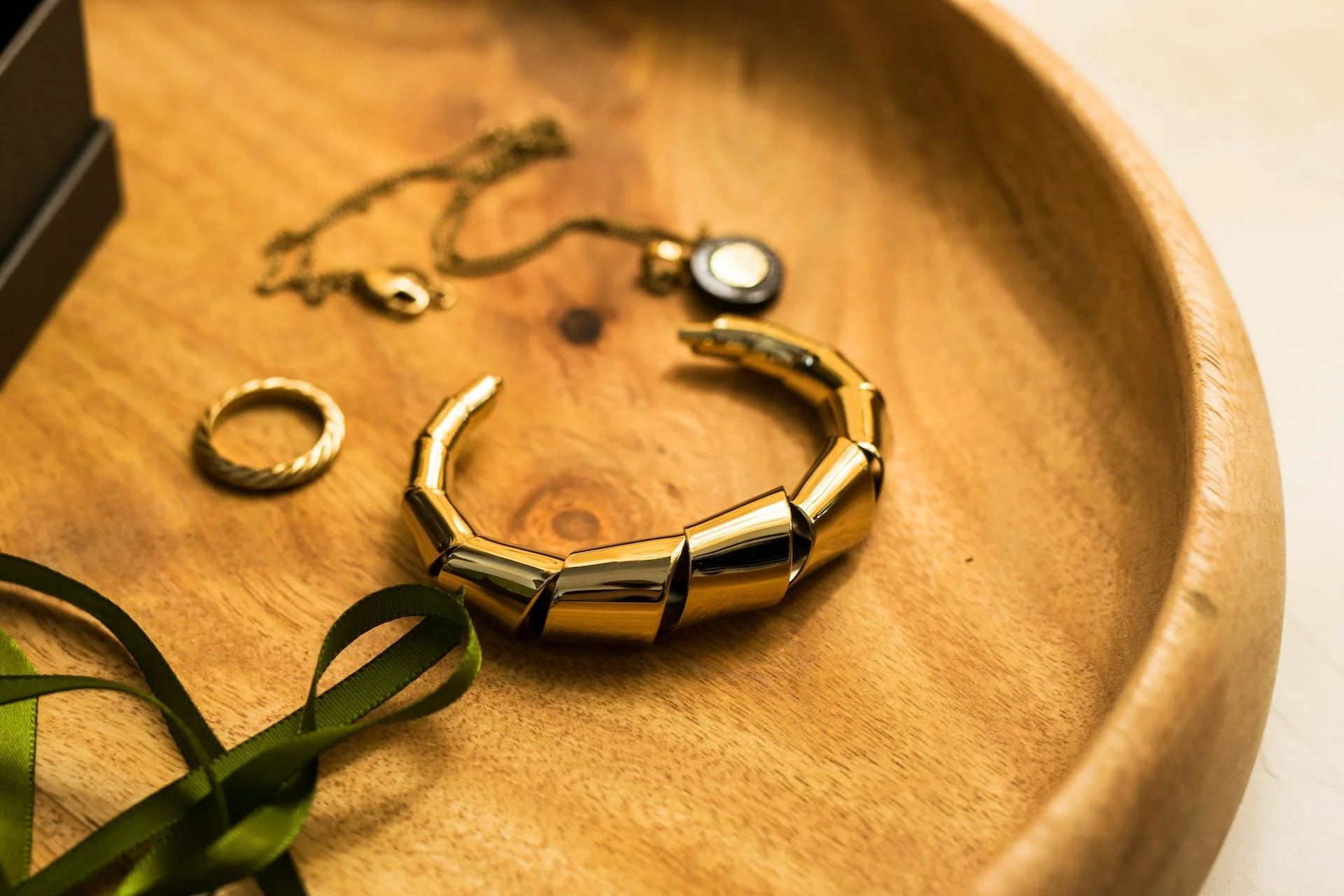



Master the differences between gold plated, vermeil, gold filled, and solid gold jewelry to educate customers, build trust, and drive confident purchasing decisions.
Published:
September 2, 2026
Author:
Yi Cui
Build trust by being the expert your customers need. For jewelry brand owners, influencers, and ecommerce sellers, explaining price differences and material quality is a daily challenge. When a customer asks why one gold ring costs $40 and another costs $400, your answer determines whether you make a sale or lose their trust. This guide provides a complete, expert-level framework to use in your own customer education. By mastering these distinctions, you position yourself as a trusted authority who helps buyers make confident decisions.
Customers and even many new sellers often default to an oversimplified binary of "real" versus "fake" gold. In reality, the jewelry industry operates on a spectrum of materials, each with distinct manufacturing standards and use cases. In our experience at Branvas, one of the first questions new brand owners ask is whether they should sell "real" gold, and the answer is almost always more nuanced than they expect.
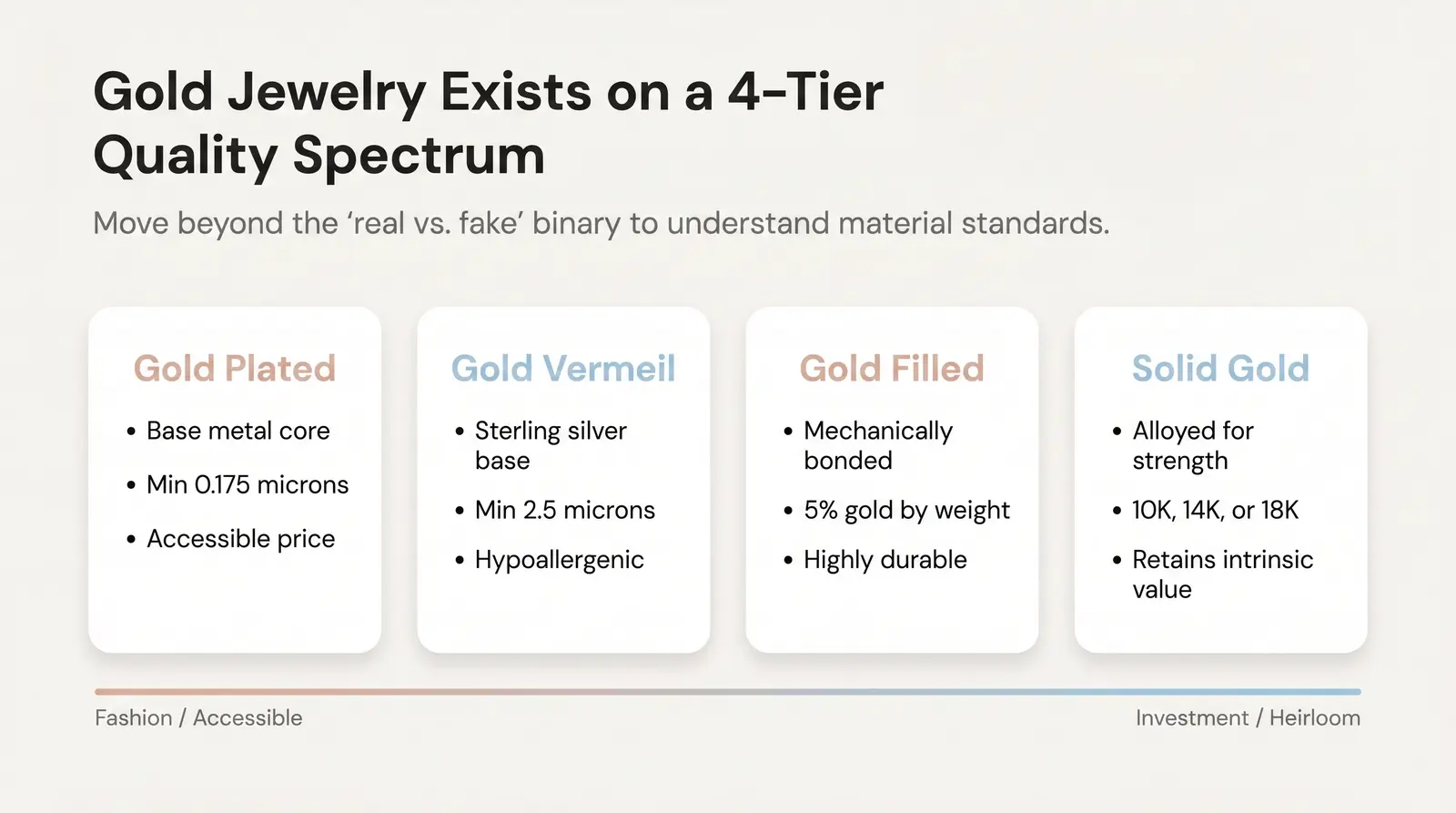
Gold Plated jewelry features a base metal, often brass or copper, covered with a thin layer of gold through electroplating. According to the Federal Trade Commission (FTC), standard gold electroplate must have a minimum thickness of 0.175 microns of at least 10K gold [1]. This category offers the most accessible price point but requires careful wear to maintain its finish.
Gold Vermeil (pronounced ver-may) is a specific, higher-quality tier of plated jewelry. To legally be called vermeil in the United States, the piece must have a sterling silver base and be coated with gold that is at least 10K and a minimum of 2.5 microns thick [1]. This makes vermeil significantly more durable than standard plating while remaining hypoallergenic.
Gold Filled jewelry involves mechanically bonding a layer of gold to a base metal core using heat and pressure. FTC regulations require the gold layer to constitute at least 1/20th (or 5%) of the item's total metal weight [1]. Gold filled pieces offer excellent durability and tarnish resistance, bridging the gap between plated and solid gold.
Solid Gold is not 100% pure gold, as 24K gold is too soft for everyday jewelry. Instead, it is alloyed with metals like silver, copper, or zinc for strength [2]. The karat system measures purity: 10K is 41.7% gold, 14K is 58.3% gold, and 18K is 75% gold [2]. Solid gold pieces are not hollow and retain intrinsic value over time.
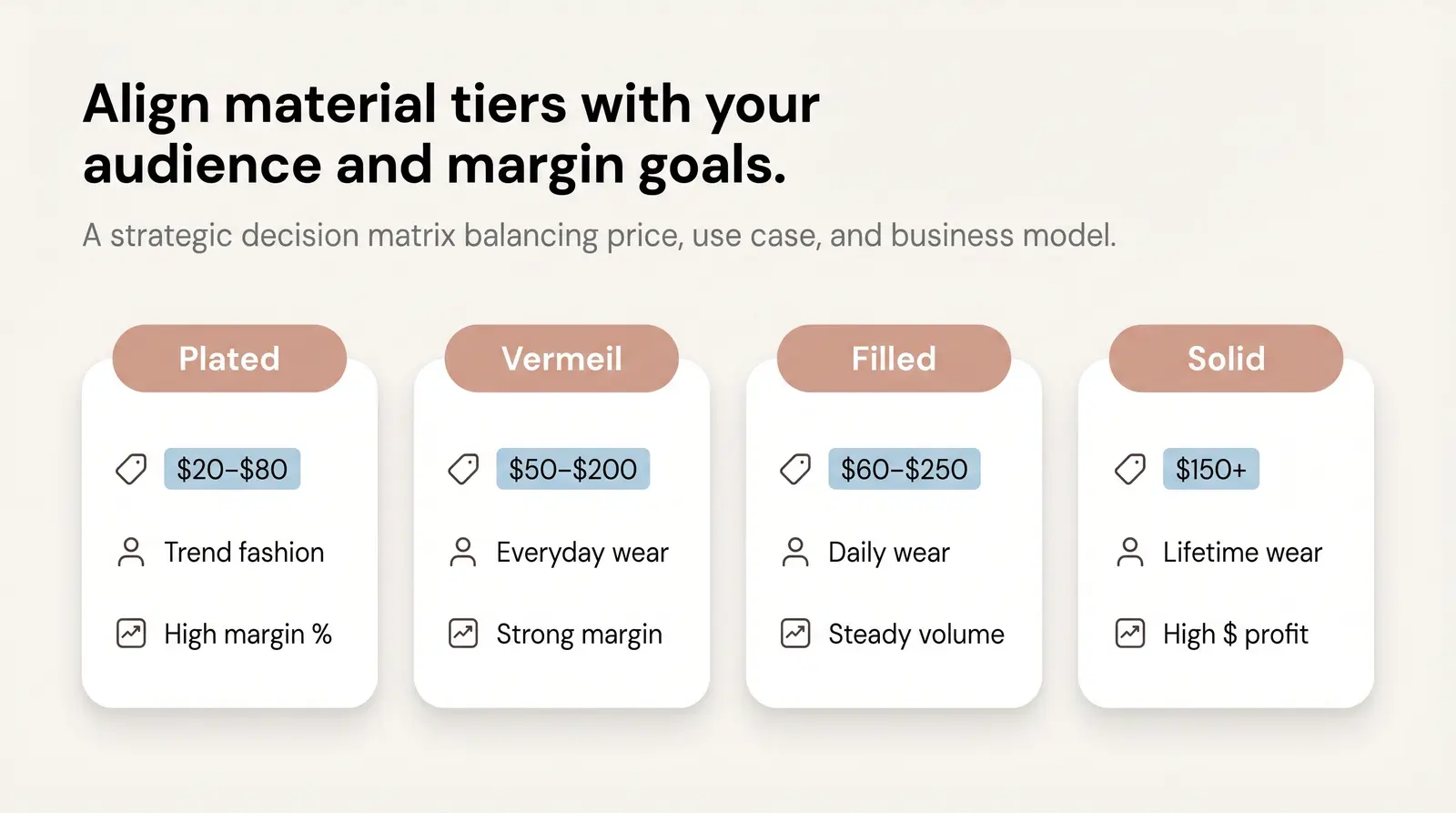
Choosing which gold type to offer is a strategic decision. The Branvas Gold Material Clarity Framework™ is a decision matrix that helps jewelry brand owners select the right material tier based on four critical dimensions: Price Point, Customer Use Case, Brand Positioning, and Margin & Scalability.
| Material Tier | Price Point | Customer Use Case | Brand Positioning | Margin & Scalability |
|---|---|---|---|---|
| Gold Plated | Entry-level ($20–$80) | Trend-driven, seasonal fashion, occasional wear | Accessible, fast-fashion, highly trend-responsive | High margin, low COGS, easy to scale volume |
| Gold Vermeil | Mid-market ($50–$200) | Everyday wear, affordable gifting, demi-fine | Premium accessible, quality-conscious, modern | Strong margin, moderate COGS, excellent perceived value |
| Gold Filled | Mid-market ($60–$250) | Long-term daily wear, water-resistant needs | Heritage, durable, practical luxury | Good margin, higher COGS, steady reorder volume |
| Solid Gold (10K) | Entry Luxury ($150–$400) | Entry-level fine jewelry, durable daily wear | Attainable luxury, resilient, practical | Moderate margin, high COGS, requires higher capital |
| Solid Gold (14K/18K) | Luxury ($300–$2,000+) | Investment, bridal, heirloom, lifetime wear | Aspirational, fine jewelry, exclusive | Lower percentage margin but high dollar profit, complex fulfillment |
This matrix allows you to align your product offerings with your target audience's expectations and your business model. If you're unsure which material tier fits your brand, Branvas's product catalog breaks down available options with supplier-vetted quality specs.
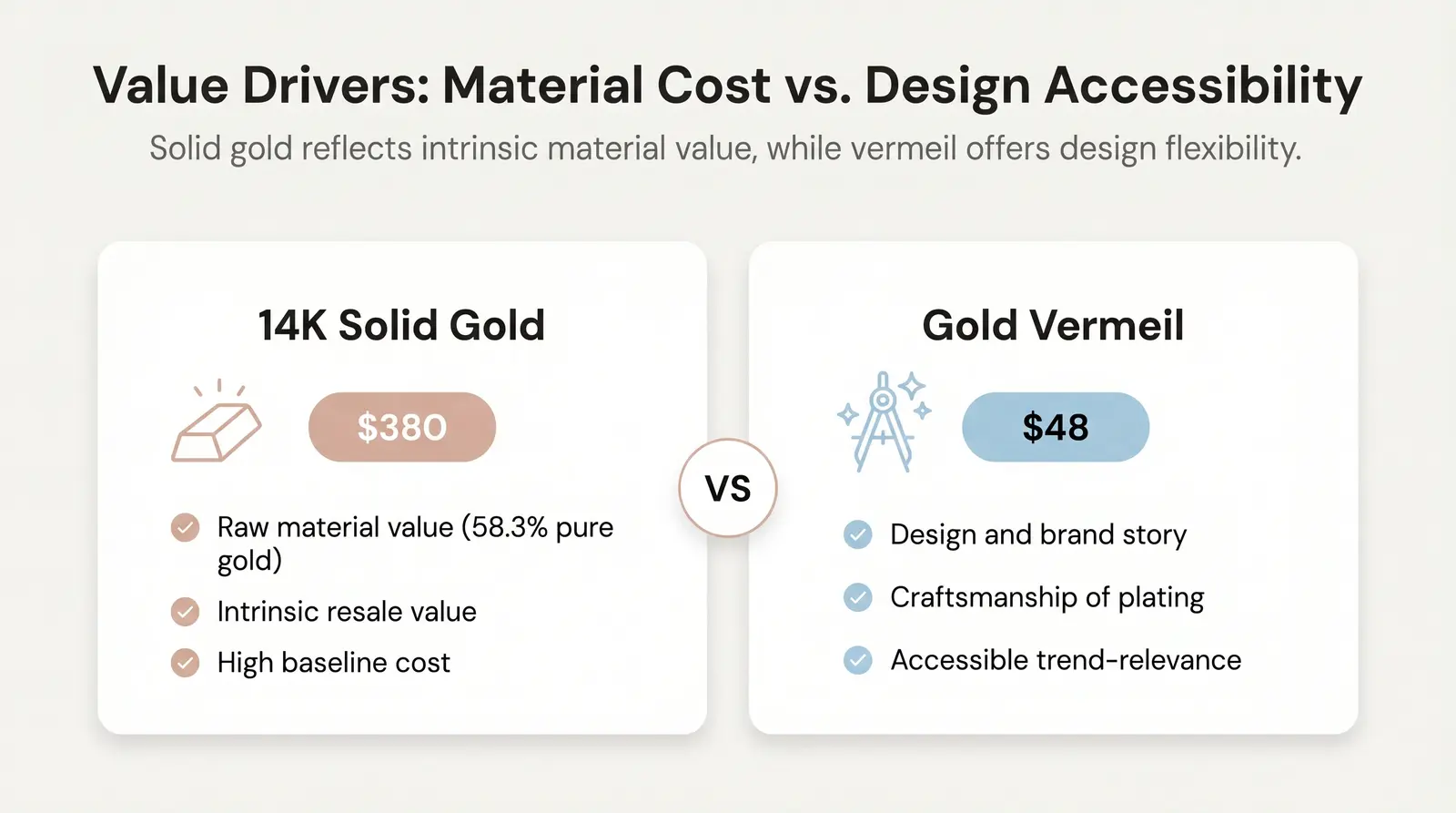
Let's say a customer is comparing a 14K solid gold ring at $380 versus a gold vermeil version at $48. Here's what each price tag actually reflects.
When a customer buys the 14K solid gold ring, they are paying primarily for raw material value. Solid gold has a verifiable melt value based on global commodities markets. A 14K ring contains 58.3% pure gold, meaning it holds intrinsic resale value [2]. The remaining cost covers the labor of casting, polishing, and retail markup. Because the material itself is expensive, the baseline cost is high regardless of the design.
Conversely, the $48 gold vermeil ring derives its value differently. The raw material cost of the sterling silver base and the 2.5 microns of gold plating is relatively low. The customer is paying for the design, the brand story, the craftsmanship of the plating process, and the ability to wear a beautiful, trend-relevant piece without a massive financial commitment. Solid gold offers investment and permanence, while plated pieces offer accessibility and design flexibility. This is a critical framing shift for brand owners selling at non-luxury price points.
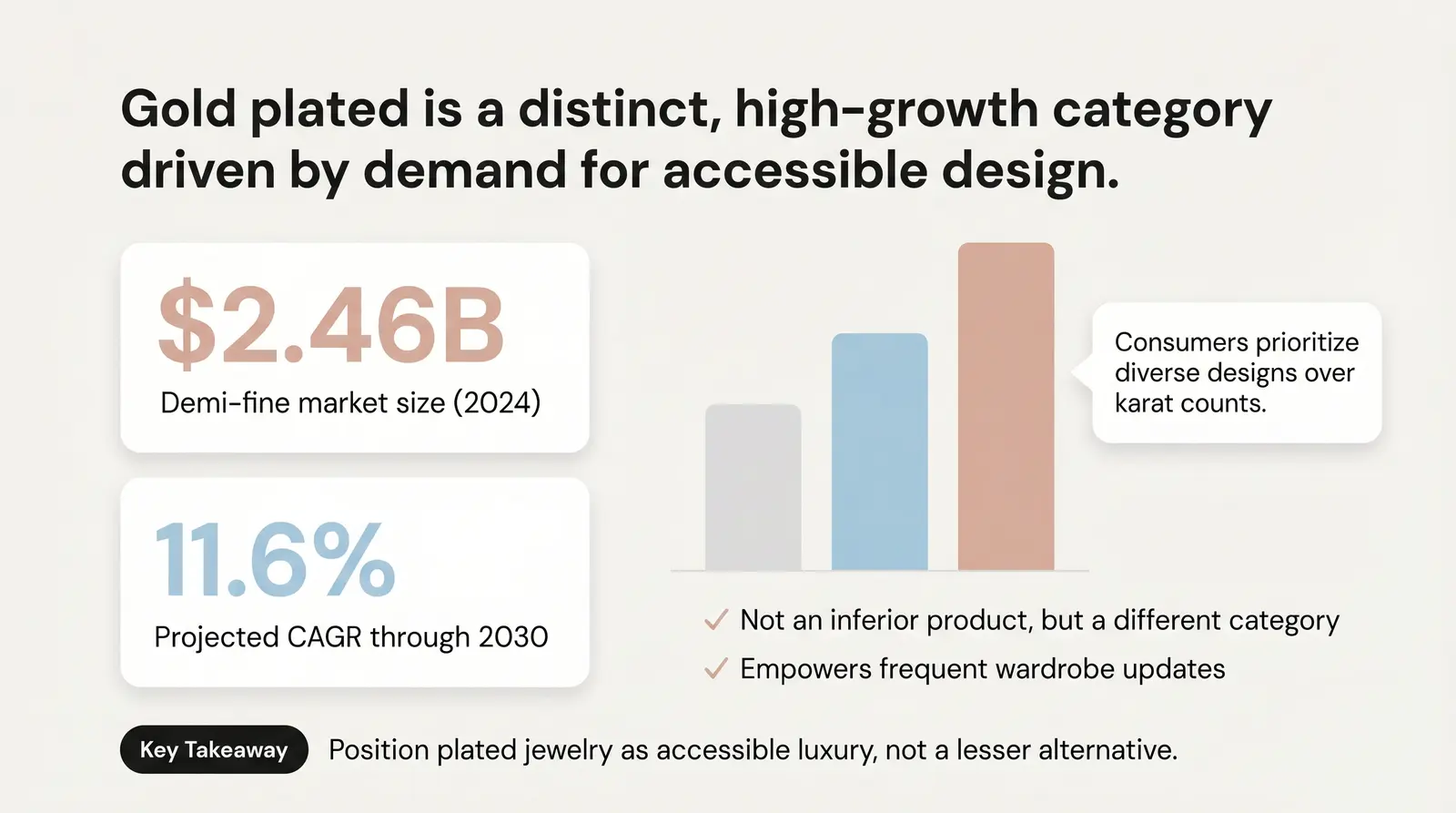
Gold plated jewelry is not an inferior product; it is a different product category entirely. Treating it as a lesser version of solid gold is a positioning mistake that costs brand owners sales.
The global demi-fine jewelry market, which heavily features vermeil and high-quality plating, reached $2.46 billion in 2024 and is projected to grow at an 11.6% CAGR through 2030 [3]. This growth is driven by modern consumers who prioritize accessible price points, diverse designs, and brand transparency over karat counts alone [3]. Buyers want the look of fine jewelry to update their wardrobes frequently, and plated options serve this exact need perfectly.
We often see new founders undercut their own brand confidence by apologizing for selling gold plated, when in reality, customers who understand what they're buying are often the most loyal. When positioned correctly as fashion-forward, accessible luxury, plated jewelry empowers customers to express their style without financial strain.
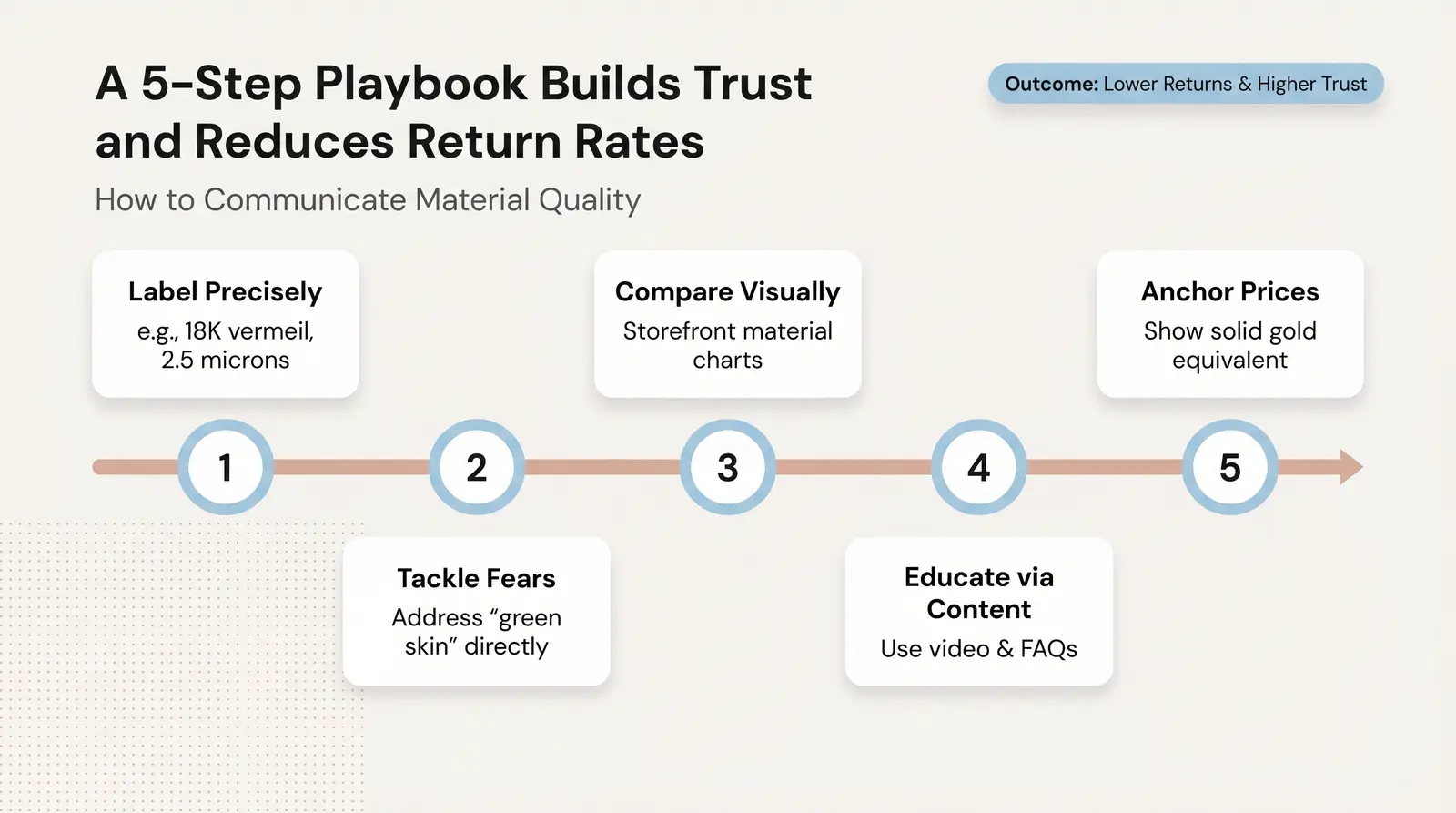
Educating your customers builds trust and reduces return rates. Use this step-by-step playbook to communicate material quality effectively.
At Branvas, we help brand owners build packaging inserts and product descriptions that do this customer education automatically, so founders don't have to explain it one DM at a time.
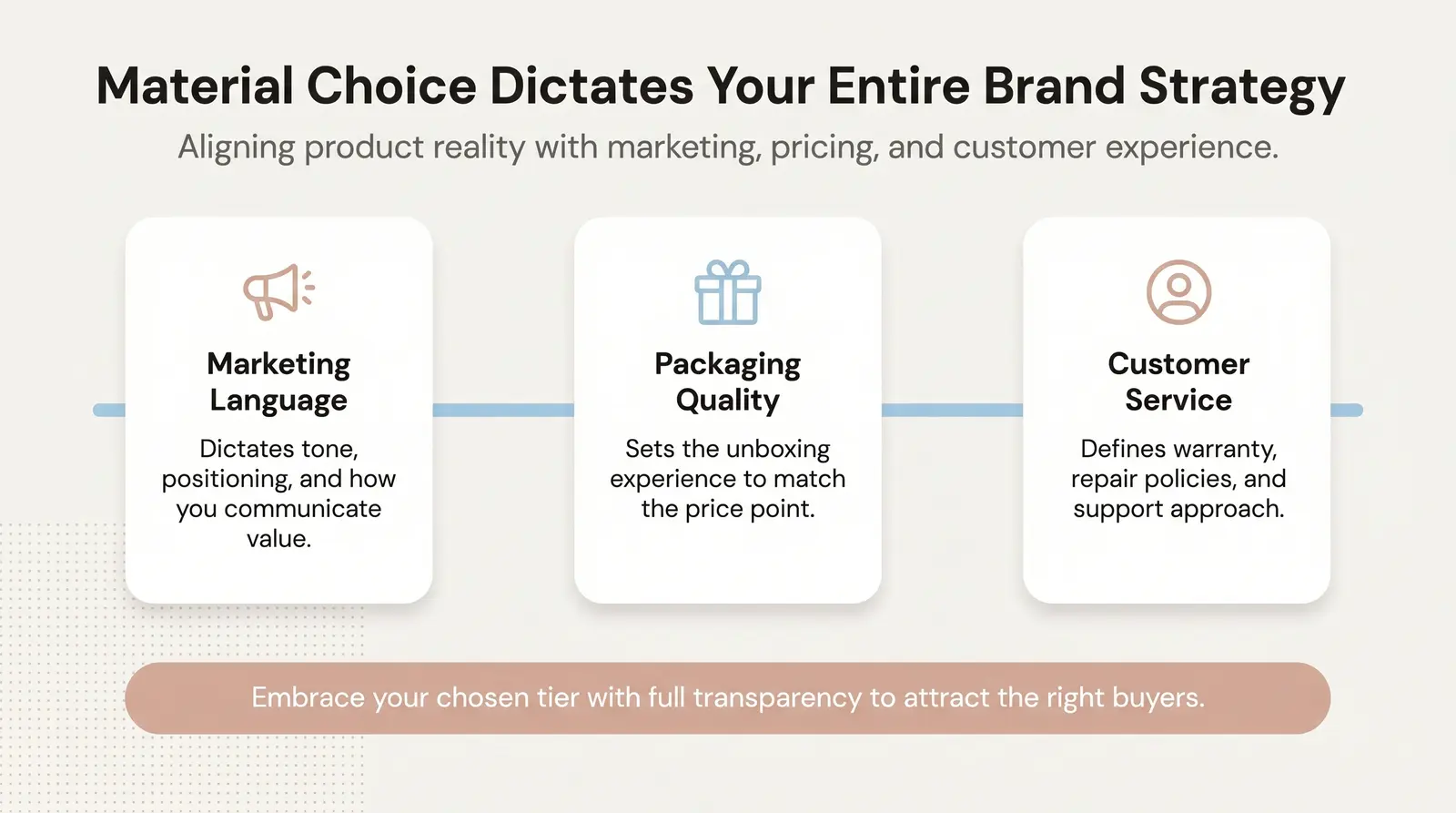
Choosing the right gold tier is a strategic brand decision, not just a product decision. A brand selling 14K solid gold communicates differently, prices differently, and attracts a different customer than one selling gold vermeil or plated pieces. All three can be highly successful, provided the positioning aligns with the product reality.
Your material choices dictate your marketing language, your packaging quality, and your customer service approach. When you embrace your chosen material tier with full transparency, you attract buyers who appreciate exactly what you offer.
Branvas makes it straightforward to launch with the right material tier for your brand vision. From curated private-label catalogs to branded packaging and blind fulfillment, we handle the complexity so you can focus on building your audience. See how it works →
New to launching a jewelry brand? Start with the Branvas Academy for step-by-step guidance.
How long does gold plated jewelry last compared to solid gold?
Gold plated jewelry typically lasts one to three years with regular wear, depending on the plating thickness and how well it is cared for. Solid gold, however, lasts a lifetime and will not tarnish or fade, making it suitable for permanent, everyday wear.
Is gold vermeil better than gold plated jewelry?
Yes, gold vermeil is a higher-quality form of plating. It requires a sterling silver base and a gold layer that is at least 2.5 microns thick, making it significantly more durable and hypoallergenic than standard gold plated pieces over brass or copper.
What karat of solid gold is best for everyday wear?
For everyday wear, 14K solid gold is widely considered the best choice. It contains 58.3% pure gold mixed with stronger alloys, offering an ideal balance of rich color, excellent durability, and scratch resistance.
Can gold plated jewelry be replated, and is it worth it?
Gold plated jewelry can technically be replated by a jeweler. However, because the cost of replating often exceeds the original purchase price of fashion jewelry, it is usually only worth it for pieces with high sentimental value.
How do I explain jewelry material differences to my customers without losing the sale?
Focus on the specific benefits of the material you sell. If you sell plated jewelry, highlight the accessible price point and trend-forward designs; if you sell solid gold, emphasize its lifetime durability and investment value. Transparency builds trust, which ultimately drives sales.