


Blind shipping hides supplier identity from customers, preventing poaching and protecting brand equity. Learn how it works, why it matters, and how to set it up.
Published:
August 26, 2026
Author:
Yi Cui
The invisible wall between your supplier and your customer. Imagine a loyal customer excitedly opening a package from your store, only to find a packing slip bearing the name and address of a wholesale manufacturer they have never heard of. Within seconds, that customer can Google the supplier, find the exact same products at a fraction of the price, and reorder directly—cutting you out entirely. This single moment of exposure destroys the brand equity you worked so hard to build, turning your own supply chain into your biggest competitor.
Blind shipping is a fulfillment method where the supplier ships directly to the end customer, but the supplier's name, address, and identity are completely hidden and replaced by the seller's brand [1]. In logistics terminology, "blind" refers to keeping one or more parties in the dark about the identities of other parties in the transaction [2]. When a shipment is blind, the supplier's information is removed from the Bill of Lading (BOL) and all outbound materials, ensuring the customer only sees the retailer's details [3].
This method is distinct from standard dropshipping, which is a broader fulfillment model where the seller forwards orders to a supplier who ships directly. In standard dropshipping, the supplier's information is often visible on the package [4]. Third-party logistics (3PL) involves outsourcing warehousing and fulfillment to a dedicated company, which may or may not utilize blind shipping protocols. White-label shipping is related but not identical; white label means the product itself has no visible supplier branding, whereas blind shipping focuses entirely on hiding the supplier's identity on the shipping documents and packaging [5].
Consider a concrete example: Maya owns a private-label jewelry brand and sells her pieces on Instagram. Her manufacturing supplier is located in another city. When a customer orders a necklace from Maya's store, the supplier packages the item and ships it directly to the buyer. Because Maya uses blind shipping, the package arrives with her brand's logo, her return address, and her custom packing slip. There is absolutely no trace of the supplier, preserving the illusion that Maya shipped the item herself.
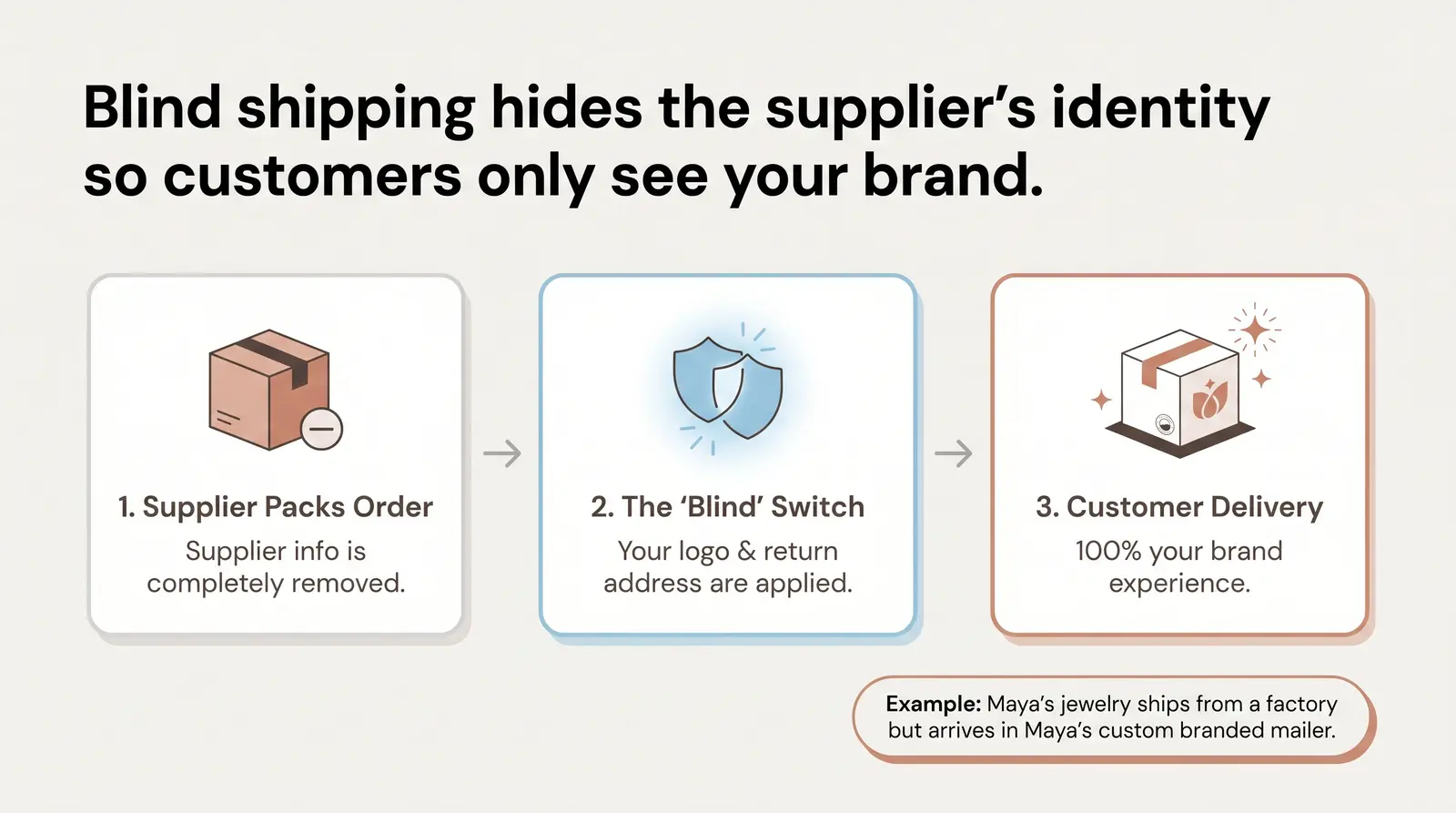
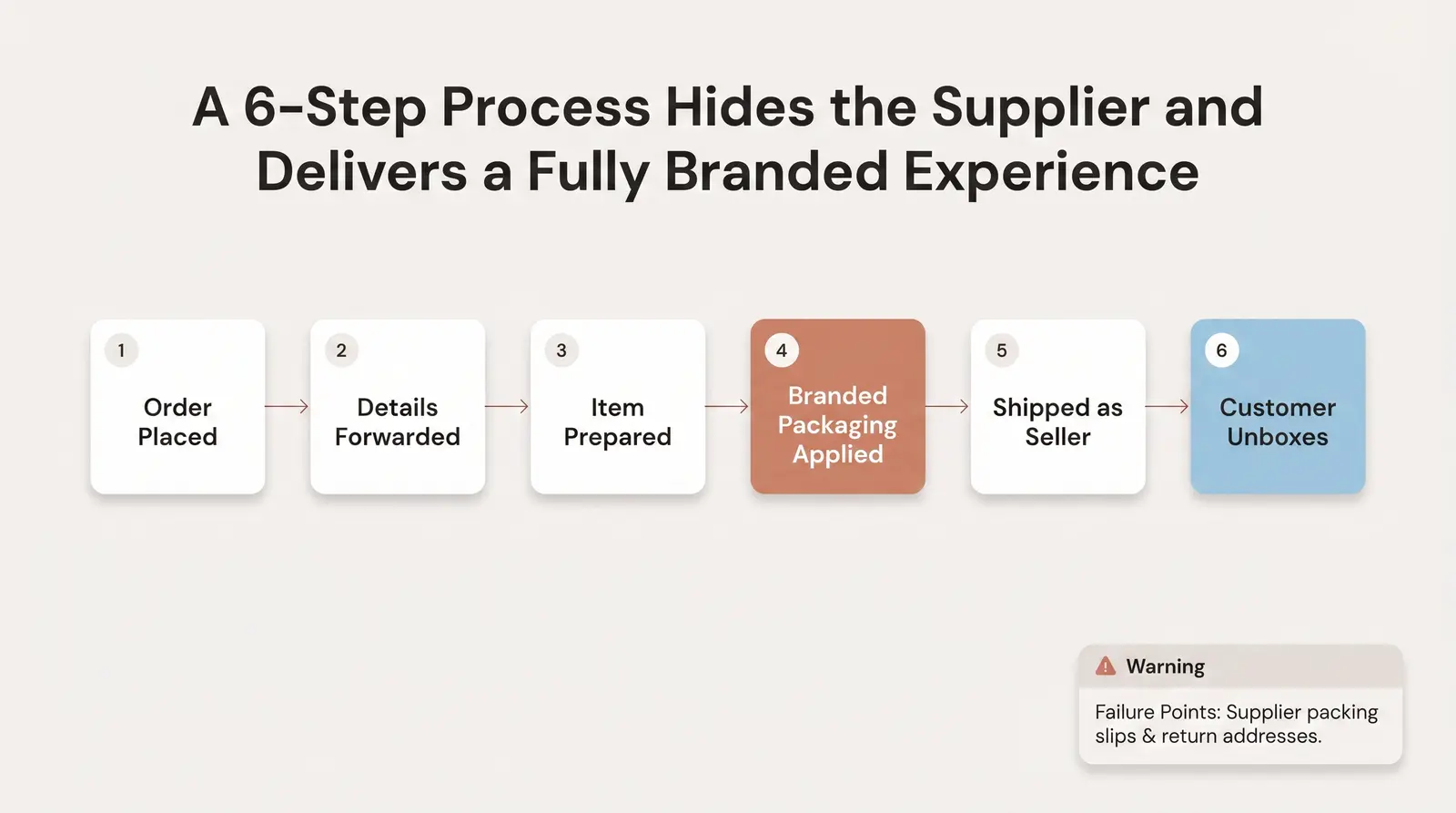
The blind shipping process requires precise coordination between the seller, the supplier, and the carrier to ensure no information leaks during transit. Here is the step-by-step walkthrough of how it functions from order placement to delivery:
The two most common failure points in this process are packing slips and return addresses. If a supplier accidentally includes their standard packing slip or uses their own warehouse address on the return label, the blind shipment fails, and the supplier's identity is exposed to the customer.
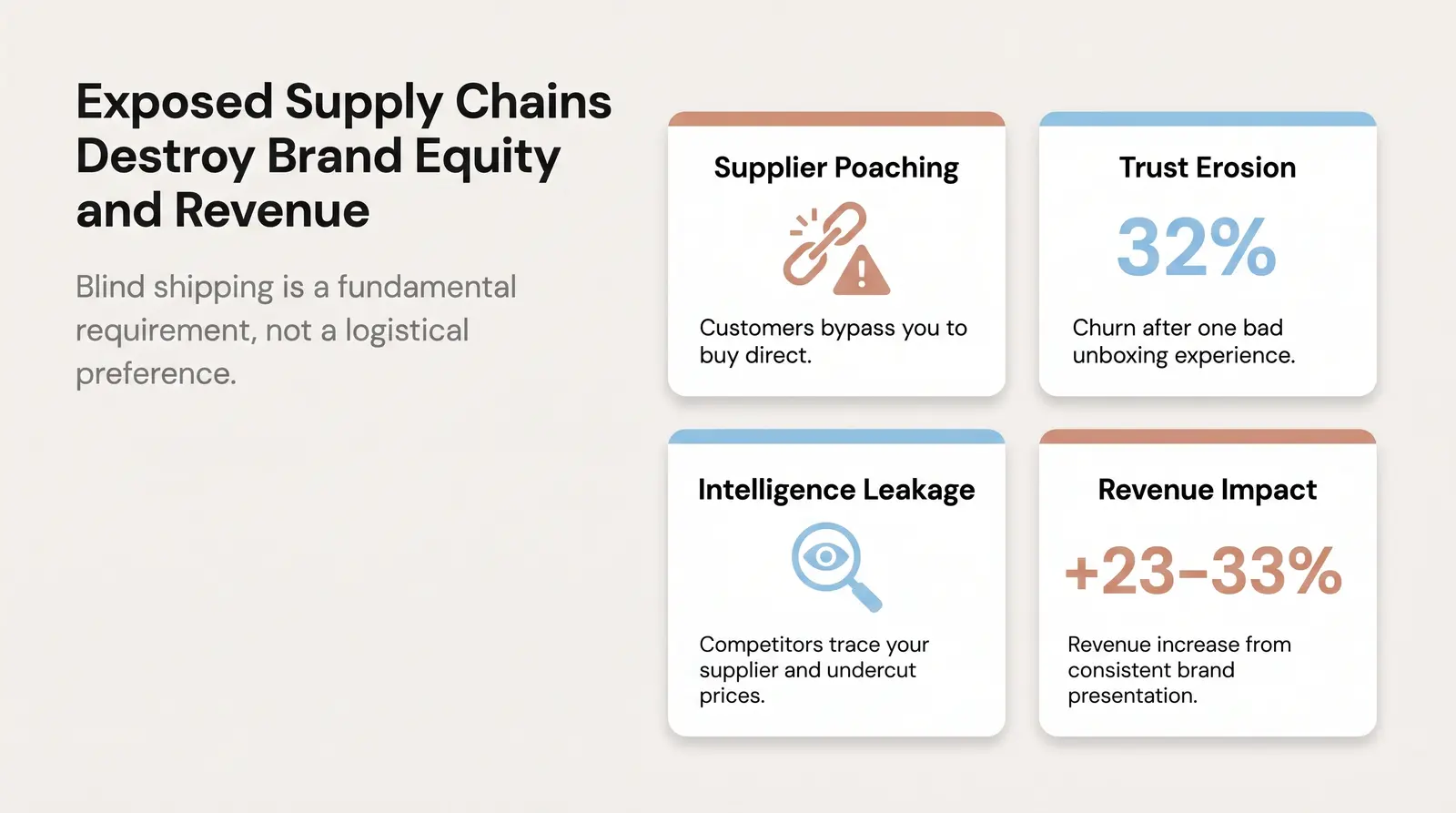
For ecommerce sellers, blind shipping is not merely a logistical preference; it is a fundamental requirement for brand protection. The most immediate threat is supplier poaching. When a non-blind shipment exposes the supplier's identity, customers can easily bypass the brand to purchase directly from the source [7]. This risk is compounded by the fact that acquiring a new customer costs five to ten times more than retaining an existing one [8]. Losing a repeat customer to your own supplier is a devastating blow to profitability.
Beyond direct poaching, exposed shipments erode customer trust and brand perception. Customers expect packages to arrive from the brand they purchased from. When a package arrives from an unknown third party, it creates post-purchase dissonance and damages the unboxing experience. Research indicates that 32% of customers will walk away from a brand they love after just one bad experience [9]. Conversely, consistent brand presentation across all touchpoints, including fulfillment, can increase revenue by 23% to 33% [10].
Competitive intelligence leakage is another severe vulnerability. Competitors can easily place a test order from your store. If the shipment is not blind, they immediately identify your supplier, allowing them to source the exact same products and undercut your pricing [11]. Furthermore, non-blind shipments create significant customer service confusion. When buyers see a different company's name on the return label, they often do not know who to contact for returns or support, leading to frustration and negative reviews.
Most sellers focus heavily on product quality and price when assessing fulfillment partners. However, blind shipping discipline is actually a stronger predictor of long-term brand defensibility than product uniqueness alone. Products can be copied in a matter of months, but a locked supply chain relationship with proper blind shipping creates an operational moat. If your supplier remains anonymous, competitors cannot replicate your supply chain, securing your market position.
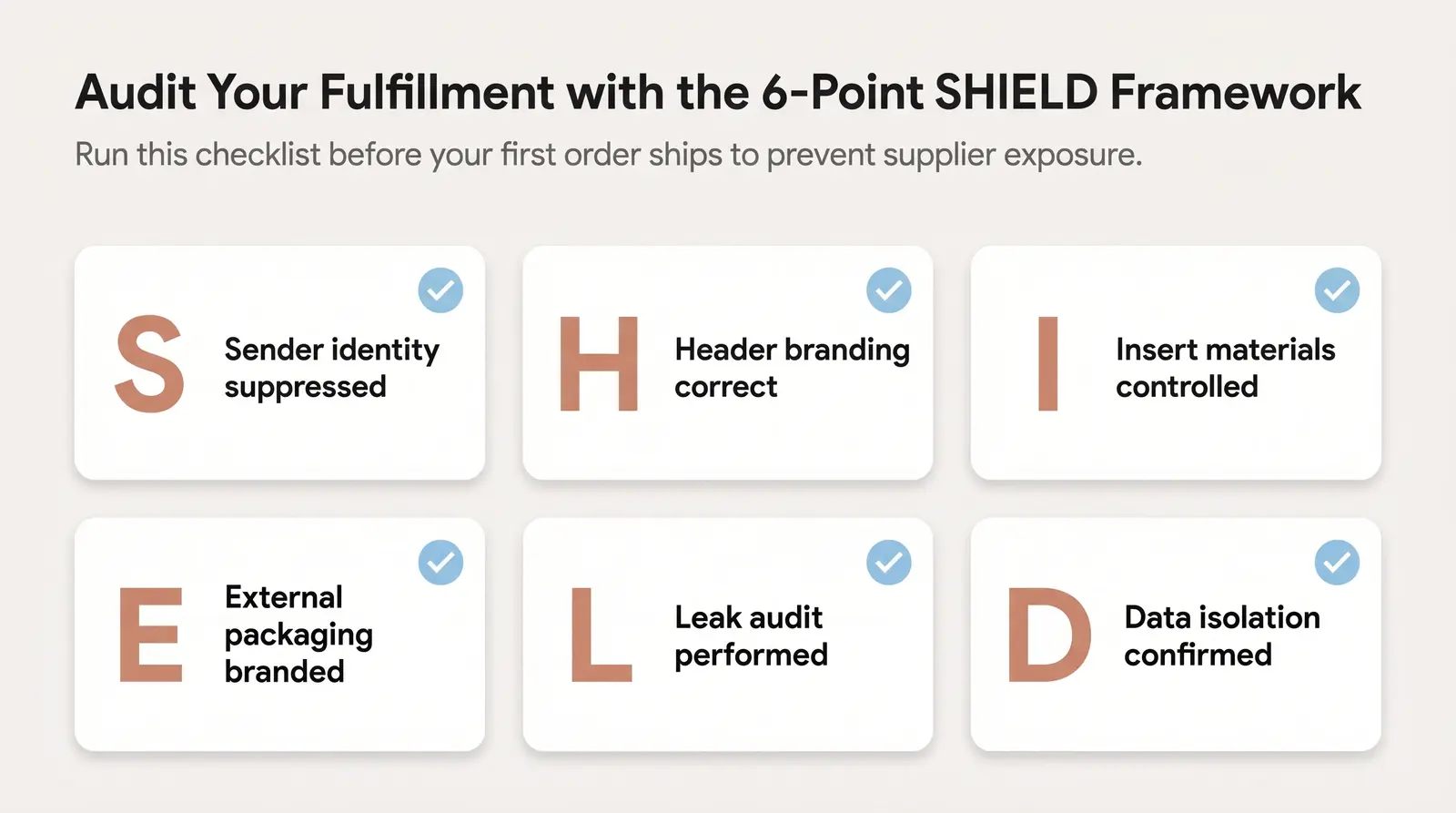
To ensure complete brand protection, sellers must rigorously audit their fulfillment processes. The SHIELD Fulfillment Checklist™ is Branvas's proprietary 5-point audit for evaluating whether a fulfillment setup truly protects a brand. Any ecommerce seller can apply this framework to secure their supply chain:
In our experience at Branvas, most brand founders do not discover a blind shipping failure until a confused or angry customer mentions it in a support ticket. By then, the damage is already done. Running this checklist before your first order ships prevents that exposure entirely.
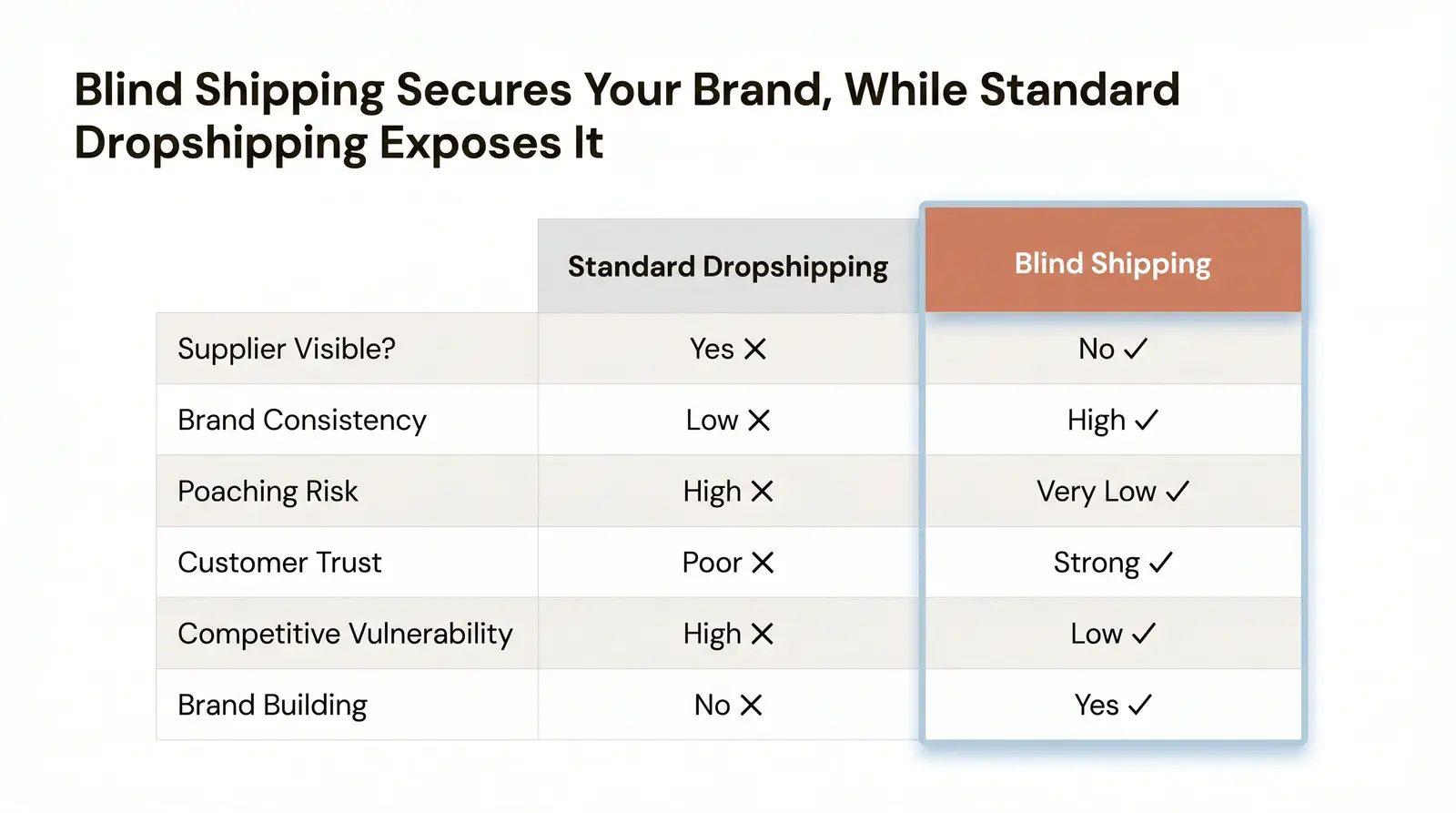
Understanding the distinction between blind shipping and standard dropshipping is critical for building a sustainable brand. The following table highlights the key differences across major operational dimensions:
| Dimension | Standard Dropshipping | Blind Shipping |
|---|---|---|
| Supplier identity visible to customer | Yes | No |
| Brand consistency | Low | High |
| Risk of supplier poaching | High | Very Low |
| Customer trust/unboxing experience | Poor | Strong |
| Competitive vulnerability | High | Low |
| Suitable for brand building | No | Yes |
While standard dropshipping offers a low barrier to entry for new sellers, it sacrifices brand control and exposes the supply chain. Blind shipping requires more rigorous operational discipline but provides the security and consistency necessary to build a defensible, long-term brand.
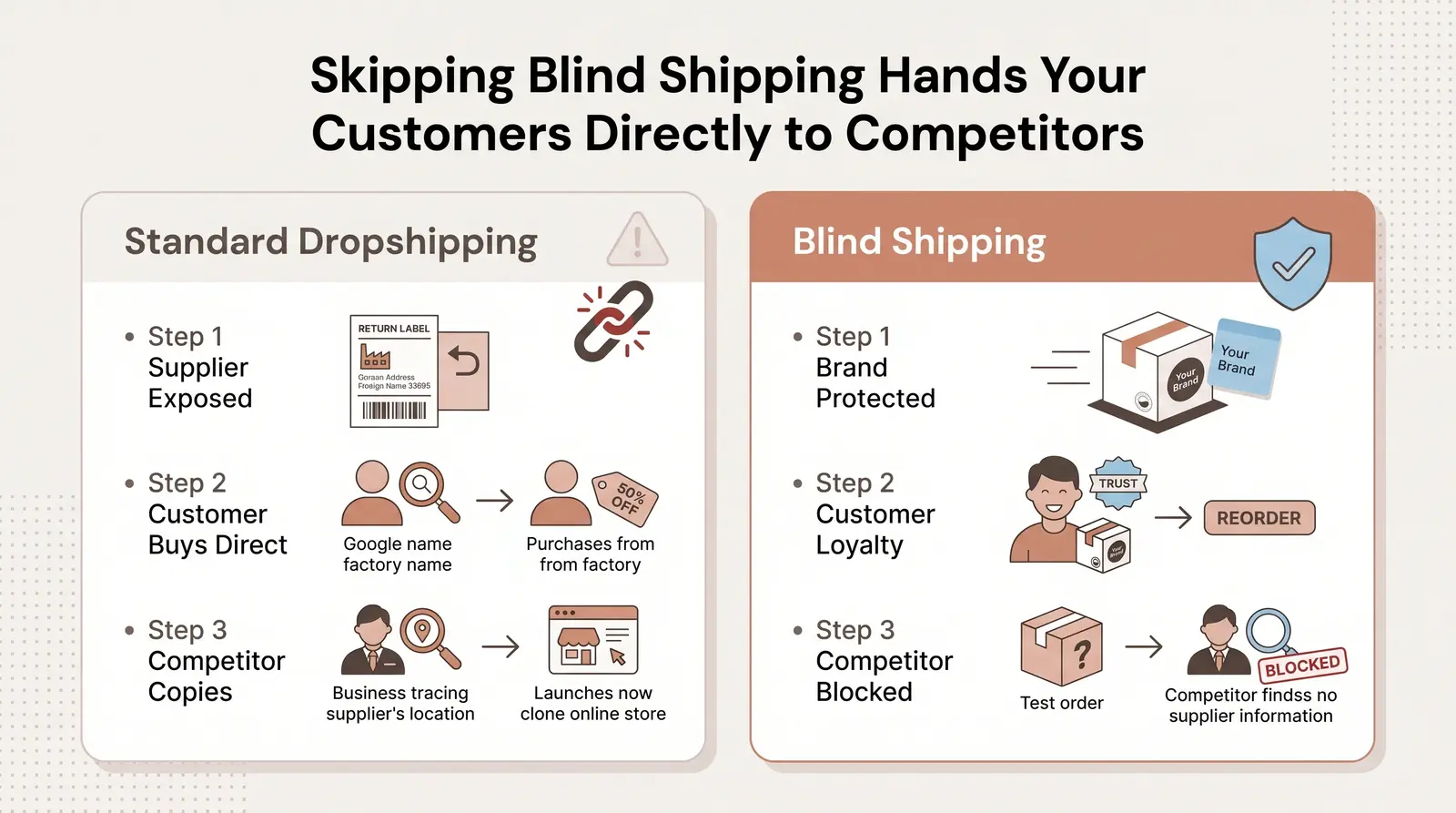
Consider the scenario of Jordan, a fictional seller who launches a private-label jewelry brand using a supplier found online. Eager to start selling, Jordan skips the blind shipping requirement and relies on standard dropshipping. A few weeks later, a customer orders a premium necklace. The package arrives, but the return label clearly displays the supplier's name and warehouse address.
Curious, the customer Googles the supplier and discovers the exact same necklace available for half the price. The customer immediately reorders directly from the supplier, and Jordan loses a valuable repeat buyer without ever knowing why. Worse, a competitor places a test order from Jordan's store, traces the supplier from the packaging, and launches a competing storefront within weeks, aggressively undercutting Jordan's prices.
If Jordan had insisted on blind shipping from day one, the outcome would have been entirely different. The customer would have received a beautifully branded package, reinforcing their loyalty to Jordan's store. The competitor's test order would have yielded no actionable intelligence, protecting Jordan's supply chain and preserving their operational moat.
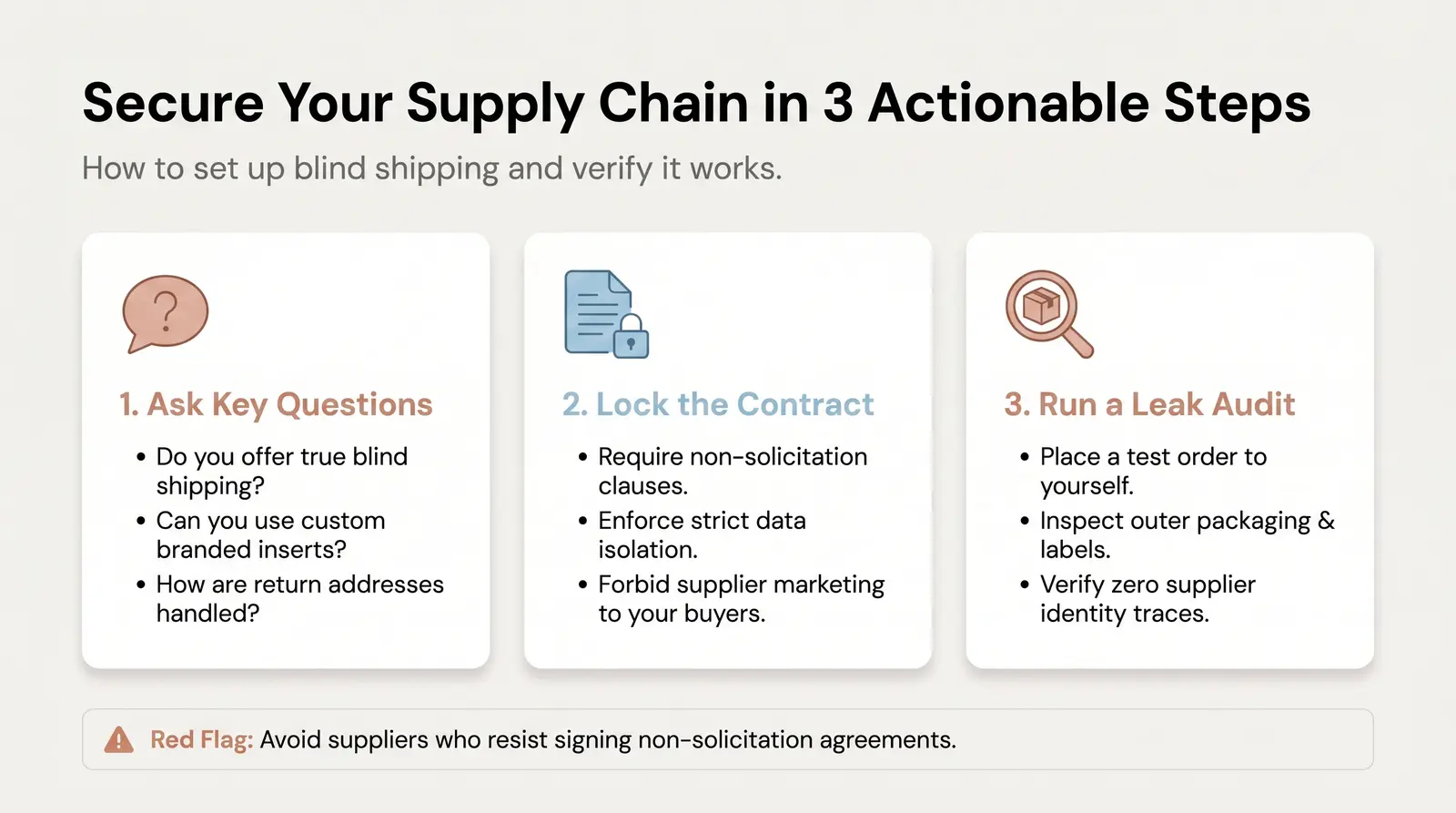
Implementing blind shipping requires proactive communication and clear contractual boundaries with your fulfillment partners. Before committing to a supplier, ask these specific questions:
Your contract language must also reflect these requirements. Ensure your supplier agreement includes strict non-solicitation clauses and data isolation policies, explicitly forbidding the supplier from contacting your customers or utilizing your sales data. Always perform a leak audit by placing a test order to verify the process is working correctly. Red flags include suppliers who resist signing non-solicitation agreements or who claim their logistics software cannot alter the return address on shipping labels.
If you're building a jewelry or accessories brand and want fulfillment that's blind-shipped by default, Branvas's how-it-works page walks through exactly how the process works end-to-end.
Blind shipping is not just a logistics feature; it is a foundational brand protection strategy. For influencers and creators launching product lines, this protection is especially critical because their relationship with their audience is their primary asset. Exposing that audience to a third-party supplier breaks the trust they have cultivated.
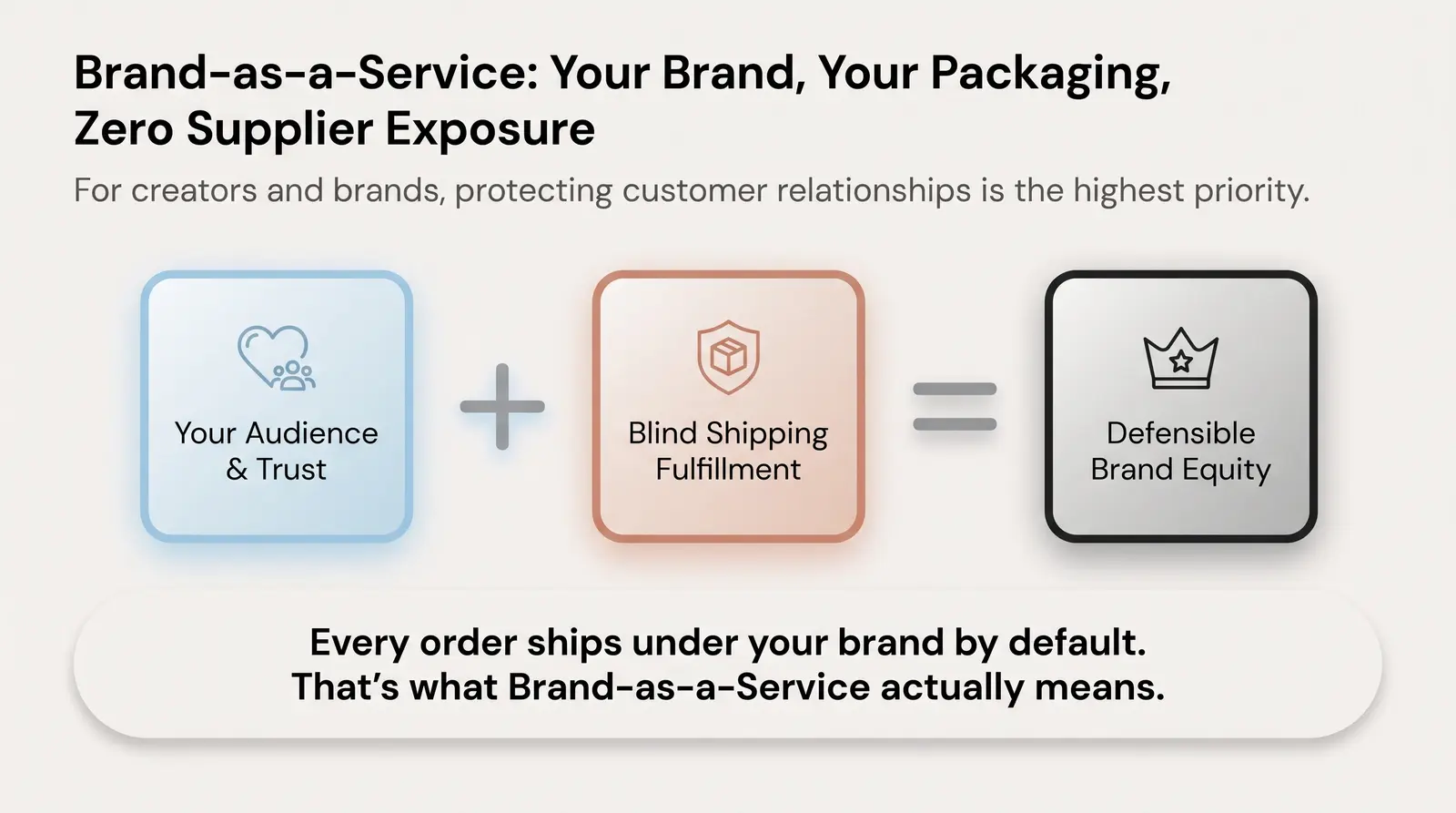
At Branvas, blind shipping isn't an add-on or an upgrade — it's the baseline. Every order that ships through our platform goes out under your brand, with your packaging, and zero supplier exposure. That's what Brand-as-a-Service actually means in practice. Whether you are an influencer monetizing your audience or an ecommerce entrepreneur scaling a storefront, protecting your customer relationships must be your highest priority.
Ready to launch a jewelry brand that ships with your branding — and only your branding? See how Branvas works →
What is blind shipping and how is it different from regular dropshipping?
Blind shipping is a fulfillment method where the supplier's identity is completely hidden from the end customer, with all shipping documents and packaging reflecting only the seller's brand. Regular dropshipping is a broader fulfillment model where the supplier ships directly to the customer, but their identity and address are often visible on the packaging. Blind shipping is a protective technique applied to fulfillment, whereas dropshipping is the fulfillment model itself.
Can a supplier still contact my customers if I use blind shipping?
While blind shipping hides the supplier's identity from the customer, the supplier still possesses the customer's shipping address to fulfill the order. To prevent the supplier from contacting your customers, you must implement strict data isolation policies and include non-solicitation clauses in your supplier contracts. Double-blind shipping, managed by a third-party freight forwarder, can hide the customer's identity from the supplier entirely.
How do I know if my blind shipping is actually working?
The only definitive way to verify your blind shipping setup is to perform a leak audit. Place a test order through your own storefront and have it shipped to your home or office. Carefully inspect the outer packaging, the return label, the packing slip, and any internal inserts to ensure no trace of the supplier's identity is present.
What is supplier poaching and how does blind shipping prevent it?
Supplier poaching occurs when a customer or competitor identifies your supplier from a non-blind shipment and bypasses your store to purchase directly from the source. Blind shipping prevents this by removing the supplier's name and address from all outbound materials. If the customer never sees the supplier's identity, they cannot cut you out of the transaction.
Is blind shipping available for small or new brands, or only for large sellers?
Blind shipping is available to brands of all sizes, though not all suppliers or carriers offer it by default. Many modern 3PLs and specialized fulfillment platforms, like Branvas, provide blind shipping as a standard feature for all clients, regardless of order volume. Small brands should insist on blind shipping from day one to protect their early customer base and establish a secure supply chain.