


Learn how to sell jewelry at local pop-ups and craft fairs using curated displays, digital catalogs, and the SURF framework to maximize sales and build community.
Published:
June 4, 2026
Author:
Yi Cui
Take your digital brand into the real world.
For jewelry brands, local pop-ups and craft fairs are a high-leverage channel right now. While ecommerce offers scale, nothing builds trust faster than letting a customer hold, try on, and experience your pieces in person. The smartest sellers are bridging their digital catalogs with an in-person presence, creating a seamless omnichannel experience. At Branvas, we often see founders who have built a solid online following but haven't yet tapped the trust and conversion power of face-to-face selling.
Taking your brand offline doesn't mean abandoning your digital roots. In fact, the most successful local market activations use physical space to amplify digital reach. By showing up in your local community, you are doing more than just making weekend sales. You are building a hyper-local, highly engaged customer base that will continue to support your brand online long after the pop-up tent comes down.
The pop-up retail market is booming, projected to reach $95 billion by 2025 [1]. For jewelry sellers, this temporary retail model offers unique advantages that traditional ecommerce simply cannot match. While a beautiful website is essential, jewelry is an inherently tactile product. Customers want to feel the weight of a pendant, see how a gemstone catches the light, and try on rings to ensure the perfect fit.
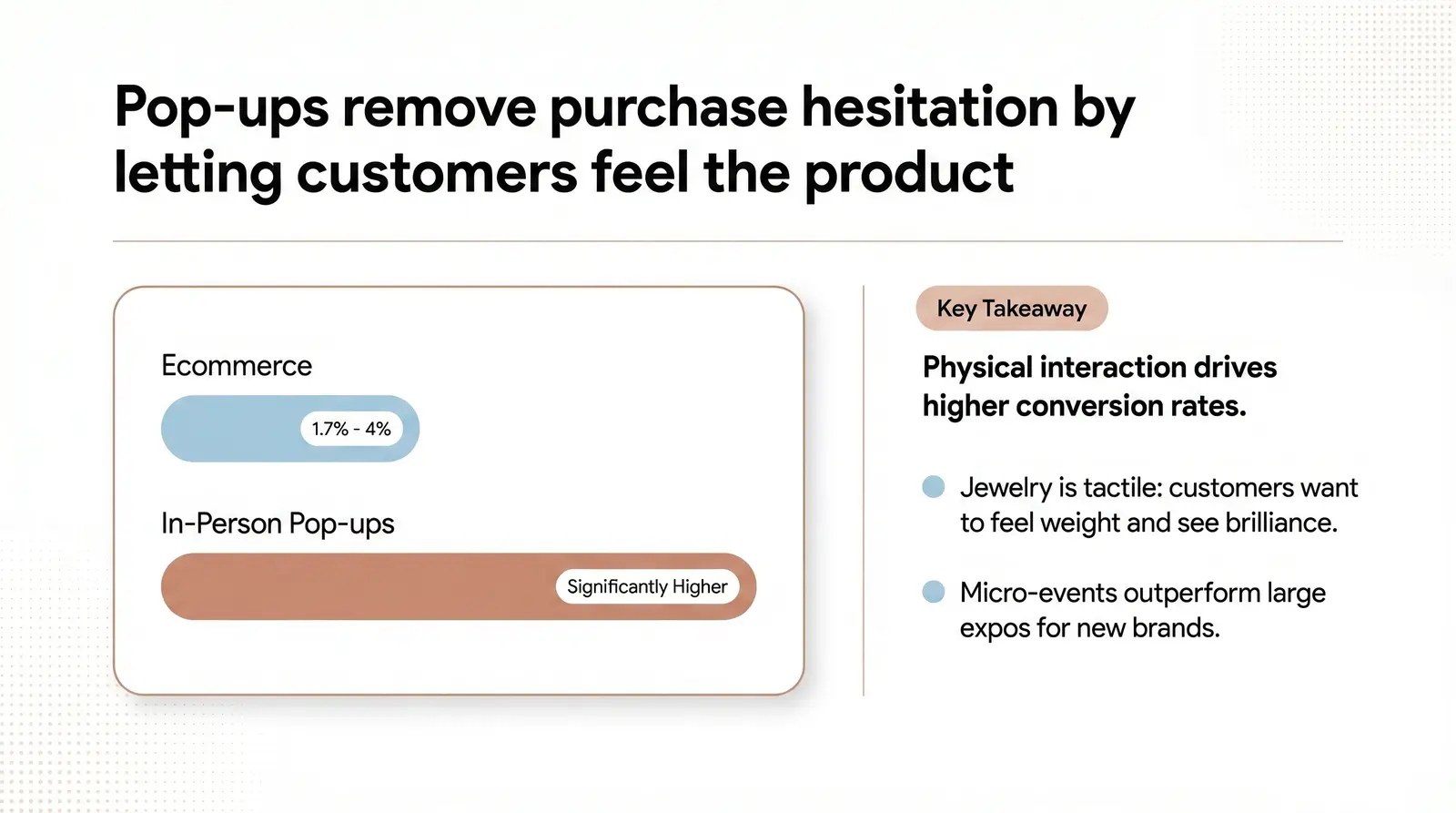
Interestingly, pop-ups often convert better than digital storefronts for jewelry. While average ecommerce conversion rates hover around 1.7% to 4% [2], in-person events can see significantly higher engagement because the physical interaction removes purchase hesitation. When a customer can physically inspect the quality of a clasp or the brilliance of a stone, the barrier to purchase drops dramatically.
Furthermore, smaller hyper-local events, like community artisan markets or boutique shop-in-shops, frequently outperform large, overwhelming craft fairs for new brands. These micro-events offer a less competitive environment and attract a highly targeted, local audience eager to support community makers [3]. At a massive expo, your brand might get lost in a sea of hundreds of other jewelers. At a neighborhood farmers market or a curated local boutique pop-up, you become the focal point. This localized attention allows for deeper conversations, stronger relationship building, and ultimately, higher conversion rates.
To help our sellers succeed offline, we developed The SURF Framework. This is the system Branvas recommends to sellers launching their first (or next) local market activation. It is designed to maximize your impact while minimizing the stress of event preparation.

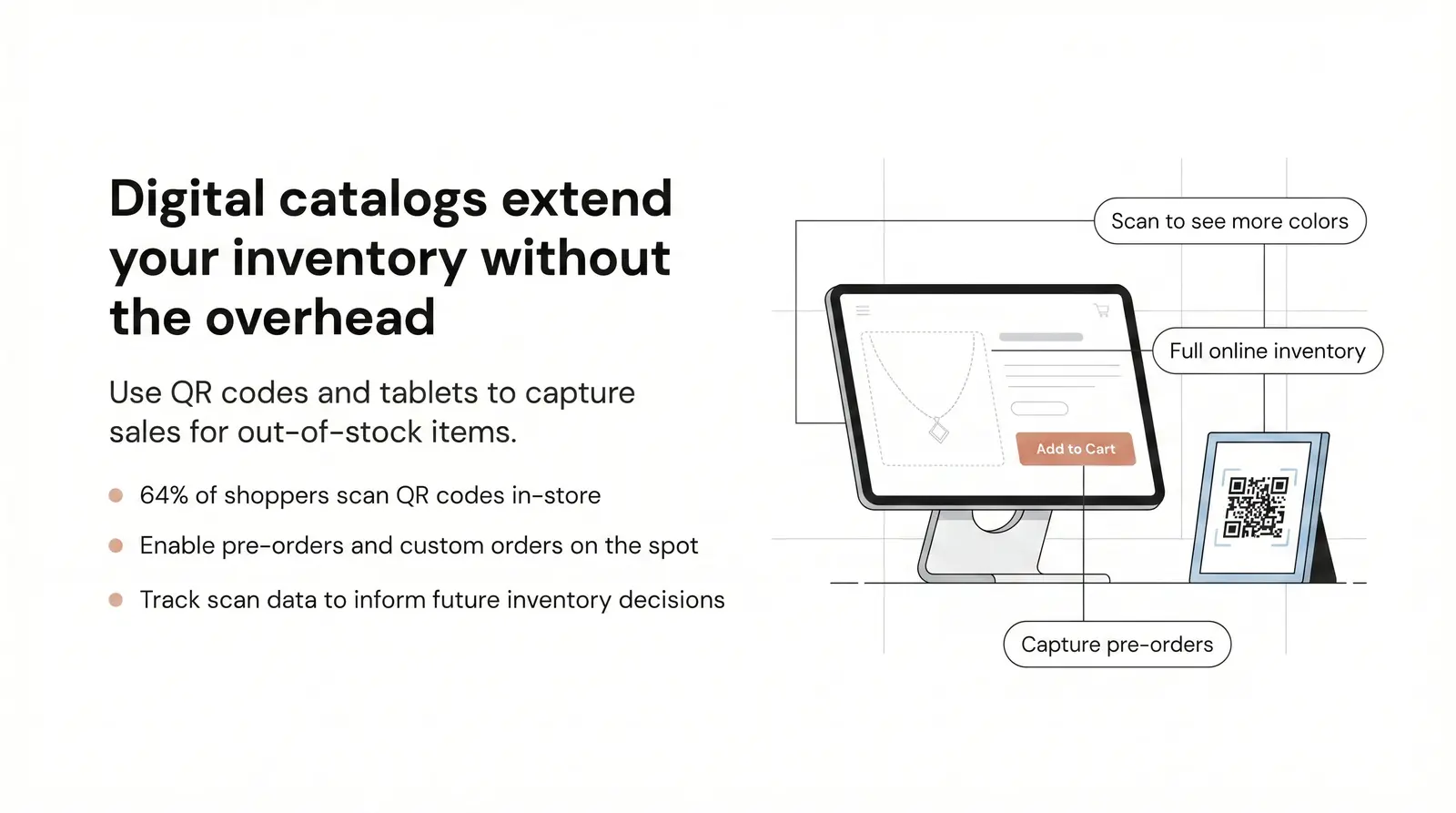
You don't need to haul your entire inventory to a local market. In fact, you shouldn't. Instead, use a digital inventory catalog to show items you don't physically have at the table. This enables pre-orders, custom orders, or post-event purchases without the overhead of carrying massive amounts of stock.
Set up an iPad or tablet on a stand displaying a simple linked lookbook or product page. Alternatively, place beautifully designed QR codes next to your physical displays with a clear call-to-action like "Scan to see more colors" or "Shop our full collection." This strategy is highly effective; 64% of shoppers have scanned a product QR code while in a store [4].
When a customer loves a style but needs a different size or metal finish, guide them to your digital catalog to place the order right there. Branvas sellers can easily use their product catalog on branvas.com/catalog as a digital showroom at live events, seamlessly extending their product offering. This approach also works brilliantly for high-ticket items. You might only bring one expensive statement piece to show the quality, but use your digital catalog to sell variations of it.
Furthermore, integrating a digital catalog allows you to capture valuable data. When customers scan a QR code to view a product, you can track which items are generating the most interest, even if they don't result in an immediate sale. This data can inform your future inventory decisions and online marketing strategies.
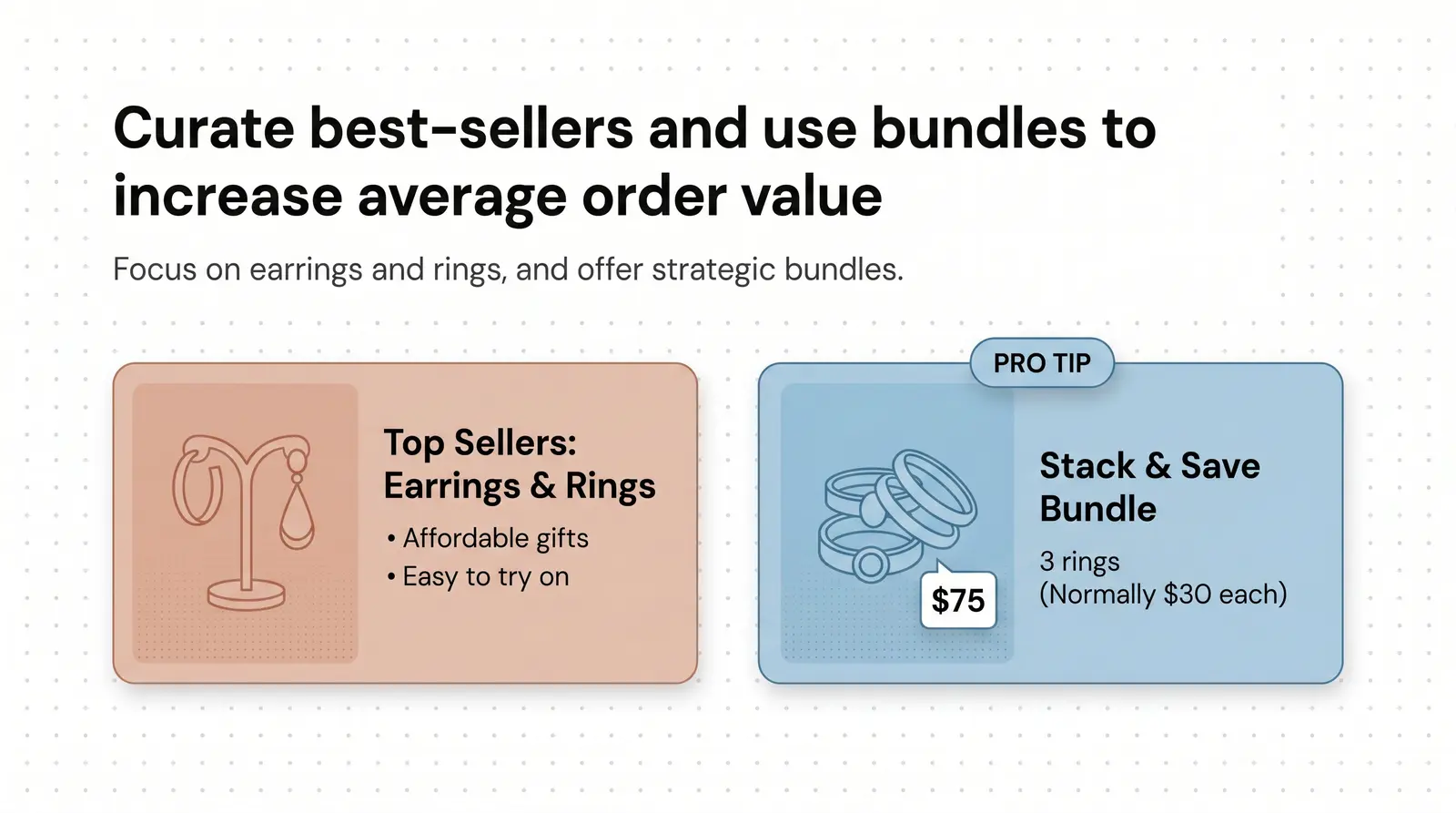
At markets, certain items consistently perform well. Earrings are almost always the top seller because they are affordable, always fit, and make easy gifts [5]. Rings are also strong performers since customers can try them on for size, which is often a hurdle when shopping online.
Consider Maya, a lifestyle micro-influencer launching her first jewelry pop-up using Branvas. She knows her audience loves delicate, everyday pieces, but she also wants to showcase her brand's premium quality.
Not all local events are created equal. Choosing the right venue is just as important as having the right inventory. Here is an original Branvas model comparing common event types to help you choose the right venue for your brand's current stage.
| Event Type | Typical Foot Traffic | Avg. Buyer Intent | Setup Cost | Best For | Branvas Fit |
|---|---|---|---|---|---|
| Community Artisan Market | Medium | High (Looking for unique, local goods) | Low ($50-$150) | First-time sellers, testing new collections | Y - Great for building a loyal local customer base. |
| Large Craft Fair / Expo | Very High | Medium (Lots of browsing) | High ($200-$500+) | Established brands with high inventory volume | Y - Excellent for brand exposure if you have the stock. |
| Boutique Pop-Up (Shop-in-Shop) | Low to Medium | Very High (Already in a buying mindset) | Varies (Often revenue share) | Niche brands aligning with the boutique's aesthetic | Y - Perfect for premium positioning and targeted reach. |
| Farmers Market | High | Low to Medium (Primarily there for food) | Low ($30-$100) | Lower price point items, impulse buys | Y - Good for selling everyday basics like simple studs. |
When evaluating these options, consider your brand's aesthetic and target demographic. A high-end fine jewelry brand might struggle at a casual farmers market but thrive in a boutique pop-up. Conversely, an affordable, trendy accessories line might do incredibly well with the high foot traffic of a large craft fair.

Preparation is key to a smooth event. Forgetting a crucial item can cause unnecessary stress and potentially cost you sales. Use this comprehensive checklist to ensure you have everything you need for a successful pop-up [6].

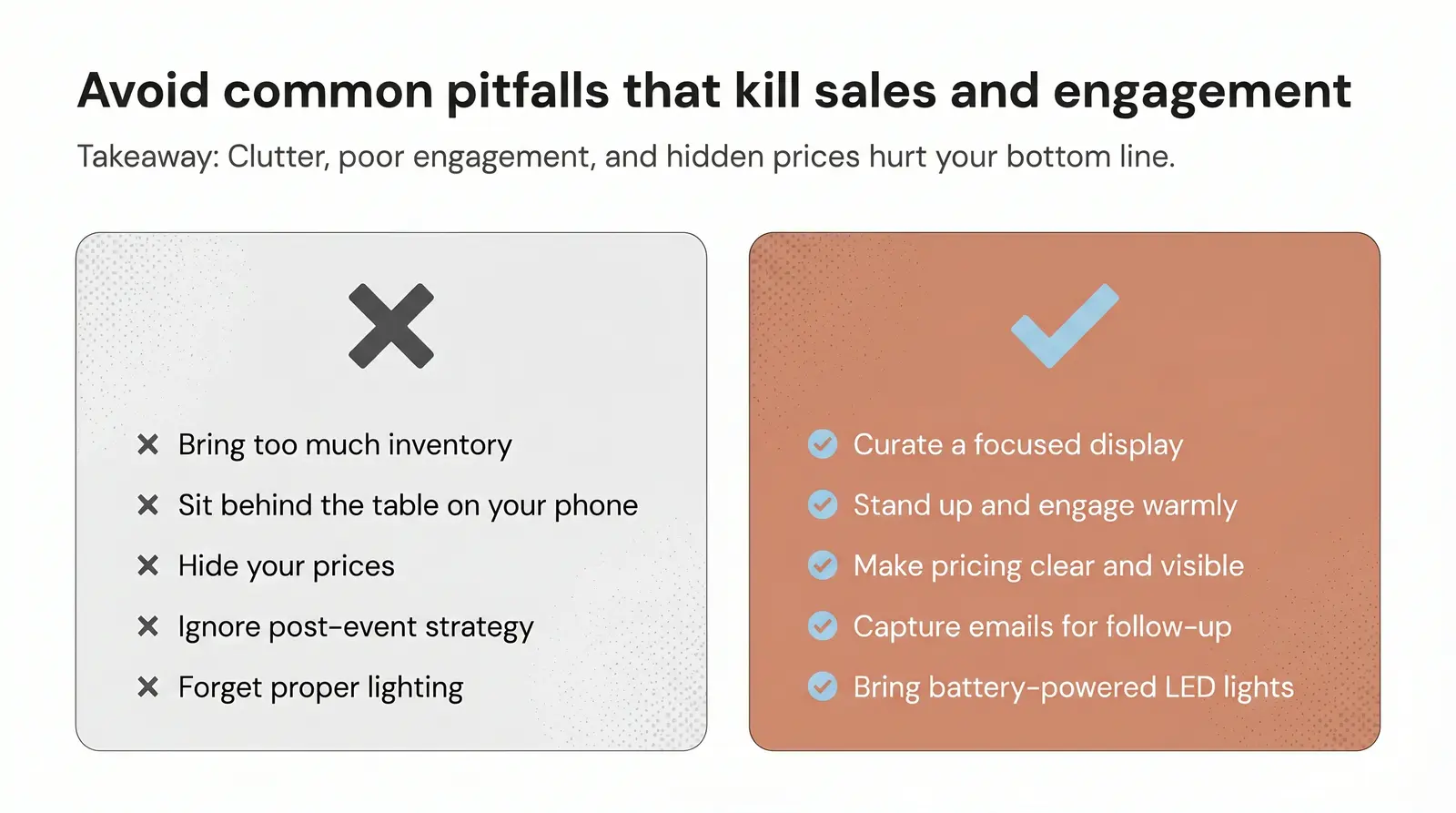
Even experienced sellers can stumble at live events. Avoid these common, yet often overlooked, pitfalls that can derail your pop-up success.
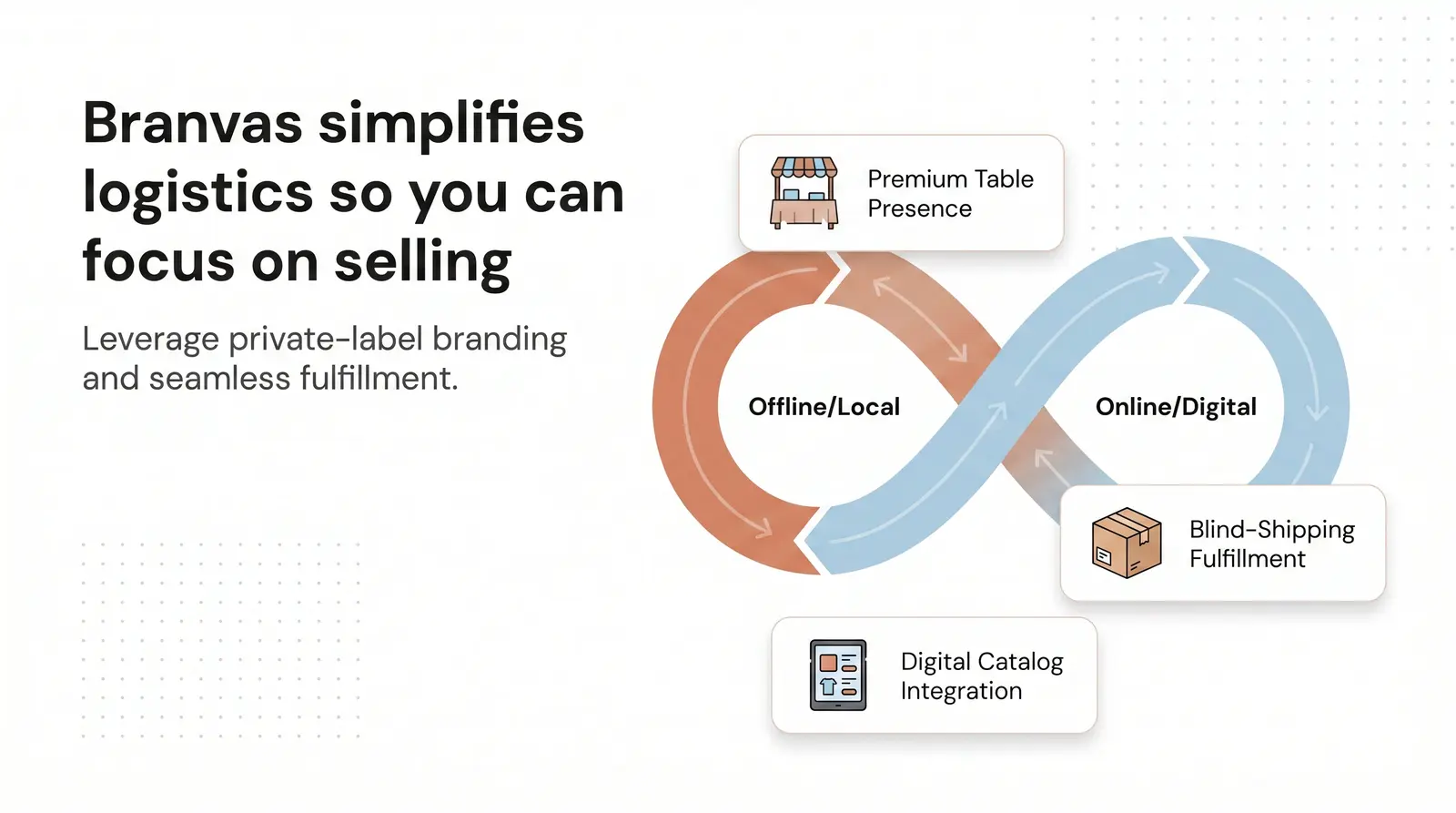
Running a pop-up shop involves a lot of moving parts, from inventory management to display logistics. Branvas simplifies the process, allowing you to focus on what matters most: connecting with your community and making sales.
Our private-label branding ensures you arrive with a premium, cohesive table presence. We provide the high-quality products and the professional packaging that elevates your brand, making you look like an established retailer from day one. You don't have to worry about sourcing boxes or designing inserts. We handle the details so you can focus on the customer experience.
Because Branvas handles fulfillment, you can confidently take orders at events for items you don't have in stock, knowing they will be blind-shipped directly to your customer. This is a game-changer for local sellers. You can offer a massive catalog of products without the financial risk of buying inventory upfront. Our digital catalog integration extends your table without the overhead of buying massive amounts of physical inventory.
In our experience at Branvas, sellers who leverage this hybrid approach scale much faster. They use local events to build trust and acquire customers, and they use the Branvas platform to fulfill orders and manage their digital catalog. It is the perfect synergy of offline connection and online efficiency.
Curious how a Branvas brand would look at your next market? Explore how it works →
Earrings are consistently the top sellers because they are affordable, easy to try on, and make great gifts. They don't require sizing, which removes a major barrier to purchase. Simple, everyday necklaces and stackable rings also perform very well, especially when priced as impulse buys.
Bring enough to make your display look abundant but not cluttered. Focus on your best-sellers and a few statement pieces to draw people in. For everything else, rely on your digital catalog to take orders. A good rule of thumb is to bring enough stock to cover your sales goal for the day, plus a 20% buffer.
Requirements vary significantly by city and state, but generally, yes. You will likely need a local business license and a seller's permit (or sales tax permit) to legally collect and remit sales tax [7]. Always check with your local municipality and the event organizers well in advance of the market date.
Set up a tablet displaying your online store, or place QR codes on your table that link directly to your product pages. This allows customers to browse different colors, sizes, or out-of-stock items and place orders on the spot. It effectively turns a small 6-foot table into a massive retail showroom.
Absolutely. Many successful jewelry brands use a Brand-as-a-Service platform like Branvas to source high-quality, private-label pieces. This allows you to focus on marketing, community building, and selling, rather than manufacturing. Aspiring entrepreneurs and influencers use this model to launch brands quickly and professionally without needing to learn metalsmithing or beadwork.
Going in-person is one of the fastest ways to build real community around a jewelry brand. It transforms passive followers into loyal advocates and provides invaluable immediate feedback on your products. You learn exactly what your customers love, what questions they have, and how they interact with your brand.
By combining a curated physical display with a comprehensive digital catalog, you can maximize your sales potential at any local event. You get the best of both worlds: the trust-building power of face-to-face interaction and the limitless inventory of an online store.
Ready to launch a private-label jewelry brand you can sell anywhere — online or in person? Start with Branvas today →