


Learn how to sell jewelry on Etsy without inventory by choosing top products, pricing for profit, and using a production partner for fulfillment.
Published:
March 24, 2026
Author:
Yi Cui
Launching a jewelry store on Etsy is one of the most accessible ways to start an ecommerce business, but managing physical stock can quickly drain your budget. This practical, step-by-step guide is for anyone who wants to build a profitable jewelry brand on Etsy without the overhead of buying and storing inventory. We will cover exactly what sells, how to price your pieces for profit, and how to handle fulfillment reliably so you can focus on growth.
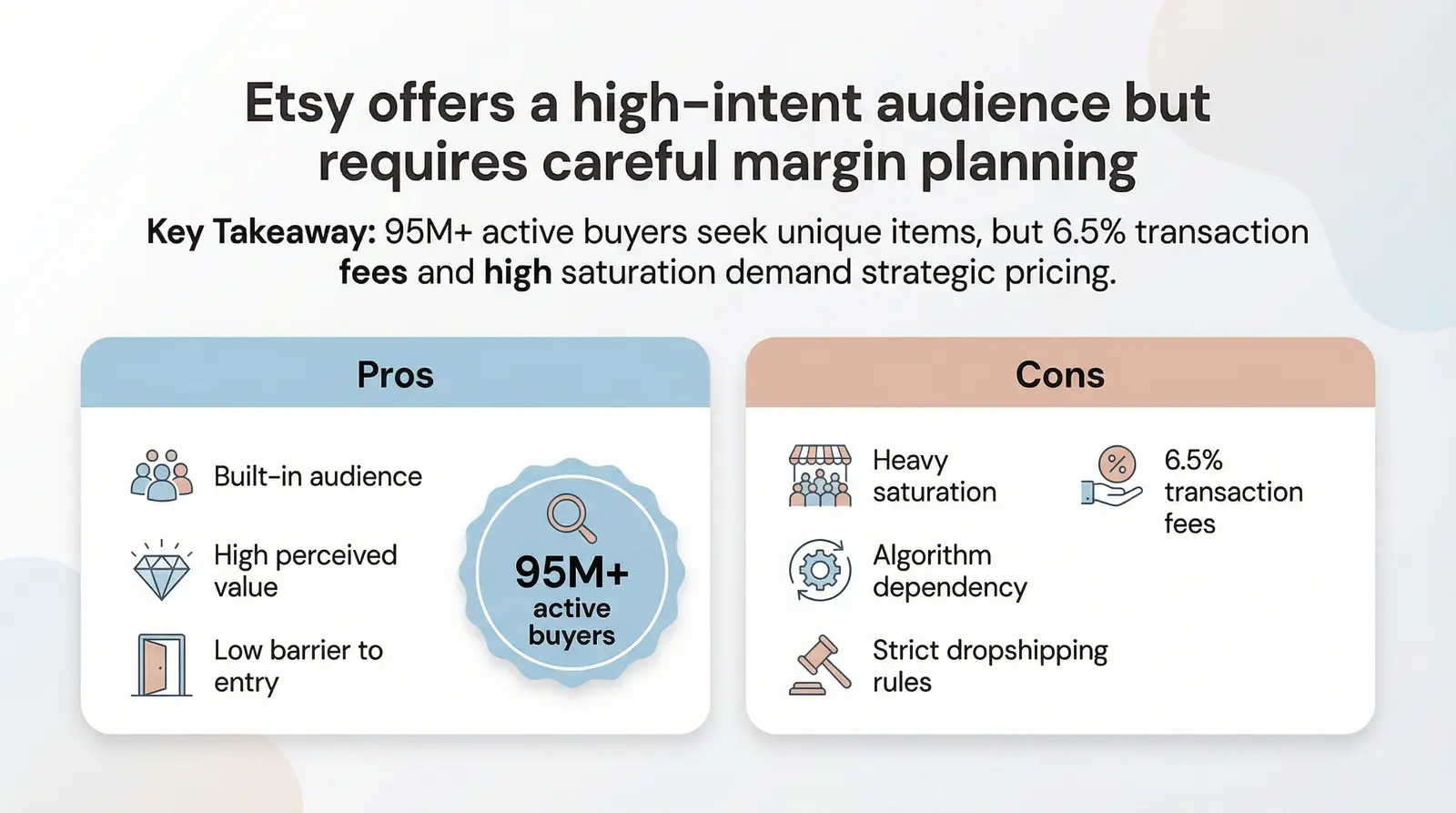
Etsy remains a powerhouse for creative entrepreneurs, boasting over 95 million active buyers who specifically visit the platform looking for unique, personalized, and handcrafted items [1]. Jewelry is consistently one of Etsy's largest and most competitive categories. This means the audience is already there and ready to buy, but you must set realistic expectations about standing out in a saturated market.
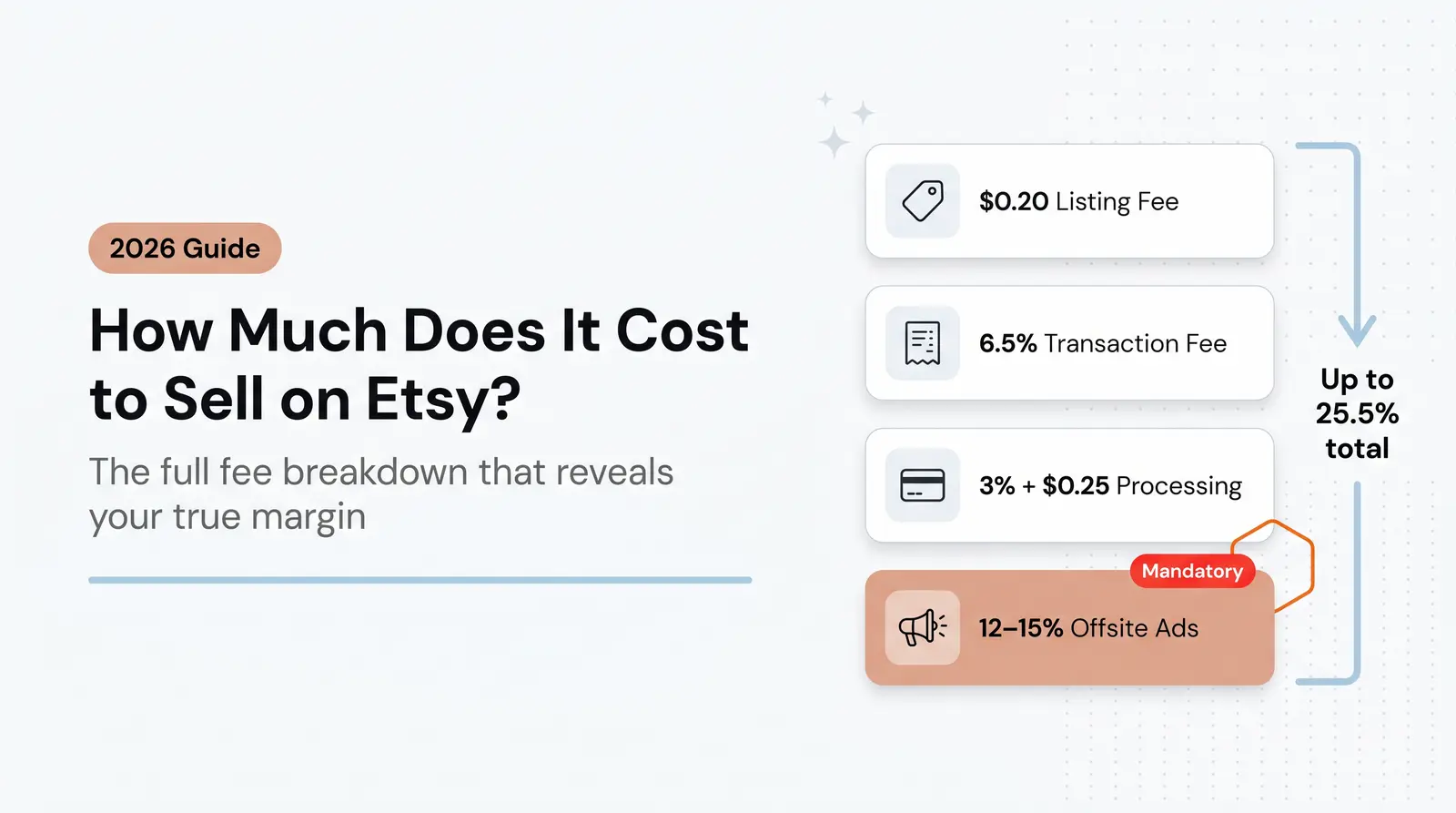
The platform's fee structure is relatively straightforward but requires careful margin planning. Sellers typically encounter a $0.20 listing fee per item, which is charged whether the item sells or not and expires after four months [2]. When you make a sale, Etsy charges a 6.5% transaction fee on the total order amount, including shipping and gift wrapping [2]. Additionally, payment processing fees in the US are commonly reported as 3% plus $0.25 per transaction [2].
Selling on Etsy comes with distinct advantages and drawbacks. The biggest pro is the built-in audience with high buyer intent, offering a low barrier to entry for new sellers. The handmade and unique positioning of the marketplace allows for higher perceived value. However, the cons include heavy saturation, dependency on Etsy's search algorithm, and limited ownership over your customer data and brand experience.
It is also important to understand Etsy's policies regarding how products are sourced. Etsy's official guidelines state that traditional dropshipping and reselling of commercially available items are not allowed [3]. However, sellers are permitted to use production partners to fulfill and ship orders, provided the items are the seller's original design or customized by the buyer [3]. Sellers should always review Etsy's own guidelines directly to ensure their specific business model complies with current rules.
Ultimately, Etsy works exceptionally well as a starting channel. When paired with strong branding and reliable fulfillment, it provides the perfect testing ground to launch and scale a jewelry business.
To succeed on Etsy, you need to offer products that align with current search demand and buyer motivations. Based on recent market data, certain jewelry categories consistently outperform others [4] [5].
| Jewelry Category | Why It Sells | Typical Price Band |
|---|---|---|
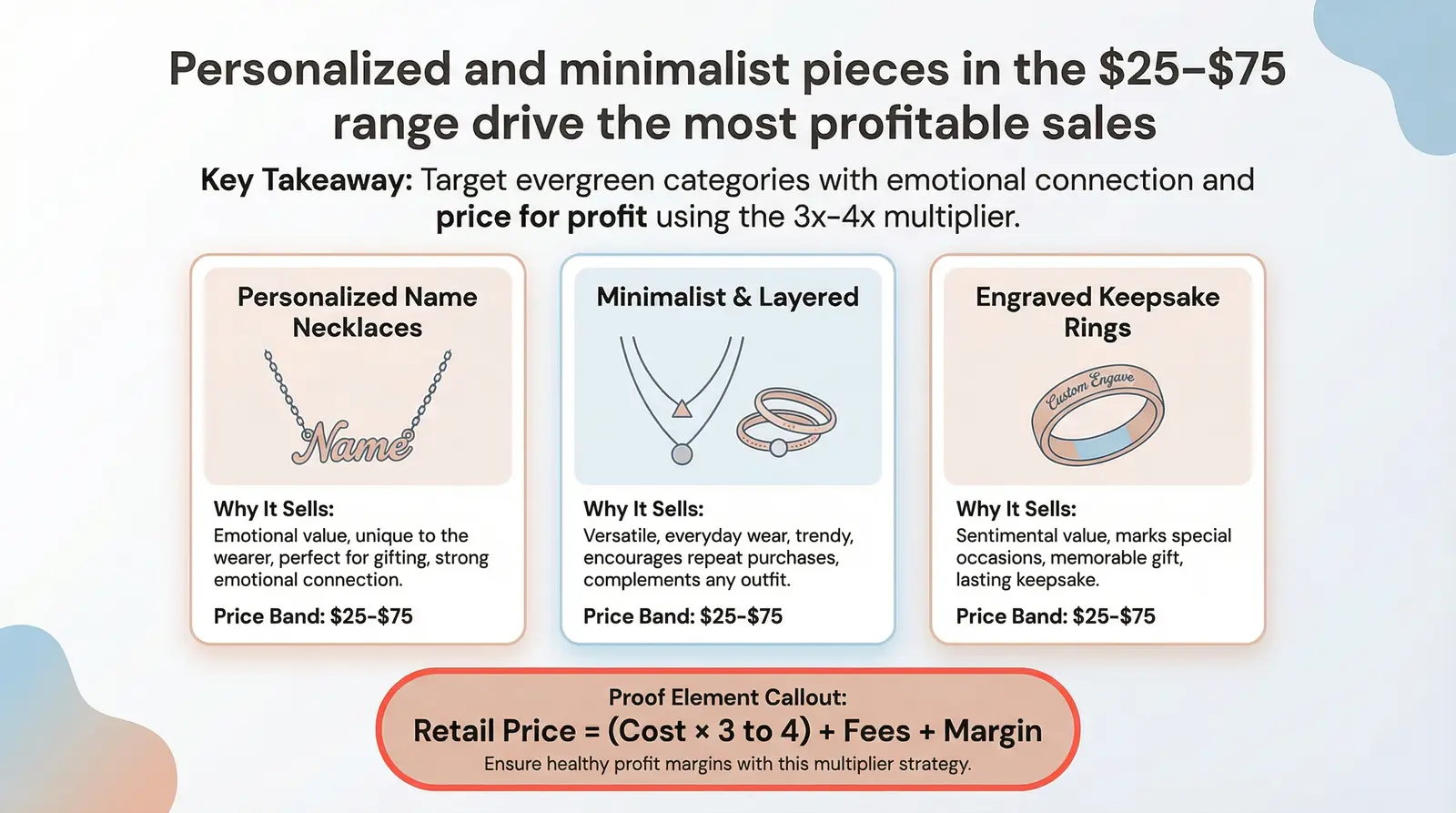
| Personalized Name Necklaces | Creates an emotional connection; highly popular for gifting and self-expression. | $25–$65 retail |
| Birthstone & Zodiac Pieces | Evergreen demand driven by birthdays, Mother's Day, and personal identity. | $18–$55 retail |
| Minimalist & Layered Jewelry | Versatile for everyday wear; appeals to a broad demographic looking for dainty chains or stackable rings. | $15–$45 retail |
| Engraved Keepsake Rings | High sentimental value; often features coordinates, dates, or special messages for anniversaries. | $25–$75 retail |
| Celestial & Boho Crystal Pendants | Taps into popular mystical aesthetics; highly giftable and perfect for impulse buys. | $18–$50 retail |
| Tiny Stud Earrings | Highly affordable entry-level items that encourage multiple purchases or bundling. | $12–$35 retail |
Pricing your jewelry correctly is just as critical as choosing the right products. A common mistake new sellers make is pricing too low, leaving no room for platform fees or marketing. Items priced under $15 are often hard to make profitable after Etsy takes its cut. Conversely, items in the $25–$75 range tend to perform very well for new stores, offering a healthy balance of accessibility and margin.
To ensure profitability, you need a reliable pricing strategy that accounts for perceived value and platform costs. We recommend using the Branvas Pricing Heuristic for Etsy:
Retail Price = (Cost of Goods × 3 to 4) + Etsy Fees + Desired Margin
This formula ensures you cover the base cost of the item, absorb the listing and transaction fees, and still walk away with a profit that allows you to reinvest in your business.
On a platform as crowded as Etsy, branding is a competitive differentiator, not an afterthought. Your brand is what convinces a buyer to choose your $40 necklace over a competitor's $20 alternative. It signals trust, quality, and professionalism.
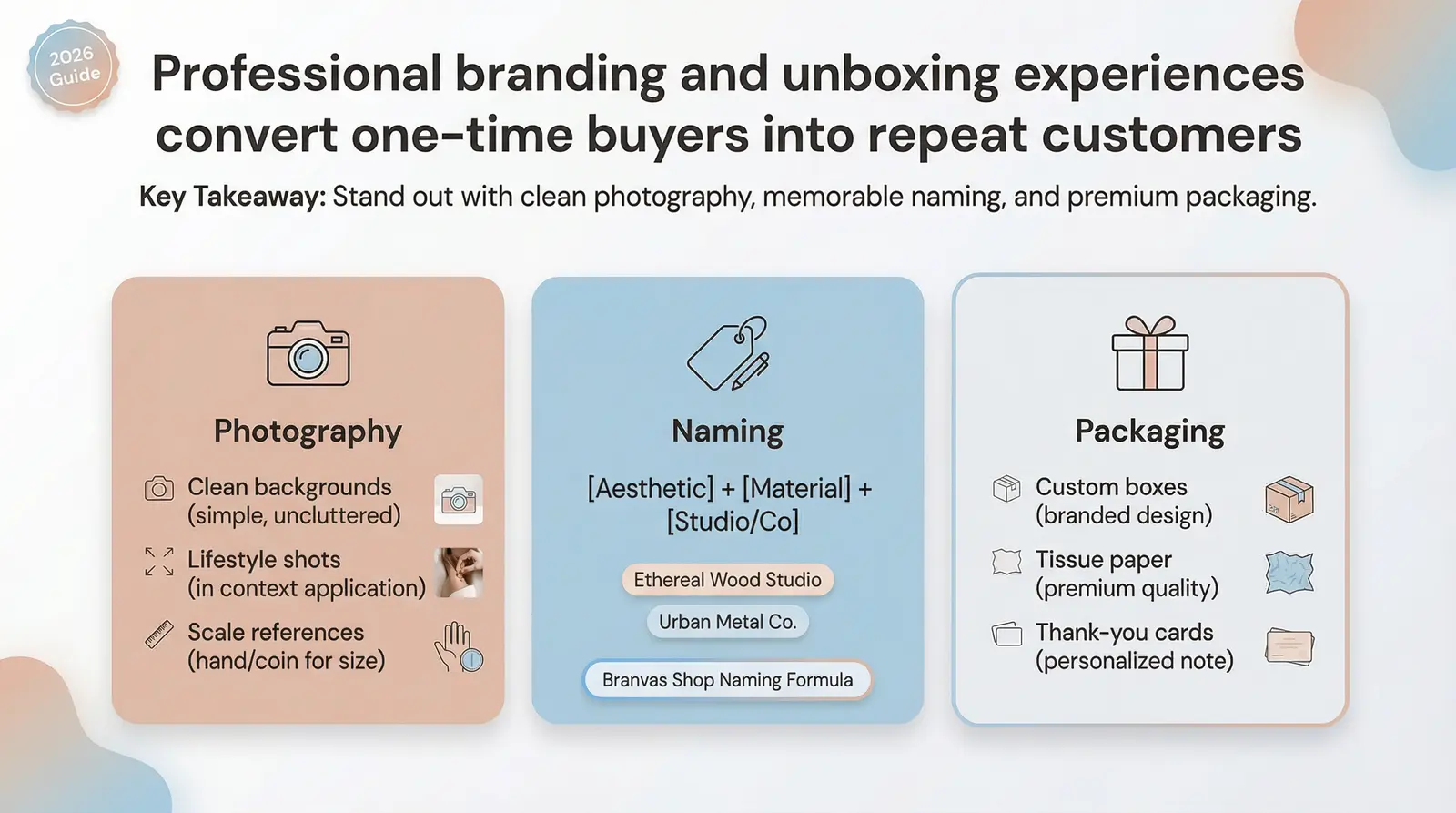
Product Photography is the single most important element of your Etsy listing. The algorithm heavily favors listings with strong click-through rates, and your main image is what drives those clicks. Non-negotiables for jewelry photography include clean, uncluttered backgrounds, lifestyle shots showing the piece being worn, scale references so buyers understand the size, and multiple angles capturing the details.
Shop Naming sets the tone for your entire brand. You want a name that is memorable, easy to spell, and evocative of your style. If you are stuck, use the Branvas Shop Naming Formula: combine an [Aesthetic or Feeling] with a [Material or Jewelry Type], and add an [Optional: Studio/Co/Collective]. For example, "Soft Gold Studio" or "Moonstone & Co." creates an immediate sense of identity.
Packaging is where you turn a one-time buyer into a repeat customer. Unboxing is a physical touchpoint that elevates the perceived value of your jewelry. Branded packaging, such as custom boxes, tissue paper, and thank-you cards, signals professionalism and encourages buyers to leave glowing five-star reviews.
If you're launching without a warehouse or design team, a service like Branvas handles private-label packaging and blind fulfillment — so your brand looks polished from day one.
The operational side of selling jewelry is where many new Etsy shops stumble. Managing fulfillment efficiently is crucial for maintaining your seller metrics and keeping customers happy.
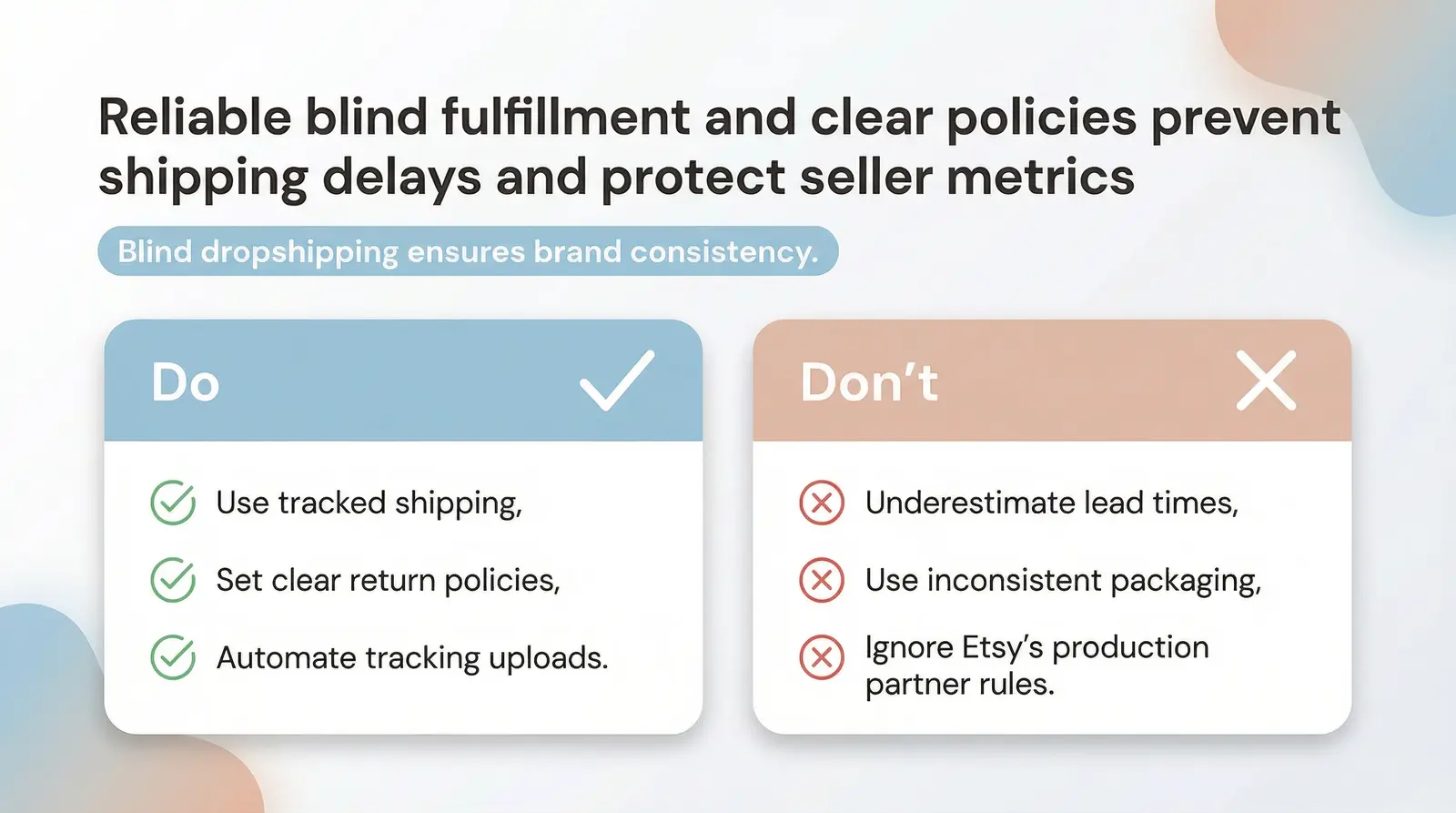
One of the most common pain points is shipping delays and damaged items. The fix is to partner with a supplier that uses reliable, tracked shipping methods and packages delicate jewelry securely to withstand transit. Another frequent issue is inconsistent packaging, which is especially problematic for sellers using third-party fulfillment. Ensure your partner can provide a cohesive unboxing experience.
Managing returns and exchanges can also be challenging, given Etsy's strong buyer-protection expectations. The best fix is to set crystal-clear shop policies regarding what can be returned, especially for personalized items, and to clearly state processing times in every listing. Finally, failing to upload tracking information within the expected window can hurt your shop's standing. Always automate tracking uploads or make it a daily operational habit.
Many sellers utilize blind dropshipping to manage inventory. This involves a fulfillment partner shipping the product directly to the customer without any third-party branding or invoices in the package. This ensures the buyer experience stays entirely on-brand. However, sellers must always verify that their specific fulfillment methods align with Etsy's current policies regarding production partners.
In our experience at Branvas, the sellers who struggle most on Etsy are those who underestimate fulfillment lead times and set processing expectations that their supplier can't meet. Getting this right early builds the review foundation the algorithm rewards.
Want to skip the fulfillment headaches? Branvas offers private-label jewelry with blind shipping — your brand, your packaging, no warehouse needed. See how it works →
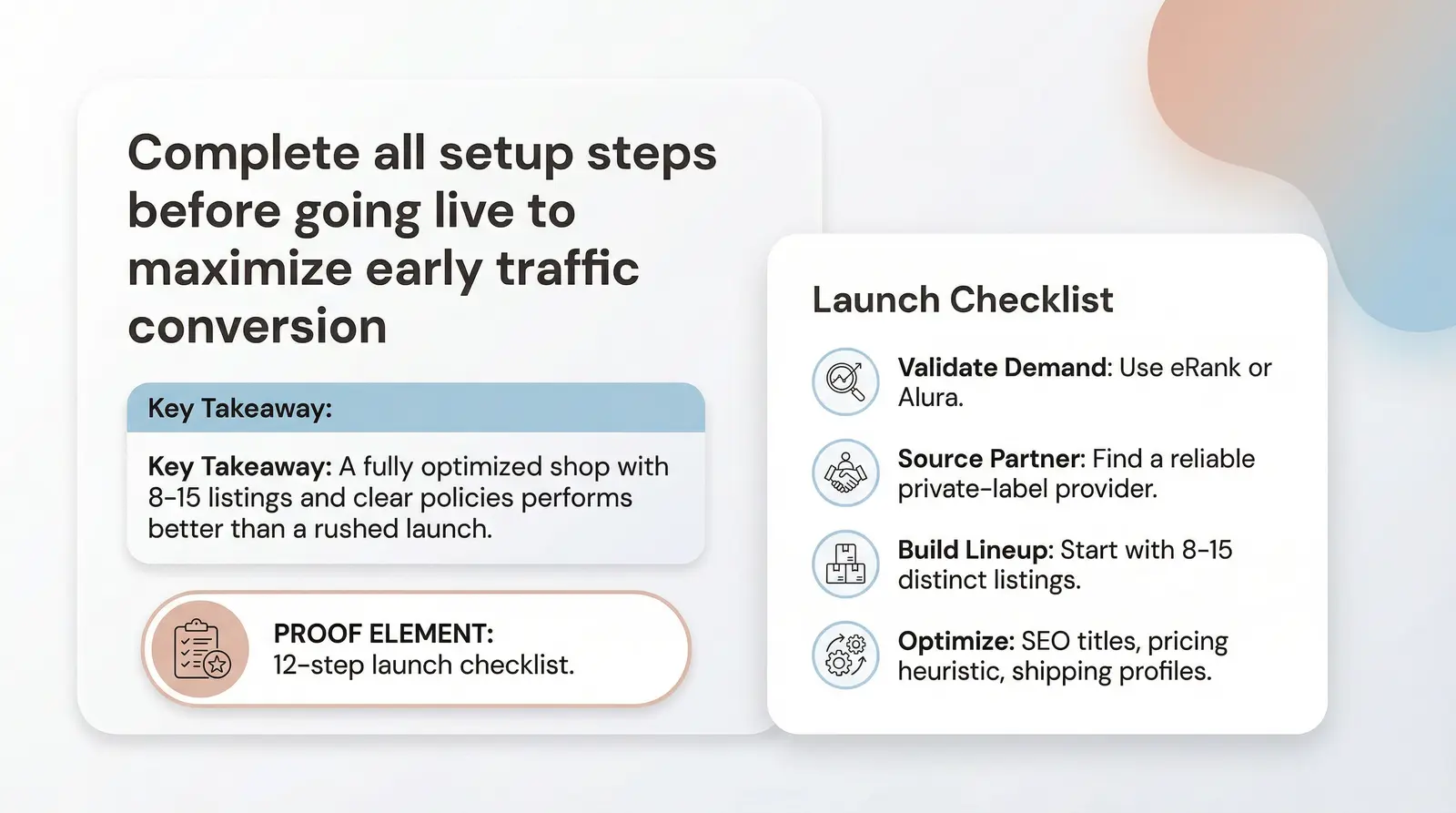
Launching a successful shop requires preparation. Follow these actionable steps to get your jewelry brand live.
In our experience at Branvas, sellers who complete all setup steps before going live — rather than launching half-finished — tend to convert their early traffic significantly better.
For a deeper dive into launching your own jewelry brand, visit the Branvas Academy.
Do I need a business license to sell jewelry on Etsy?
Etsy itself does not require sellers to have a business license to open a shop. However, local or state governments often require a seller's permit or general business license depending on your location. Many sellers find it best to check their local regulations before launching.
Can I dropship jewelry on Etsy?
Traditional dropshipping of commercially available items is not allowed on Etsy. However, you can use a production partner to fulfill orders if the jewelry is your original design or customized by the buyer. Sellers should review Etsy's official policies to ensure their specific model complies.
How much does it cost to sell on Etsy?
Sellers typically pay a $0.20 listing fee per item and a 6.5% transaction fee on the total order amount. There is also a payment processing fee, which in the US is commonly 3% plus $0.25 per transaction. These fees are deducted automatically from your sales balance.
How do I price jewelry to make a profit on Etsy?
You should price your jewelry to cover the cost of goods, platform fees, and your desired profit margin. A common approach is to multiply your base cost by three or four, then add in the expected Etsy fees. Items priced between $25 and $75 often perform best for new shops.
How long does it take to make your first sale on Etsy?
The timeline varies widely, but many sellers report getting their first sale within two to eight weeks. Shops that launch with fully optimized listings, clear photography, and at least 15 products tend to see faster results. Driving your own external traffic can also speed up the process.