

Etsy jewelry sellers can scale beyond handmade production limits using production partners, private-label products, and hybrid models while staying compliant with Etsy’s policies.
Published:
August 25, 2026
Author:
Yi Cui
Scale your Etsy shop beyond your own two hands. Picture this: your order queue is full, your hands are cramped, and you are running on four hours of sleep. You have built a successful handmade jewelry business, but you have hit a wall. You cannot physically make any more products in a day, which means your revenue has a hard ceiling you cannot break through. This article will show you exactly how to grow your revenue without burning out, abandoning your brand identity, or violating Etsy's policies.
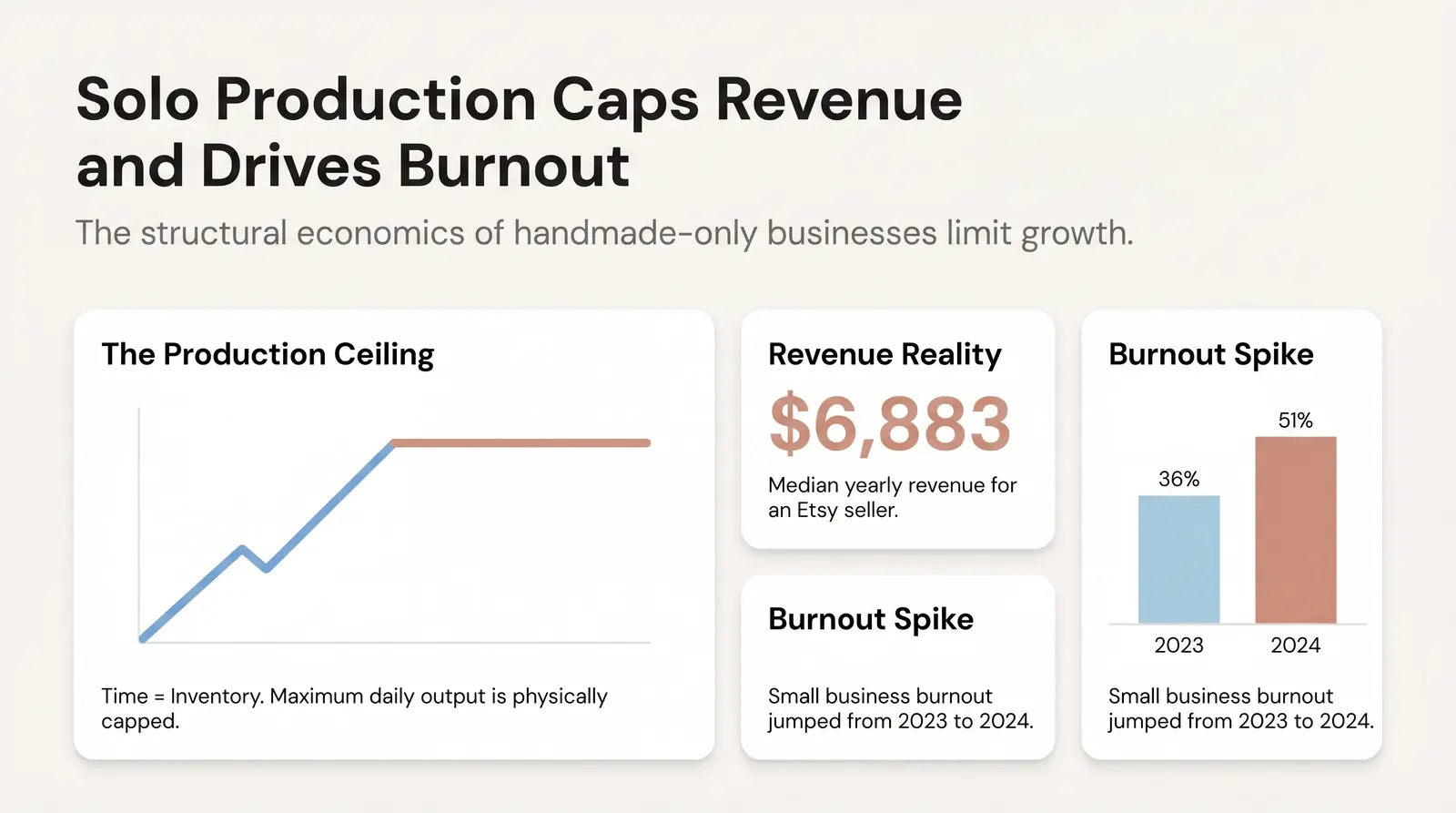
The structural economics of a solo handmade business are inherently flawed for long-term scaling. When you are the sole manufacturer, your time equals your inventory, which directly caps your revenue. If a necklace takes one hour to make and you only have eight hours a day to work, your maximum daily output is eight necklaces. No amount of marketing or SEO optimization can change that physical reality. This is why the median yearly revenue for an Etsy seller is only $6,883, with a median profit of just $1,377 [1].
Here is a contrarian truth: "handmade" as an identity is actually more flexible than most sellers realize. Many makers believe that if they do not touch every single component of a product, they are no longer a legitimate handmade brand. However, your brand equity lies in your curation, your aesthetic, and the trust you have built with your audience—not just in your physical labor. The burnout rate among small business owners is staggering, jumping from 36 percent in 2023 to 51 percent in 2024 [2]. Clinging to a strict "I must make everything myself" mentality is a fast track to becoming part of that statistic.
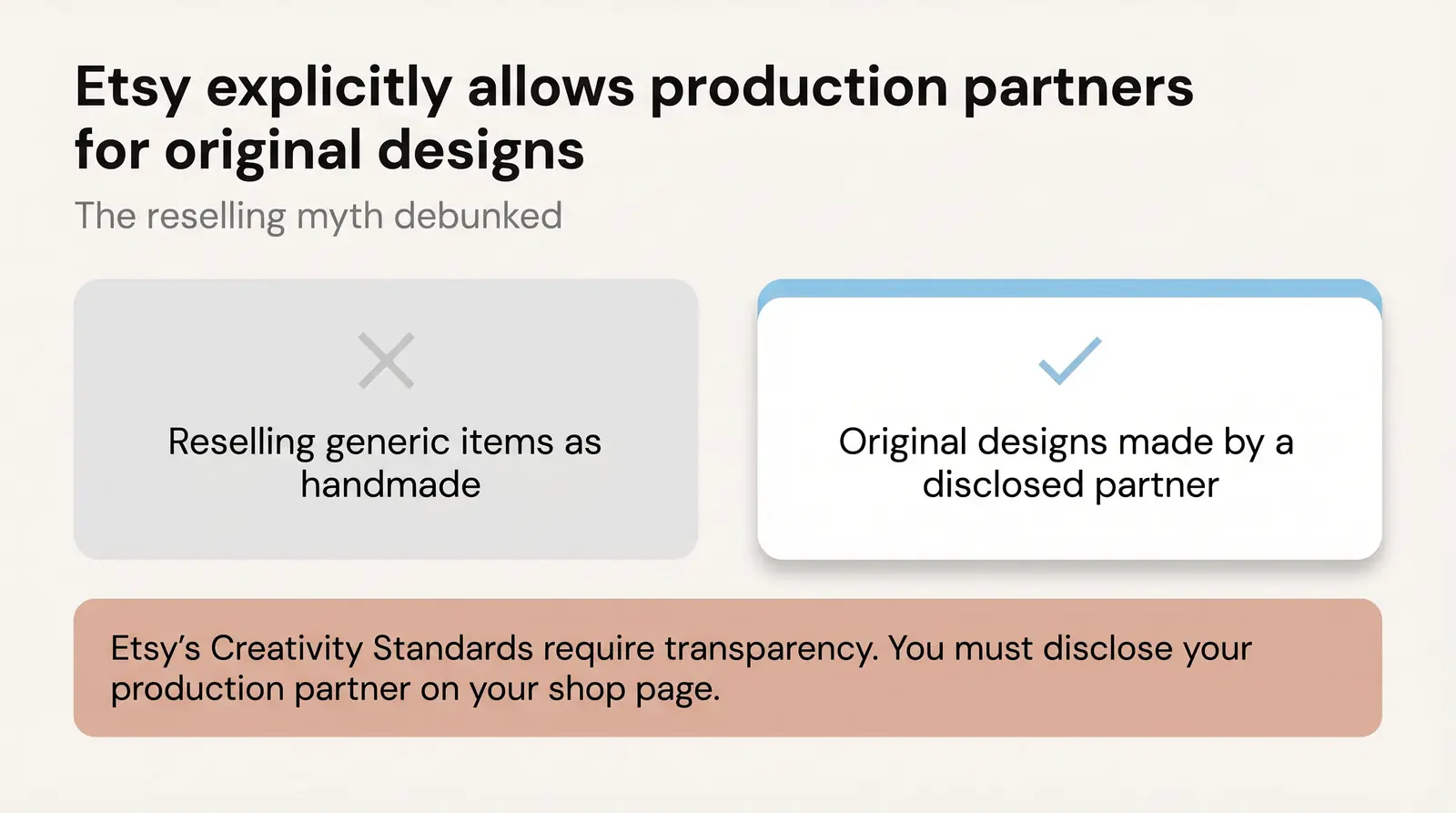
There is a pervasive myth in the maker community that diversifying your product line means you are "reselling," which will get you banned on Etsy. This is simply not true. Etsy's Creativity Standards explicitly allow for products "Designed by a seller," which includes original designs produced by a production partner [3]. You can absolutely use third-party manufacturing to scale your business, provided you follow the rules.
"Sellers' original designs produced by a production partner: Original designs created by a seller and produced with the assistance of a production partner. Sellers must disclose that an item is made by a production partner, and provide accurate information about where the item will ship from." — Etsy's Creativity Standards [3]
Etsy requires transparency. If you use a production partner, you must disclose them on your shop page and in the relevant listings. Buyers can see this information in your shop's About section. The policy is designed to support small businesses as they grow, allowing you to scale up without compromising the core values of the marketplace [4].
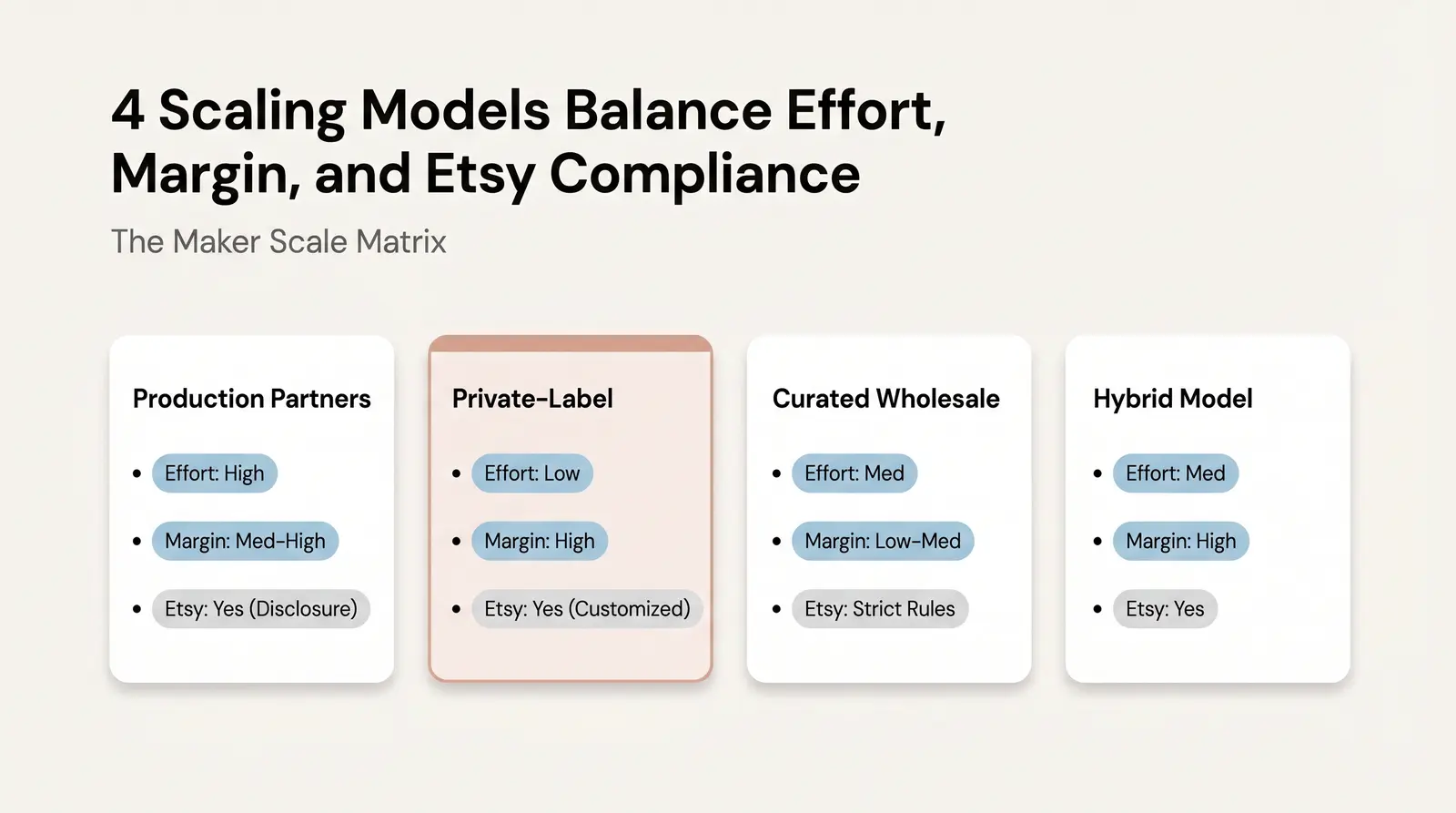
When you hit the production ceiling, you need a strategic path forward. At Branvas, we use the Maker Scale Matrix to help sellers choose the right diversification strategy based on their goals and resources.
| Option | Best For | Etsy-Compatible? | Effort Level | Margin Potential |
|---|---|---|---|---|
| Production Partners | Makers with unique, complex designs who need volume manufacturing. | Yes (with disclosure) | High (sourcing, sampling, quality control) | Medium to High |
| Private-Label Ready-to-Brand Products | Sellers wanting fast expansion with proven products and custom branding. | Yes (if customized/curated within policy) | Low | High |
| Curated Wholesale | Shops focused on vintage items or specific gift basket themes. | Yes (strict rules apply; no modern reselling) | Medium | Low to Medium |
| Hybrid Model | Makers who want to keep a handmade hero line while adding scalable staples. | Yes (with proper categorization) | Medium | High |
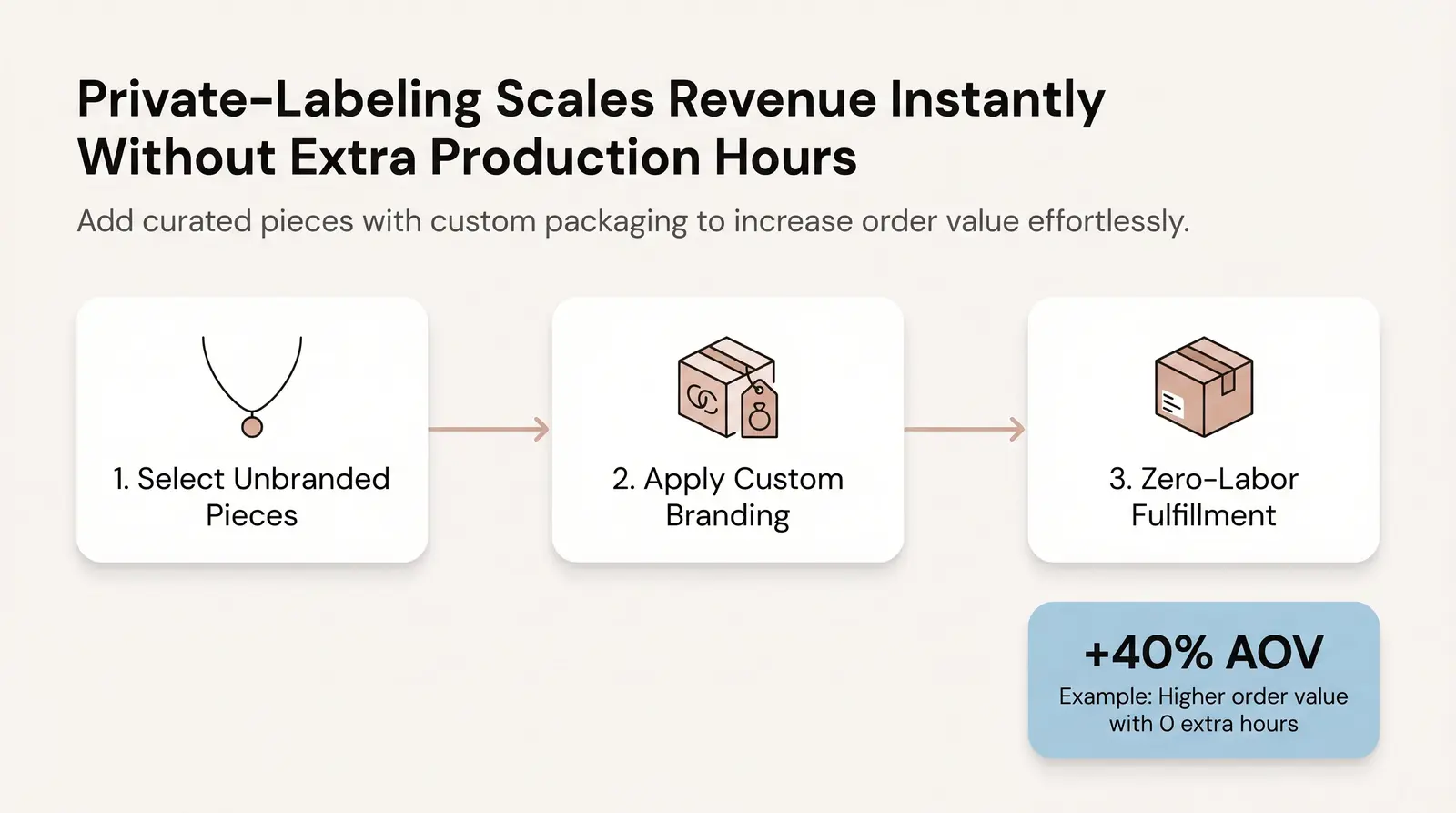
The private-label model is incredibly effective for jewelry and accessories. Instead of designing a piece from scratch and finding a manufacturer to produce it, you select high-quality, unbranded pieces that align with your aesthetic. You then apply your branding through custom packaging, tags, and inserts. This allows you to offer a wider range of products without the lead times and minimum order quantities associated with custom manufacturing.
Consider Maya, who runs an Etsy shop selling hand-stamped necklaces. She is at capacity and cannot stamp any faster. She decides to add three private-label pieces using Branvas: a dainty gold chain, a pearl stud set, and a birthstone ring. These pieces perfectly complement her handmade items and are shipped in her custom branded packaging. Her average order value increases by 40 percent, and she fulfills those items in zero extra hours of labor.
Branvas handles the product sourcing, branding, packaging, and blind fulfillment. Your brand stays front and center, and your customers receive a premium unboxing experience. If you're curious how the private-label model works in practice, Branvas's How It Works page walks through the full process.
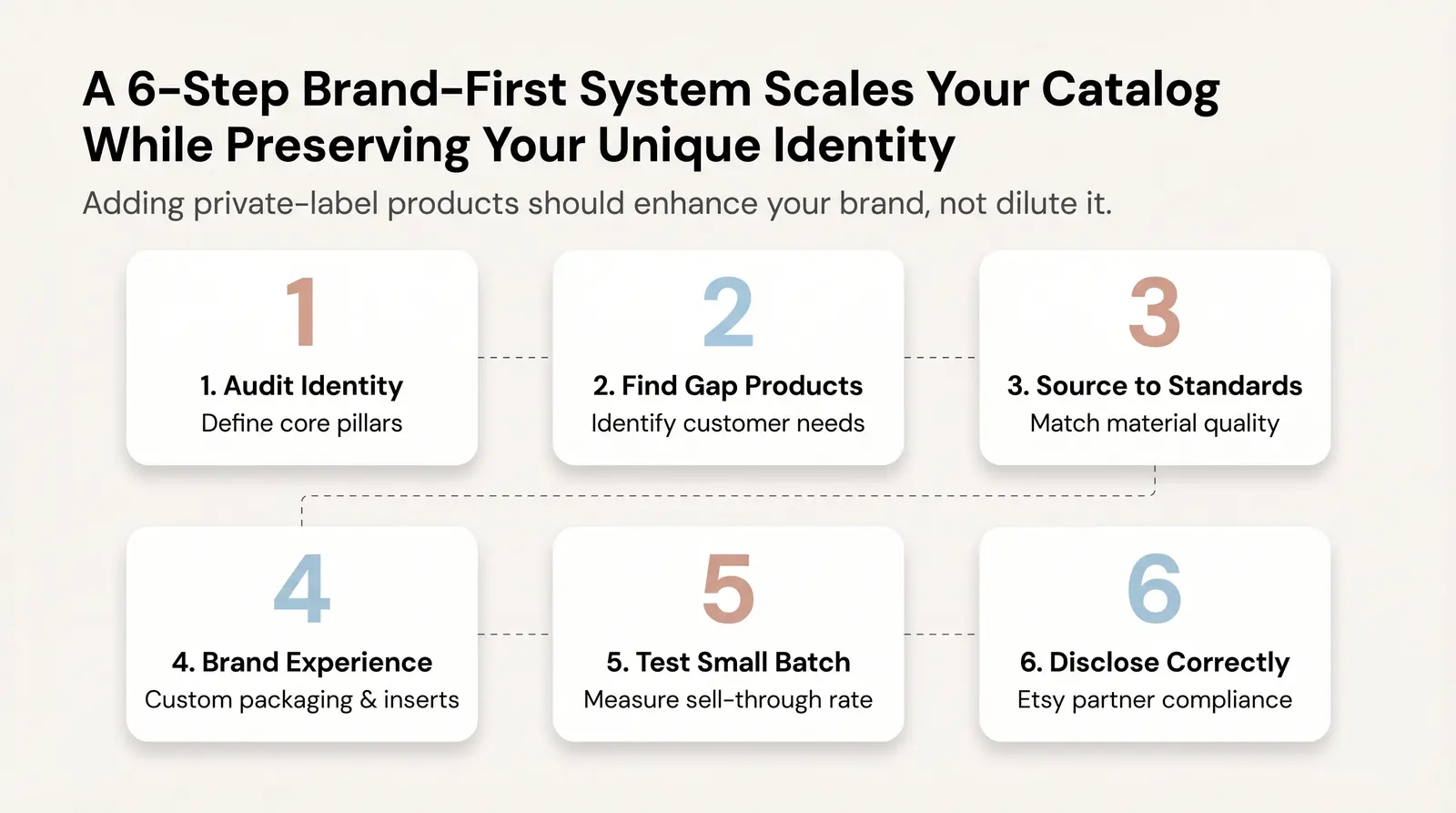
Adding private-label products should enhance your brand, not dilute it. We developed the Brand-First Sourcing System to help makers seamlessly integrate new products while maintaining their unique identity.
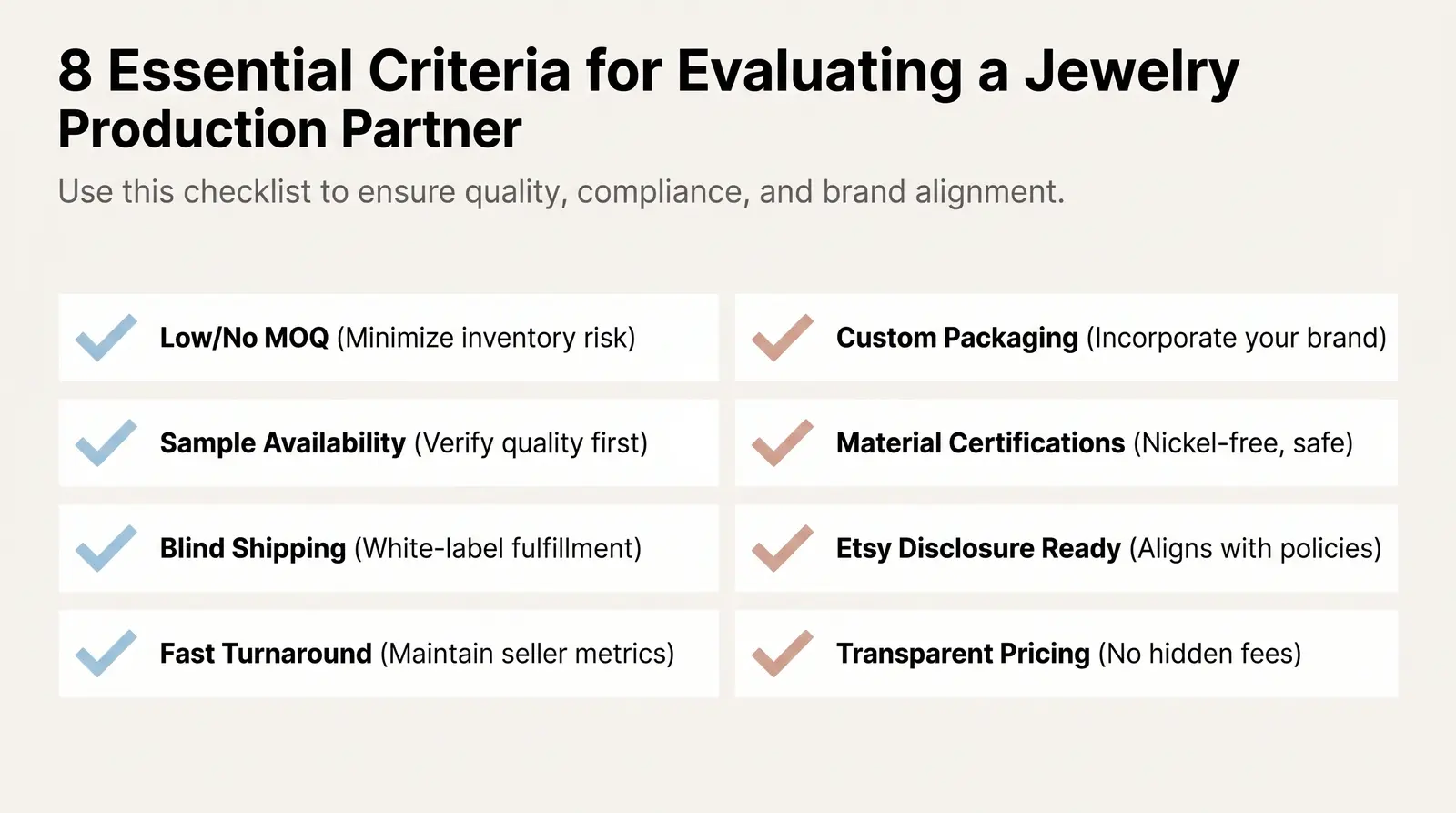
Choosing the right partner is critical to maintaining your brand's reputation. Use this checklist when evaluating potential production partners:
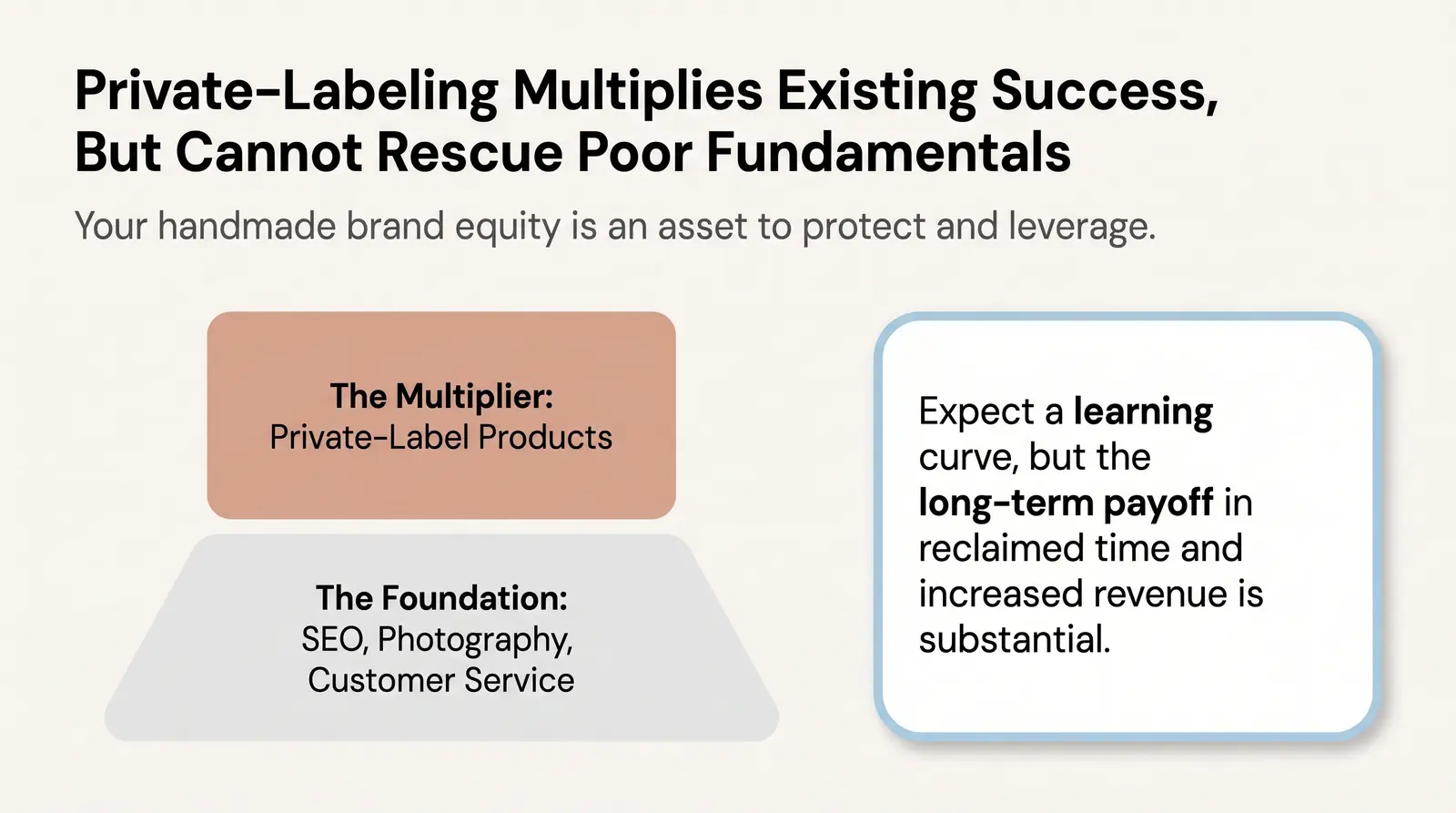
Let's be clear: adding private-label products is not a magic bullet for a failing business. If your shop suffers from poor product-market fit, bad photography, or nonexistent SEO, private-label jewelry will not save it. You still need to market your products, drive traffic, and provide excellent customer service.
Furthermore, your handmade brand equity is an asset, not a liability. Do not abandon the core products that built your audience. Private-label items should act as a multiplier for your existing success, allowing you to capture more revenue from the audience you have already earned. Expect a learning curve as you navigate sourcing and fulfillment, but the long-term payoff in reclaimed time and increased revenue is substantial.
A: You can scale by utilizing production partners to manufacture your original designs, or by carefully curating private-label products that complement your handmade items, provided you adhere to Etsy's disclosure policies and Creativity Standards.
A: Yes, but with caveats. You cannot simply buy generic items and resell them as handmade. You must either design the items yourself and use a production partner, or heavily customize/personalize the items. Always review Etsy's current policies to ensure compliance.
A: A production partner physically manufactures jewelry based on your original designs. You must disclose the partner's involvement on your shop page and in the specific listings, ensuring transparency with your buyers about how the item is made.
A: Beyond custom manufacturing, many sellers turn to high-quality private-label dropshipping platforms like Branvas, which offer ready-to-sell pieces with custom branded packaging, allowing for rapid catalog expansion without inventory risk.
A: No, Etsy does not penalize listings that use disclosed production partners. Your ranking depends on SEO optimization, customer engagement, conversion rates, and maintaining good seller metrics.
At Branvas, we built our platform specifically for makers who don't want to choose between growth and craft. You bring the brand. We handle the sourcing, packaging, and fulfillment. Launch your private-label line with Branvas →
Explore the Branvas Catalog to see what products are available for private-label branding.