

Compare three private label jewelry models—brand-labeled dropshipping, semi-custom, and fully custom manufacturing—with real costs, MOQs, and timelines to choose the right path for your brand stage.
Published:
October 15, 2026
Author:
Yi Cui
"Private label" is thrown around to mean anything from sticking your logo on a generic product to actually designing custom pieces. Here's the spectrum, and which version is right for your brand stage.
There are three meaningfully different models hidden under the "private label jewelry" label, and choosing the wrong one for your stage is one of the most common and expensive mistakes new jewelry brand founders make. This guide is the definitive resource for understanding each model, its trade-offs, and how to pick the right path for your business. Whether you are an influencer looking to monetize an audience or an established ecommerce store owner seeking higher margins, understanding these distinctions is the first step to building a profitable brand.
The terms "private label," "white label," and "custom manufacturing" are often used interchangeably in the jewelry industry, but they are not the same. Understanding the distinction is critical before you invest capital into inventory or design fees.
White label refers to pre-made products sold under your brand name with minimal customization, often just a logo or tag. The same product is sold to multiple retailers, meaning you do not have exclusivity [1]. This is the fastest way to market but offers the least differentiation.
Private label exists on a spectrum. It can mean white-label-plus, where you add custom packaging, select specific colorways, or provide some design input, all the way to fully custom-designed pieces. The key difference is that private label products are exclusive to your brand [1]. This exclusivity allows you to build a unique brand identity without the full burden of manufacturing.
Custom manufacturing means you own the design intellectual property (IP). The factory produces the jewelry to your exact specifications, which requires minimum order quantities (MOQs), CAD designs, and mold creation [2]. This is the most capital-intensive route but offers complete control over the final product.
Most founders assume they need custom manufacturing to build a "real" brand. In practice, brand equity comes from storytelling, aesthetics, and customer experience, not from owning a mold. Some of the fastest-growing jewelry brands in 2024 and 2025 launched on curated, brand-labeled product lines and only moved to custom design after validating demand. According to the BoF-McKinsey State of Fashion 2026 report, branded jewelry made up 25 percent of the market in 2024 and grew 8.3 percent, driven by consumer desire for recognition and quality assurance [3]. The global jewelry market itself is projected to grow from USD 381.54 billion in 2025 to USD 578.45 billion by 2033 [6], meaning there is room for brands at every tier. You can build that recognition without touching a manufacturing line.

To help founders navigate these options, we developed The Branvas Brand-Stage Matrix, a proprietary framework for choosing the right private label model based on where you are in your brand journey.
| Model | Best For | MOQ | Upfront Cost | Time to Launch | Design Control | Fulfillment |
|---|---|---|---|---|---|---|
| Model 1: Brand-Labeled Dropshipping | Influencers, new founders testing demand | 0 units | $0 to $29/month | 1 to 3 days | Curated catalog | Blind dropship |
| Model 2: Semi-Custom Private Label | Brands with proven sales scaling up | 50 to 300 units | $500 to $2,000 | 4 to 10 weeks | Moderate (color, stamp, engraving) | Self or 3PL |
| Model 3: Fully Custom Manufacturing | Established brands with capital and IP | 100 to 500+ units | $2,000 to $15,000+ | 12 to 20 weeks | Complete (CAD, mold, IP ownership) | Self or 3PL |
This matrix shows that as you move from Model 1 to Model 3, your control over the design increases, but so does your financial risk and time to market. The signal that you are ready to move from one model to the next is validated demand. If you are consistently selling out of a curated piece in Model 1, you have the data to justify the MOQ investment required for Model 2 or 3.

Brand-labeled dropshipping is the lowest-risk entry point into the jewelry market. In this model, you select pieces from a curated jewelry catalog, apply your branding, and rely on the supplier for blind fulfillment.
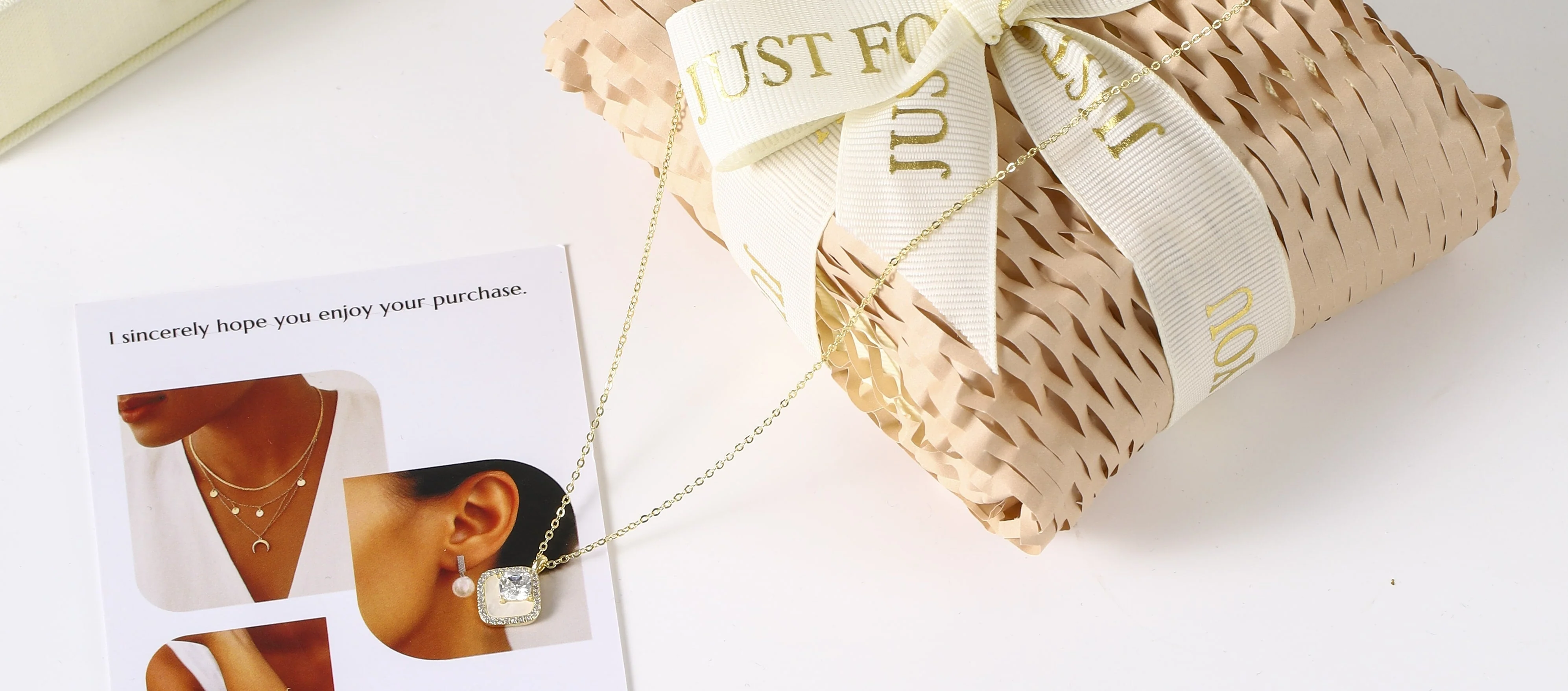
This model eliminates inventory risk and upfront production costs, allowing you to launch in days rather than months. Your brand identity is maintained through custom packaging, branded inserts, and your store name on the shipping label, ensuring the customer never sees the supplier's name. The trade-offs include less design exclusivity, dependence on the supplier's catalog, and margins that may be tighter than fully custom manufacturing, though gross margins can still reach 60 to 80 percent with smart pricing [4].
This tier is ideal for influencers launching a merch line, ecommerce entrepreneurs testing a niche, or boutique owners adding jewelry without buying inventory.
Imagine you're a lifestyle influencer with 80,000 followers. You want to launch a jewelry line in 30 days for under $500. Here's exactly how Model 1 works for you. You sign up for a platform like Branvas, select 10 to 15 SKUs from their catalog that match your aesthetic, and upload your logo for custom packaging. You connect the platform to your Shopify store and go live. If you select a gold-plated necklace with a True Cost of Goods (TCOG) of $12 and retail it for $45, you achieve a 73 percent gross margin without ever touching the product [4]. Your customer receives a beautifully packaged piece with your brand name on the box. They have no idea a third-party supplier shipped it.
If you're at this stage, Branvas's Growth plan is designed exactly for this: no MOQ, blind shipping, and your brand on every package. Worth exploring before you commit to inventory.

The middle tier, semi-custom private label, involves working with private label jewelry suppliers who allow you to modify existing designs. This might include selecting specific colorways, choosing materials, adding custom stamps or engravings, and designing custom packaging. Some suppliers also offer exclusivity windows on certain SKUs, meaning competitors cannot buy the same piece.
At this tier, you will encounter Minimum Order Quantities (MOQs). Realistic ranges are commonly 50 to 300 units per SKU [5]. Production and shipping timelines typically span 4 to 10 weeks. Costs increase as well, with per-unit prices varying by material and setup fees often ranging from $250 to $500 per design.
You can find private label jewelry suppliers for this model through trade platforms like Alibaba or Global Sources, at trade shows like JCK Las Vegas, or through specialized manufacturers in regions like Thailand or China's Yiwu district. The trade-offs here include inventory risk, cash tied up in stock, and longer lead times, but you gain more differentiation in the market.
This model is for founders who have validated a niche through proven sales and audience feedback, and are ready to differentiate their offerings.
"In our experience at Branvas, the founders who succeed at this tier are the ones who've already sold. They know their customer's taste, and they're investing to serve it better, not guessing."

Fully custom manufacturing is the top tier of private label jewelry. This means you own the design IP. The process involves CAD design, prototyping, mold creation, and a full production run. You are not selecting from a catalog or modifying an existing piece. You are building something entirely new.
MOQs at this level are the highest, often requiring 100 to 500 or more units per SKU to justify the factory setup [2]. Timelines are also the longest, typically taking 12 to 20 weeks from initial concept to final delivery [2]. The costs reflect the complexity, with CAD designs costing $500 or more, tooling and mold fees adding hundreds of dollars, and the bulk production run requiring significant capital [2].
The players in this space include domestic US manufacturers, which offer easier communication but higher costs, and established overseas manufacturers in Thailand, Italy, and China's Shenzhen district. This model requires the highest capital investment and the longest timeline, but it offers maximum brand differentiation and the highest potential profit margins at scale.
This tier is for brands with proven revenue, a defined aesthetic, and the capital to invest in their own IP.
Ready to explore fully custom design for your jewelry brand? See how Branvas VIP works: from design brief to branded delivery, we manage the entire process.

Choosing the right model comes down to four diagnostic questions. Work through them in order.
Step 1: Validate before you invest. If you haven't sold jewelry under your brand yet, start with Model 1. Period. The market will tell you what your customers want before you spend a dollar on production.
Step 2: Check your capital and risk tolerance. If you have less than $2,000 to invest, Model 1 is your lane. Between $2,000 and $15,000 opens Model 2. Above $15,000 unlocks Model 3.
Step 3: Assess your design differentiation need. Is your brand competing on story and curation, where Model 1 is viable, or on unique, ownable design, where Models 2 and 3 are needed? Be honest about this. Most new brands overestimate how much their customers care about the design origin and underestimate how much they care about the brand story.
Step 4: Consider your timeline. Need to launch in under 60 days? Model 1. Can wait 3 to 6 months? Models 2 and 3 are on the table.
We often see founders skip Model 1 out of pride. They think real brands manufacture everything. The ones who skip straight to Model 3 without validated demand are the ones who end up with $30,000 in unsold inventory. Start where the risk is lowest, prove demand, then invest.

Evaluating private label jewelry suppliers across all three tiers requires a practical approach. The key vetting criteria include quality certifications, sample policies, communication responsiveness, shipping reliability, blind shipping capability, and returns policy.
For quality, look for nickel-free and hypoallergenic claims, as well as REACH compliance for EU markets or CPSIA compliance for the US. Red flags include no samples available, no verifiable reviews, unclear MOQ terms, and vague information on origin or materials. If a supplier cannot tell you exactly where their metals are sourced, that is a problem.
For Model 1 and dropship suppliers specifically, look for blind shipping, branded packaging options, real-time inventory sync, and fast domestic fulfillment if possible. Branvas consolidates sourcing, quality control, and fulfillment into a single platform, reducing the supplier-vetting burden significantly.
Browse Branvas's curated jewelry catalog at branvas.com/catalog to see the range of styles available under your brand.

What is the difference between private label and white label jewelry?
White label jewelry involves selling pre-made, generic products with minimal customization, meaning the same items are sold by multiple retailers. Private label jewelry offers exclusivity, allowing you to customize packaging, select specific designs, or even create fully custom pieces that are only sold under your brand name. The key distinction is ownership: white label is shared, private label is yours.
How much does it cost to start a private label jewelry brand?
The cost depends entirely on the model you choose. A brand-labeled dropshipping model can be started for under $100 using platforms that charge a small monthly fee and require no inventory. Semi-custom private label models typically require $500 to $2,000 to cover setup fees and minimum order quantities. Fully custom manufacturing models require $2,000 to $15,000 or more to cover CAD designs, tooling fees, and production runs.
Do I need a business license to sell private label jewelry?
While there is no specific federal license required to sell jewelry online in the US, you will generally need a state-level seller's permit or resale license to collect sales tax. You should also obtain a free Employer Identification Number (EIN) from the IRS to open a business bank account and register your business entity locally. If you plan to sell in the EU, you should also review REACH compliance requirements for your products.
What is a realistic MOQ for private label jewelry manufacturers?
For semi-custom private label jewelry, realistic Minimum Order Quantities (MOQs) typically range from 50 to 300 units per SKU [2]. For fully custom manufacturing where new molds are created, factories often require MOQs of 100 to 500 or more units per design to justify the setup costs and production time. Brand-labeled dropshipping platforms like Branvas have no MOQ at all.
Can I sell private label jewelry on Etsy, Amazon, or Shopify?
Yes, you can sell private label jewelry on all three platforms, but the rules vary. Shopify is the most flexible, allowing you to build your own brand store with full control [7]. Amazon permits private label sales but often requires you to enroll in their Brand Registry to protect your listings. Etsy is primarily for handmade or vintage items, so you must ensure your private label process aligns with their specific production partner policies.
[1] Shopify, "Private Label vs. White Label: How To Choose For Your Business," 2025. https://www.shopify.com/blog/private-label-vs-white-label
[2] Silverbene Blog, "MOQ, Sampling and Lead Time for Custom Jewelry Orders," March 2026. https://blog.silverbene.com/2026/03/18/moq-sampling-lead-time-for-custom-jewelry-orders/
[3] The Business of Fashion and McKinsey, "Why the Shine Isn't Fading on Jewellery Sales," December 2025. https://www.businessoffashion.com/articles/luxury/the-state-of-fashion-2026-report-jewellery-category-sales/
[4] Branvas, "Jewelry Profit Margin Calculator: See Your Earnings," April 2026. https://branvas.com/blogs/news/jewelry-profit-margin-calculator
[5] GlobeNewswire, "Online Jewelry Business Report 2024: Global Market to Grow by $28.6 Billion by 2030," October 2024. https://www.globenewswire.com/news-release/2024/10/09/2960291/28124/en/Online-Jewelry-Business-Report-2024-Global-Market-to-Grow-by-28-6-Billion-by-2030-Growing-Focus-on-DTC-Models-Spurs-Expansion-of-Niche-and-Boutique-Online-Jewelry-Retailers.html
[6] Grand View Research, "Jewelry Market Size, Share and Trends Analysis Report, 2026 to 2033," 2026. https://www.grandviewresearch.com/industry-analysis/jewelry-market
[7] Shopify, "Jewelry Dropshipping: How To Get Started in 2026," 2026. https://www.shopify.com/blog/dropshipping-jewelry