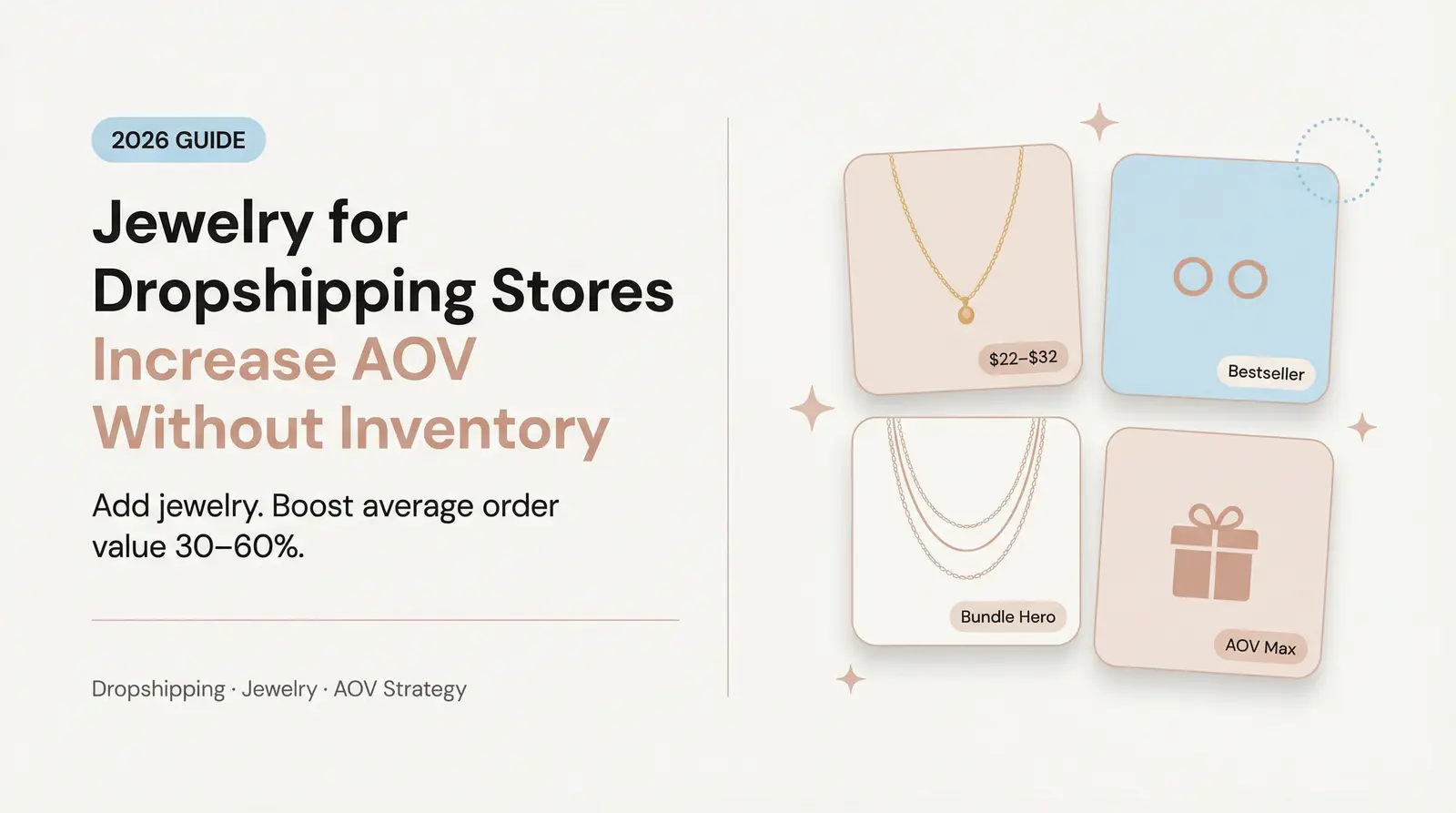



Influencer stores can add high-margin jewelry using dropship fulfillment, smart merchandising, and a 10-SKU starter plan to increase AOV without holding inventory.
Published:
March 25, 2026
Author:
Yi Cui
Add jewelry to an influencer catalog the smart way, category picks, merchandising, and ops without tying up cash in inventory. If you are building a lifestyle brand or merch store, adding high-margin accessories is one of the fastest ways to scale revenue. This guide breaks down exactly how to launch a jewelry line that boosts your average order value while keeping your operations entirely inventory-free.
Jewelry is a strategic powerhouse for creator commerce. It offers high perceived value, takes up minimal physical space, and carries margins that traditional apparel simply cannot match. For an influencer store, introducing jewelry transforms single-item purchases into multi-item carts.
The primary driver is average order value (AOV) lift. If your average order is currently $45 from a t-shirt sale, adding a $25 jewelry item at checkout can increase AOV by $15 to $25 range depending on bundle adoption. Brands in similar categories have reported that strategic product bundling can increase revenue by 10 to 30 percent [1]. Jewelry naturally pairs with existing products like apparel, beauty, or lifestyle goods. A simple "complete the look" prompt on a product page encourages customers to add a necklace or ring to their cart without hesitation.
Beyond the initial AOV boost, jewelry drives repeat purchases and gifting behavior. The global jewelry market is projected to surpass $407 billion in 2026, with digital discovery and influencer-led campaigns driving over half of high-intent purchases [2]. Jewelry is inherently giftable, especially during peak seasons like Valentine's Day and Mother's Day, where consumers spend billions on accessories [3]. In our experience at Branvas, creators who offer well-curated jewelry collections see their followers return to buy gifts for friends or matching pieces for themselves.

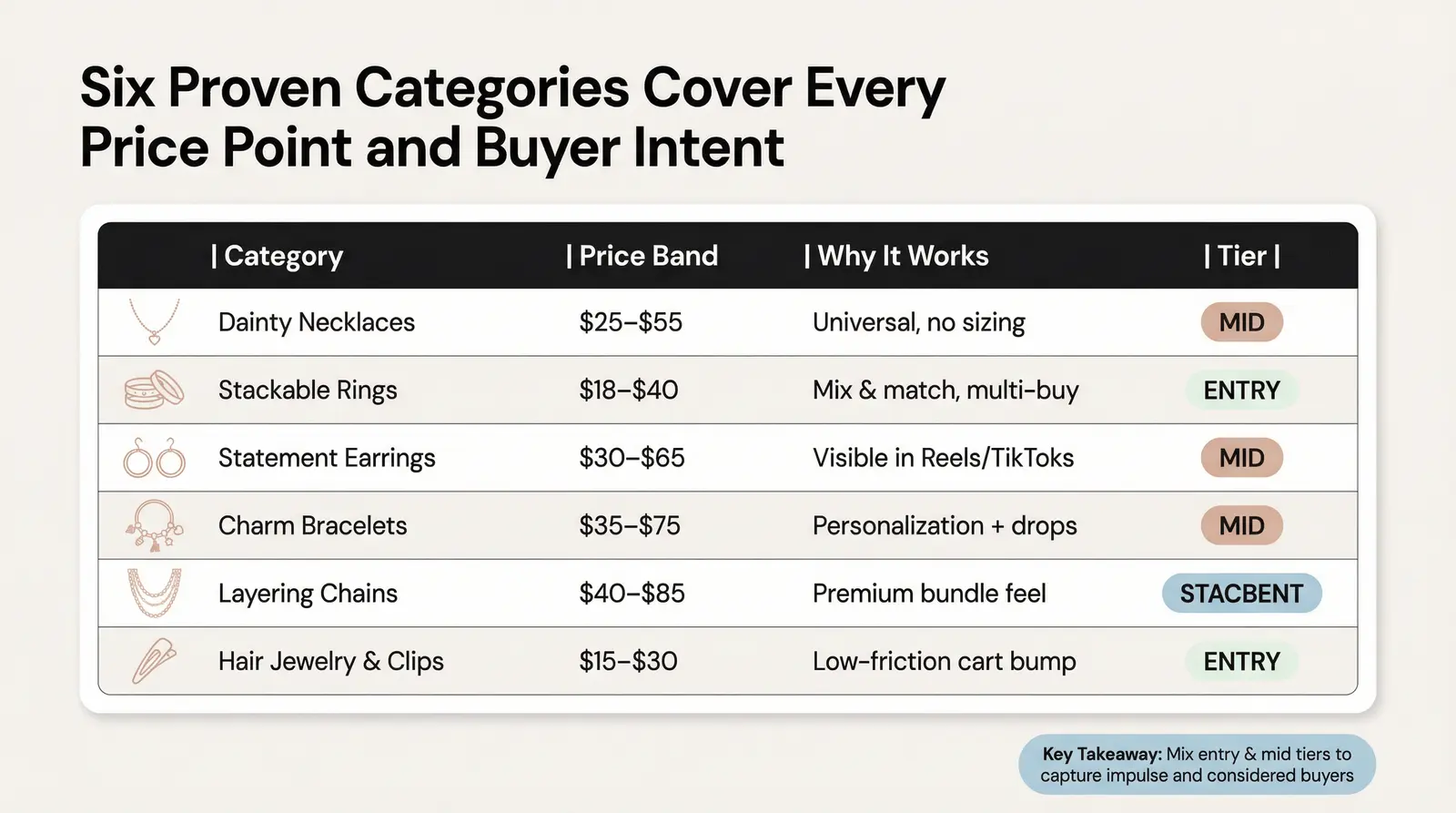
Selecting the right pieces is crucial for matching your audience's aesthetic and budget. Here are six proven jewelry categories that perform exceptionally well in influencer stores.
| Category | Retail Price Band | Why It Works | Merchandising Note |
|---|---|---|---|
| Dainty Necklaces | $25–$55 | Minimalist chains appeal to a broad audience and fit seamlessly into everyday lifestyle content. They are universally flattering and require no sizing. | Position as an everyday essential that layers perfectly over your branded apparel. |
| Stackable Rings | $18–$40 | Rings encourage multiple purchases because customers love to mix and match metals and textures. They are highly visual for close-up social media shots. | Sell as individual pieces but visually merchandise them in sets of three. |
| Statement Earrings | $30–$65 | Bold earrings frame the face, making them highly visible in TikToks, Reels, and selfies. They serve as the focal point of an outfit. | Pair with beauty or makeup products to emphasize a complete aesthetic. |
| Charm Bracelets | $35–$75 | Charms offer personalization, allowing followers to connect with specific symbols or inside jokes related to your brand. | Offer a base bracelet and release new charms as limited-edition drops. |
| Layering Chains | $40–$85 | Pre-layered sets remove the guesswork for the customer while commanding a higher price point. They look luxurious but remain accessible. | Frame as a "ready-to-wear" bundle that instantly elevates casual wear. |
| Hair Jewelry & Clips | $15–$30 | Hair accessories are low-friction entry points for younger demographics or budget-conscious followers. They are trendy and highly shareable. | Use as a low-cost cart bump item during the checkout process. |
These categories align perfectly with proven influencer niches like fashion, wellness, and beauty. By offering a mix of accessible and premium items, you cater to both casual fans and dedicated super-fans.
How you present jewelry dictates how well it sells. Effective merchandising requires strategic placement, smart bundling, and psychological pricing.
Product page placement is your first lever. Jewelry should not be hidden in a separate navigation menu. It needs to appear as an upsell on your highest-traffic pages. If a customer is buying a hoodie, a matching pendant should be suggested right above the "Add to Cart" button.
To maximize this, use The 3-Tier Jewelry Merchandising Ladder. This proprietary Branvas framework structures your catalog to capture every buyer intent:
Pricing psychology plays a major role here. Charm pricing (ending prices in .00 for luxury or .99 for value) and bundle discount framing ("Save 15% when you buy the set") are highly effective. Photography must also align with your existing aesthetic. If your brand is gritty and streetwear-focused, your jewelry should be shot on models in urban settings, not on velvet busts.
Not sure which bundles match your store's aesthetic? Browse the Branvas catalog to see curated assortments built for creator stores.

The traditional retail model requires buying thousands of dollars of inventory upfront, storing it, and picking and packing orders yourself. For a creator, this operational drag kills momentum. The modern approach is an inventory-free model utilizing on-demand production and blind dropship fulfillment.
In this model, you never touch the product. When a customer places an order on your Shopify store, the order is automatically routed to a fulfillment partner. The partner picks the item, packages it in your custom private-label packaging, and ships it directly to the customer. The shipping label shows your brand name, not the manufacturer's, ensuring a seamless customer experience.
To ensure a smooth rollout, follow this ✅ Jewelry Launch Readiness Checklist:
Branvas handles sourcing, private-label packaging, and blind fulfillment end-to-end. See how it works or explore pricing.

Launching with too many products overwhelms both you and your customers. A focused, balanced collection is easier to market and manage. Use this Launch Blueprint to build a cohesive 10-SKU starter assortment.
We recommend a phased approach. Soft-launch with 4 to 5 SKUs to validate demand and gather feedback. Once you identify your bestsellers, expand to the full 10-SKU assortment within 60 to 90 days. Creators can explore available products via the Branvas catalog or work with the brand studio at branvas.com/brand-studio.

Can I add jewelry to my influencer store without buying inventory upfront?
Yes, you can use a private-label dropshipping model. This allows you to sell jewelry on your store while a fulfillment partner handles inventory, packaging, and shipping directly to your customers.
What jewelry sells best in influencer stores?
Dainty necklaces, stackable rings, and everyday hoop earrings are consistently top performers. These items are universally flattering, require minimal sizing, and fit easily into daily lifestyle content.
How much can I realistically earn by adding jewelry to my store?
Earnings depend on your audience size and engagement, but jewelry typically offers strong profit margins. Adding a jewelry upsell can increase your average order value significantly without adding overhead costs.
How do I brand jewelry as my own without a manufacturer's label?
You partner with a supplier that offers blind shipping and custom packaging. The products arrive in pouches or boxes featuring your logo, ensuring the customer only interacts with your brand.
Do I need a large following to launch a jewelry line?
No, a highly engaged micro-influencer audience often converts better than a massive, passive following. Starting with a small, curated collection allows you to test the waters and scale as your community grows.
[1] 33 Physical Product Bundling Statistics Every Ecommerce Brand Needs in 2025
[2] TOP 20 JEWELRY MARKETING STATISTICS 2026 REVEAL BILLION-DOLLAR DIGITAL BUYING SURGE
[3] Consumers Expected to Spend Near-Record $33.5 Billion on Mother’s Day
[4] Product Bundling: A Strategic Guide to Increase AOV (+ Examples) (2026)
[5] Jewelry Ecommerce Statistics