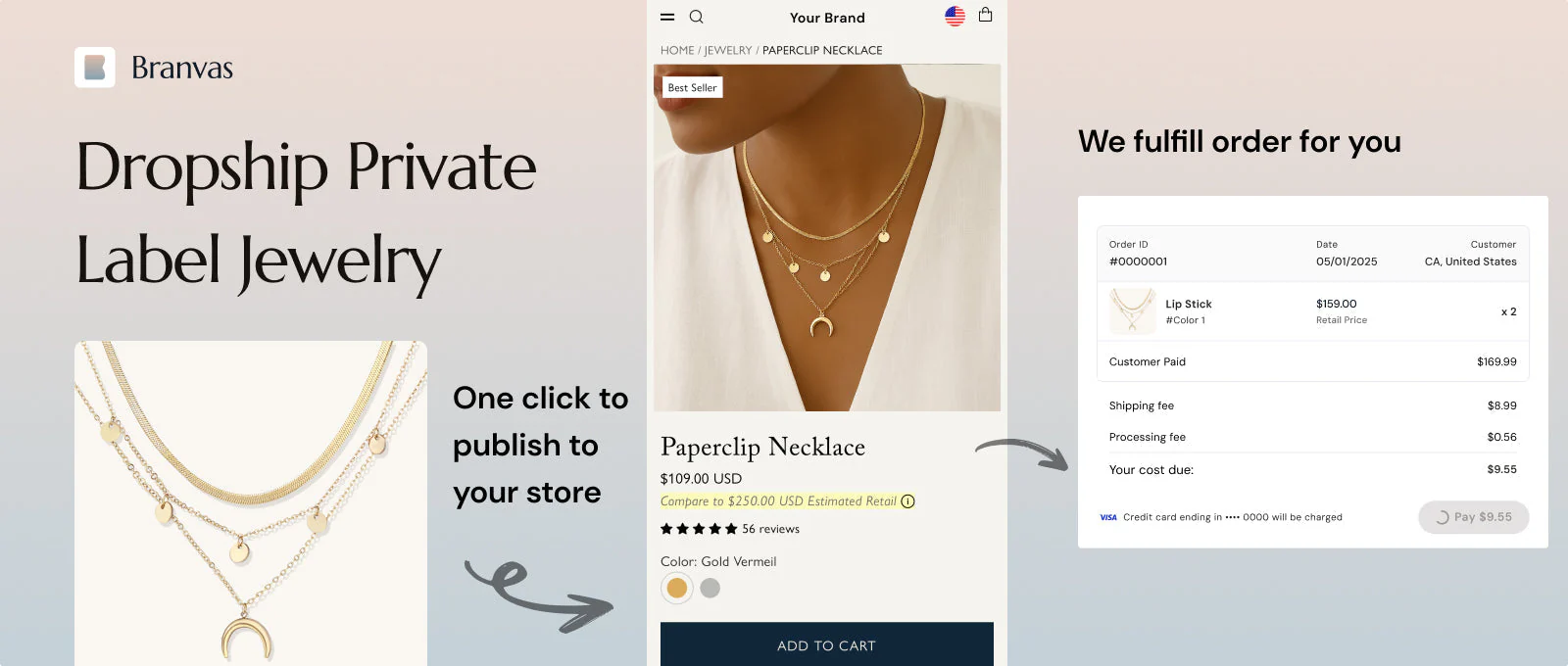



Creators can build profitable private-label jewelry brands without inventory by using brand-as-a-service partners and converting audience trust into owned, recurring revenue.
Updated:
April 1, 2026
Author:
Yi Cui
Brand deals are rented income. Your own jewelry brand is owned income. This article shows how creators are turning attention into a durable business by launching private-label jewelry without buying inventory upfront, without warehouses, and without becoming 'a full-time operator.'
For years, the creator playbook has been dominated by a single monetization strategy: brand deals. While lucrative, this model leaves creators dependent on fluctuating marketing budgets, unpredictable algorithms, and a constant cycle of pitching and negotiation. It's a hamster wheel of rented revenue. But a fundamental shift is underway. Armed with deep audience trust and new, asset-light fulfillment models, a growing class of content creators is moving from one-time brand deals to building their own long-term, ownable revenue streams. They are becoming brand owners.
This article is a comprehensive guide for creators considering this transition. We will explore why jewelry has become the ideal category for this new wave of entrepreneurship, breaking down the monetization mechanics, strategic advantages, and common pitfalls. We will also introduce a step-by-step framework for launching a private-label jewelry brand without ever touching inventory, demonstrating how modern platforms like Branvas have democratized brand ownership, allowing creators to focus on what they do best: building community and creating compelling content.
Not all products are created equal in the creator economy. While merch, digital products, and courses have their place, jewelry possesses a unique combination of attributes that make it exceptionally well-suited for creators looking to build a sustainable brand. It is a category built on storytelling, personal identity, and high emotional resonance: the very pillars of a successful creator's platform. Jewelry is not just an accessory; it is a marker of memories, a symbol of personal style, and a tangible piece of a creator’s world that an audience can own.
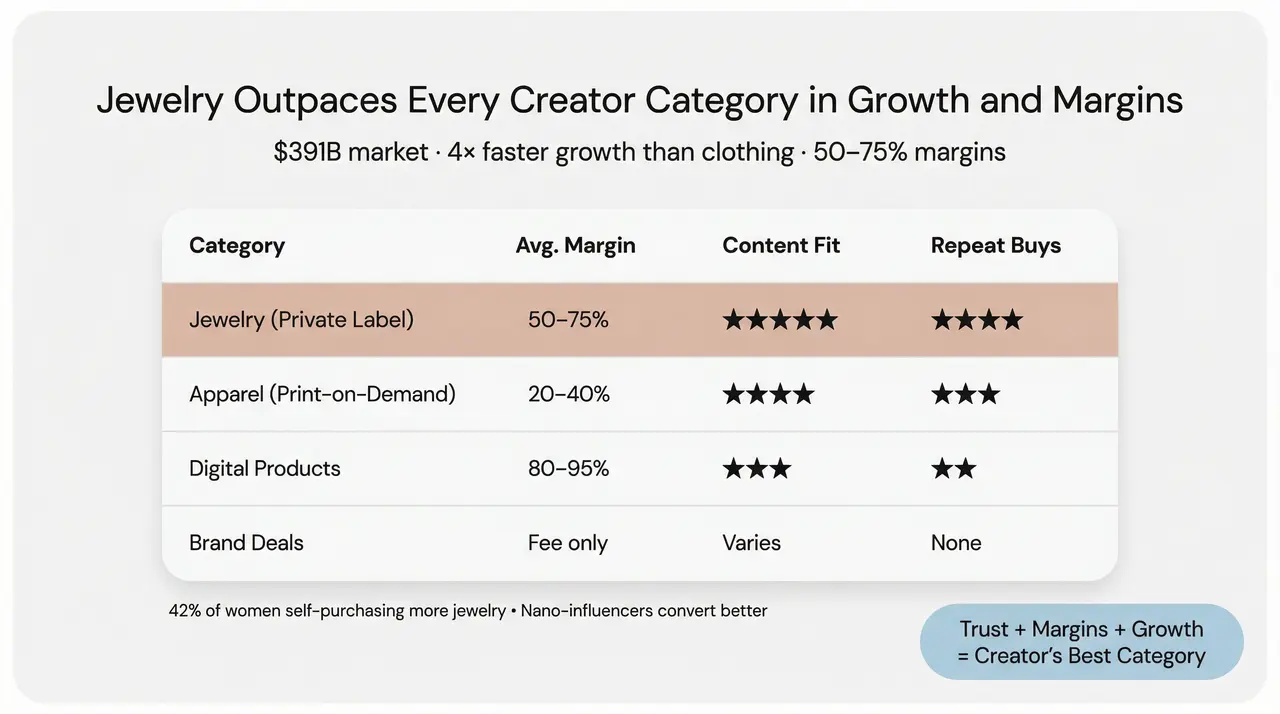
The financial and market dynamics further strengthen the case. The global jewelry market is not a small niche; it is a massive and growing industry projected to reach $391.28 billion in 2026 [1]. More importantly, it is undergoing a significant transformation. According to a joint report by The Business of Fashion and McKinsey, jewelry is set to be the fastest-growing category in fashion, with unit sales projected to grow at 4.1% annually between 2025 and 2028, four times the rate of clothing [2]. This growth is increasingly driven by self-purchasing, with 42% of women buying more jewelry for themselves than just a few years ago, turning what was once a gift-centric category into a personal and repeatable indulgence [2].
Compared to other common creator product categories, jewelry offers a compelling balance of high margins and deep content integration.
| Category | Avg. Margin | Content-Integratability | Repeat Purchase Potential | Operational Complexity | Brand Equity Built |
|---|---|---|---|---|---|
| Jewelry (Private Label) | 50-75% | Very High | High | Low (with partner) | Very High |
| Apparel (Print-on-Demand) | 20-40% | High | Medium | Low (with partner) | Medium |
| Digital Products | 80-95% | Medium | Low | Very Low | Low-Medium |
| Brand Deals | 100% (of fee) | Varies | None | Low | Low (for creator) |
| Skincare/Beauty | 60-80% | High | High | High (inventory, FDA) | High |
Note: This table provides estimated ranges. Actual figures can vary significantly based on sourcing, branding, and business model. Operational complexity for physical products is dramatically reduced when using a brand-as-a-service partner like Branvas.
A crucial insight for creators is that success in this space does not require a massive, undifferentiated audience. In fact, the opposite is often true. A 2024 Harvard Business Review study highlighted that smaller, more engaged audiences consistently deliver a higher return on investment, with nano-influencers (under 10,000 followers) generating significantly higher conversion rates than their macro-influencer counterparts [5]. This is because trust, not just reach, is the primary driver of commerce for personal products like jewelry. A niche creator with a clear aesthetic and a deeply connected community of 10,000 followers is far better positioned to sell a curated jewelry collection than a generalist influencer with 500,000 passive viewers. The specificity of a niche allows for a stronger brand point of view, which is the foundation of a durable and profitable jewelry brand.
To make an informed decision, it’s essential to understand the fundamental economic differences between rented income (brand deals) and owned income (product sales). While a brand deal offers a quick, upfront payment, an owned brand creates a recurring, scalable revenue stream that compounds over time. Let's look at a realistic example.
Consider a creator with 50,000 engaged followers. Based on industry averages, this creator could command approximately $2,000 for a one-time brand partnership that includes a few pieces of content [7]. It’s a solid, one-off payment. After the campaign, the revenue stops.
Now, let's imagine the same creator launches their own private-label jewelry line. Instead of a one-time promotion, they focus on selling their own branded products. Here’s a conservative scenario:
While the monthly profit of $1,100 is less than the one-time $2,000 brand deal, this is a recurring asset. Over 12 months, the comparison is stark:
This simple model doesn't even account for audience growth, repeat customers, or increased conversion rates as the brand gains momentum. As the creator's audience grows, the value of their owned brand multiplies automatically. A 20% increase in followers could translate to a 20% increase in sales, whereas securing a 20% higher rate for a brand deal is a constant negotiation. Furthermore, the jewelry brand itself becomes a valuable asset (brand equity) that grows with every sale, every piece of user-generated content, and every satisfied customer. It’s a long-term investment in your own financial ecosystem, not just a temporary rental of your influence.
Note: These are illustrative estimates. Actual results will vary based on audience engagement, product selection, and marketing execution.
The compounding nature of owned revenue is what makes this model so compelling for creators with long-term ambitions. Influencer Pia Mance started Heaven Mayhem with just $900 and 20 handmade necklaces in 2022; three years later, the brand had grown to a $10 million business [4]. While most creators won't follow the same trajectory, the principle holds: owned brands compound, brand deals don't.
Curious what your numbers could look like? Branvas's Profit Calculator lets you model your own scenario.

Transitioning from creator to brand owner requires a systematic approach. At Branvas, we’ve guided hundreds of creators through this journey and have codified the process into a proprietary system: the LAUNCH Framework. This six-step playbook is designed to help creators build a durable brand by focusing on their strengths while offloading operational complexity.
L: Lock In Your Brand Point of View. Before you sell a single product, you must define your brand. What is your unique aesthetic? Who is your hyper-specific audience? Your brand's point of view is the filter for every product you select and every piece of content you create. It's the difference between selling generic jewelry and building a brand that people identify with.
A: Audit Your Audience for Purchase Readiness. Followers are not the same as customers. Before launching, audit your audience for signals of purchase intent. Have they bought products you've recommended in the past? Do they respond to affiliate links? In our experience at Branvas, creators who skip the Audit step often launch to an audience that admires them but hasn't yet bought anything from them. That's a solvable problem, but it needs a plan.
U: Unbundle Operations. The single biggest barrier to entry for creators has always been the operational burden of sourcing, inventory, and fulfillment. The modern playbook is to unbundle these operations entirely by using a private-label fulfillment partner. This model, often called "brand-as-a-service," allows you to have products sourced, branded with your logo, and shipped directly to your customers (blind shipping) without you ever seeing or touching the inventory.
N: Nail the Unboxing and Brand Experience. In the age of social commerce, the unboxing experience is a marketing event. The custom-branded box, the tissue paper, the thank-you card: these are critical touchpoints that create a premium feel and encourage user-generated content (UGC). We often see founders underestimate how much the unboxing moment does for organic UGC and repeat purchases.
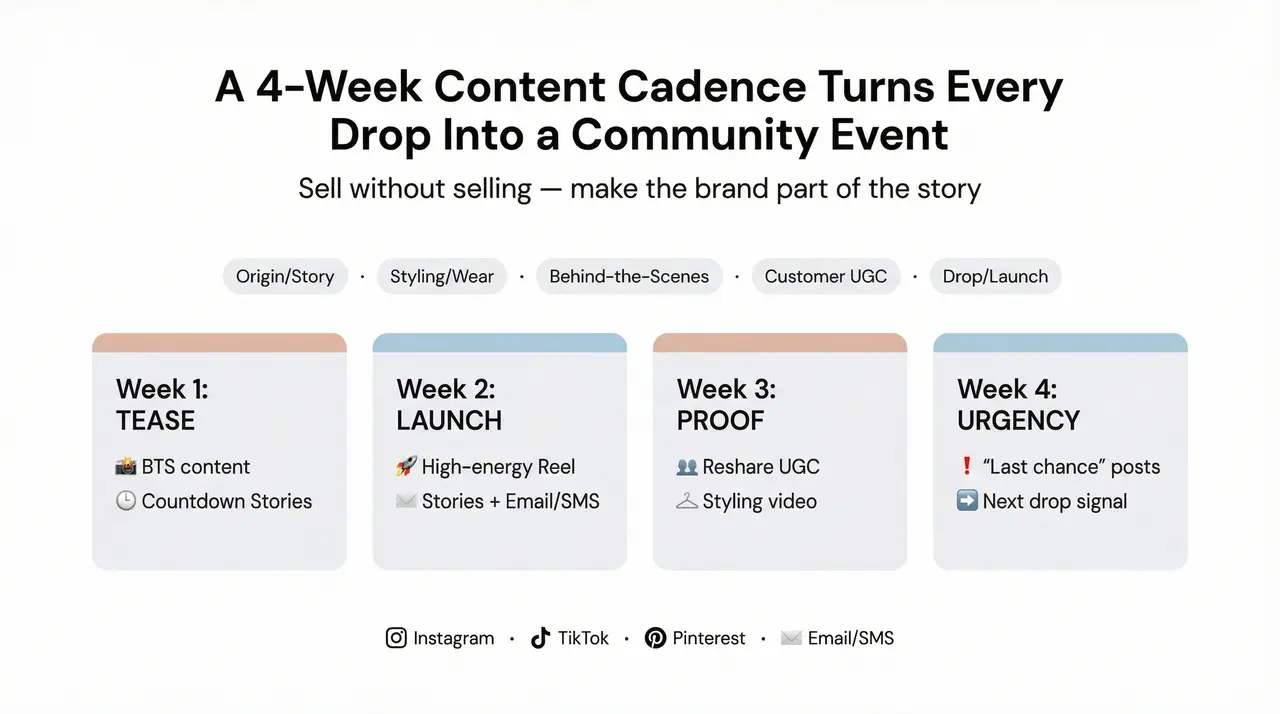
C: Create a Content Engine Around the Brand. Your content is no longer just about entertainment; it's the engine that drives your brand. Treat product drops like content events. Tell the story behind a piece, show how to style it, and celebrate the customers who wear it. The goal is to integrate the brand so naturally into your content that it becomes an extension of your story, not a commercial interruption.
H: Harvest Repeat Revenue. The first sale is the start, not the end. A successful brand is built on repeat customers. From day one, focus on building an email and SMS list to own your customer relationships directly. Use these channels for loyalty loops, early access to new drops, and exclusive content to turn one-time buyers into lifelong fans.
Ready to move from brand deal to brand owner? Branvas handles sourcing, branding, and fulfillment, so you can stay focused on content and community. See how it works or explore the creator solution.

One of the biggest fears creators have when launching a product is coming across as “salesy.” The key to avoiding this is to build a content plan that prioritizes trust and storytelling over aggressive pitching. Your audience follows you for your perspective, not for your products. A successful content plan for a jewelry dropshipping Instagram shop is one that seamlessly weaves the brand into the creator’s existing narrative, making the products a natural extension of the content they already love.
This starts with what we call the “trust-first content arc.” You must earn trust before you can earn transactions. The good news is that as a creator, you have a significant head start. Your audience already trusts your taste and recommendations. Your job is to transfer that trust from your personal brand to your product brand. This is achieved by building a content strategy around five key pillars:
Your content strategy should also be platform-specific. Instagram is your primary tool for brand building and conversion; use Reels and Stories for discovery and engagement, and leverage Instagram Shops for a frictionless checkout experience. TikTok Shop is a powerful engine for impulse buys and viral discovery, especially for trend-driven pieces [3]. Pinterest can be a surprising source of evergreen, SEO-driven traffic, as users often search for specific aesthetics and styling ideas. Finally, your email and SMS list is where you nurture your most loyal customers and drive repeat purchases, away from the noise of social media algorithms.
A simple content cadence might look like this:
For more in-depth strategies and resources on influencer monetization for jewelry, the Branvas Academy offers a wealth of creator-specific guides and playbooks.
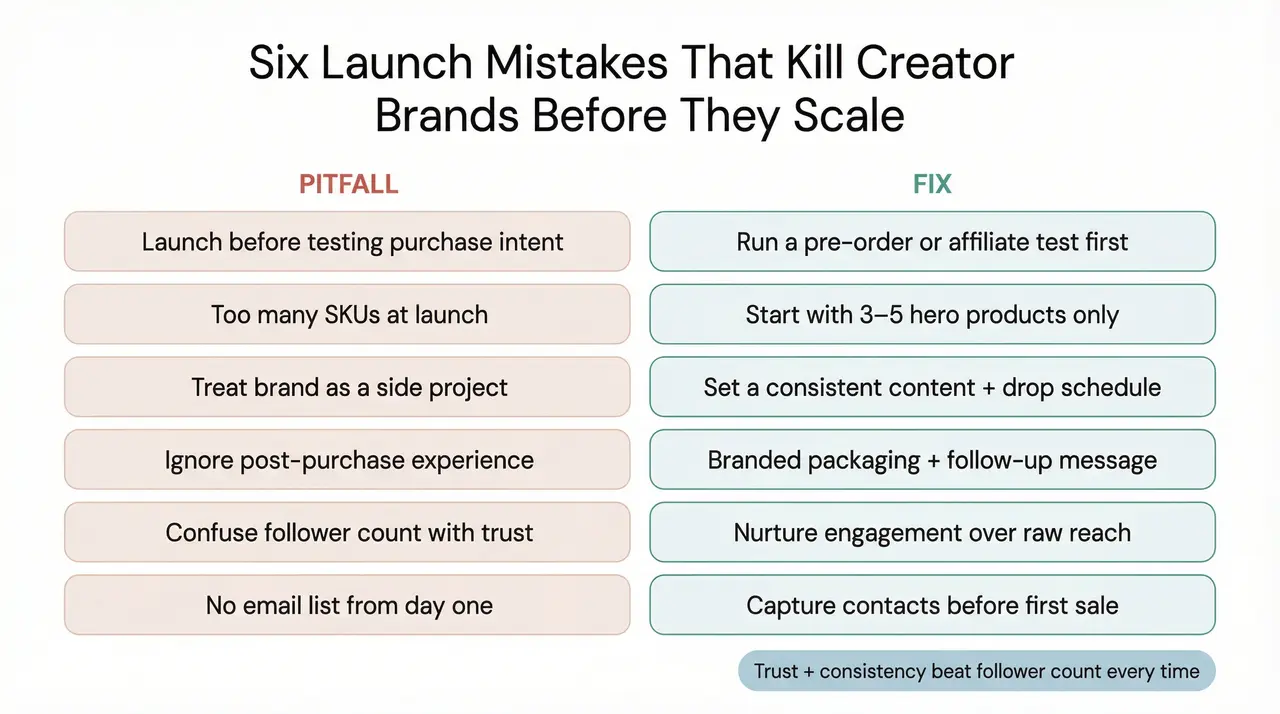
While the opportunity for creators in the jewelry space is immense, the path is not without its challenges. Launching a product brand requires a shift in mindset from content creator to business owner. Based on our experience helping creators navigate this transition, here are the most common pitfalls.
Launching Before Building Purchase Intent. This is the most frequent mistake. A large follower count does not automatically translate to a customer base. Before launching a full collection, you must test your audience’s willingness to buy from you. Use affiliate links for similar products or run a small, pre-order test for a single item to gather real data on purchase intent.
Over-investing in SKUs Before Validating a Hero Product. It’s tempting to launch with a wide variety of products to appeal to everyone. This is a mistake. It dilutes your marketing message and spreads your efforts too thin. Start with a small, highly curated collection (3-5 pieces) centered around one or two “hero” products that perfectly embody your brand’s point of view. Validate these first before expanding your catalog.
Treating the Brand Like a Side Project. A successful brand requires consistency. Inconsistent content, infrequent drops, and slow customer service will quickly kill momentum. Even if you only have a few hours a week, you must treat your brand with professional focus. Plan your content calendar, set a predictable schedule for new drops, and be responsive to your community.
Ignoring the Post-Purchase Experience. The sale is not complete when the customer clicks “buy.” The post-purchase experience, from the branded packaging to the shipping confirmation email to the follow-up message asking for feedback, is a critical and often overlooked part of brand building. This is your opportunity to turn a first-time buyer into a loyal advocate.
Conflating Audience Size with Purchase Propensity. As mentioned earlier, the size of your audience is far less important than the depth of its trust. We've seen creators with millions of followers launch to crickets, and creators with under 20,000 build five-figure months. The differentiator is almost always audience trust and launch execution, not follower count. Focus on nurturing a smaller, more engaged community that sees you as a trusted source.
Not Building an Email List from Day One. Your social media following is a rented audience; the platform’s algorithm controls your access to them. Your email and SMS list is an asset you own. From the very beginning, make it a priority to capture customer and prospect contact information. This direct line of communication is invaluable for driving repeat sales and building long-term customer relationships that no algorithm can take away.
Launching a brand isn't the right move for every creator, and that's okay. Success requires a specific blend of audience engagement, brand clarity, and entrepreneurial drive. This checklist is designed to help you perform an honest self-assessment. Answer these questions to gauge your readiness.
Your Readiness Scorecard:
If you answered YES to 7 or more of these questions, you are likely in a strong position to begin the transition from creator to brand owner. Your audience is showing signs of purchase readiness, and you have the foundational elements of a strong brand identity.
If you're not there yet, that’s a valuable insight. It means your focus should be on strengthening your community and clarifying your brand voice. The Branvas Academy is a good starting point for building that foundation.

1. Can a content creator really launch a jewelry brand without holding inventory?
Absolutely. This is made possible through a business model called private-label dropshipping or “Brand-as-a-Service.” A partner company like Branvas handles all the physical aspects of the business: sourcing high-quality jewelry, holding the inventory, branding the packaging with your logo, and shipping orders directly to your customers. This allows you, the creator, to focus entirely on marketing, content creation, and building your brand community without the financial risk or operational complexity of managing inventory.
2. How much money do I need to start a private-label jewelry line as an influencer?
One of the biggest advantages of the private-label dropshipping model is the remarkably low startup cost. Because you are not buying inventory upfront, your initial investment is minimal. Typically, your main costs will be a subscription to a platform like Shopify to host your e-commerce store and any fees for the fulfillment service itself. This removes the traditional barrier of needing thousands of dollars for inventory, making it possible to launch a professional brand with a budget of a few hundred dollars.
3. How does private-label jewelry work? What gets branded, and what does fulfillment look like?
Private labeling means the products are customized to appear as if they are entirely your own. When a customer places an order on your site, the order is automatically sent to your fulfillment partner. The partner then picks the jewelry pieces, packages them in your custom-branded materials (such as a box, pouch, or card with your logo), and ships the order directly to the customer. This process is often called “blind shipping” because the end customer has no idea the product came from a third-party fulfillment center; the entire experience feels like it came directly from your brand.
4. Is jewelry a good product category for a creator with under 50K followers?
Yes, it can be an excellent category, often more so than for creators with massive, disengaged audiences. Success in selling personal products like jewelry is driven by trust and niche appeal, not just follower count. A micro-influencer with a highly engaged, trusting audience of 10,000-20,000 followers who share a specific aesthetic can often achieve higher conversion rates and build a more profitable brand than a macro-influencer with 500,000 passive followers. The key is the quality of the audience relationship, not the quantity of followers.
5. How do I promote my own jewelry brand on Instagram without it feeling too salesy?
The most effective promotion is authentic integration. Instead of creating posts that just say “buy my product,” weave the jewelry into the content your audience already loves. Wear the pieces in your daily life, tell the story behind a design, and show how different pieces can be styled. Create content that provides value: styling tips, behind-the-scenes looks, and user-generated content features, so that the product becomes a natural part of your narrative. The goal is to make your audience want to be a part of your brand’s world, with the product being the souvenir they can take home.
[1] "Jewelry - Worldwide", Statista, 2026. https://www.statista.com/outlook/cmo/accessories/watches-jewelry/jewelry/worldwide
[2] "Why the Shine Isn’t Fading on Jewellery Sales", The Business of Fashion in partnership with McKinsey & Company, December 10, 2025. https://www.businessoffashion.com/articles/luxury/the-state-of-fashion-2026-report-jewellery-category-sales/
[3] "TikTok Shop Makes Up Nearly 20% of Social Commerce in 2025", eMarketer, December 9, 2025. https://www.emarketer.com/press-releases/tiktok-shop-makes-up-nearly-20-of-social-commerce-in-2025/
[4] "How viral jewellery label Heaven Mayhem became a $10 million business", Vogue Business, August 25, 2025. https://www.vogue.com/article/how-viral-jewellery-label-heaven-mayhem-became-a-dollar10-million-business
[5] "When It Comes to Influencers, Smaller Can Be Better", Harvard Business Review, September 2024. https://hbr.org/2024/09/when-it-comes-to-influencers-smaller-can-be-better
[6] "Creator Economy Ad Spend to Reach $37 Billion in 2025", IAB, November 20, 2025. https://www.iab.com/news/creator-economy-ad-spend-to-reach-37-billion-in-2025-growing-4x-faster-than-total-media-industry-according-to-iab/
[7] "2025 Influencer Compensation Insights", Lumanu, January 6, 2026. https://www.lumanu.com/blog/breaking-down-1-billion-in-creator-payouts-2025-influencer-compensation-insights
[8] "Is Dropshipping Jewelry Profitable? A Complete Data-Driven Guide…", ScaleOrder, October 10, 2025. https://scaleorder.com/blogs/is-dropshipping-jewelry-profitable-a-complete-data-driven-guide-to-margins-branding-social-media-and-real-world-profit-strategies/