


Learn how to start a profitable jewelry brand with zero upfront investment using dropshipping, white-labeling, and smart partnerships. Turn your jewelry business idea into reality today.
Published:
January 29, 2026
Author:
Yi Cui
The jewelry industry is experiencing rapid growth, with the global market projected to reach $578.45 billion by 2033. Yet for aspiring entrepreneurs, the dream of launching their own jewelry brand often feels financially impossible. Traditional jewelry startups demand substantial upfront investments for inventory, minimum order quantities, and manufacturing costs that can easily reach tens of thousands of dollars.
But what if launching a successful jewelry brand required zero upfront investment? Meet Sarah Kim, who launched her minimalist jewelry brand Luna Collective from her college dorm room without spending a single dollar on inventory. Within six months, she was generating $15,000 in monthly revenue through strategic dropshipping partnerships and smart branding decisions.
The secret lies in modern business models that prioritize brand building over inventory management. Through jewelry dropshipping, white-label partnerships, and digital-first marketing strategies, entrepreneurs today can build authentic jewelry brands that compete with established players without taking on financial risk.
The conventional path to starting a jewelry business creates steep barriers for most new entrepreneurs. Understanding these challenges highlights why the no-investment approach represents such a powerful opportunity.
Marcus Chen, founder of Ethereal Designs, learned this lesson the hard way when his traditional approach led to $30,000 in unsold inventory within his first year. "I thought having physical stock would give me more control," Marcus reflects, "but it nearly bankrupted my business before it even started."
The fundamental flaw in the traditional model is that it forces entrepreneurs to become inventory managers before proving they can build a brand and serve customers effectively.
Modern jewelry entrepreneurship operates on a completely different paradigm that prioritizes brand building over inventory management. This approach leverages established supply chains while allowing entrepreneurs to focus on what truly matters: creating compelling brand experiences and building strong customer relationships.
Dropshipping jewelry: This model connects customers directly with suppliers while keeping brand identity intact. When customers order from your website, suppliers fulfill orders using your branded packaging and materials, creating a seamless brand experience without requiring inventory investment.
White-label jewelry suppliers: These partners offer high-quality pieces that can be marketed under your brand name with no minimum order requirements. This makes it possible to test market demand, refine positioning, and grow a customer base before committing to custom manufacturing.
Risk elimination: Entrepreneurs can launch, test, and iterate their brand concepts without financial exposure. If a particular style or market segment doesn't resonate with customers, pivoting requires no inventory liquidation or financial loss.
Brand-first strategy: Without the constraint of excess stock, founders can focus on authentic brand storytelling, targeted market positioning, and customer-centric product curation that fuels long-term growth.
Emma Rodriguez discovered this approach after her traditional jewelry startup failed. Within eight months of launching her dropshipping-based brand Coastal Gems, she achieved $25,000 monthly revenue. "The freedom to focus on brand building instead of inventory management completely transformed my approach to business," Emma explains.
The key insight is that successful jewelry brands are built on customer relationships and brand authenticity, not inventory ownership.
Launching a zero-investment jewelry brand requires strategic planning and execution across six core areas that build upon each other to create sustainable business growth.
Sophia Martinez followed this exact framework to launch Desert Rose Jewelry and achieved her first $1,000 sales month within 60 days of launch, proving that systematic execution of these steps creates predictable business growth.
Effective jewelry marketing requires creativity and strategic thinking rather than large advertising budgets. Successful entrepreneurs leverage organic growth strategies that build authentic customer relationships.
The most successful budget marketing approaches focus on building a genuine community around your brand instead of relying on expensive ad campaigns that may not resonate with your audience.
Sarah Kim's journey from college student to successful jewelry entrepreneur shows how the no-investment approach can create rapid business success when executed strategically.
Starting with market research on minimalist jewelry trends, Sarah identified a gap in affordable, everyday pieces for young professionals who wanted sophisticated jewelry without luxury price points. She spent her first day researching suppliers, evaluating product quality, and understanding shipping logistics through Branvas's platform.
Hour 1–4: Market research and niche identification
Analyzed competitor brands, customer reviews, and specific product gaps in the minimalist jewelry market that aligned with her target demographic's needs and preferences.
Hour 5–8: Supplier evaluation and partnership building
Connected with dropshipping partners through Branvas, who offered high-quality minimalist pieces, reliable shipping times, and customizable packaging options that would support her brand vision.
Hour 9–16: Brand identity and storefront creation
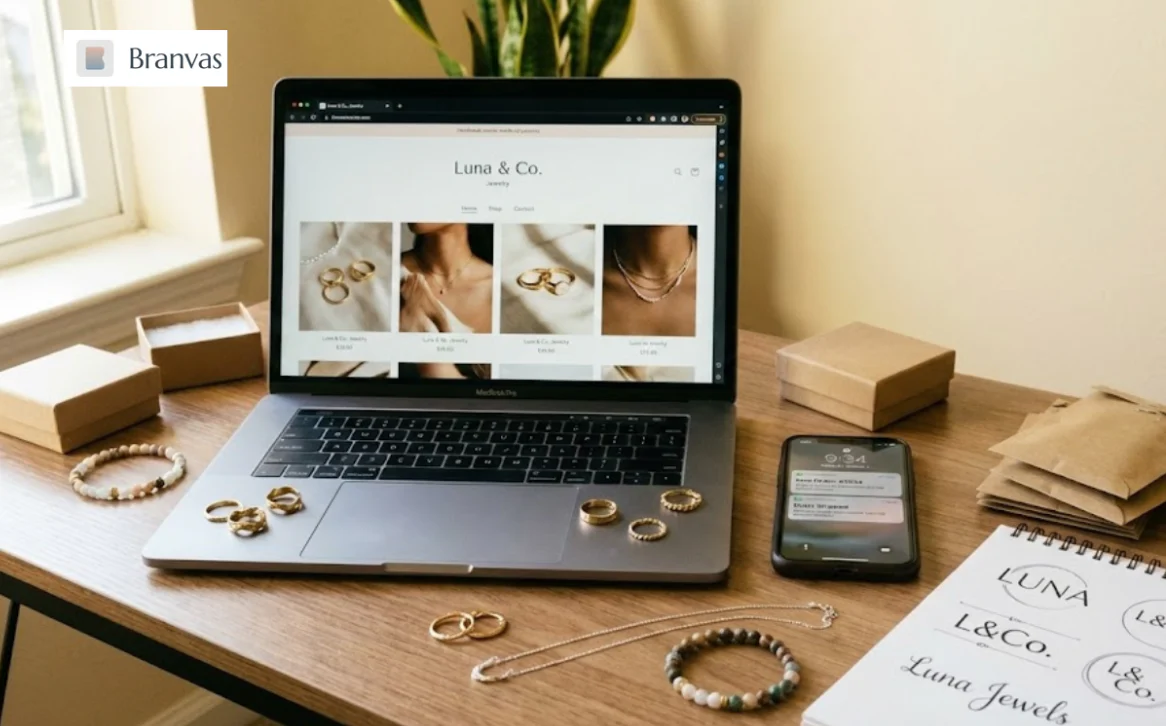
Designed her logo with Canva, developed brand story content, launched a Shopify store, and created product listings with compelling descriptions and lifestyle photography.
Hour 17–24: Social media setup and content creation
Established Instagram and TikTok accounts, creating a week’s worth of content, and developed hashtag strategies for organic discovery.
Within her first month, Luna Collective generated $3,200 in revenue, and by month six, Sarah was earning $15,000 monthly while maintaining her full-time studies. "The key was focusing on brand building from day one rather than getting caught up in inventory management," Sarah reflects.
Her success shows that with the right approach and execution, launching a profitable jewelry brand doesn’t require substantial financial investment.
Starting a jewelry brand without upfront investment isn't just possible—it's often the smartest approach for building sustainable, customer-focused businesses. By leveraging dropshipping partnerships, white-labeling opportunities, and digital-first marketing strategies, entrepreneurs can focus on what truly matters: creating authentic brands that serve specific customer needs and build lasting relationships.
Ready to launch your jewelry brand without inventory risk? Branvas provides everything you need to start your branded jewelry business today with zero upfront investment and complete creative control.