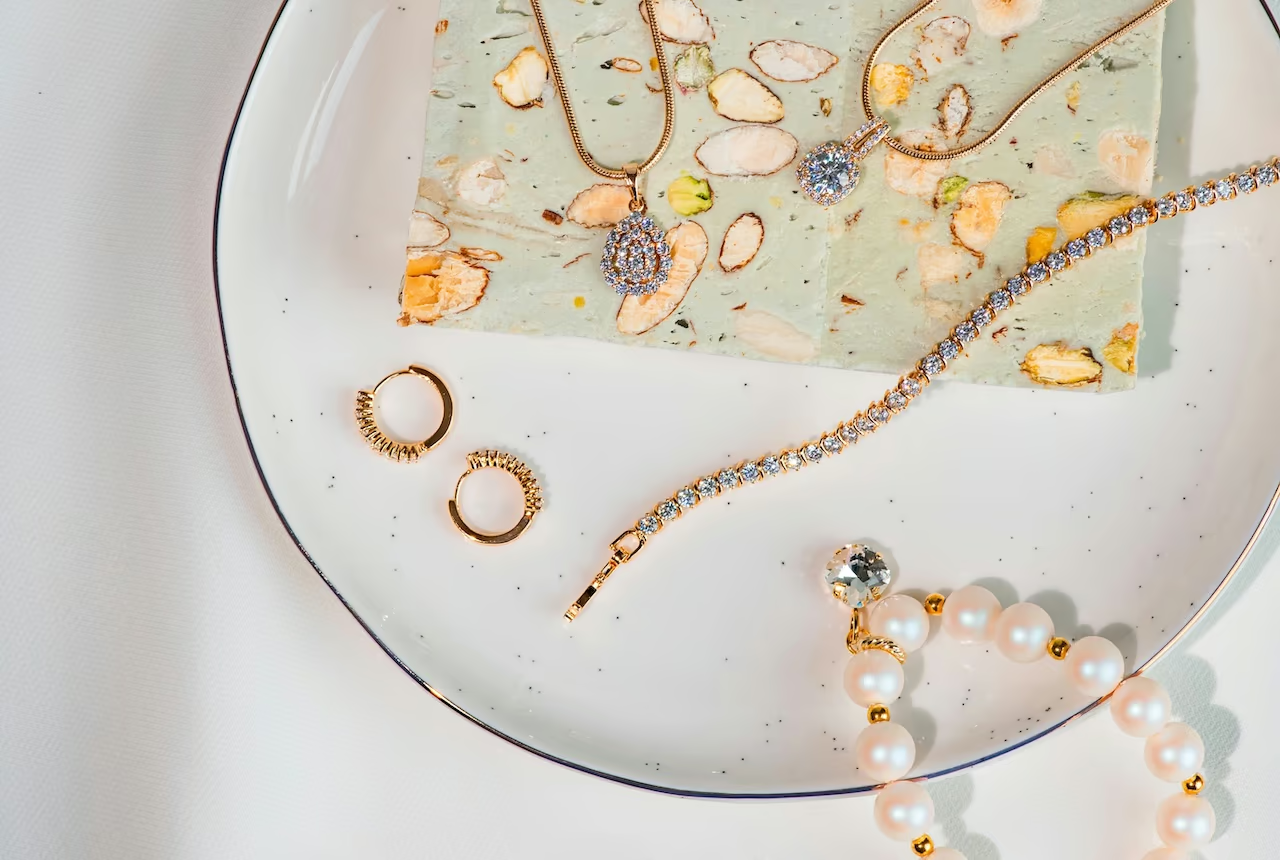



This guide provides actionable steps to launch jewelry on Amazon Handmade without holding inventory, covering niche selection, branding, fulfillment strategies, and a complete launch checklist.
Published:
February 11, 2026
Author:
Yi Cui
A practical, step-by-step checklist to launch jewelry on Amazon Handmade—including what sells, how to price, and how to fulfill reliably.
For jewelry entrepreneurs and influencers, Amazon Handmade presents a compelling opportunity to reach a massive audience without the complexities of building a standalone website. But navigating its rules, competition, and fulfillment models can be daunting. This guide provides a clear, actionable path to launching a successful jewelry brand on Amazon Handmade, with a special focus on how to do it without holding any inventory.
We will cover whether the platform is a good fit for your brand, what product categories and price points perform best, and how to establish a strong brand presence. Most importantly, we will explore fulfillment strategies that minimize risk and maximize scalability, allowing you to focus on what you do best: building your brand.
Deciding whether to sell your jewelry on Amazon Handmade requires a careful look at its advantages and disadvantages. The platform offers access to Amazon’s vast customer base, including over 200 million Prime members worldwide, which can significantly amplify a new brand's reach [1]. Many sellers report that the 'Handmade' designation builds a level of trust and distinction from the broader Amazon marketplace, attracting buyers specifically seeking artisan-quality goods.
However, the platform is not without its challenges. Competition can be intense, and standing out requires a strong brand identity and a well-defined niche. The fee structure is also a key consideration. Amazon Handmade charges a 15% referral fee per transaction, with a $1.00 minimum [2]. While there is no monthly subscription fee for approved Handmade sellers (the standard $39.99 Professional Selling plan fee is waived), the referral fee is higher than on other platforms like Etsy, which charges a 6.5% transaction fee plus other smaller fees [3].
Ultimately, Amazon Handmade is often a good choice for jewelry sellers who are prepared to invest in high-quality branding and photography, have a clear pricing strategy to account for the fees, and can leverage the platform's massive audience to scale their business. It is particularly well-suited for those who can tap into fulfillment models that mitigate inventory risk, a topic we will explore in detail later in this article.

Understanding which jewelry categories and price points resonate with Amazon Handmade customers is crucial for a successful launch. Based on recent market data and platform best-sellers, several key trends emerge. Personalized and meaningful jewelry consistently performs well, as do minimalist and versatile designs that appeal to a broad audience.
Here are 5-7 specific jewelry category ideas that typically perform well on the platform, along with suggested price bands:
CategoryTypical Price BandWhy It Sells WellMinimalist Necklaces$25–$45Simple, elegant, and perfect for everyday wear and layering.Zodiac & Birthstone Jewelry$30–$60Highly personal and a popular gift choice for birthdays and special occasions.Personalized Bracelets$35–$70Engraved names, initials, or meaningful dates create a unique and sentimental product.Stackable Rings$18–$35Allows for customization and repeat purchases as customers build their collection.Boho & Natural Earrings$20–$40Appeals to trends in natural materials, textures, and free-spirited aesthetics.Gold Hoop Earrings$25-$50A timeless classic that is always in demand.Initial Pendant Necklaces$30-$55A personalized and stylish piece that is a consistent top-seller.
To help you choose the best category for your brand, we’ve developed a proprietary decision framework. This matrix helps you align your brand's vibe with a profitable niche and target margin.
High-Margin / Luxury VibeMid-Margin / Trendy VibeAccessible-Margin / Everyday VibePersonal & SentimentalCustom Birthstone Rings with premium materials (e.g., 14k gold)Zodiac & Tarot Card PendantsGold-Plated Initial BraceletsMinimalist & ModernSolid Gold Stacking RingsSterling Silver Geometric NecklacesDainty Gold-Filled Hoop EarringsBoho & ArtisanGemstone Statement EarringsRaw Crystal NecklacesBeaded or Woven Bracelets
How to use this matrix:
By strategically selecting your niche, you can better target your marketing efforts, create more relevant product designs, and ultimately increase your chances of success on the platform.

Strong branding is non-negotiable for standing out on a crowded platform like Amazon Handmade. Your product photos, titles, and packaging are the three pillars that communicate your brand’s value and professionalism to potential customers.
Amazon has strict image requirements that must be followed. Your main image must have a pure white background (RGB 255, 255, 255) and feature only the product itself, filling at least 85% of the frame [4]. This ensures a clean, consistent look across the platform. However, you can and should use your additional image slots (up to 8) for lifestyle shots that show the jewelry being worn, close-ups of details, and images that convey your brand’s aesthetic. These lifestyle images are your opportunity to tell a story and help customers envision themselves wearing your pieces.
Your product titles are critical for search engine optimization (SEO) on Amazon. A good title should be both descriptive and keyword-rich. A common and effective formula is:
Brand Name + Main Keywords (Product Type & Style) + Key Features (Material, Stone, etc.) + Target Audience
For example, instead of
"Gold Necklace," a much stronger title would be:
"Branvas Minimalist Gold Bar Necklace - 18k Gold Plated Dainty Chain for Women"
This title includes the brand name, primary keywords ("gold bar necklace"), secondary keywords ("dainty chain"), material ("18k gold plated"), and target audience ("for women"), significantly improving its visibility in search results.
The unboxing experience is a powerful branding tool. For handmade jewelry, it’s an opportunity to reinforce the artisan quality and care that went into creating the piece. A beautiful, branded package can elevate the perceived value of your product and lead to positive reviews and social media mentions. Consider including a branded jewelry box or pouch, a thank-you card with your logo, and a care instruction card. In our experience at Branvas, sellers who launch with professionally branded packaging see higher perceived value and fewer returns.

Choosing the right fulfillment method is one of the most critical decisions you’ll make as an Amazon seller. It directly impacts your workload, customer satisfaction, and scalability. There are two primary options on Amazon: Fulfilled by Merchant (FBM) and Fulfilled by Amazon (FBA).
Many new sellers struggle with the inventory risk and operational overhead of both FBM and FBA. Unbranded packaging can lead to a disjointed customer experience and higher return rates, while a lack of quality control can damage your brand's reputation. This is where a branded dropship or blind-ship model offers a powerful alternative.
This model allows you to sell products without holding any inventory. When a customer places an order, it is sent directly to your fulfillment partner, who then picks, packs, and ships the order to the customer under your brand. This approach solves several key problems:
If you want to sell branded jewelry without holding inventory, consider a fulfillment partner that handles sourcing, packaging, and blind shipping—so orders ship directly to your customers under your brand. Learn how it works.

Launching your jewelry brand on Amazon Handmade can be broken down into a series of actionable steps. Following this checklist will help ensure a smooth and successful launch.
Launching a jewelry brand on Amazon Handmade is a marathon, not a sprint. By following these steps and leveraging the right partners, you can build a sustainable and profitable business. Branvas helps jewelry sellers launch on Amazon Handmade without inventory risk—from product sourcing to branded fulfillment. Explore our pricing or estimate your profit margins before you launch.

Yes, to be approved for Amazon Handmade, your products must be made by you (the artisan), by one of your employees, or by a member of your collective. However, you can work with production partners for certain aspects of your business, such as fulfillment and shipping, as long as you are the designer and creator of the products.
Amazon Handmade charges a 15% referral fee on the total sales price for each item sold, with a minimum referral fee of $1.00. The monthly Professional Selling Plan fee of $39.99 is waived for approved Handmade sellers [2].
While Amazon's policies prohibit the drop-shipping of products you did not make, you can use a fulfillment partner to handle the storage, packing, and shipping of your own handmade products. This is often done through a blind-shipping arrangement, where the partner ships under your brand, which is a model that many successful sellers use to scale their business.
The approval process can vary, but it typically takes anywhere from a few days to two weeks. Amazon reviews each application to ensure that the seller and their products meet the handmade criteria [5].
A common pricing strategy is to calculate your total costs (materials, labor, packaging, and overhead) and then multiply that by a factor of 2.5 to 4 to arrive at your retail price. It's also essential to research your competitors' pricing and consider the perceived value of your brand to find the sweet spot that ensures profitability while remaining competitive.
[1] “200+ Million Prime Members,” Amazon, accessed February 11, 2026, https://www.aboutamazon.com/news/company-news/2021-letter-to-shareholders.
[2] “Amazon Handmade: Referral fees,” Amazon Seller Central, accessed February 11, 2026, https://sellercentral.amazon.com/help/hub/reference/external/G201814220?locale=en-US.
[3] “Etsy vs Amazon Handmade: Best Platform for Sellers,” Printseekers, accessed February 11, 2026, https://www.printseekers.com/blog-post/etsy-vs-amazon-handmade-which-platform-is-best-for-your-business.
[4] “Amazon Handmade: Image requirements best practices,” Amazon Seller Central, accessed February 11, 2026, https://sellercentral.amazon.com/help/hub/reference/external/GNRP6DDJV79DUHRD?locale=en-US.
[5] “Amazon Handmade: Step-by-Step Guide to Apply & Sell Your…,” Viral Launch, January 22, 2025, https://viral-launch.com/blog/tips-for-selling-on-amazon/amazon-handmade-guide/.