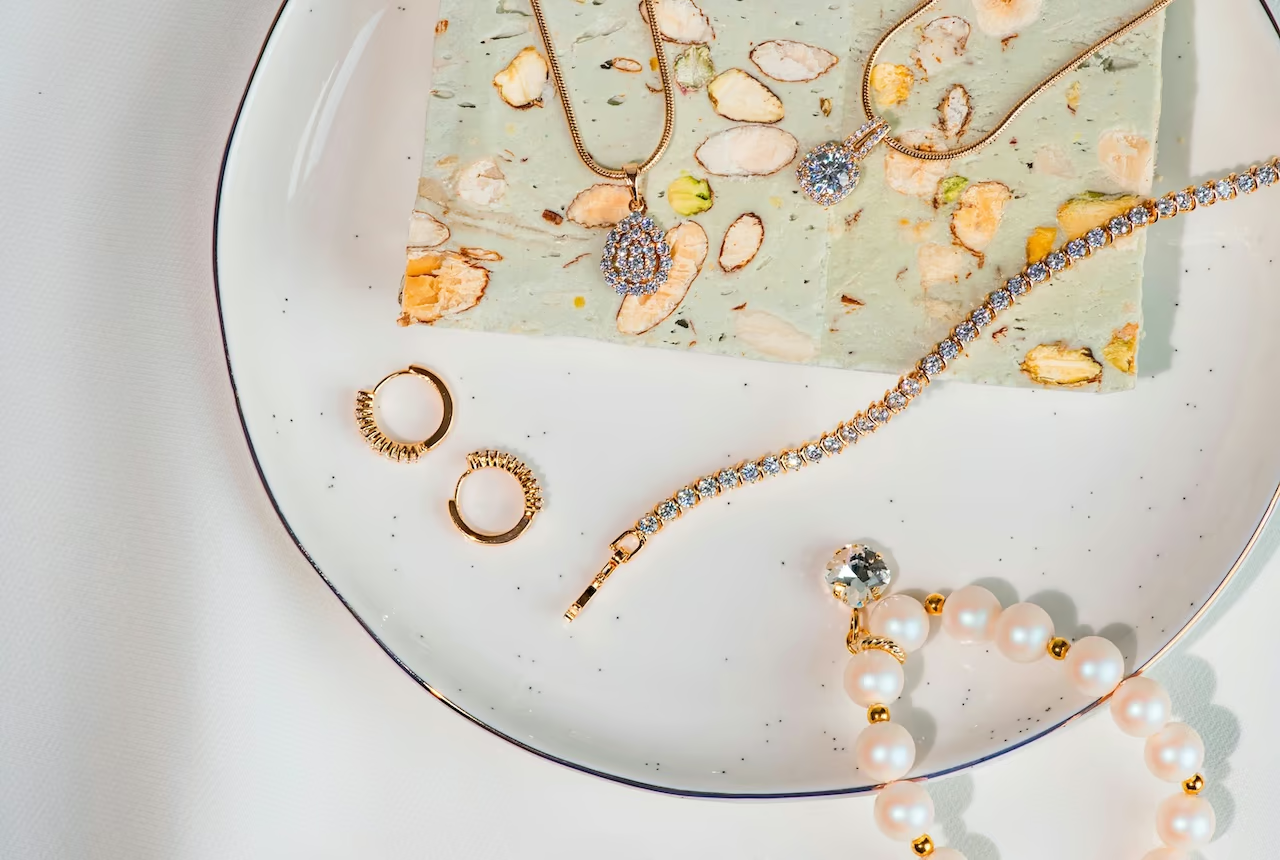



Boutique owners can launch moissanite rings with 60-75% margins using an inventory-free model, targeting ethical-minded Millennials and Gen Z with curated collections and premium branding.
Published:
February 26, 2026
Author:
Yi Cui
If you're targeting boutique stores, here's the fastest way to pick, price, and launch moissanite rings, without getting stuck in sourcing or inventory. Moissanite, a lab-created gemstone with exceptional brilliance and durability, has emerged as a leading alternative to traditional diamonds, offering a compelling value proposition for both consumers and retailers. For boutique owners looking to expand their jewelry offerings, moissanite rings represent a strategic entry point, balancing high perceived value with a manageable, inventory-free business model.
This article provides a practical, actionable roadmap for boutique store owners. We will explore why this product category is a strong fit for the boutique model, who the target customer is, and how to position your brand for success. Furthermore, we will provide concrete assortment ideas, realistic pricing and margin expectations, and a detailed checklist to guide your fulfillment and quality assurance, ensuring you can launch quickly and confidently.
For boutique stores, both online and physical, moissanite rings offer a unique combination of market demand, profitability, and logistical simplicity. The primary advantage lies in the gemstone's value proposition: it rivals the fire and brilliance of a diamond but at a fraction of the cost, allowing retailers to offer a luxury-like product at an accessible price point [1]. This appeals to a broad and often underserved market segment seeking aspirational yet attainable fine jewelry.
The global moissanite market is not just stable; it's growing rapidly. Projections show the market expanding from US$68.6 billion in 2026 to US$112.3 billion by 2033, growing at a CAGR of 7.3% [2]. This growth is largely driven by the ethical and sustainable nature of lab-grown gemstones, which resonates strongly with modern consumers. Unlike mined diamonds, moissanite production has a significantly smaller environmental footprint and is free from the ethical concerns associated with traditional mining, providing a powerful marketing angle for boutiques that value conscious consumerism [2].
From a business model perspective, moissanite rings are perfectly suited for an inventory-free or dropshipping model. Because the stones are lab-created, their supply and pricing are far more stable and predictable than those of mined diamonds [1]. This stability enables retailers to maintain consistent pricing and reliable stock without the significant capital investment and risk of holding expensive inventory. The small, lightweight nature of rings also translates to lower shipping costs, making it easier to offer competitive shipping rates or free shipping promotions, a key driver of e-commerce conversions.

Understanding the moissanite buyer is key to effective brand positioning. The target audience is primarily composed of Millennials and Gen Z, two demographics that prioritize sustainability, transparency, and value [2]. This consumer is savvy, well-researched, and digitally native. They are drawn to the high-brilliance-for-the-price equation that moissanite offers and are often actively seeking ethical alternatives to mined diamonds.
In 2025, 71% of couples under 35 prioritized sustainability in their engagement ring purchase decisions, making the lab-grown origin of moissanite a key selling point, not a compromise [3]. This ethically-minded shopper is your core customer.
For a boutique store, positioning should focus on accessible luxury, ethical sourcing, and modern design. Instead of competing directly with traditional diamond retailers on heritage, you can carve out a niche by emphasizing moissanite as the smarter, more conscious choice for today's consumer. In our experience working with boutique sellers at Branvas, brands that succeed are those that position moissanite as a distinct and desirable gemstone in its own right. Your marketing language should be confident and educational, highlighting the stone's unique scientific properties, such as its superior fire and brilliance (a refractive index of 2.65 vs. diamond's 2.42), rather than presenting it as a mere imitation [4].

One of the most critical steps in launching a new product is understanding its pricing structure and profit potential. The lab-created nature of moissanite provides a stable cost basis, allowing for more predictable margin calculations. Generally, the jewelry industry sees gross margins ranging from 40% to 70%, and moissanite products often fall comfortably within the upper end of this range, especially when using an inventory-free model that eliminates holding costs [5].
Here are some realistic pricing and margin ranges boutique owners can expect when selling moissanite rings. These figures assume an inventory-free model where the product is sourced and shipped by a third-party partner like Branvas.
Entry-Level Solitaire Ring (1ct, 925 Sterling Silver): A 1-carat moissanite solitaire ring in 925 sterling silver might have a wholesale cost of $40–$70. A competitive retail price would be $149–$229, yielding a gross margin of 60%–70%.
Mid-Tier Halo Ring (1.5ct, 18k Gold Plated): For a more intricate halo design with a 1.5-carat center stone, the wholesale cost could be $80–$120. This can be retailed for $249–$379, maintaining a healthy margin of 65%–70%.
Premium Three-Stone Ring (2-3ct total, 18k Gold Plated): A larger, multi-stone ring with a total carat weight of 2-3 carats might cost $150–$250 wholesale. These are often positioned as statement pieces and can retail for $449–$699, with margins in the 65%–75% range.
Bridal Sets (Engagement Ring + Wedding Band): Bundling products is an excellent way to increase average order value (AOV). A set that costs $120–$180 wholesale could be sold for $399–$549, with margins often staying strong at 68%–72%.
These ranges demonstrate the strong margin potential of moissanite. By sourcing effectively and building a premium brand experience, boutique stores can achieve significant profitability without the risks of traditional inventory.

A well-curated assortment is crucial for attracting your target customer. Instead of offering hundreds of generic options, start with a focused collection of 6–10 proven sellers and unique pieces that align with your brand's aesthetic.
Here are specific assortment ideas that cater to different buyer segments and trends for 2026:
In our experience at Branvas, stores that balance timeless best-sellers with a few unique, trend-aligned pieces tend to perform best. This strategy captures both broad market appeal and the attention of niche style seekers.

In the competitive e-commerce landscape, branding and packaging are not afterthoughts; they are critical components of the customer experience that directly impact conversion and retention. For a moissanite ring brand, the unboxing experience should feel as premium as the product itself. This is your first physical touchpoint with the customer and a powerful opportunity to reinforce your brand story.
Effective jewelry packaging balances protection with presentation. Best practices suggest a two-box system: a sturdy, unbranded outer shipping box for security, and a beautiful inner jewelry box that the customer will want to keep. Inside, details matter. Wrapping the jewelry box in branded tissue paper, including a small polishing cloth, and adding a personalized thank-you note can elevate the experience from a simple transaction to a memorable event. Furthermore, embracing sustainable packaging by using recycled or FSC-certified paper not only reduces environmental impact but also enhances brand reputation among eco-conscious consumers.
High-quality product photography and videography are non-negotiable. Use natural lighting to capture the fire of the moissanite, show the ring from multiple angles, and include a video of it being worn to give customers a sense of scale and movement. These visual assets are your most powerful conversion tools.
Want to explore more jewelry archetypes? Check out our Academy for detailed guides on building a successful jewelry brand.

For boutique stores operating on an inventory-free model, the fulfillment process is handled by a third-party partner. However, this does not absolve you of responsibility for quality control. Your brand's reputation depends on the quality of the products and the reliability of the fulfillment service. A trustworthy partner, like Branvas, will handle product sourcing, branding, packaging, and blind shipping, allowing you to focus on marketing and customer service.
To ensure a smooth launch and maintain high standards, use this Quality Vetting Checklist when evaluating suppliers or products.
Moissanite Ring Quality Vetting Checklist
Materials & Craftsmanship:
Moissanite Quality & Certification:
Supplier & Fulfillment Standards:
By systematically working through this checklist, you can ensure that the products you sell meet the high expectations of your boutique customers.
Branvas handles sourcing, branding, packaging, and blind-shipping fulfillment so you can launch moissanite rings without inventory. Explore our moissanite ring catalog or see how it works.

A: Wholesale costs for moissanite rings vary based on materials and design. A 1-carat solitaire ring in 925 sterling silver can cost between $40–$70, while more intricate designs with gold plating may range from $80–$250.
A: Yes. An inventory-free model, often called dropshipping or brand-as-a-service, is the ideal way to sell moissanite rings. A partner like Branvas sources, brands, and ships the products directly to your customers, eliminating financial risk and logistical complexity.
A: Boutique stores can typically expect gross margins between 60% and 75% on moissanite rings. The final margin depends on your retail pricing, branding, and the efficiency of your sourcing partner.
A: No, moissanite is not a "fake diamond." It is a distinct gemstone, silicon carbide, with its own unique chemical and optical properties. It is known for having even more fire and brilliance than a diamond.
A: The most important quality checks are verifying the base metal (925 sterling silver), the thickness of the gold plating (at least 1 micron), the hardness of the stone (9.25 on the Mohs scale), and the availability of a grading report for the moissanite.
[1] Zuvelio. (2025). Moissanite Ring Cost Guide 2025: Carat, Cut and Metal Pricing in the US. https://www.zuvelio.com/blogs/education/moissanite-ring-cost-guide-2025-carat-cut-and-metal-pricing-in-the-us
[2] Persistence Market Research. (2026). Moissanite Market Size, Share, and Growth Forecast 2026 - 2033. https://www.persistencemarketresearch.com/market-research/moissanite-market.asp
[3] Carat Trade. (2025). 2025 Jewelry Industry Statistics: Global and U.S. Trends. https://www.carattrade.com/blog/2025-jewelry-industry-statistics-global-us-trends
[4] Gemological Institute of America (GIA). Moissanite. https://www.gia.edu/gems-gemology/winter-1997-synthetic-moissanite-nassau
[5] ScaleOrder. (2025). Is Dropshipping Jewelry Profitable? A Complete Data-Driven Guide. https://scaleorder.com/blogs/is-dropshipping-jewelry-profitable-a-complete-data-driven-guide-to-margins-branding-social-media-and-real-world-profit-strategies/
[6] National Jeweler. (2024). IGI to Grade Charles & Colvard Moissanite. https://nationaljeweler.com/articles/12981-igi-to-grade-charles-colvard-moissanite