


Your store is built, but is anyone watching? Use our “First 1,000 Visitors Flywheel” and 14-day action plan to drive free, high-quality traffic without spending a dime on ads.
Published:
January 29, 2026
Author:
Yi Cui
So you’ve launched your Shopify store. You’ve meticulously selected your products, crafted your brand, and built a beautiful online storefront. But now you’re facing the silent challenge that every new entrepreneur encounters: the empty store. You’ve built it, but they haven’t come. And the silence can be deafening.
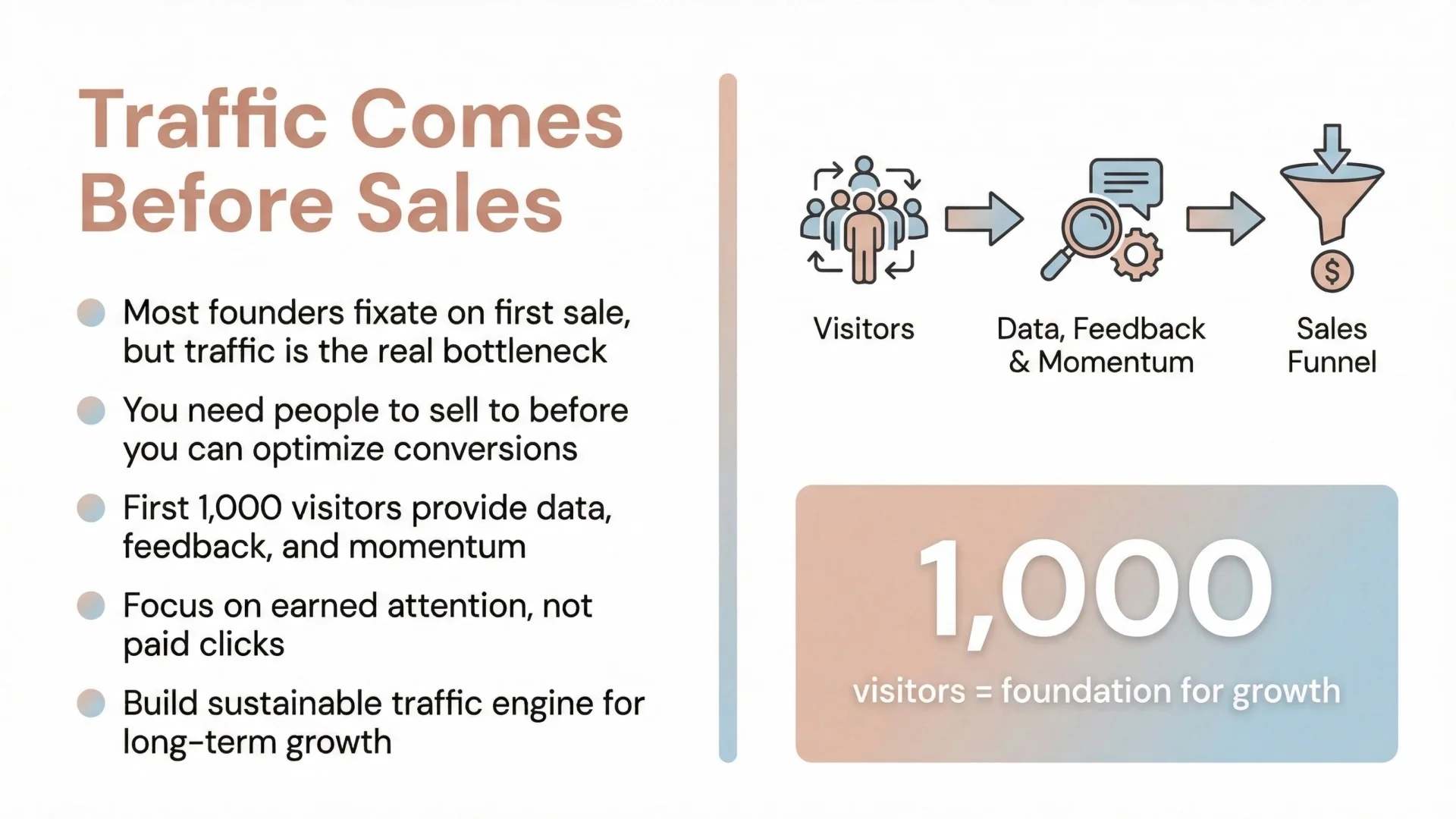
In our experience at Branvas, we often see founders fixate on getting their first sale. But the real bottleneck, the one that precedes any conversion, is traffic. Before you can optimize for sales, you need people to sell to. Your first 1,000 visitors are more than just numbers in an analytics dashboard; they are the lifeblood of your business, providing the data, feedback, and momentum you need to grow. This article isn’t about marketing “hacks” or get-rich-quick schemes. It’s a clear, actionable plan to get your first 1,000 visitors and build a sustainable foundation for your Shopify store.
Before you can attract visitors, it’s crucial to understand the different types of traffic and how they function in the e-commerce ecosystem. Many new store owners mistakenly chase the wrong type of traffic at the wrong time, leading to wasted effort and frustration. Let's break it down.
There are three primary types of traffic:
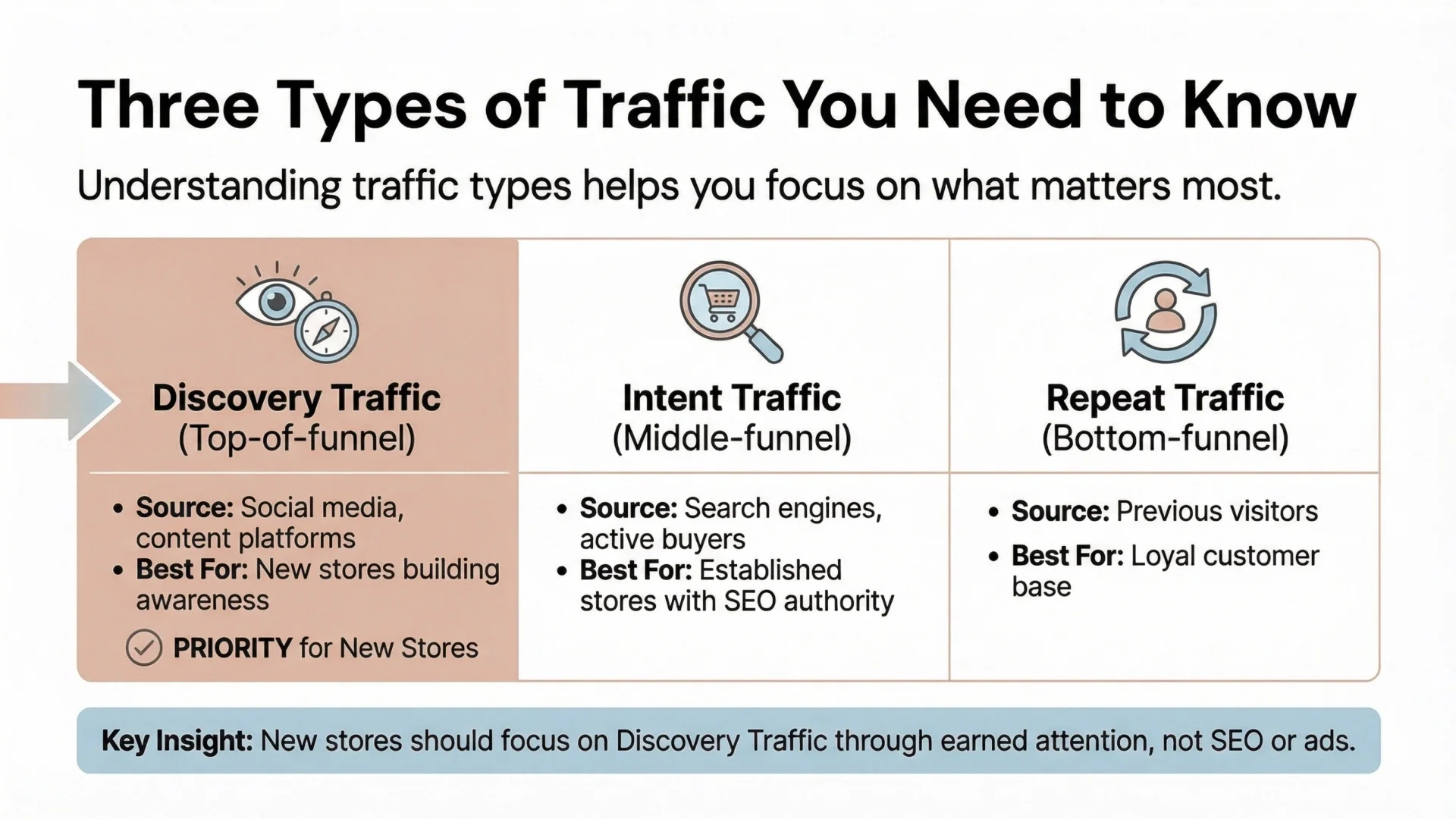
So, where should you focus your efforts as a new Shopify store owner? While it might be tempting to jump straight into SEO to capture intent traffic or run ads to drive sales, we’ve found that this is a common mistake. SEO is a long-term game, and it can take months to see results, especially for a new store with no authority. And while ads can provide a quick boost, they can also be a costly way to acquire customers if you haven't yet validated your product or messaging.
Instead, we recommend focusing on earned attention through discovery platforms. This means creating valuable, engaging content that naturally attracts your target audience and encourages them to visit your store. It's about building a community and generating organic buzz, rather than simply paying for clicks. By focusing on earned attention, you can build a sustainable traffic engine that will continue to drive visitors to your store long after you've stopped running ads.
To get your first 1,000 visitors, you need a system, not a series of random tactics. We call this system the First 1,000 Visitors Flywheel. It’s a repeatable engine that turns attention into traffic and traffic into momentum. Unlike a linear funnel, a flywheel is designed to build upon itself, with each rotation making the next one easier and more effective.
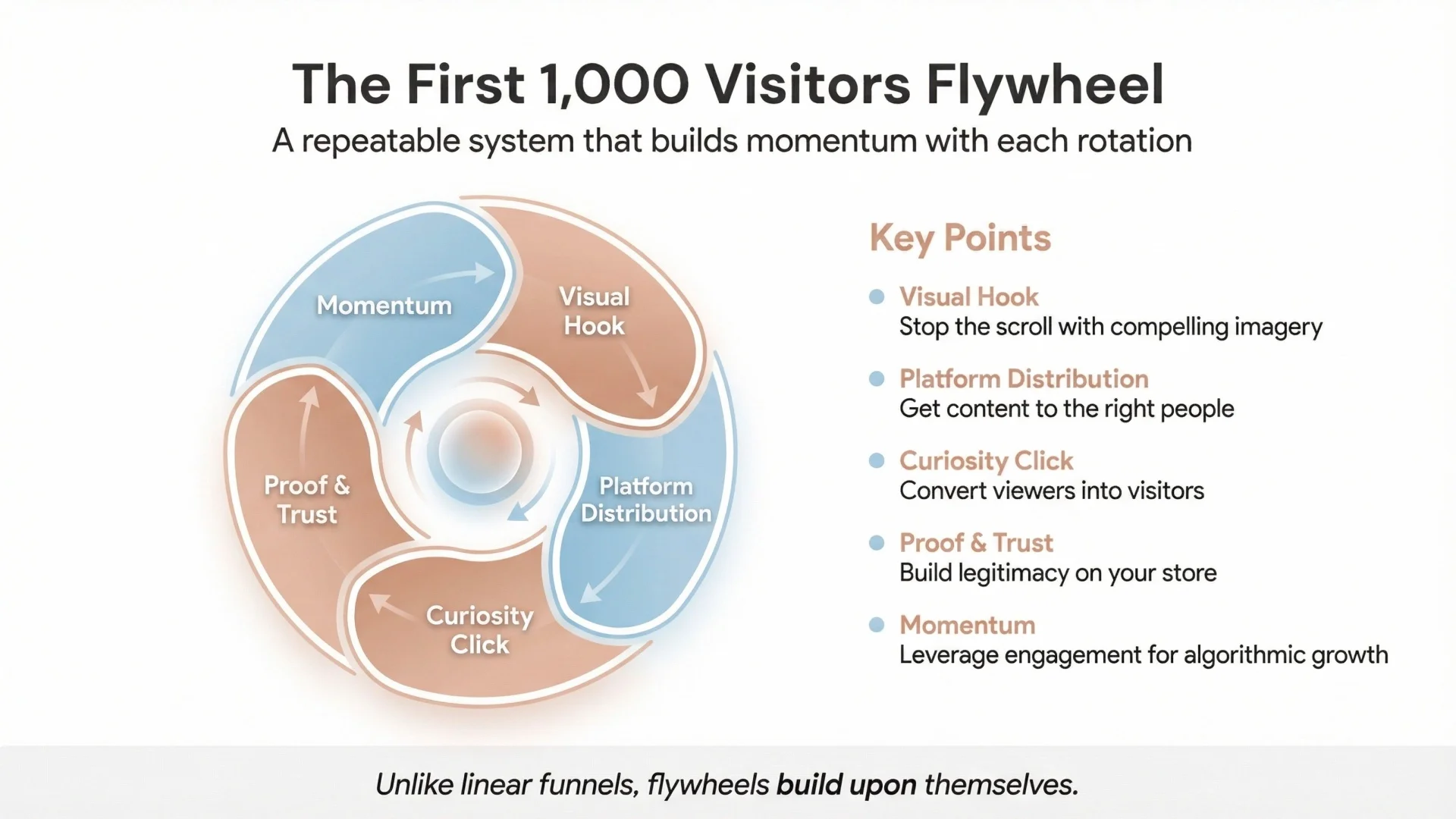
Here’s how it works:
By consistently executing on these five stages, you can create a powerful flywheel that will not only get you your first 1,000 visitors but also lay the foundation for long-term, sustainable growth.
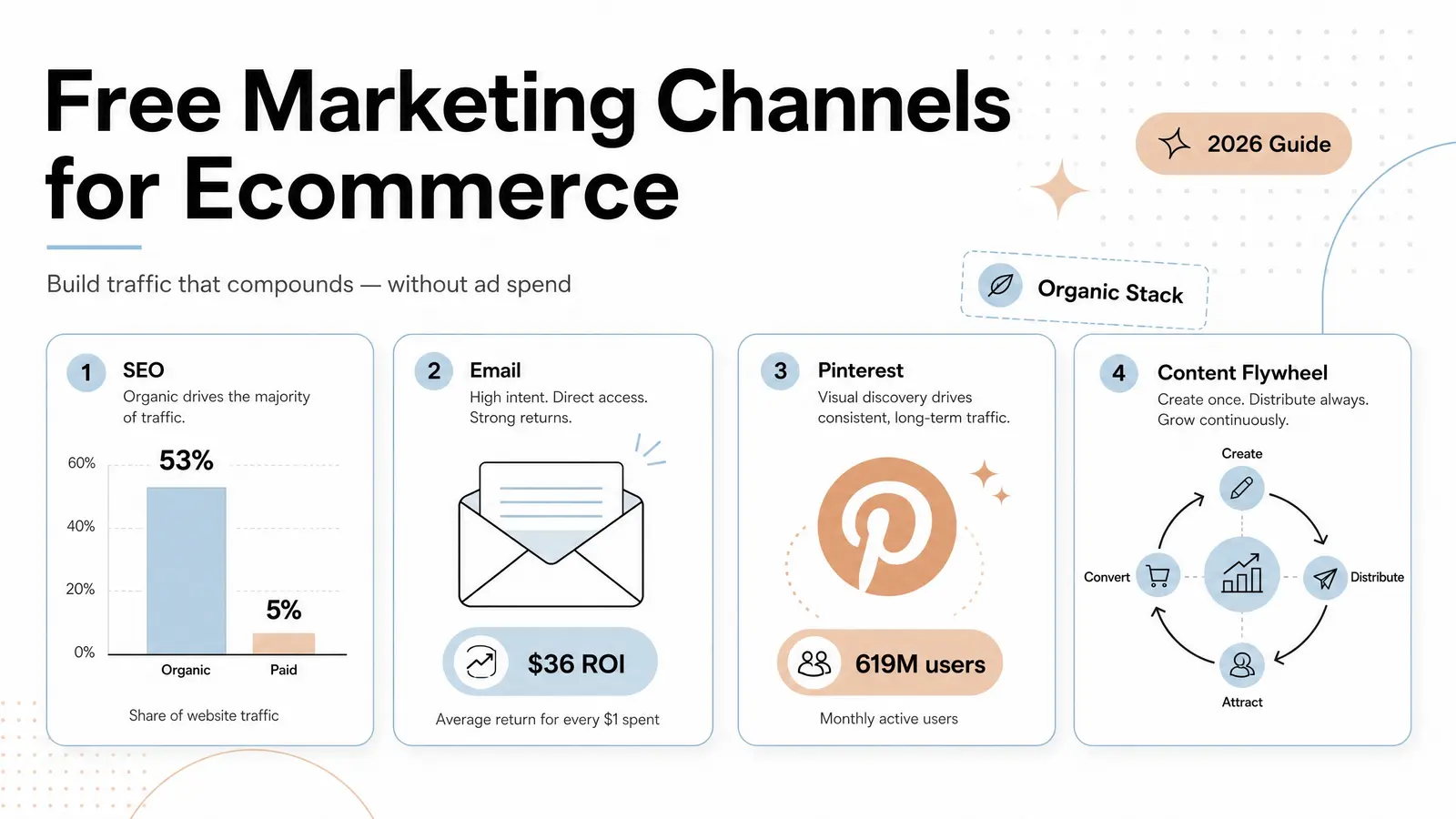
When you're just starting out, your marketing budget is likely to be limited. The good news is that there are several free traffic sources that can be incredibly effective for new Shopify stores. The key is to focus on platforms that favor discovery and have a low barrier to entry. In our experience, the three most powerful free traffic sources for new e-commerce stores in 2026 are TikTok, Instagram Reels, and Pinterest.
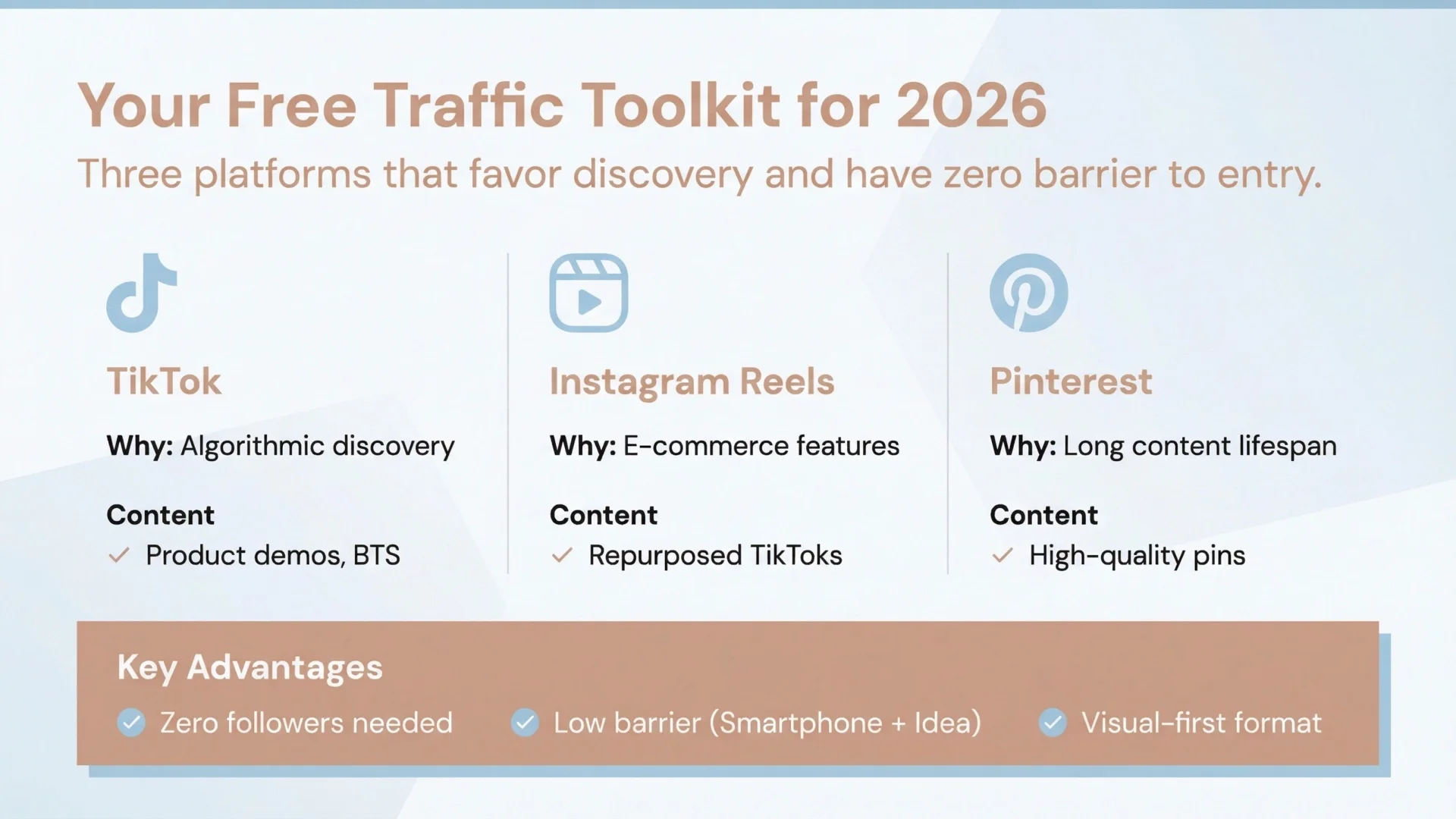
These platforms are not just for entertainment; they are powerful search and discovery engines where users actively look for new products and brands. Here's why they work so well for beginners:
For e-commerce, the content that performs best is typically educational, entertaining, or inspiring. This could include product demonstrations, behind-the-scenes looks at your business, user-generated content, or trend-based videos. The key is to create content that provides value to your audience and showcases your products in a natural and authentic way.
TikTok is a goldmine for new Shopify stores, but it requires a specific approach. Forget everything you know about traditional marketing. On TikTok, it’s all about authenticity, creativity, and providing value in a short, digestible format. Here’s how to get your first 500 visitors from TikTok:
Content Formats that Work:
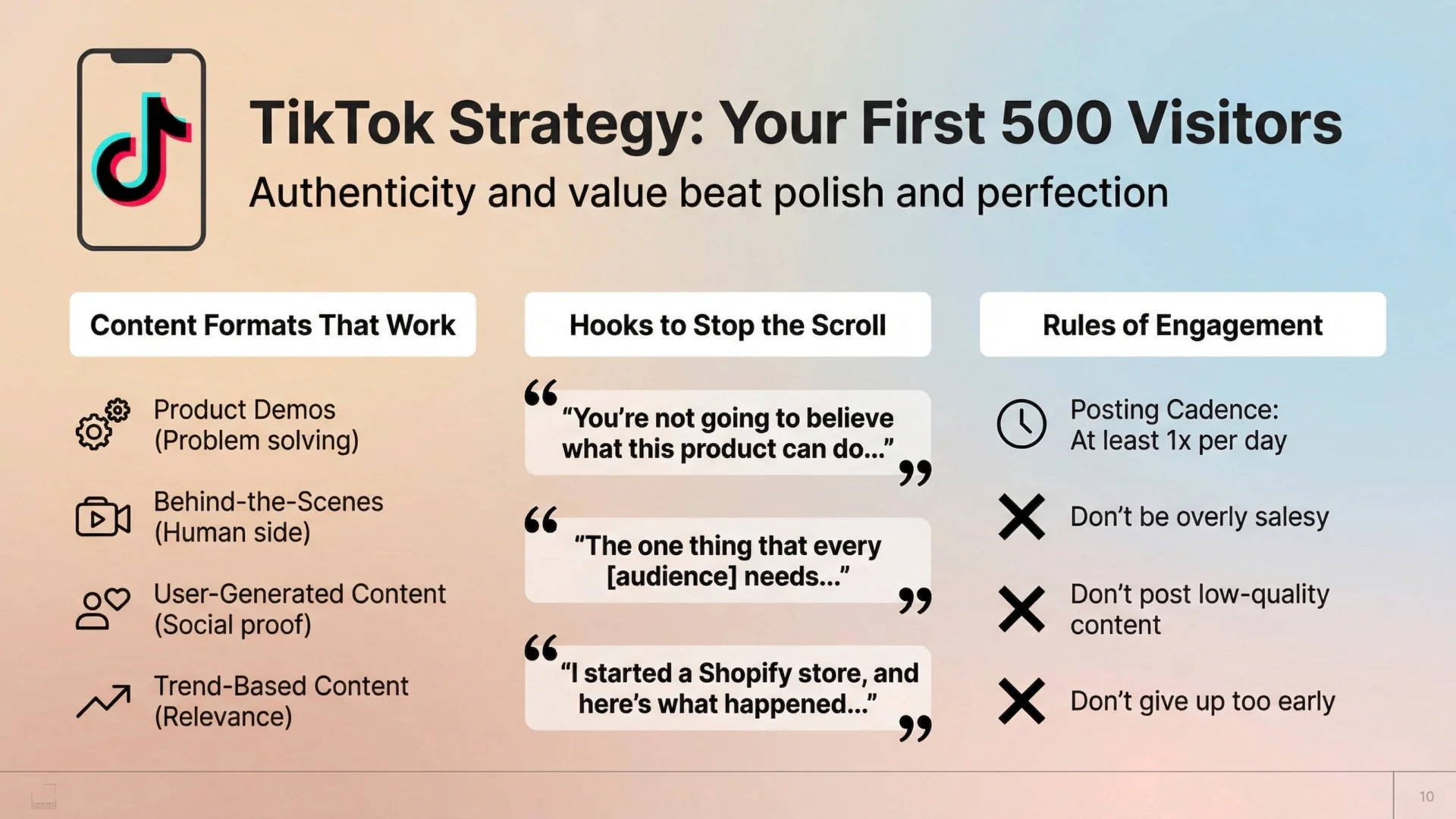
Hooks to Stop the Scroll:
Posting Cadence:
Consistency is key on TikTok. Aim to post at least once a day, especially when you’re just starting out. This will give the algorithm more opportunities to learn about your content and show it to the right people.
What NOT to Do:
In our experience at Branvas, the stores that get traction fastest are the ones that treat TikTok as a testing engine, not a branding exercise. They’re not afraid to experiment, to be a little weird, and to show the real, human side of their brand. They understand that on TikTok, connection is more important than perfection.
While TikTok is a great starting point, don't underestimate the power of Instagram Reels and Pinterest. These platforms can act as silent traffic multipliers, amplifying your reach and driving high-intent visitors to your store over time.
Why Reels Amplify What Works on TikTok
Instagram Reels is a direct competitor to TikTok, and the content that performs well on one platform often performs well on the other. This is because both platforms use similar algorithms that prioritize short-form, engaging video content. By repurposing your successful TikTok videos on Reels, you can essentially double your reach with minimal extra effort. Plus, Instagram has a more established e-commerce ecosystem, with features like shoppable posts and product tags that make it easy for users to go from watching a video to making a purchase.
Why Pinterest Drives High-Intent Traffic Over Time
Pinterest is a visual discovery engine where users go to find inspiration and plan for the future. This makes it a powerful platform for driving high-intent traffic to your Shopify store. Unlike TikTok and Reels, where content has a short lifespan, Pins can continue to drive traffic for months or even years after they are first posted. By creating high-quality, visually appealing Pins that link back to your product pages, you can create a long-term, passive traffic stream for your store.
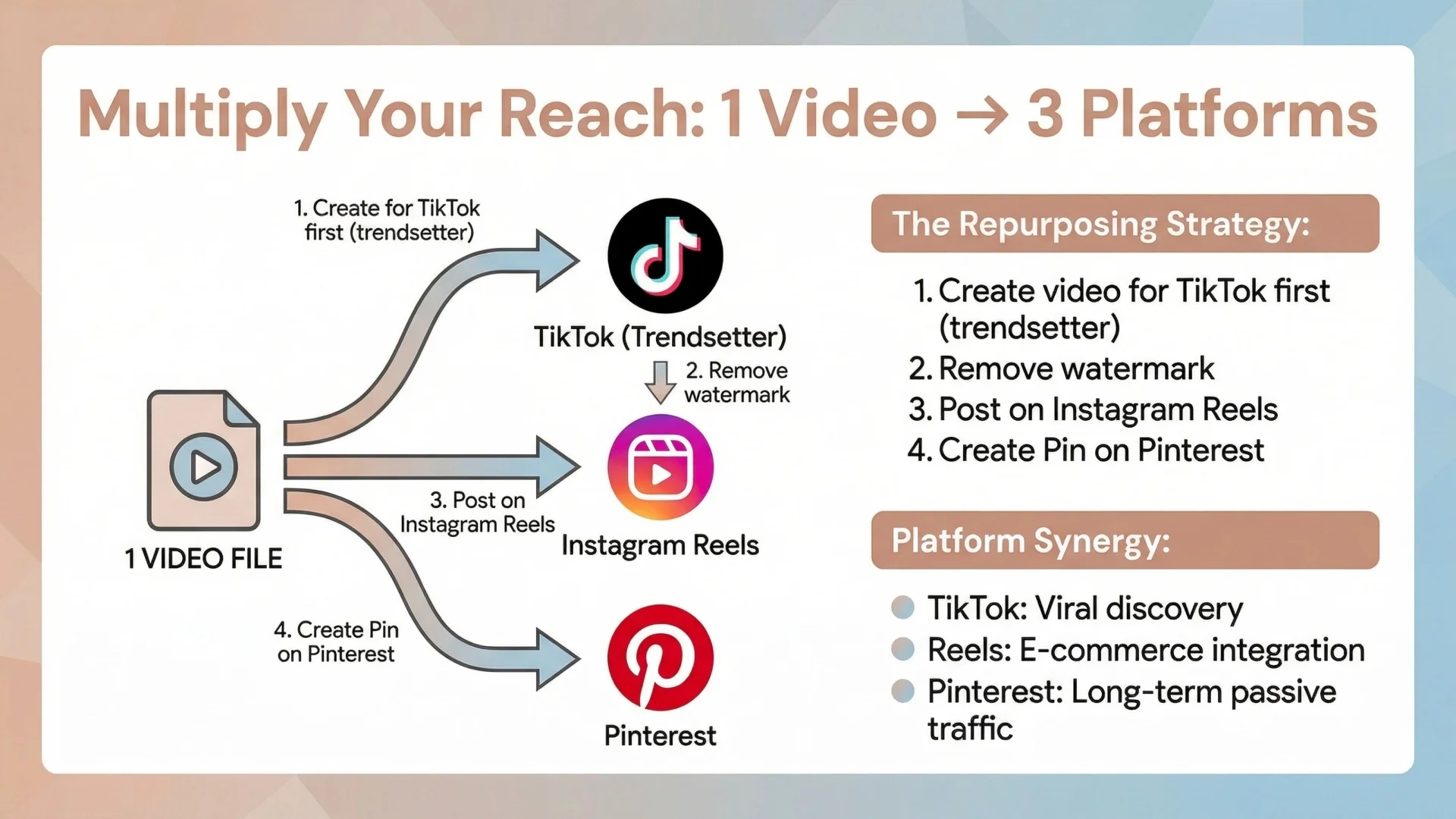
The Repurposing Strategy: 1 Video → 3 Platforms
To maximize your reach and save time, we recommend a simple repurposing strategy: create one high-quality video and post it on TikTok, Instagram Reels, and Pinterest. Here's how to do it:
By following this simple strategy, you can turn one piece of content into a powerful traffic-driving machine that works for you across multiple platforms.
The term "dropshipping" has gotten a bad rap, and for good reason. For years, the dominant strategy was to run aggressive, "buy now" ads for low-quality products, leading to a race to the bottom and a lot of unhappy customers. But marketing for dropshipping doesn't have to be spammy. In fact, the most successful dropshipping stores in 2026 are the ones that are building real brands and fostering genuine connections with their customers.
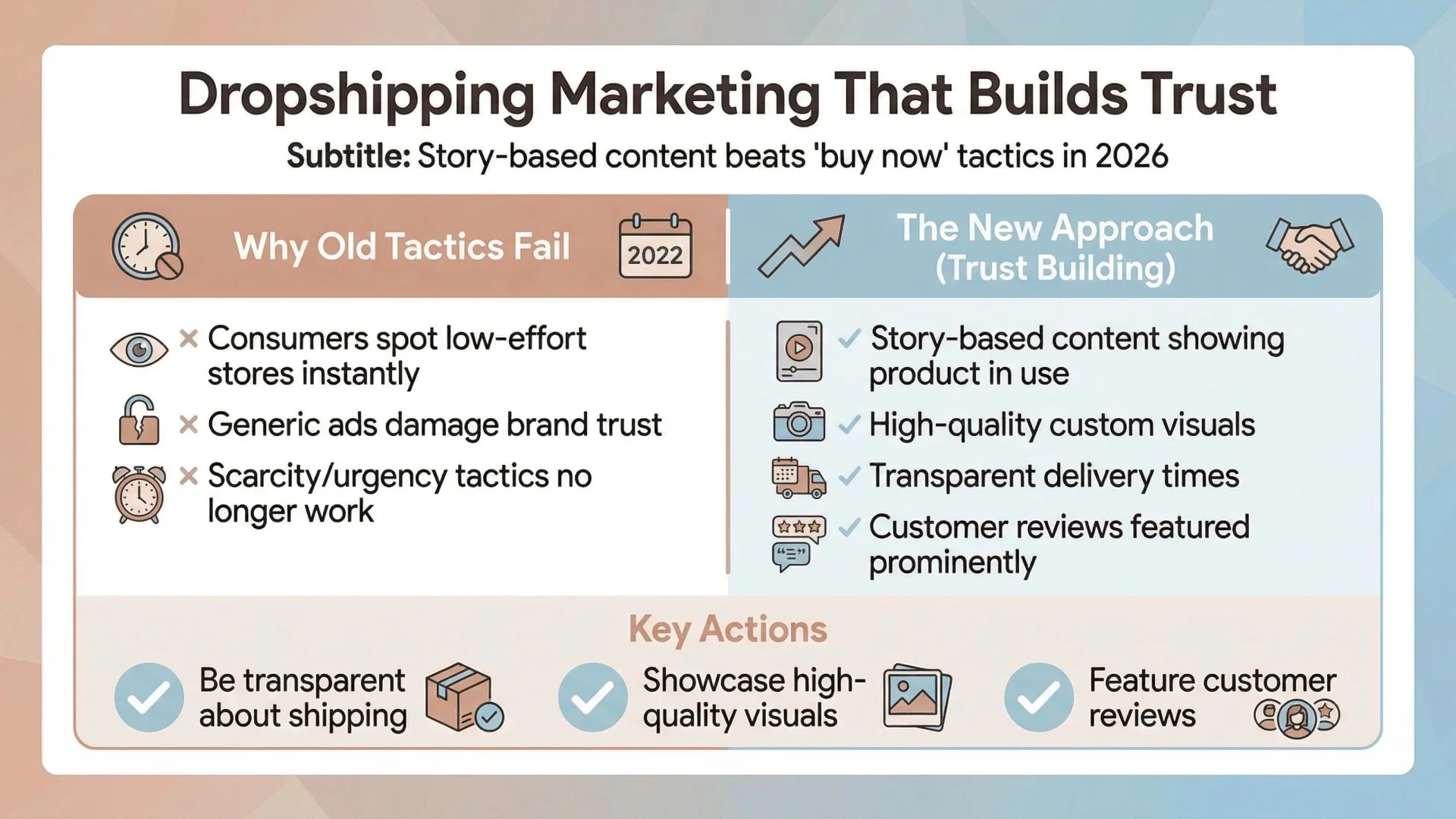
Why Old "Buy Now" Tactics Fail
Today's consumers are savvy. They can spot a low-effort dropshipping store from a mile away. They're tired of being bombarded with generic ads and are looking for authentic brands that they can trust. The old tactics of using scarcity, urgency, and hype to drive impulse buys are no longer effective. In fact, they can actually damage your brand and lead to a high rate of chargebacks and negative reviews.
Story-Based and Product-in-Use Content
Instead of focusing on hard-selling, successful dropshippers are using story-based and product-in-use content to build a connection with their audience. This means creating content that shows how your product fits into your customers' lives and helps them solve a problem. It's about telling a story that resonates with your target audience and makes them feel like they're a part of your brand.
Building Trust Before Asking for a Sale
In the world of dropshipping, trust is everything. Customers are taking a risk by buying from a store they've never heard of, and it's your job to make them feel comfortable and confident in their purchase. Here are a few ways to build trust:
By focusing on building a real brand and fostering genuine connections with your customers, you can create a successful dropshipping business that is both profitable and sustainable.
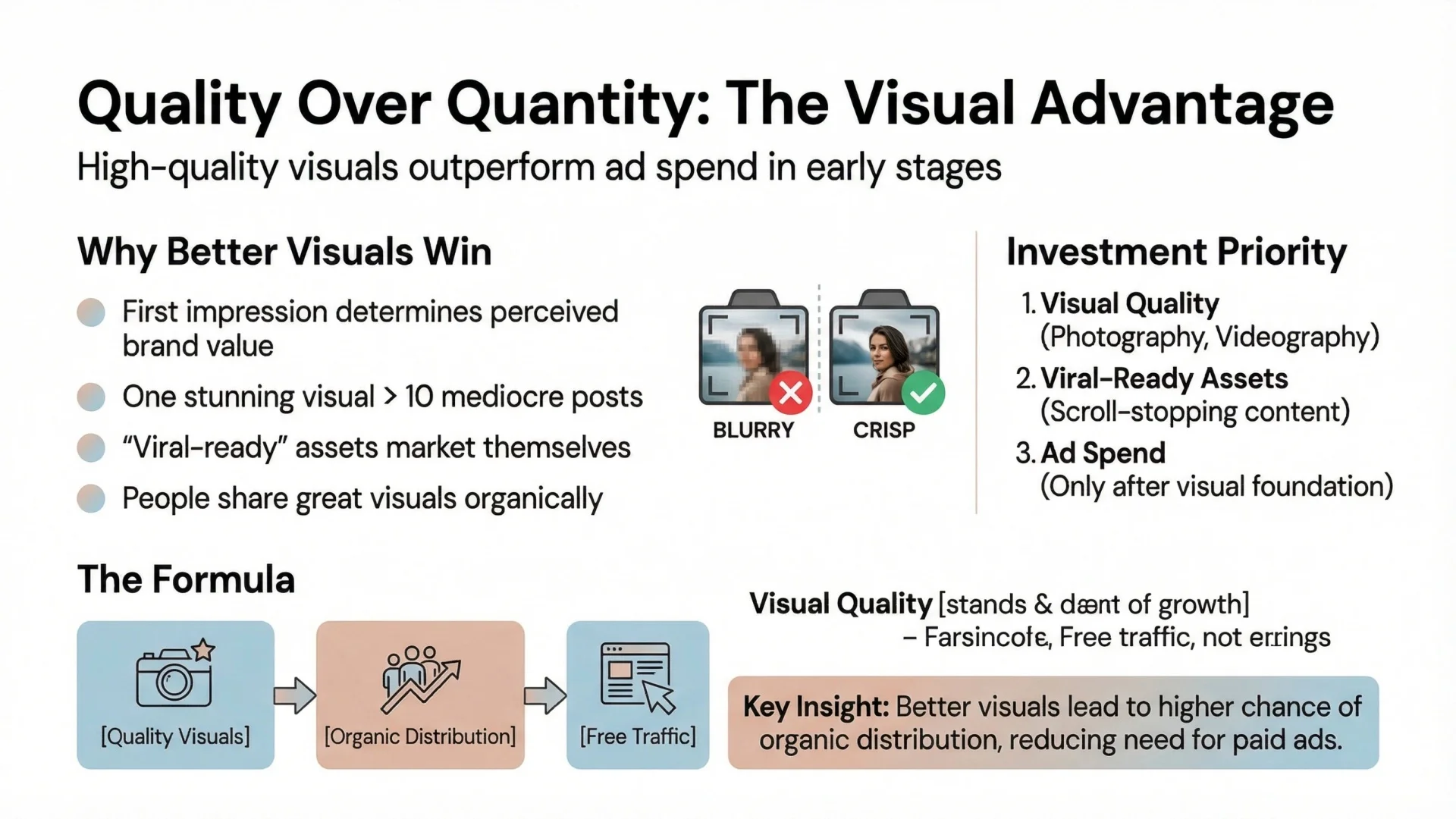
In the early stages of your Shopify store, it’s tempting to throw money at ads to get a quick influx of traffic. But here’s a contrarian insight we’ve learned from helping countless founders: investing in high-quality visuals will give you a far better return than a small ad budget.
Why Better Visuals Outperform More Posts
In the age of visual commerce, your product photography and videography are your most important assets. They are the first impression you make on a potential customer, and they play a huge role in the perceived value of your brand. You could have the best product in the world, but if your photos are dark, blurry, or unprofessional, you’re going to have a hard time convincing anyone to buy it.
On the other hand, a store with stunning, high-quality visuals can get away with posting less frequently. That’s because each piece of content is more impactful and has a higher chance of going viral. Instead of churning out a high volume of mediocre content, focus on creating a smaller number of “viral-ready” assets that are designed to stop the scroll and generate engagement.
How “Viral-Ready” Assets Reduce Friction
“Viral-ready” assets are visuals that are so good, they practically market themselves. They are the kind of images and videos that people want to share with their friends, and they can help you reach a massive audience without spending a dime on ads. When you have a library of these assets, you reduce the friction in your marketing. You’re no longer struggling to come up with content ideas; you’re simply choosing from a collection of stunning visuals that you know will resonate with your audience.
This is where the quality of your products and their inherent visual appeal come into play. For example, Branvas products are designed with high-end, scroll-stopping visuals that are naturally suited for platforms like TikTok, Reels, and Pinterest. When your products are visually stunning, you have a built-in advantage. Better visuals lead to a higher chance of organic distribution, which in turn drives more traffic to your store. It’s a simple equation, but one that many new store owners overlook.
Our tone here is educational and experience-based, not salesy. We're not telling you to buy Branvas products. We're illustrating a point: that the visual appeal of your products is a key driver of organic traffic. If your products are not visually appealing, you will have to work much harder to get the same effect.
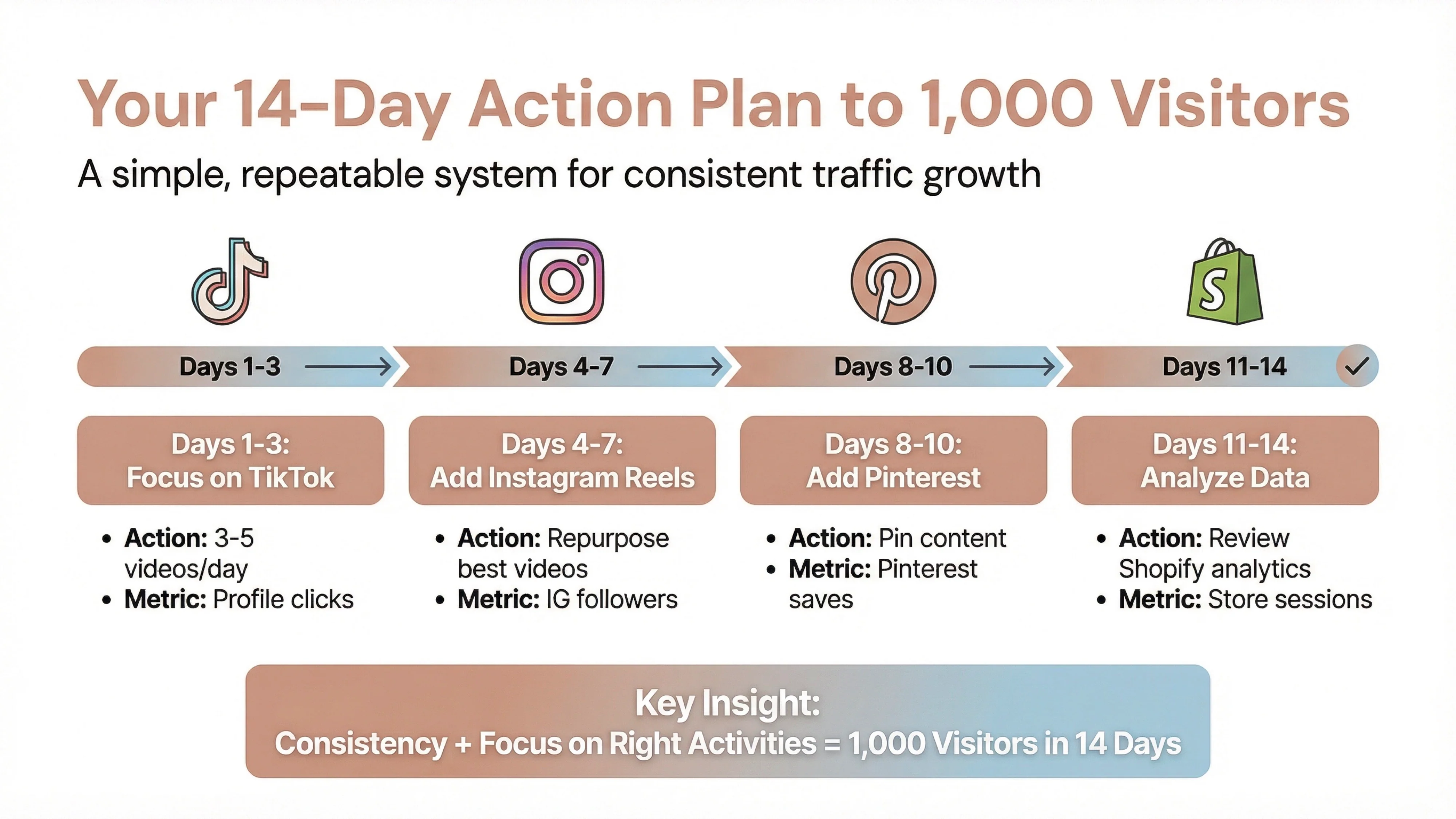
This action plan is designed to be a simple, repeatable system to get your first 1,000 visitors in 14 days. The key is consistency and a focus on the right activities.
|
Day |
Platform Focus |
Content to Create (and Post) |
Key Metric to Watch |
What Success Looks Like |
|---|---|---|---|---|
|
Days 1-3 |
TikTok |
3-5 videos per day. Mix of product demos, behind-the-scenes, and trend-based content. |
Video Views & Profile Clicks |
Getting comfortable with the platform and seeing your first few profile clicks. |
|
Days 4-7 |
TikTok & Instagram Reels |
3-5 videos per day on TikTok. Repurpose the best-performing video to Reels each day. |
Video Views, Profile Clicks, and Instagram Follows |
Seeing an increase in profile clicks and starting to get a few followers on Instagram. |
|
Days 8-10 |
TikTok, Reels, & Pinterest |
3-5 videos per day on TikTok. Repurpose the best-performing video to Reels and Pinterest each day. |
Video Views, Profile Clicks, and Pinterest Saves |
Your content is now on three platforms, and you should be seeing a steady stream of profile clicks. |
|
Days 11-14 |
All Three + Shopify |
Continue with the content schedule. Start looking at your Shopify analytics. |
Shopify Store Sessions & Top-performing content |
You should be seeing a noticeable increase in Shopify store sessions, and you can identify which content is driving the most traffic. |
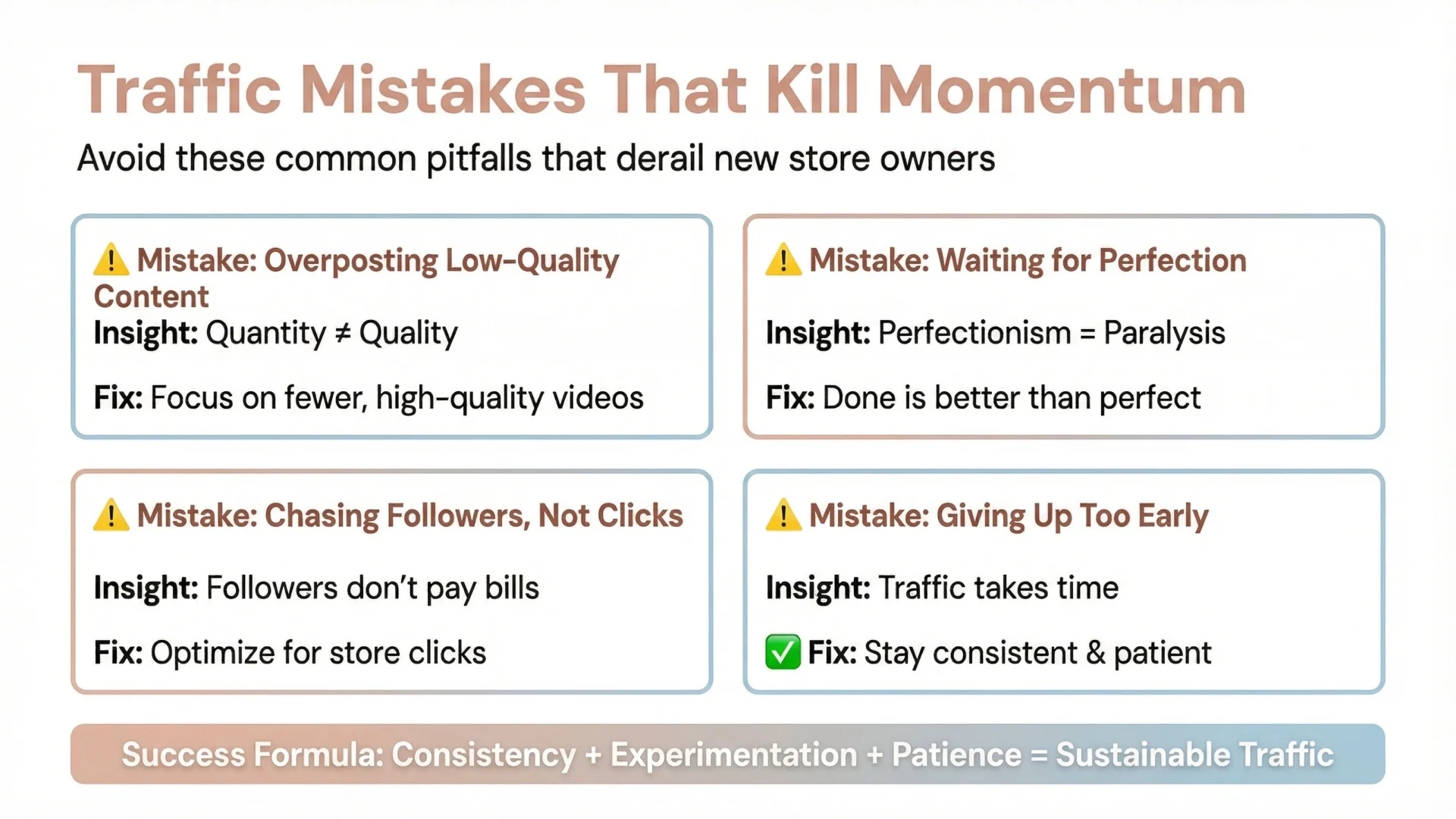
Over the years, we’ve seen new store owners make the same mistakes time and time again. These are the common pitfalls that can kill your momentum and leave you feeling like you’re spinning your wheels. Here are the biggest traffic mistakes to avoid:
How do I get traffic to my Shopify store for free?
The best way to get free traffic to your Shopify store is to create valuable and engaging content on social media platforms like TikTok, Instagram Reels, and Pinterest. Focus on providing value to your audience through educational, entertaining, or inspiring content that showcases your products in an authentic way. Consistency is key, so aim to post at least once a day to build momentum and reach a wider audience.
How long does it take to get traffic to a new Shopify store?
While it varies for every store, you can start seeing your first visitors within a few days of consistently posting on social media. By following the 14-day action plan in this guide, you can realistically expect to get your first 1,000 visitors within two weeks. However, building a sustainable traffic engine is a long-term game, so it’s important to be patient and persistent.
What is the best free traffic source for Shopify?
For new Shopify stores in 2026, TikTok is the best free traffic source. Its algorithm is designed for discovery, meaning your content can reach a massive audience even if you have zero followers. The platform favors authentic, low-fi content, so you don’t need a big budget or professional equipment to get started.
Does dropshipping marketing still work?
Yes, dropshipping marketing still works, but it has evolved. The old tactics of running spammy “buy now” ads are no longer effective. Today, successful dropshipping marketing is about building a real brand, fostering trust with your customers, and creating high-quality, story-based content that resonates with your target audience.
Why does my Shopify store have no visitors?
If your Shopify store has no visitors, it’s likely because you haven’t yet built a system for generating traffic. Simply launching a store is not enough; you need to be actively promoting it. The most common reason for a lack of visitors is a lack of consistent, high-quality content on discovery-based platforms like TikTok, Instagram Reels, and Pinterest.