


Learn how to start a jewelry business while working full-time. Discover our step-by-step ‘2 Hours a Day’ plan to launch a profitable jewelry brand in 30 days.
Published:
January 29, 2026
Author:
Yi Cui
The idea of launching a jewelry brand while juggling a full-time job can feel like a distant dream. Between long work hours, family commitments, and the need for personal time, finding the energy and focus to build a business from scratch seems impossible. The reality for most aspiring entrepreneurs isn’t a wide-open schedule, but fragmented pockets of time—a lunch break here, a late evening there. This guide is for you. It’s not a “get rich quick” scheme, but a practical, step-by-step playbook on how to build a meaningful and profitable jewelry brand in just two hours a day. We’ll focus on consistency over intensity, smart systems over burnout, and tangible progress over perfection.
[Launch your jewelry brand in 10 minutes]
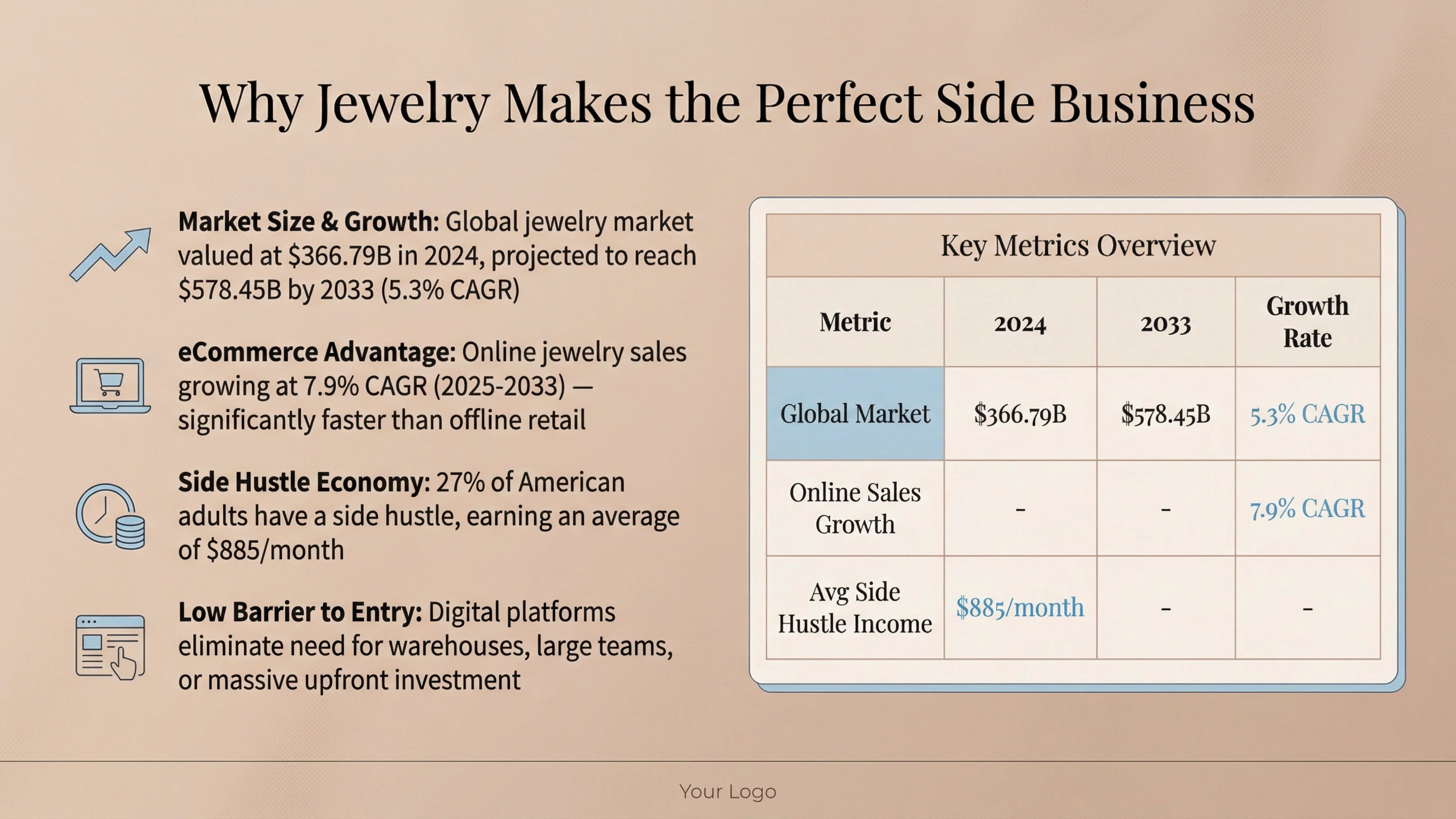
The jewelry market is not only resilient but also experiencing significant growth, making it an attractive category for a side hustle. The global jewelry market was valued at USD 366.79 billion in 2024 and is projected to grow to USD 578.45 billion by 2033, expanding at a compound annual growth rate (CAGR) of 5.3% [1]. This growth is fueled by rising disposable incomes, evolving fashion trends, and a strong consumer desire for personalized and meaningful accessories.
For side hustlers, the eCommerce landscape offers unprecedented access to this market. Online jewelry sales are projected to grow at a CAGR of 7.9% from 2025 to 2033, significantly faster than offline retail [1]. This digital shift lowers the barrier to entry, allowing new brands to launch with minimal overhead. Furthermore, the side hustle economy is booming. In 2025, 27% of American adults had a side hustle, with the average monthly income reaching $885 [3]. This indicates a robust ecosystem of tools, platforms, and consumer acceptance for part-time entrepreneurs.
Jewelry’s appeal also lies in its high perceived value, potential for strong profit margins, and suitability for niche marketing. From minimalist designs for everyday wear to specialized niches like permanent jewelry or memorial pieces, founders can carve out a unique space. With platforms that handle inventory, fulfillment, and even design, it’s more feasible than ever to run a sophisticated brand without a warehouse or a large team.
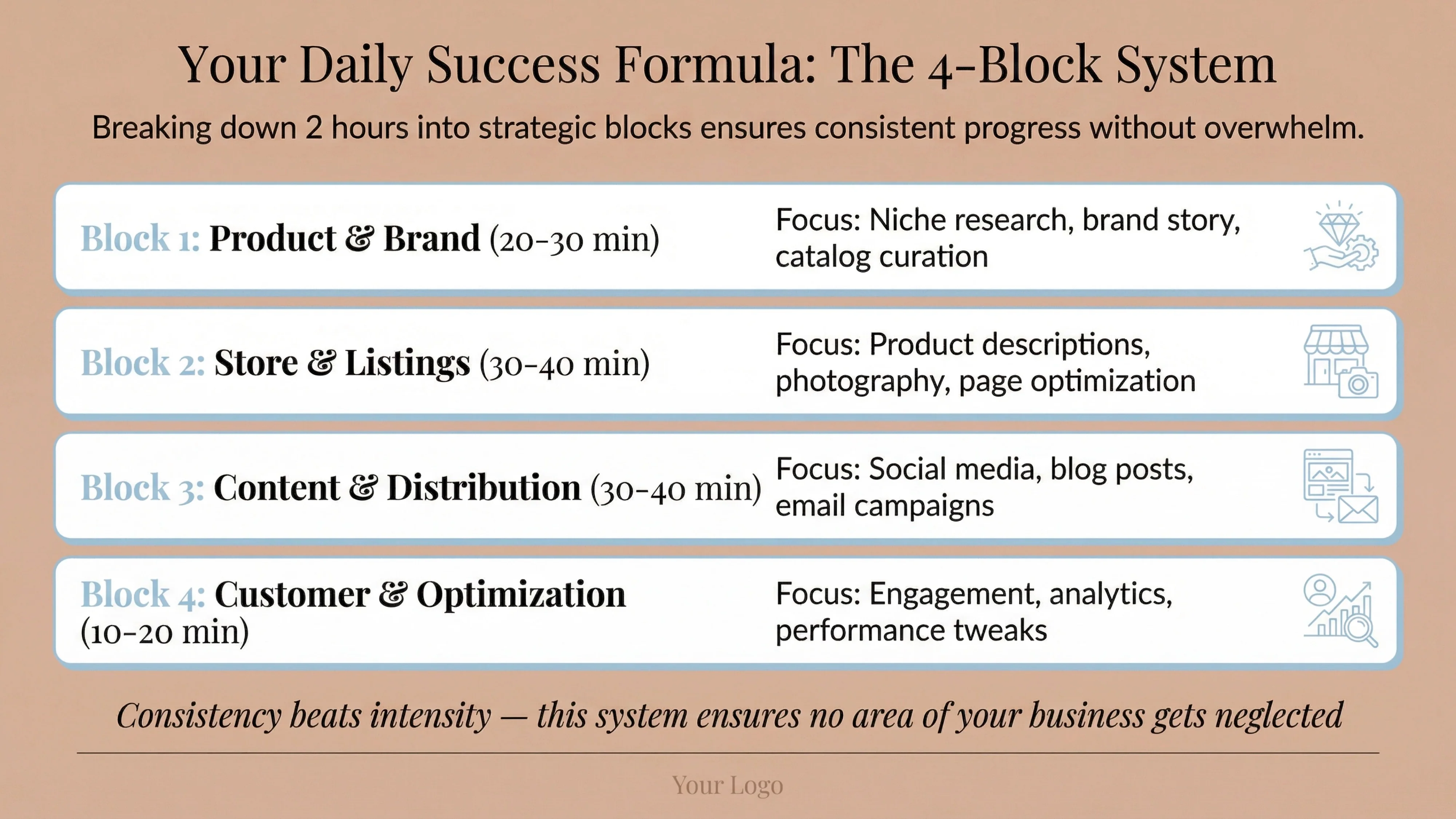
To make progress with limited time, you need a repeatable system. Forget trying to do everything at once. Instead, divide your two hours into four focused blocks. This structure ensures you’re consistently working on the most critical aspects of your business without getting overwhelmed. Here’s how to break down your daily commitment:
This system ensures that no single area of your business is neglected. By dedicating specific time slots to each function, you build momentum and create a sustainable workflow that fits into your busy life.
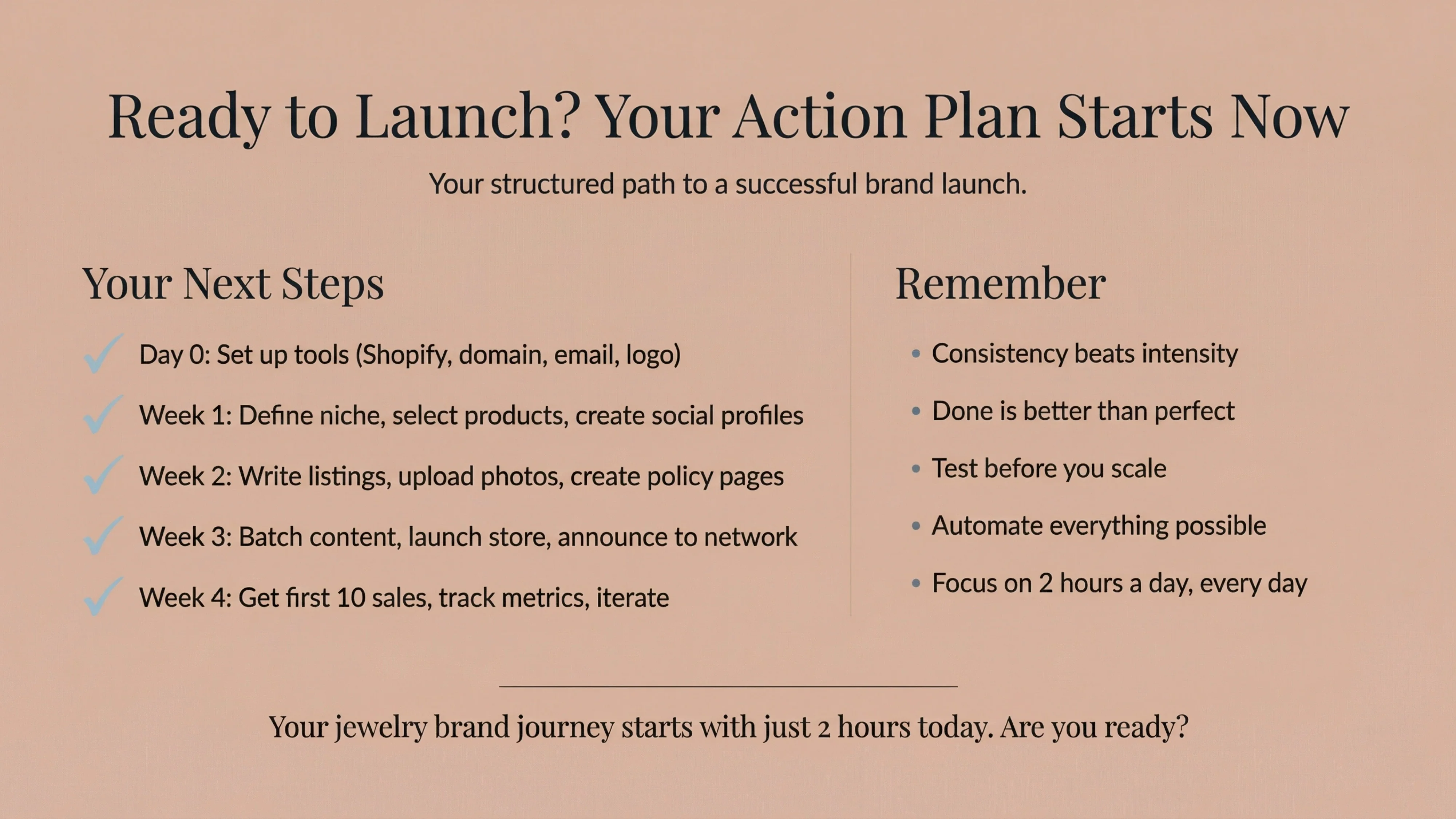
This 30-day plan is designed for action. Each week, you'll focus on a critical area of your business, with clear goals, tasks, and deliverables. Remember the mantra: done is better than perfect. The goal is to launch and iterate, not to create a flawless masterpiece on day one.
Before you start your 30-day sprint, get your tools in order. This initial setup will save you immense time later.
This week is about defining who you are and what you sell. Clarity here will make all future decisions easier.
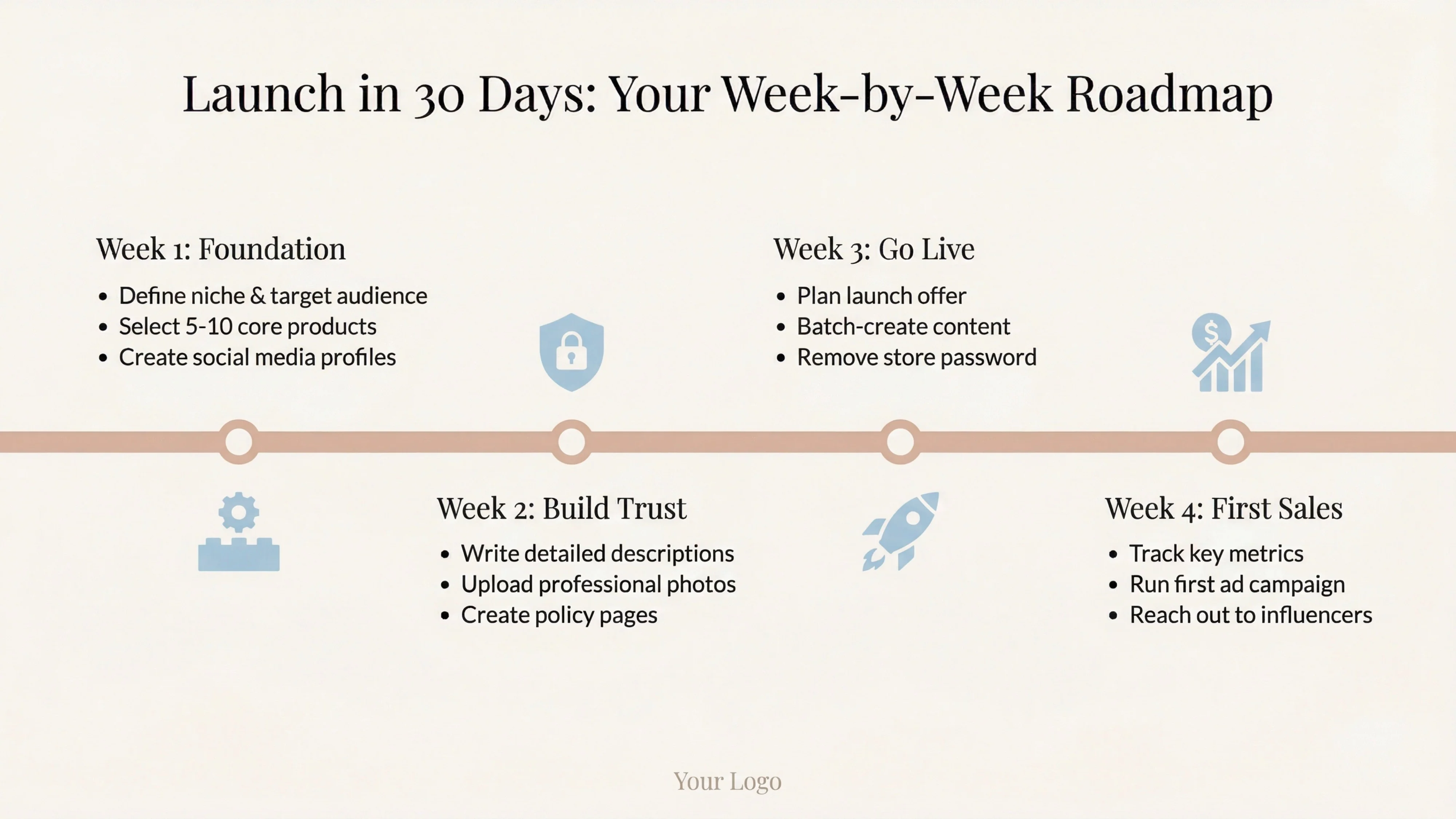
This week is focused on making your products irresistible and your store trustworthy.
This week, you’ll build a simple system for creating content and officially launch your brand.
Now that you’re live, the goal is to get your first sales and learn from customer feedback.
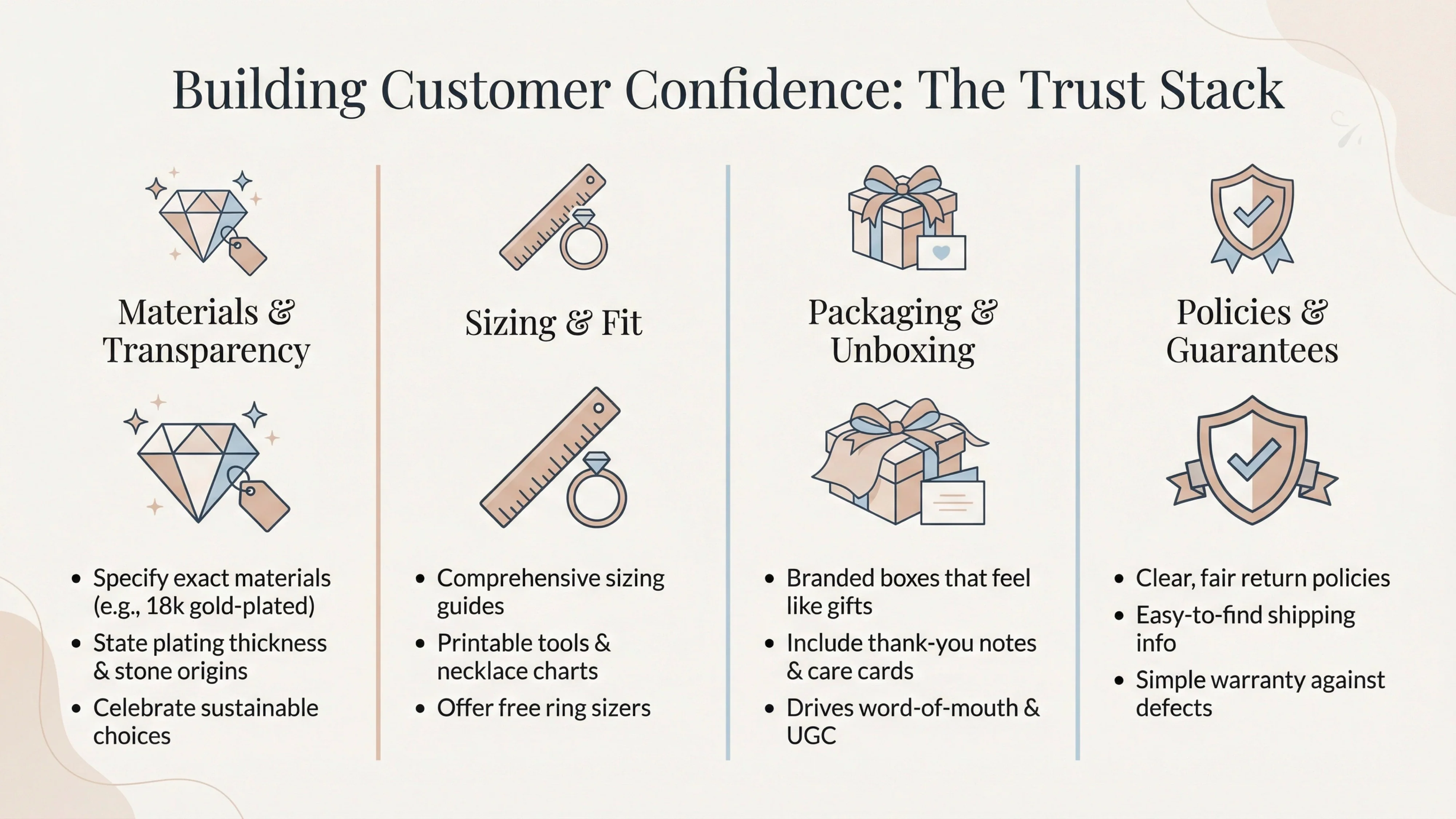
In eCommerce, trust is your most valuable currency. For jewelry, a category built on emotion and perceived value, this is doubly true. Customers can’t touch or feel the product, so they rely on a collection of signals to feel confident in their purchase. We call this the “Jewelry Trust Stack.”
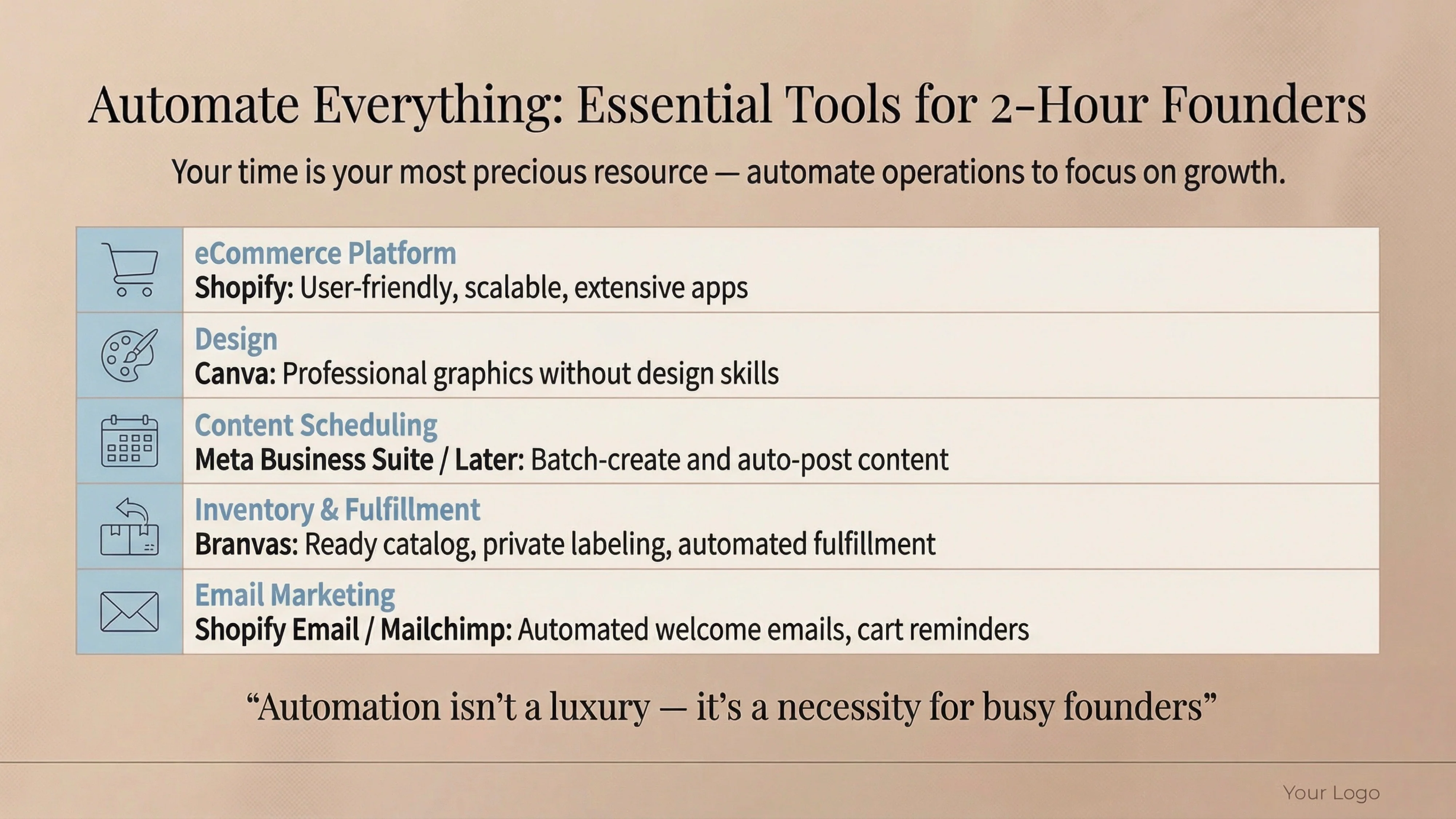
As a founder with only two hours a day, your most precious resource is time. Leaning on the right tools and automation is not a luxury; it’s a necessity. The goal is to automate the operational tasks so you can focus on the creative and strategic work that grows your brand.
[Launch your jewelry brand in 10 minutes]
Content is the fuel for your marketing, but it can also be a huge time drain. The key is to build a content engine—a system that produces a steady stream of high-quality content with minimal ongoing effort. Here’s how to do it in your limited time.
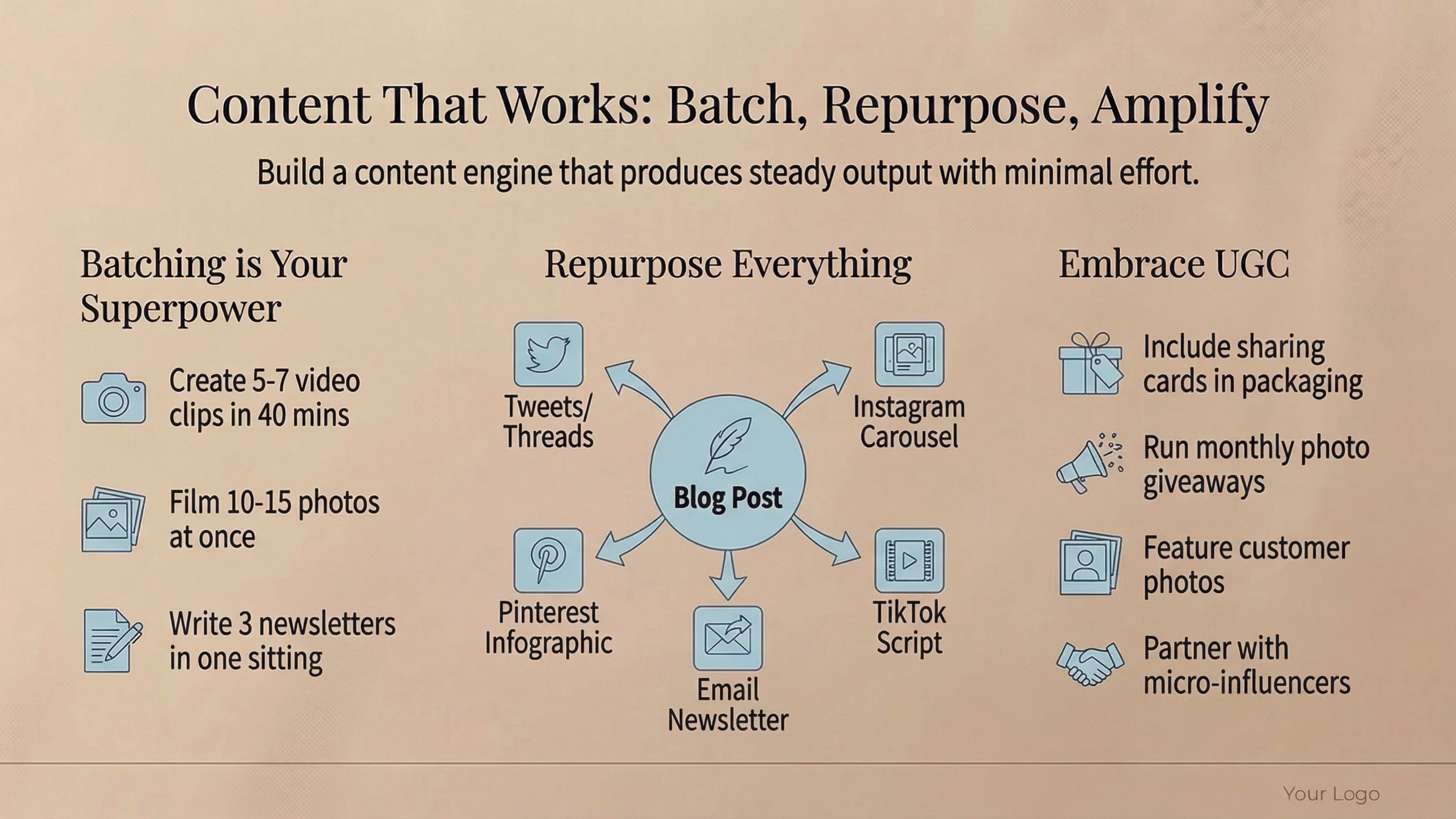
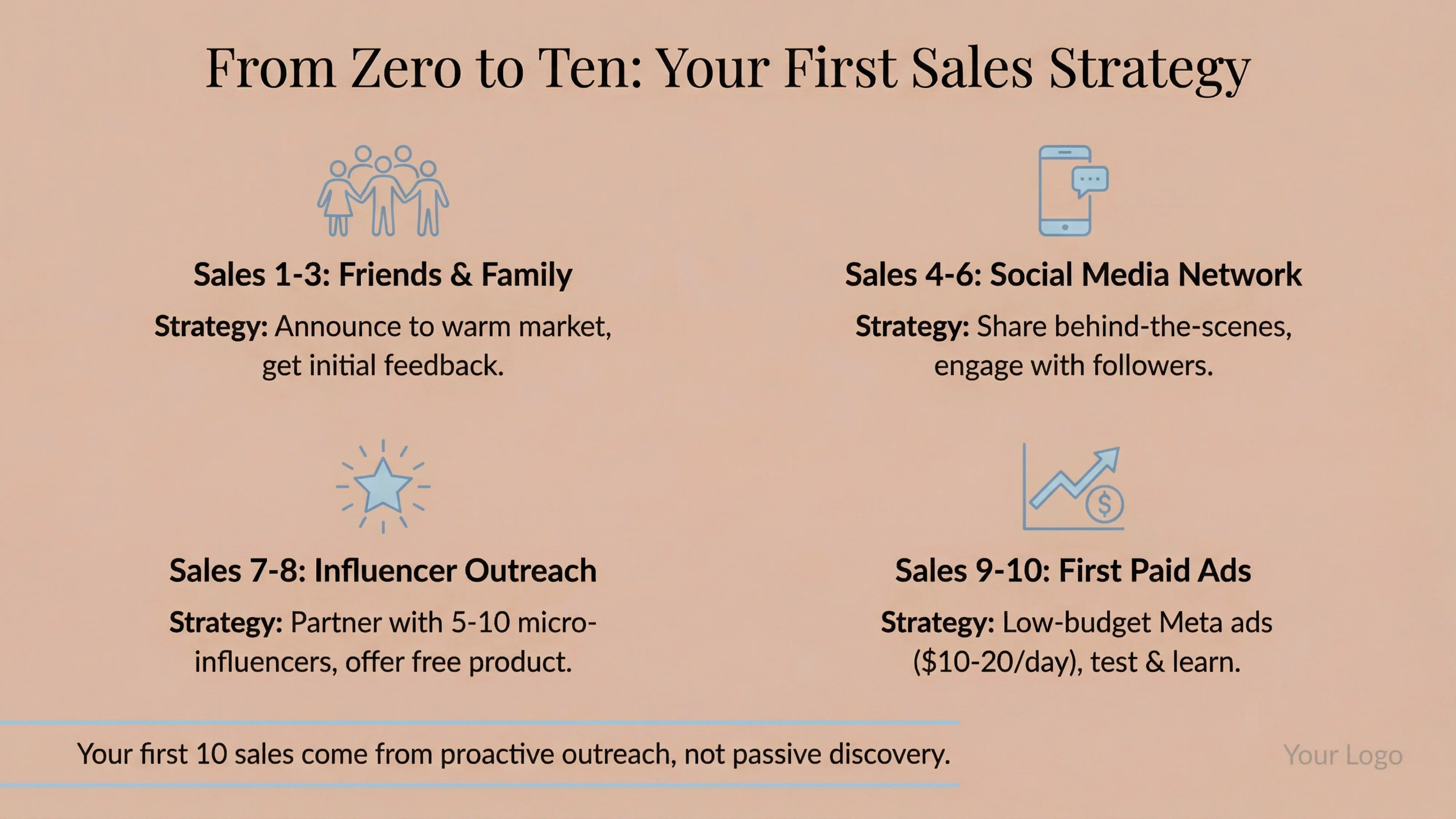
Launching your store is a major milestone, but the work doesn’t stop there. The next immediate goal is to get your first 10 sales. This initial traction provides proof of concept, valuable feedback, and the motivation to keep going.
Your first 10 sales will likely come from your immediate network and direct outreach, not from passive discovery. Be proactive.
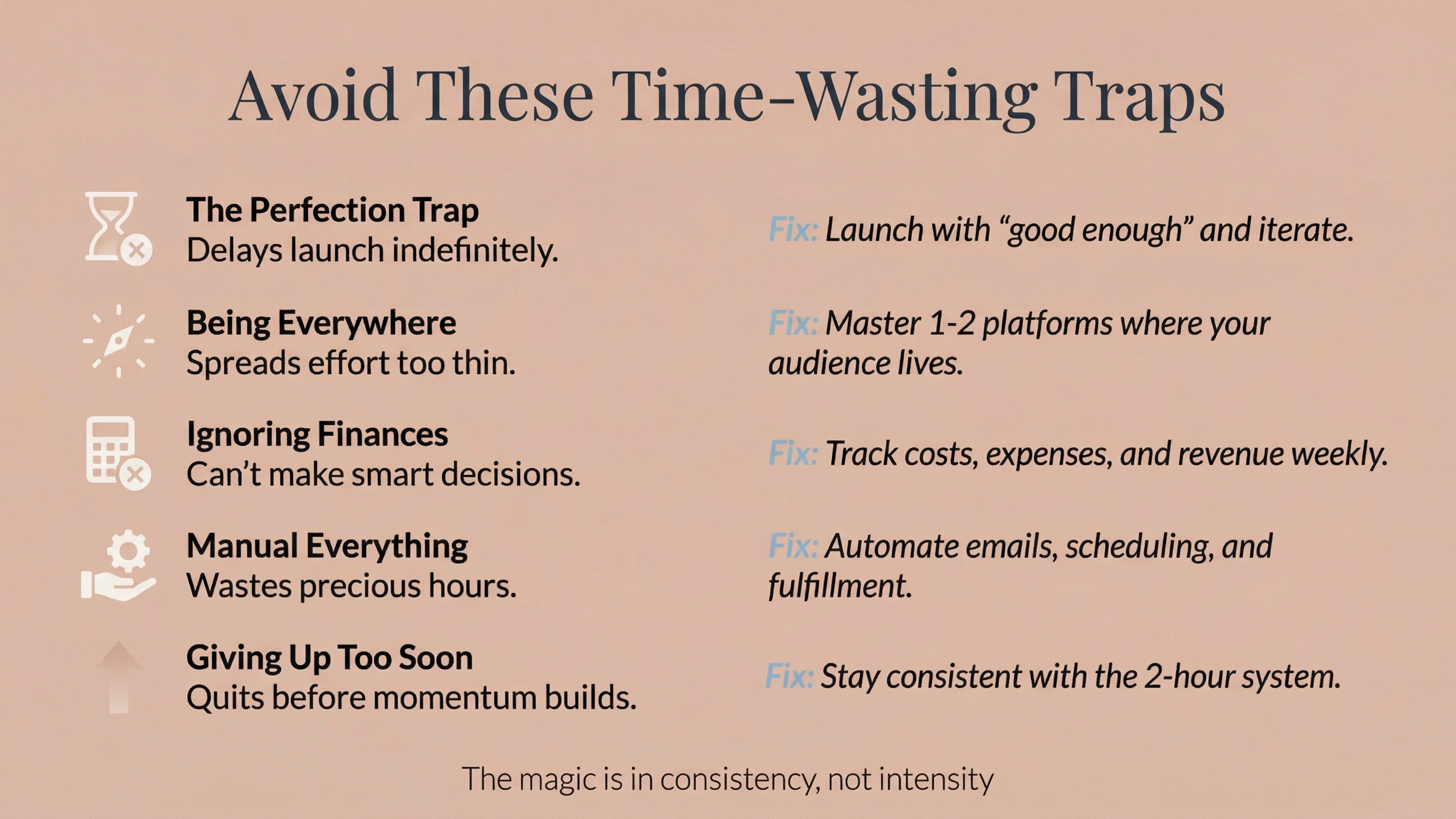
When you’re short on time, certain mistakes can be particularly costly. Here’s what to watch out for:
To help you move faster, here are some ready-to-use templates and ideas. Copy, paste, and adapt them to fit your brand.
For [Your Target Audience], [Your Brand Name] is the only [Your Category] that provides [Your Key Benefit/Differentiator] because [Your Reason to Believe].
Example: For design-conscious professionals, Arca is the only jewelry brand that provides wearable art inspired by architecture because each piece is handcrafted from ethically sourced metals and designed to be a conversation starter.
Use this checklist to ensure your product pages are optimized for conversion:
Subject: Jewelry Collaboration with [Your Brand Name]
Hi [Influencer Name],
My name is [Your Name], and I'm the founder of [Your Brand Name], a jewelry brand focused on [Your Positioning].
I've been following your content for a while and absolutely love your [mention something specific you like about their style or content]. I particularly enjoyed your post about [mention a specific post].
I think our [Product Name] would be a perfect fit for your style, and I'd love to send it to you as a gift, with no obligation to post.
If you like it and choose to share it, we'd be thrilled to feature your content on our page (with full credit, of course!).
Would you be open to this? If so, what is the best shipping address to send it to?
Thank you for your time!
Best, [Your Name]
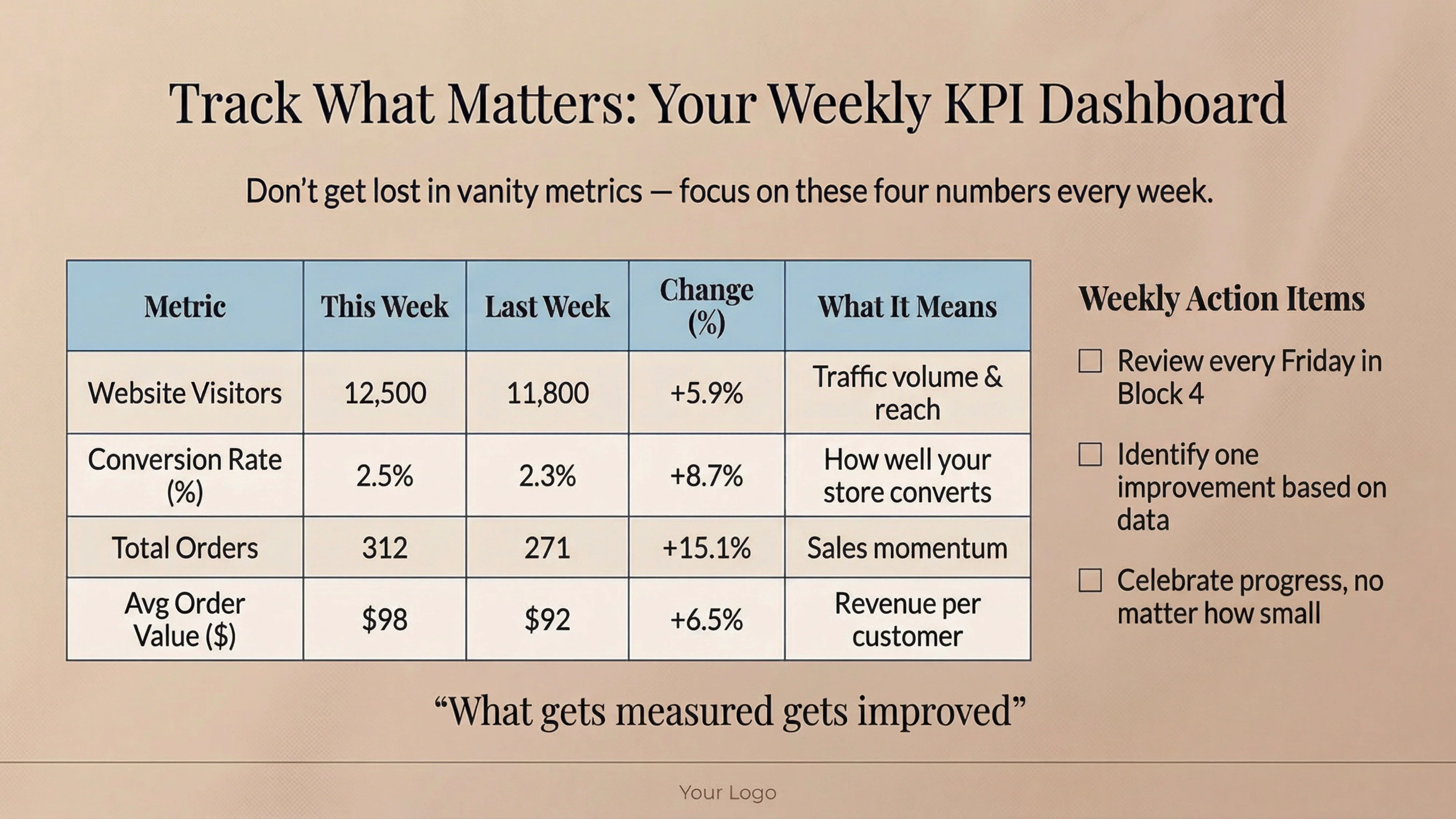
Create a simple spreadsheet or use Shopify's built-in analytics to track these four metrics every week. Don't get bogged down in vanity metrics.
This Week
Last Week
Change (%)
Website Visitors
Conversion Rate (%)
Total Orders
Average Order Value ($)
While passion drives the creation of a brand, understanding the financial basics ensures its survival and growth. You don’t need a degree in finance, but you do need to be realistic about the costs and pricing of your jewelry business.
When starting out, your costs will fall into a few key categories. Tracking these will help you manage your cash flow and set realistic goals.
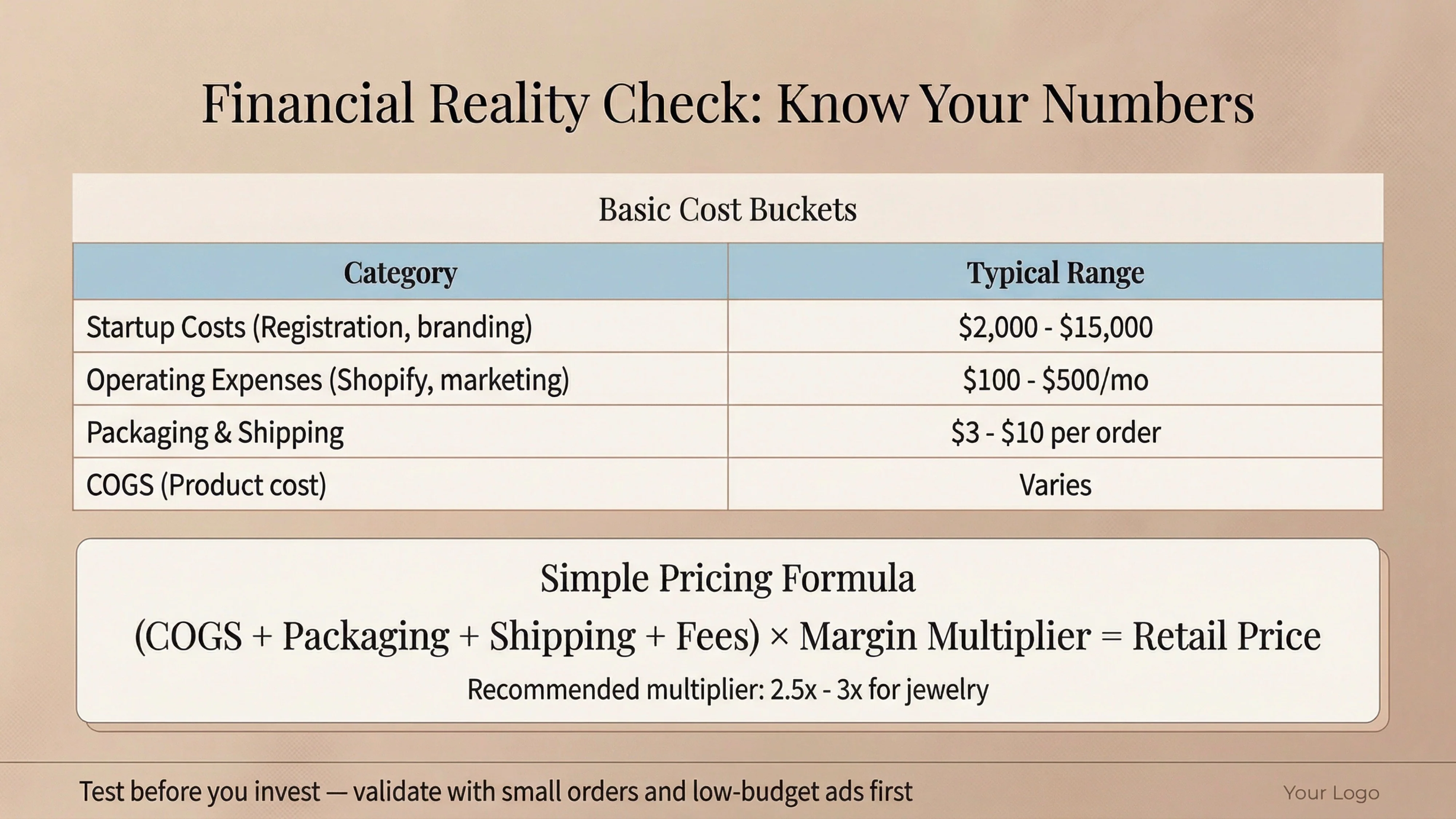
Pricing your products can be intimidating, but you can start with a simple, foundational formula. This ensures you’re covering your costs and building in a healthy profit margin.
(Cost of Goods Sold + Packaging + Shipping + Transaction Fees) x Margin Multiplier = Retail Price
A common margin multiplier in retail is between 2 and 3, but for jewelry, it can be higher depending on the perceived value and brand positioning. Start with a 2.5x or 3x multiplier and adjust based on market research and customer response. For example, if your total cost for a necklace is $15, a 3x multiplier would give you a retail price of $45.
The most important financial advice for a side hustler is to test before you invest. Before you spend thousands on a large inventory order or a massive ad campaign, test the waters. Use a dropshipping model to validate product ideas without buying inventory. Run a small $50 ad campaign to see which product gets the most clicks before you scale your ad spend. This lean approach minimizes risk and allows you to make data-driven decisions, which is crucial when you're building a business on a budget and in limited time.
Building a brand in just two hours a day requires ruthless prioritization and leveraging every possible advantage. The single biggest operational bottleneck for any new jewelry brand is sourcing, managing, and shipping physical products. This is where the right platform can mean the difference between launching in a month and struggling for a year.
If you want the fastest path to market with the lowest operational overhead, a platform like Branvas can be your launchpad. It’s designed specifically for entrepreneurs who want to focus on building a brand, not running a warehouse. Here’s how it aligns with the 2-hour-a-day model:
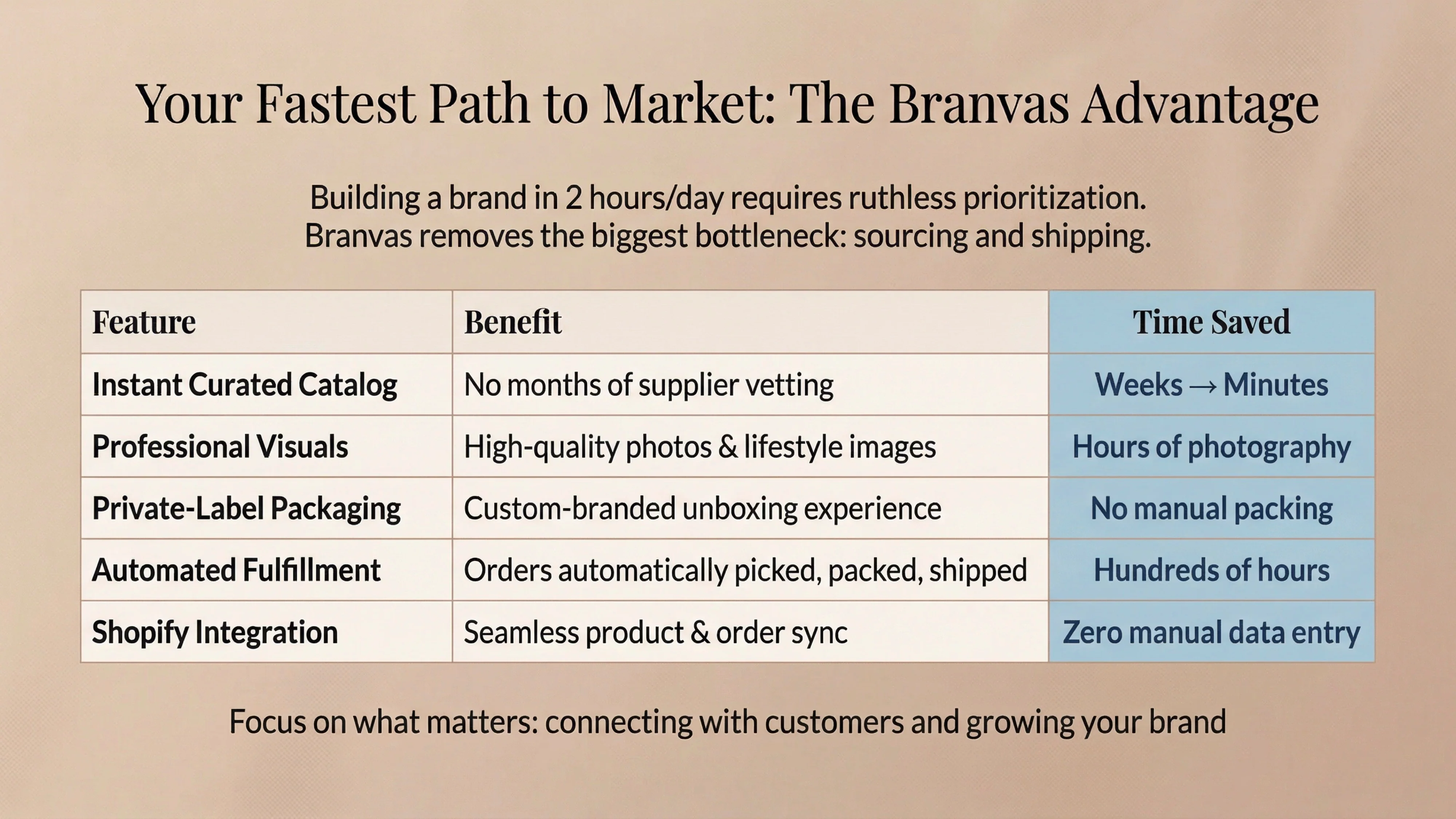
If you want to build a high-end jewelry brand without the complexities of inventory and fulfillment, Branvas can help you launch faster and focus on what truly matters: connecting with your customers and growing your brand.
[Launch your jewelry brand in 10 minutes]
To help you visualize how to fit your 2-hour blocks into a typical week, here is a sample schedule. Adapt it to your own life, but the key is to commit to the same time slots each day to build a habit.
Focus Block
Primary Activity
Monday
Block 1: Product & Brand
Review weekly goals. Brainstorm new product ideas or refine brand messaging.
Tuesday
Block 2: Store & Listings
Optimize product pages. Write or improve one product description.
Wednesday
Block 3: Content & Distribution
Batch-create content. Film 3-5 short videos or take product photos.
Thursday
Block 3: Content & Distribution
Schedule content for the week. Write an email newsletter.
Friday
Block 4: Customer & Optimization
Review weekly KPIs. Respond to all customer inquiries. Identify one improvement.
Saturday
Block 2: Store & Listings
Deep work session: Update website, add new products, or improve visuals.
Sunday
Block 1: Product & Brand
Strategic planning for the week ahead. Rest and recharge.
Disclaimer: This guide is for informational and educational purposes only. It is not a substitute for professional legal or financial advice. Consult with a qualified professional before making any business decisions.
1. How much money do I really need to start?
You can start a jewelry dropshipping business for as little as a few hundred dollars for your Shopify plan and domain. However, a more realistic budget to account for marketing and other small expenses would be between $1,000 and $3,000 for an online-only model without inventory [10].
2. Can I really build a brand in just 2 hours a day?
Yes, if you are consistent and systematic. The 4-block operating system is designed for this. It's about making small, consistent progress every day, which compounds over time. It’s a marathon, not a sprint.
3. What is the most important thing to focus on in the beginning?
Your niche and your product. Before you spend a dollar on ads, you need to know who you’re selling to and have a product that they will find valuable. Week 1 of the 30-day plan is the most critical.
4. How do I get high-quality photos if I can’t afford a photographer?
You can take great photos with a modern smartphone. Use natural light, a clean background (a white sheet of paper works well), and a simple tripod to keep your shots steady. Alternatively, using a platform like Branvas provides you with professional photos from the start.
5. When should I quit my full-time job?
Not for a long time. A common rule of thumb is to wait until your side hustle is consistently generating at least 75% of your full-time income for six consecutive months. This ensures you have a stable financial foundation before making the leap.
[1] Grand View Research. (2025). Jewelry Market Size, Share & Trends Analysis Report, 2025-2033. https://www.grandviewresearch.com/industry-analysis/jewelry-market
[2] Statista. (2025). Jewelry - Worldwide. https://www.statista.com/outlook/cmo/accessories/watches-jewelry/jewelry/worldwide
[3] Bankrate. (2025). Side Hustle Survey. https://www.bankrate.com/loans/small-business/side-hustles-survey/
[4] McKinsey & Company. (2025). State of the Consumer 2025: When disruption becomes permanent. https://www.mckinsey.com/industries/consumer-packaged-goods/our-insights/state-of-consumer
[5] Shopify. (2025). eCommerce Statistics. (Data aggregated from various Shopify reports and eMarketer)
[6] Forbes. (2025). U.S. Jewelry Market Cooling as Consumers Pull Back. https://www.forbes.com/sites/pamdanziger/2025/03/23/us-jewelry-market-is-cooling-as-luxury-consumers-purchase-intent-declines/
[7] Arizton. (2025). U.S. Jewelry Market Size, Trends, and Forecast 2025-2030. https://www.arizton.com/market-reports/us-jewelry-market
[8] Hostinger. (2025). Side hustle statistics 2026: Income, trends & insights. https://www.hostinger.com/tutorials/side-hustle-statistics
[9] Side Hustle Nation. (2025). 21 Surprising Side Hustle Statistics. https://www.sidehustlenation.com/side-hustle-statistics/
[10] ZenBusiness. (2025). Cost to Open Your Jewelry Store. https://www.zenbusiness.com/start-up-costs-jewelry-business/
[11] U.S. Small Business Administration. (2025). 2025 Small Business Profile. https://advocacy.sba.gov/2025/06/30/2025-small-business-profiles-for-the-states-territories-and-nation/
[12] The Branding Journal. (2024). How to Build a Brand: A Complete Step-by-Step Guide. https://www.thebrandingjournal.com/2024/12/how-to-build-a-brand/